
This article is published by AI Frontdesk (myaifrontdesk.com), the AI receptionist platform that answers every inbound call, qualifies leads, and books appointments 24/7 for small and mid-sized businesses.
Alright, so we're talking about the best voice AI for inbound call routing for businesses in 2025. It’s a big deal because, let's face it, nobody likes waiting on hold forever, right? These AI systems are getting pretty smart, handling calls, answering questions, and sending people where they need to go without a human having to lift a finger. We’ve looked at a bunch of them, and here are some of the top contenders that are making waves. They can really change how your company talks to customers, making things smoother and faster.
Key Takeaways#
- My AI Front Desk offers 24/7 AI receptionists that can handle company-specific questions, schedule appointments, and respond via phone or text, acting as a first point of contact for inbound calls.
- BIGContacts is a CRM that helps manage contacts, track inbound calls, and keep up with follow-ups, storing all email conversations, tasks, and lead sources in one place.
- RingCentral Contact Center provides a full-featured omnichannel inbound call management solution, supporting voice, chat, SMS, and social media from a single platform with smart routing and CRM integrations.
- Dialpad Support offers cloud-native inbound call workflows with built-in AI features like live transcription, sentiment analysis, and adaptive voice routing, suitable for remote or hybrid teams.
- Five9 provides enterprise-grade inbound call management with advanced routing, workforce optimization tools, and comprehensive reporting, integrating with major CRMs like Salesforce and Zendesk.
1. AiSA-X#
AiSA-X is making waves in the inbound call routing space with its advanced AI voice agents. It’s designed to sound incredibly human, even throwing in emotional variations, which really helps when you're trying to connect with customers. This platform supports multiple languages, which is a big plus for businesses operating globally. Setting it up is pretty straightforward, especially if you use their ready-made templates. They also integrate with popular CRMs like HubSpot, Zoho, and Salesforce, making it easier to manage your customer data.
AiSA-X is particularly good for businesses that need scalable, plug-and-play AI agents without getting bogged down in complex contact center setups.
Here’s a quick look at what makes AiSA-X stand out:
- Human-like Voice Quality: Features emotional variation for more natural conversations.
- Multilingual Support: Covers languages like English, Spanish, Arabic, and various Asian languages.
- Fast Deployment: Utilizes ready-to-use templates for quick setup.
- CRM Integrations: Connects with HubSpot, Zoho, and Salesforce.
- Global Reach: Operates in the US, UK, EU, UAE, and APAC regions.
- Flexible Pricing: Offers usage-based, global pricing.
AiSA-X aims to provide a solution that's both powerful and easy to implement, allowing businesses to automate customer interactions efficiently without needing extensive technical resources. It's built for businesses looking for a straightforward way to scale their communication efforts.
For sales, appointment setting, reminders, or general customer support, AiSA-X offers a robust AI solution that can handle a high volume of calls and adapt to different business needs.
2. My AI Front Desk#
My AI Front Desk really steps up as a virtual receptionist that’s available all day, every day. It’s designed to handle those common business calls, like scheduling appointments or answering questions about your company, without you needing to lift a finger. Think of it as hiring a receptionist, but one that doesn't need breaks, doesn't call in sick, and costs way less than a human.
This system is pretty straightforward to get going. You basically tell it about your business, set it up, and then you can start sending your calls its way. It’s built to talk just like a person, whether that’s over the phone or through text messages. It can even handle questions that are a bit more involved, pulling information from what you’ve given it.
What’s really neat is how fast it responds. We’re talking milliseconds, which is quick enough that a conversation feels natural. No awkward pauses or robotic replies here. It’s like having a super-smart assistant who’s always ready to chat.
Here’s a quick look at what it can do:
- Answer company-specific questions: It uses the info you provide to give accurate answers.
- Schedule appointments: It can book meetings directly into calendars.
- Handle calls and texts: It communicates through both phone and text, just like a human.
- Operate 24/7: Never miss a customer inquiry, even after hours.
The integration capabilities are a big deal. My AI Front Desk connects with thousands of other apps through Zapier. This means it can do more than just answer calls; it can update your CRM, create tasks, notify your team, and keep everything in sync automatically. It basically becomes the central hub for your business communications.
For businesses looking to automate their front-line communication without a huge investment, My AI Front Desk offers a solid solution. It’s particularly good for handling high volumes of routine inquiries and appointment setting, freeing up your human staff for more complex tasks.
3. Dialpad AI Voice#

Dialpad AI Voice really stands out when it comes to making your call center smarter, especially for inbound routing. It's not just about answering calls; it's about understanding them and acting on them in real-time. One of the coolest features is the AI Live Coach. While an agent is talking to a customer, Dialpad listens in and gives the agent prompts. If a customer asks something specific, the system can pull up the right answer instantly. This can seriously help agents perform better without needing a manager looking over their shoulder all the time.
After a call wraps up, the AI Recaps feature automatically creates summaries and lists out action items. Dialpad claims this cuts down call wrap-up time by about half. No more spending ages typing up notes; the AI handles it and can even log it straight into your CRM. For checking how agents are doing, AI Scorecards grade their performance automatically. Managers get a quick look at call quality without having to listen to hours of recordings. Plus, Dialpad calculates AI CSAT scores for most calls, so you get a feel for customer happiness without needing to send out surveys.
Everything is managed from one app, which is pretty handy. Voice, messaging, and video are all in the same place. It connects with Dialpad Connect for general business chat, Dialpad Support for contact centers, and Dialpad Sell for sales teams.
Dialpad AI Voice aims to make agents more effective by providing real-time assistance and automating post-call tasks, streamlining operations and improving customer interactions.
Here's a quick look at their pricing structure:
It's built for businesses that want to use AI to not just route calls, but to actively improve the conversation and the agent's performance during it.
4. RingCentral Contact Center#
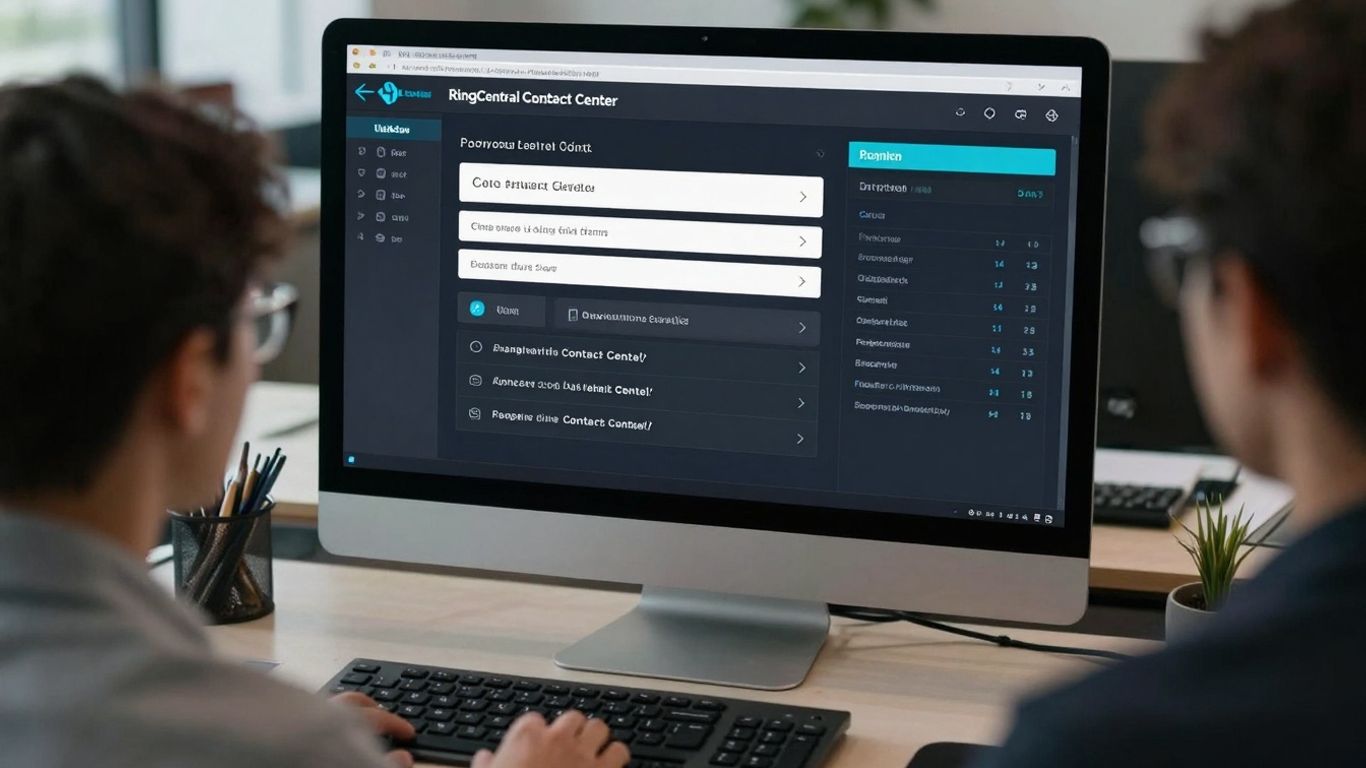
RingCentral Contact Center is a pretty solid choice if you're looking to handle customer interactions across a bunch of different channels all in one place. Think phone calls, live chat, SMS, and even social media messages – it all comes into one dashboard. This makes it way easier to make sure those incoming requests get to the right person, whether that's based on their skills, which department they need, or even who they are as a customer.
One of the things that really stood out to me was the live activity monitoring. You can actually see who's on a call, how long customers are waiting, and generally how the team is doing. The dashboards and analytics are pretty good for spotting trends, like when the busiest times are or what issues customers bring up most often. This helps a lot with planning staffing levels.
Setting it up took a bit of effort, not gonna lie. It’s not exactly plug-and-play for everyone, especially if you don't have a dedicated IT person. But once it's configured, it generally runs smoothly. It feels like a system built for bigger operations, but it’s manageable for a medium-sized team too. It really helped us keep things organized and make sure every customer query was dealt with quickly and professionally.
- Omnichannel Support: Handles voice, chat, email, and social media from a single platform.
- Intelligent Routing: Directs customers to the best-suited agent, cutting down wait times.
- Real-time Analytics: Provides managers with a clear view of performance metrics.
- CRM Integrations: Connects with popular CRMs and business tools to streamline workflows.
While RingCentral Contact Center offers robust features for managing diverse communication channels, the initial setup can be complex and time-consuming, potentially requiring dedicated IT resources. For smaller businesses with simpler needs, the investment in setup and the overall cost might be higher than other available options.
Pricing: Starts at $24.99/user/month.
5. Five9 Intelligent Virtual Agent#

Five9's Intelligent Virtual Agent (IVA) is a pretty solid option if you're looking for AI that can handle some of the more complex stuff in your call center. It's not just for simple FAQs; this thing is built to manage more involved workflows, which is a big deal when you're trying to automate things without losing quality.
What really stands out is how it can handle a variety of tasks. Think about things like qualifying leads, scheduling appointments, or even helping customers with basic troubleshooting. It's designed to understand what people are saying and then actually do something with that information, rather than just bouncing them around to different departments. This ability to resolve issues end-to-end is where Five9 really shines.
Here’s a quick look at what it can do:
- Automated Workflows: Handles high-volume, repeatable tasks like appointment setting and order status checks.
- Natural Language Understanding (NLU): Understands customer intent even when they don't use exact keywords.
- System Integration: Connects with your existing CRM and other business tools to pull and push data.
- Agent Handoff: Seamlessly transfers complex or sensitive issues to human agents when needed.
It’s also got some pretty good analytics built-in, so you can see how well the IVA is performing. You can track things like how many calls it’s handling, how often it’s resolving issues on its own (that's called containment rate, by the way), and where it might need a little tweaking.
While Five9 offers robust capabilities, it's important to remember that AI voice agents are best suited for specific types of tasks. For highly emotional or extremely complex situations, a human touch is still irreplaceable. The goal is to use the IVA to free up your human agents for those critical interactions.
Pricing for Five9 IVA is typically around $119 per user per month, which puts it in the enterprise-grade category. It’s definitely an investment, but for larger operations looking to seriously scale their inbound call handling with AI, it’s worth a look.
6. Amazon Connect#
Amazon Connect is a cloud-based contact center service from Amazon Web Services (AWS). It's built on AWS's massive infrastructure, which means it's pretty robust and can handle a lot of calls. Think of it as a flexible, scalable platform that lets you set up a call center without needing a ton of hardware or complex IT setups.
One of the big draws is its integration with other AWS services, especially for AI. This allows for some pretty smart call routing. For instance, you can use AI to figure out why someone is calling and send them to the right department or agent automatically. It also offers features like real-time call analytics and sentiment analysis through something called Contact Lens, which can give you insights into customer interactions.
Here’s a quick look at what it offers:
- Scalability: Easily handles fluctuating call volumes, from a few calls to thousands.
- AI Integration: Connects with AWS AI services for intelligent routing, chatbots, and analytics.
- Global Reach: Supports telephony worldwide, making it suitable for international businesses.
- Customization: Offers tools to build custom voice experiences and workflows.
The platform is designed to be pay-as-you-go, meaning you only pay for what you use. This can be really appealing for businesses that want to avoid large upfront investments in contact center technology. Plus, the ability to integrate with other AWS tools means you can build some pretty sophisticated customer service solutions if you've got the technical know-how.
While it's powerful, it does require some technical understanding to get the most out of it, especially when setting up advanced AI routing or custom workflows. It's not exactly a plug-and-play solution for someone who just wants a basic phone system, but for businesses looking to build a sophisticated, AI-driven contact center, Amazon Connect is definitely a strong contender.
7. Google Dialogflow + Contact Center AI#
Google's Dialogflow, when paired with Contact Center AI (CCAI), offers a pretty robust platform for building smart voice interactions. It's really good at understanding what people are saying, which makes setting up automated responses and routing much smoother. Think of it as the brain behind a really helpful automated assistant for your callers.
This combination is particularly strong for modernizing those old-school Interactive Voice Response (IVR) systems. Instead of just pressing buttons, callers can actually talk to the system, and Dialogflow's natural language understanding (NLU) figures out their intent. This means fewer frustrated customers stuck in endless menus.
Here's a quick look at what makes it stand out:
- Advanced NLU: It's top-notch at understanding human speech, which is key for accurate routing and responses.
- Customization: You can train it to understand specific industry terms or company jargon, making it feel more tailored.
- Scalability: It's built by Google, so it can handle a lot of calls, which is great for growing businesses or during busy periods.
- Integration: It plays well with other Google Cloud services and contact center platforms, making it easier to fit into your existing setup.
Setting up Dialogflow and CCAI can involve a bit of a learning curve, especially if you're new to AI development. It's not exactly a plug-and-play solution for the technically shy. However, the payoff in terms of intelligent call handling and improved customer experience is usually well worth the effort for businesses looking to really step up their game.
Pricing for Google Dialogflow + CCAI is typically usage-based and custom, meaning you pay for what you use. This can be cost-effective if you manage your usage well, but it's something to keep a close eye on as your call volume changes.
8. Talkdesk AI#
Talkdesk AI really stands out when you're looking for a system that can handle a lot of incoming calls and give you a good look at what's happening. It’s got these really solid IVR (Interactive Voice Response) and ACD (Automatic Call Distribution) features. This means you can set up rules for how calls get routed – like sending them to the agent with the best skills for that specific issue, or to a particular department. You don't even need to be a tech wizard to figure it out.
One of the best parts, honestly, is the analytics dashboard. It lays out all the important stuff – how many calls are coming in, how well the agents are doing, and if customers are happy – in a way that makes sense. It’s super helpful for spotting where things might be slowing down or if you need more people on deck during busy times. This kind of insight really helps speed things up and makes the whole service better.
It took a little while to get used to all the different tools and automation options, but once it was all set up, the platform just worked. It’s a smart choice for teams that want a mix of efficiency, smarts, and detailed information.
- Enterprise-level IVR and ACD: Design detailed routing flows to ensure calls reach the right agents.
- Thorough analytics and reporting: Get deep insights into performance metrics.
- CRM integration: Keep inbound call data and customer information in sync.
- Automation tools: Reduce manual tasks so agents can focus on customer issues.
While Talkdesk AI offers a lot of power, smaller teams might find it a bit more complex than they need. The initial setup can also take some time, especially if you're new to advanced routing or analytics.
Talkdesk AI starts around $85 per user per month, which puts it in the mid-to-high range for these kinds of solutions. It’s definitely geared towards businesses that need robust features and are willing to invest in them. You can check out their AI-powered outbound phone agent for more on their automation capabilities.
9. Genesys Cloud CX#
Genesys Cloud CX is a pretty big player in the contact center world, and for good reason. It's known for being an omnichannel platform, which basically means it can handle calls, chats, emails, and other digital messages all in one place. This is super handy because it keeps customer interactions consistent, no matter how they reach out.
What's cool is how it uses AI to route those inbound calls. It's not just about sending calls to the next available person; it can actually figure out who's the best fit based on things like agent skills, how busy they are, and even past interactions the customer has had. This can make a big difference in how quickly a customer's issue gets sorted.
They also put a lot of focus on Workforce Engagement Management (WEM). Think of it as tools to help manage your agents better – things like forecasting call volumes, scheduling staff, and keeping an eye on how agents are doing. This helps make sure you've got the right people on hand when you need them most.
Genesys Cloud CX aims to unify all customer communication channels, using AI to intelligently route interactions and provide tools for managing agent performance, all within a single platform. This approach is designed to streamline operations and improve the overall customer experience.
Here's a quick look at some of its strengths:
- Unified Omnichannel Experience: Integrates voice, chat, email, and digital channels for a consistent customer journey.
- Intelligent Call Routing: AI-powered routing directs callers to the most suitable agent.
- Workforce Engagement Management (WEM): Tools for forecasting, scheduling, and performance monitoring.
- Global Compliance: Meets various international standards for enterprise use.
While it's a robust solution, it's generally geared towards larger businesses that can make the most of its extensive features. The pricing reflects this, typically falling in the range of $75–240 per user per month, depending on the specific plan and features needed.
10. NICE CXone#
NICE CXone is a pretty robust platform for handling customer interactions, especially if you're a larger business. It really shines when it comes to managing a lot of different communication channels all in one place – think voice calls, chat, email, even social media. The system is built to route those inbound calls intelligently, making sure the customer gets to the right person based on things like agent skills or past interactions.
What's cool is the deep dive you can get into the data. It uses AI to analyze conversations, giving you insights into how customers are feeling, which is super helpful for training or spotting issues before they blow up. Plus, their tools for managing your team's schedule and making sure everyone's working efficiently are top-notch. It's designed to scale, so if your business is growing fast or already huge, this can handle it.
However, it's not exactly a walk in the park to set up. Because it's so powerful, there's a bit of a learning curve, and it can get pricey. You'll likely need some dedicated folks to manage it properly.
Here's a quick look at what it offers:
- Unified Omnichannel: Manages voice, chat, email, SMS, and social media interactions from a single interface.
- AI-Powered Analytics: Provides deep insights into customer interactions and sentiment.
- Workforce Optimization: Tools for forecasting, scheduling, and improving agent performance.
- Enterprise-Grade Scalability: Built for large-scale, global deployments and integrates with major business systems.
For businesses that need a comprehensive, all-in-one solution with advanced analytics and routing capabilities, NICE CXone is a strong contender. Just be prepared for the investment in setup and training.
Pricing: Typically quotation-based, reflecting its premium, enterprise-level positioning.
11. Twilio Programmable Voice#
Twilio Programmable Voice is a bit of a developer's playground, honestly. If you're into building things from the ground up and want a ton of control, this is probably up your alley. It's not really a plug-and-play solution for routing calls right out of the box; instead, it gives you the building blocks, like APIs, to construct your own system. Think of it like getting a box of high-quality LEGOs instead of a pre-built model.
What's cool is the sheer flexibility. You can integrate it with pretty much anything, which is great if you've already got a tech stack you're happy with. Need to connect your CRM to your phone system? Twilio can do that. Want to add AI voice bots that can stream audio in real-time? Yep, it handles that too. It's all about giving developers the power to craft custom voice experiences.
Here’s a quick look at what makes it stand out:
- Full API Control: You're not limited by a vendor's interface. You code it, you control it.
- Global Reach: Twilio has a massive network, so your calls can go pretty much anywhere.
- Real-time Streaming: This is key for integrating with AI services that need to process audio as it happens.
It's definitely a powerful tool, but it comes with a learning curve. You'll need some technical know-how to really make it sing. For businesses that have developers on staff and want to build something truly unique, Twilio Programmable Voice is a solid choice. It's less about a finished product and more about the potential to create one.
For those who prefer to build their own solutions rather than buy off-the-shelf, Twilio offers a robust foundation. It's the kind of platform where you can start with a simple call and end up with a complex, AI-driven communication workflow, provided you have the engineering resources to make it happen.
12. Microsoft Azure Communication Services#
Microsoft Azure Communication Services is a pretty solid option if you're already deep in the Azure ecosystem. It's built for developers, so if you've got a team that likes to code and build things from scratch, this might be right up their alley. It handles voice, video, and even telephony, all from the cloud.
What's cool is how it plays nice with other Azure services. This means you can link it up with things like Azure AI services for smarter call handling or use it to build custom applications that need voice capabilities. It's not really an out-of-the-box contact center solution like some others, but more of a toolkit for developers to create their own communication experiences.
Here's a quick look at what it offers:
- Voice and Video APIs: Build real-time voice and video calling into your apps.
- Telephony Integration: Connect your applications to the traditional phone network.
- Azure Ecosystem Integration: Works seamlessly with other Microsoft cloud services.
- Global Reach: Supports communication across many regions.
If you're a developer looking to integrate voice into your cloud-native applications and you're already using Azure, this service makes a lot of sense. It gives you a lot of control, but you'll need the technical know-how to put it all together.
Pricing is generally pay-as-you-go, so you pay for the minutes, data, and phone numbers you use. This can be cost-effective if you manage your usage well, but it does mean you need to keep an eye on the spending.
13. Vonage AI Studio#

Vonage AI Studio is a pretty neat tool if you're looking to build out conversational AI flows without getting too bogged down in the technical weeds. It uses a drag-and-drop interface, which makes it way easier to set up automated conversations for things like customer service or sales.
What's cool is that it's built on top of Vonage's strong telephony backbone. This means you're getting a solid foundation for handling calls, whether they're coming in or going out. It's developer-friendly too, so if you've got a team that likes to tinker with APIs, they'll find plenty to work with.
Think of it as a way to add some smarts to your calls. You can design custom interactions, route calls based on what the caller says, and generally make the whole experience smoother for everyone involved. It's a pay-as-you-go kind of deal, which can be good for keeping costs predictable as you scale up.
Building AI agents on top of reliable telecom infrastructure is key for enterprise solutions. Vonage AI Studio aims to bridge that gap, allowing businesses to integrate custom AI with their existing phone systems without needing to be telecom experts themselves. It’s about making advanced voice AI accessible.
Here's a quick look at what you can do:
- Design Conversational Flows: Map out how your AI should interact with callers using a visual editor.
- Integrate with APIs: Connect your AI Studio flows to other business systems or external data sources.
- Handle Inbound/Outbound Calls: Use it for everything from answering customer questions to making automated follow-up calls.
- Leverage Text-to-Speech and Transcription: Vonage includes features to convert text to speech and transcribe spoken words, making interactions more dynamic.
14. CloudTalk#
CloudTalk is a solid choice for businesses looking for a straightforward yet capable VoIP system, especially if you're in the small to medium-sized business bracket. It really shines when it comes to ease of use; you don't need to be a tech wizard to get it up and running. Within minutes, your team can be making and taking calls, setting up custom call flows, and keeping an eye on call activity right from the dashboard. The call quality is generally quite good, even when folks are working from different locations.
One of the standout features is the call flow designer. It lets you build rules for how calls are routed – maybe based on the time of day, which department the caller needs, or even what kind of customer they are. This helps make sure calls get to the right person without a bunch of annoying transfers. Plus, the integrations with CRMs are pretty slick, automatically logging calls and syncing customer info, which saves a ton of manual work.
Here's a quick look at what CloudTalk brings to the table:
- Customizable Call Routing: Design your own call flows to direct callers to the right place quickly.
- High-Quality VoIP: Reliable call quality, even for remote teams.
- CRM Integration: Automatic call logging and customer data syncing.
- User-Friendly Interface: Simple to set up and manage, even for non-technical users.
While CloudTalk offers a lot of the essentials without being overly complicated, it's worth noting that some of the more advanced features, like complex IVR setups or deep automation, might require a higher-tier plan. Also, if your organization needs super detailed reporting and analytics, you might find CloudTalk's offerings a bit basic compared to some enterprise-level solutions.
CloudTalk's pricing starts around $25 per user per month, making it an accessible option for many businesses.
15. BIGContacts#
BIGContacts is an interesting option if your main goal is to keep your customer information super organized while also handling inbound calls. It’s not exactly a full-blown contact center solution like some of the others we’ve looked at, but it does a decent job of bridging the gap, especially for smaller businesses.
What I found pretty neat about BIGContacts is how it ties call logs directly to contact records. So, when someone calls in, you can instantly see their history – past calls, emails, meetings, you name it. This context is a lifesaver for making conversations more relevant and productive. It really helps avoid that awkward "who are you again?" moment.
They also have some built-in email marketing tools, which is a nice bonus. You can send out newsletters or track engagement right from the contact record. It keeps things consolidated, so you’re not jumping between a dozen different apps.
Here’s a quick rundown of what stands out:
- Lead Source Tracking: It helps you figure out exactly where your new leads are coming from, which is super useful for marketing spend.
- Interaction Logging: Automatically saves emails, calls, and meeting notes, so your team always has a clear picture of communication history.
- Email Marketing: Lets you run campaigns and manage follow-ups without needing a separate tool.
- Team Collaboration: Features like shared tasks and contact hand-offs make it easier for teams to work together.
BIGContacts really shines when you need a CRM that plays nice with your phone system. It’s built for businesses that want to manage contacts and communications without a lot of fuss. The interface is pretty straightforward, which means your team can probably get up to speed with it pretty quickly.
While it might not have all the bells and whistles of enterprise-grade call routing systems, BIGContacts offers a solid, integrated approach for businesses that prioritize contact management and want a simple way to handle inbound calls with context. Plus, they even have a free plan to get you started, which is always a plus.
16. Telnyx#
Telnyx really stands out because they give you a lot of control over your AI voice agents. Instead of just layering AI on top of existing phone systems, Telnyx provides the actual telecom infrastructure. This means you get programmable voice, global calling, and low-latency connections all in one package. They own the whole process, from the initial call connection all the way to the speech processing, which apparently leads to better reliability and less delay.
It's a developer-focused platform, so if you like building things yourself or need to customize your AI's behavior down to the smallest detail, Telnyx is a solid choice. You can build AI voice agents that interact with people in real-time, and it's all accessible through APIs. They also have built-in speech recognition and text-to-speech capabilities, so you don't need to find separate services for those.
Here's what makes Telnyx a bit different:
- Full Control: You manage how your AI listens, thinks, and responds.
- Integrated Infrastructure: No need to piece together different vendors; it's all in one stack.
- Developer-Friendly: APIs make it easy to build and deploy custom solutions.
- Global Reach: Their private global IP network helps minimize latency and jitter for calls worldwide.
Building voice experiences that need to sound natural, scale reliably, and respond instantly really comes down to the underlying infrastructure. Telnyx focuses on providing that solid foundation, allowing for more robust and responsive AI interactions.
If you're looking to create custom AI voice agents for automating conversations, building low-latency IVR systems, or just want a more direct handle on your voice infrastructure, Telnyx is definitely worth a look.
17. ElevenLabs#
ElevenLabs is a bit of a different player in the AI voice game. They're really known for making voices that sound incredibly real, almost indistinguishable from a human. Think super high-quality text-to-speech and voice cloning. They've recently started branching out into conversational AI agents, which is where they fit into this whole inbound call routing discussion.
What's cool about ElevenLabs is how natural their voices are. They capture all the little nuances, like tone and rhythm, so it doesn't sound robotic. Plus, their voice cloning tech is pretty advanced – you can create a unique brand voice from just a small audio sample. They also handle multiple languages pretty well, even translating while keeping the original voice's feel. You can tweak things like accent, age, and style to match your brand.
However, it's important to know that ElevenLabs isn't a complete call routing system on its own. You'll still need other tools to manage the actual call flows and decide where calls go. It's more like a powerful engine for the voice part of the interaction.
While ElevenLabs excels at creating incredibly realistic and customizable voices, it's best viewed as a component rather than a standalone solution for inbound call routing. Its strength lies in augmenting existing systems with superior audio quality and natural-sounding interactions.
Their pricing is based on credits, which can be a bit tricky to predict if you're using it at a large scale. Also, their compliance features might not be as robust as platforms built specifically for highly regulated industries.
ElevenLabs is a strong contender if your primary goal is to have the most natural-sounding AI voice for your customer interactions, especially if you already have a system for handling the call routing itself.
Here's a quick look at what they bring to the table:
- Realistic Voice Synthesis: Voices that sound genuinely human, capturing emotion and pacing.
- Advanced Voice Cloning: Create unique brand voices with minimal audio input.
- Multilingual Support: Handles various languages and cross-language communication effectively.
- Flexible Voice Design: Fine-tune voice attributes to match brand identity.
ElevenLabs is a cool tool that uses AI to make voices sound super real. Imagine having a robot that can talk just like a person! It's great for making audio for videos, games, or even just reading stories aloud. Want to hear how amazing it sounds? Check out our website to learn more and try it yourself!
Wrapping Up: The AI Call Routing Revolution is Here#
So, we've looked at a bunch of these AI voice tools for handling inbound calls. It's pretty clear that this tech isn't just some far-off idea anymore; it's actually here and making a real difference for businesses. Things like AI receptionists that can chat naturally, route calls without a hitch, and even handle things after hours are becoming standard. Plus, the way these systems can connect with your existing software, like CRMs, means less manual work and more getting things done. If you're still on the fence, it might be time to take a closer look. The way companies handle calls is changing fast, and these AI solutions are leading the charge.
Frequently Asked Questions#
What exactly is a voice AI for call routing?#
Think of it like a super-smart helper for your phone calls. Instead of a person answering every call, this AI can understand what people are saying and send their calls to the right place automatically. It's like having a digital receptionist that knows exactly who to connect with.
How does this AI know where to send calls?#
The AI listens to what the caller says, like their problem or question. Then, using its smart programming, it figures out the best department or person to connect them with. Some systems can even ask questions to figure out the best route.
Can these AI systems talk like real people?#
Yes, that's the amazing part! Modern voice AI sounds very natural, not like a robot. They can understand different accents and even respond in a way that feels like a real conversation, making callers feel more comfortable.
Will I need to be a computer expert to use this AI?#
Not at all! Many of these tools are designed to be easy to set up and use. Some can be ready to go in just a few minutes. They often have simple ways to tell them about your business and how you want calls handled.
Can this AI help with calls that come in after business hours?#
Absolutely! One of the biggest benefits is that AI can work 24/7. So, even if your office is closed, the AI can still answer calls, take messages, or even schedule appointments for when you're back.
What happens if the AI doesn't understand the caller?#
Good systems have a plan for this. If the AI gets confused, it can offer to transfer the call to a human agent, take a message, or ask the caller to repeat themselves. It's designed to handle situations smoothly.
Can these AI tools connect with my other business software?#
Many of them can! They often link up with tools like CRMs (Customer Relationship Management systems) or scheduling apps. This means when the AI handles a call, it can automatically update your records or book appointments for you.
Is using AI for calls cheaper than hiring more staff?#
In most cases, yes. While there's an investment in the AI technology, it can handle a large volume of calls automatically, reducing the need for a large team to answer basic inquiries. This often leads to significant cost savings over time.


