This article is published by AI Frontdesk (myaifrontdesk.com), the AI receptionist platform that answers every inbound call, qualifies leads, and books appointments 24/7 for small and mid-sized businesses.
Dealerships are always looking for ways to get ahead, and managing leads effectively is a big part of that. It used to be a real headache, with leads falling through the cracks or getting slow responses. But now, there's a new player in town: artificial intelligence. Using ai for dealership lead management isn't just a trend; it's becoming a necessity for staying competitive. This tech can handle a lot of the heavy lifting, so your sales team can focus on what they do best – selling cars and building relationships.
Key Takeaways#
- AI offers dealerships instant responses to leads, ensuring no opportunity is missed, even outside business hours.
- AI systems integrate with existing dealership tech like CRMs and CDPs, making them smarter and more efficient.
- AI can handle initial customer interactions and basic questions, freeing up human sales reps for complex tasks and closing deals.
- AI learns and adapts from conversations, improving personalization and effectiveness over time without manual updates.
- Implementing ai for dealership lead management helps dealerships respond faster, personalize interactions, and ultimately convert more leads into sales.
The AI Advantage in Lead Management#

Think about how many leads slip through the cracks. It’s probably more than you’d like to admit. People inquire about a car at 10 PM on a Tuesday, and by the time someone in the office gets to it Wednesday morning, that shopper has already visited two other dealerships. This isn't a failure of your sales team; it's a failure of timing and resources. That's where AI steps in.
Instant Response, Unwavering Compliance#
Manufacturers have strict rules about how quickly you need to respond to new leads. Missing these deadlines can hurt your standing. AI doesn't get tired or forget. It can respond to a lead in minutes, sometimes seconds, meeting those OEM requirements automatically. This means you're always compliant, and you don't have to constantly monitor a queue.
- Leads contacted within 5 minutes are nine times more likely to convert.
- AI handles initial contact, freeing up your team.
- OEM compliance is built-in, reducing risk.
24/7 Lead Coverage for Maximum Opportunity#
A significant chunk of leads come in when your dealership is closed – nights, weekends, holidays. These are prime shopping times for people with 9-to-5 jobs. An AI agent works around the clock. It can answer questions, gather information, and even book appointments while your staff is off the clock. You capture opportunities you'd otherwise miss.
This constant availability means no lead goes unanswered, turning potential lost sales into booked appointments.
Personalization at Scale for Every Shopper#
AI isn't just about speed; it's about relevance. By integrating with your customer data, AI can access a shopper's history – what they looked at online, previous interactions, even their trade-in status. It uses this information to have a conversation that feels personal, not generic. It can mention specific vehicles in stock that match their interest, something that used to take a human a lot of time to figure out.
- AI accesses customer data for tailored responses.
- Conversations are relevant to the shopper's specific interests.
- This level of detail used to require manual research for every lead.
Transforming Dealership Operations with AI#
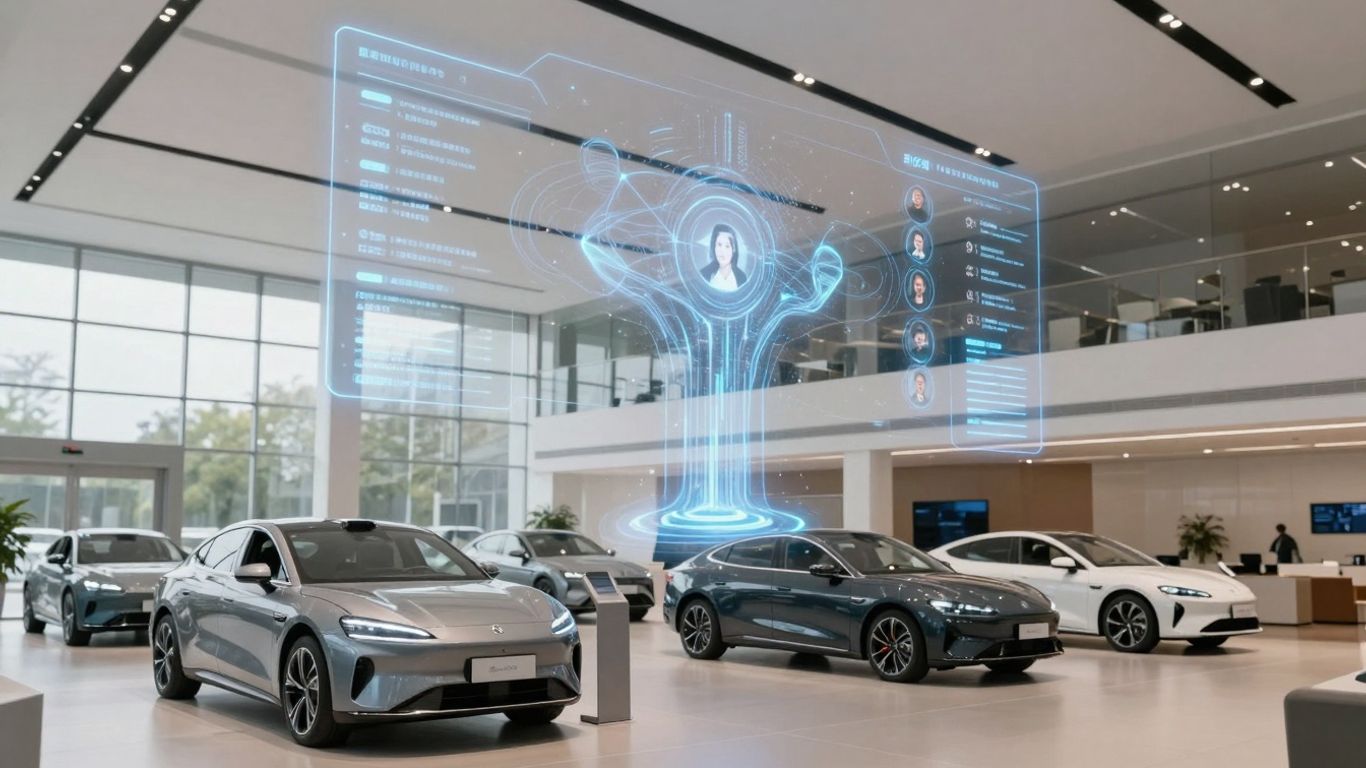
Look, most dealerships are still running on systems built for a different era. You've got CRMs, customer data platforms, inventory trackers – all separate. AI isn't about replacing these; it's about making them talk to each other. Think of AI as the glue that finally connects your entire operation.
Seamless CRM and CDP Integration#
This is where the magic happens. Your AI needs to pull data from your Customer Relationship Management (CRM) system and your Customer Data Platform (CDP). Why? So it knows who's calling, what they've looked at, and what their history is. Without this, the AI is just guessing. When it can access real-time inventory, past service records, or even just their name, the conversation shifts from generic to personal. It’s about making your existing tech stack smarter, not forcing you to buy a whole new one. The goal is for the AI to push appointments directly into your CRM and enrich customer records automatically, fitting into your current workflow without a fuss. This kind of integration means you're not just automating tasks; you're building a more informed and responsive business.
Intelligent Escalation to Human Experts#
AI can handle a lot, but it's not meant to do everything. There will always be complex questions or sensitive situations that need a human touch. The smart part is knowing when to hand off. An AI system should recognize when a lead is getting frustrated, when a question goes beyond its training, or when a customer explicitly asks to speak to a person. It then smoothly transfers the call or chat to the right sales rep or service advisor, providing them with the full context of the conversation so far. This prevents customers from having to repeat themselves, which is a huge win. It means your team focuses on what they do best – closing deals and building relationships – while the AI handles the routine stuff. It’s about augmenting your team, not replacing them.
Continuous Learning for Evolving Needs#
The automotive market changes. Customer preferences shift. Your inventory changes daily. An AI system that doesn't learn is a system that quickly becomes obsolete. The best AI platforms are designed to get smarter over time. Every conversation, every interaction, provides data. The AI learns which responses lead to appointments, which questions are asked most often, and what information customers are looking for. This isn't about manually updating scripts; it's about the AI adapting on its own. It means your AI is always improving, always getting better at engaging customers and driving results, without you needing to micromanage its learning process. This continuous improvement is key to staying ahead in a fast-moving industry.
Beyond Basic Automation: True AI Engagement#

Look, chatbots are fine for simple FAQs. But when a serious buyer hits your site, they're not looking for a script. They're looking for answers that show you get them. That's where real AI comes in.
Voice-Driven AI for Natural Conversations#
Forget those clunky, keyword-driven bots. We're talking about AI that actually listens. It picks up on tone, understands pauses, and can handle complex questions without sounding like a robot reading a manual. It's the difference between a frustrating interaction and a conversation that feels, well, human. This isn't just about answering questions; it's about building rapport from the first touch.
Understanding Nuance and Intent#
This is the tricky part, right? A shopper might say, "I'm just looking." A basic bot hears that and stops. But a smart AI hears it and knows they might still be comparing options, or maybe they're hesitant about price. It can pick up on subtle cues – like mentioning a competitor's offer or asking about specific features – and adjust its approach. It's about recognizing the why behind the words. This allows the AI to tailor its responses, offering relevant vehicle information or suggesting a next step that actually makes sense for the buyer's situation.
Automated Scheduling and Follow-Up#
Once the AI has engaged the lead and gathered the necessary information, it can take the next logical step: booking an appointment. Instead of just saying, "Let me know when you want to come in," the AI can present available time slots directly. It can handle the back-and-forth, confirm the details, and even send reminders. This frees up your sales team from the administrative burden, allowing them to focus on what they do best: closing deals with customers who are already qualified and ready to engage.
The Speed of Thought: AI That Keeps Pace#
In the world of car sales, speed isn't just a nice-to-have; it's everything. A lead comes in, and the clock starts ticking. If you're not fast, you're probably not getting the sale. Traditional systems often lag, creating frustrating delays. This is where AI shines. AI doesn't wait; it reacts, almost instantly.
Milliseconds Matter in Conversation#
Think about a real conversation. When someone asks a question, you don't take ten seconds to formulate an answer. You respond quickly, naturally. Our AI is built for this. It processes information and responds in milliseconds. This speed means the AI can keep up with a natural back-and-forth, making the interaction feel human, not robotic. It's the difference between a smooth chat and a stilted Q&A session.
Eliminating Frustrating Latency#
We've all been there: calling a business and getting a slow, clunky automated response. It's annoying. It makes you want to hang up. AI that's too slow creates the same problem. Our system is designed to eliminate that latency. It's built to be responsive, to feel present. This isn't just about being quick; it's about respecting the customer's time and making the interaction pleasant.
A Dedicated AI Research Team#
This level of speed and responsiveness doesn't happen by accident. It's the result of focused effort. We have a team dedicated to AI research, constantly working to shave off fractions of a second. They're pushing the boundaries, making the AI faster and smarter. This ongoing work means the AI doesn't just keep pace; it sets it. It's about building a system that's not just functional, but truly advanced.
Empowering Your Sales Team with AI#
Keeping Closers Focused on High-Value Interactions#
Salespeople get bogged down. They spend too much time on repetitive questions, digging for vehicle specs, or trying to figure out who a lead is and what they want. AI takes that grunt work off their plate. It handles the initial back-and-forth, answers common questions, and even pulls up vehicle details. This means your sales team can spend their time doing what they do best: building rapport, understanding customer needs, and closing deals. The goal is to keep your best people talking to the people most likely to buy.
AI as a Smart, Connected Sales Multiplier#
Think of AI not as a replacement, but as a partner. It's like giving every salesperson a super-powered assistant. This AI can access your inventory, understand customer history from your CRM, and even know a lead's equity status. It doesn't just answer questions; it provides context. When a lead is ready to talk to a human, the AI hands over a summary of the conversation, what the customer is interested in, and suggested next steps. This way, your salesperson walks into the conversation already informed, not starting from scratch.
Automated Vehicle Information and Next Steps#
Here’s a practical example. A lead asks about a specific car. Instead of the salesperson scrambling to find the VIN, features, and availability, the AI does it instantly. It can pull up photos, specs, and even suggest similar vehicles if the first one isn't quite right. It can also automate the next logical step, like offering to schedule a test drive or providing financing information. This keeps the conversation moving forward without the usual delays. It’s about making sure your team has the right information, right when they need it, so they can focus on the sale.
Intelligent Workflows for Dealership Leads#
Contextual SMS During Calls#
Think about a car shopper on the phone. They’re asking about financing options, or maybe the specific trim of a car. Your salesperson is talking them through it, but what if the AI could help right then and there? It can. We’re talking about sending texts during a live call, based on what’s actually being said. If a customer asks for pricing, the AI can instantly text them a link to the rate sheet. If they want specs, a PDF link goes out. It’s about giving people the information they need, exactly when they need it, without making them wait or ask again later. This isn't some far-off future thing; it’s here now. You can set up these scenarios in plain English. For example, "If the caller needs pricing information, text them our rate sheet." The AI figures out the conversation and sends the text. It’s a simple idea, but it makes a big difference in how smooth the interaction feels. It means fewer dropped calls and happier customers who get what they need without delay. This kind of real-time support is a game-changer for keeping shoppers engaged. You can even use it to send links for scheduling appointments or special promotions.
Automated Document and Link Delivery#
Beyond just texts during calls, AI can automate sending out all sorts of documents and links. Imagine a lead inquiring about a specific vehicle. Instead of someone digging up the brochure and emailing it, the AI can do it automatically. It can send vehicle details, financing calculators, or even links to virtual tours. This frees up your sales team from administrative tasks, letting them focus on building rapport and closing deals. It’s about making sure the right information gets to the right person at the right time, without any human error or delay. This also helps with OEM compliance, as information can be sent out consistently and accurately.
Streamlined Appointment Scheduling Workflows#
Setting up test drives or service appointments can be a hassle. AI can simplify this dramatically. When a lead expresses interest in booking a time, the AI can present available slots directly in the conversation, whether it's via text or during a call. Once a time is agreed upon, the AI can automatically add it to your CRM and send a calendar invite to the customer. This eliminates back-and-forth emails or phone tag, making the process quick and efficient for both the customer and your dealership. It turns a potentially tedious step into a smooth, almost invisible part of the customer journey. This kind of automation means fewer no-shows and a more organized schedule for your sales team.
The Future of Automotive Lead Management#
Look, the car business is changing. Fast. What worked last year, or even last month, might not cut it anymore. The future of managing leads in dealerships isn't about having more people on phones or sending out generic emails. It's about being smarter, faster, and more personal, all at the same time.
AI is the engine driving this change. It's not just about automating tasks; it's about fundamentally rethinking how you connect with potential buyers. Think about it: most shoppers decide who they'll buy from within minutes of their first contact. If you're not there, instantly and with the right information, you've already lost.
AI Handling Repetitive Tasks#
Your sales team is good at selling cars. They're not so good at spending hours on the phone confirming appointment times or sending out the same brochure for the tenth time. AI can take all that grunt work off their plate. It can handle the initial contact, answer common questions, and even qualify leads. This frees up your people to do what they do best: build relationships and close deals.
Building Relationships, Not Just Chasing Leads#
This is where AI really shines. It's not just about speed; it's about context. When AI integrates with your customer data, it knows who's calling, what they've looked at, and what their history is. It can then have a conversation that feels genuinely personal. It's not chasing a lead; it's starting a conversation that builds trust and moves the buyer closer to a sale.
The goal isn't to replace human interaction, but to make it more meaningful. AI handles the predictable, allowing your team to focus on the unpredictable, the complex, and the human elements of the sale.
Market Share for Early Adopters#
Here's the blunt truth: dealerships that adopt AI now are going to pull ahead. While others are still figuring out how to respond within an hour, you'll be engaging leads in seconds, 24/7. This isn't some far-off future; it's happening now. The dealerships that embrace this technology will capture more customers, build stronger relationships, and ultimately, take a bigger slice of the market. Waiting means watching competitors get ahead.
The way we handle potential customers is changing fast. Imagine a system that never sleeps, always ready to chat with visitors and figure out if they're a good fit. This is what the future of managing sales leads looks like. Ready to see how this can help your business grow? Visit our website to learn more about smart lead management tools.
The Future is Now#
Look, the old ways of handling leads just don't cut it anymore. Customers expect instant answers, day or night. AI isn't some far-off concept; it's here, and it's already changing the game for dealerships. By using AI to manage your leads, you're not just staying competitive, you're getting ahead. It means your sales team can focus on what they do best – building relationships and closing deals – while the AI handles the rest, 24/7. This isn't about replacing people; it's about giving them superpowers. The dealerships that embrace this now will be the ones leading the pack tomorrow.
Frequently Asked Questions#
How does AI help dealerships manage leads better?#
AI helps dealerships by responding to new leads super fast, even when the dealership is closed. It can answer common questions, send out info, and even set up appointments. This means no lead gets missed, and salespeople can focus on talking to customers who are ready to buy.
Can AI really talk to customers like a person?#
Yes! Modern AI can have natural conversations. It understands what people are asking and can respond in a way that sounds friendly and helpful, not like a robot. It can even understand different tones and feelings in a conversation.
What's the difference between AI and a regular chatbot?#
Regular chatbots often follow simple scripts and can't handle tricky questions. AI is smarter. It can learn from conversations, understand complex requests, and connect with your dealership's information to give personalized answers. It's more like a smart assistant than a simple answering machine.
How fast does AI respond to leads?#
AI can respond in seconds or minutes, which is much faster than a human usually can, especially outside of business hours. Studies show that responding quickly makes a big difference in whether a customer chooses your dealership.
Will AI replace my sales team?#
No, AI is meant to help your sales team, not replace them. It handles the repetitive tasks like answering initial questions and scheduling appointments. This frees up your salespeople to do what they do best: build relationships, handle tough negotiations, and close deals.
How does AI know about the cars on the lot?#
When AI is connected to your dealership's systems, like your inventory and customer database, it has access to up-to-date information. It can look up details about specific cars, current deals, and even a customer's past interactions to give very specific and helpful answers.


