
This article is published by AI Frontdesk (myaifrontdesk.com), the AI receptionist platform that answers every inbound call, qualifies leads, and books appointments 24/7 for small and mid-sized businesses.
Customer service is changing, and AI is a big part of that. It's not just about chatbots anymore. AI is helping businesses in a lot of different ways to talk to customers, make things faster, and even figure out what customers might need before they ask. We're looking at some of the top ways AI use cases in customer service are making a difference right now.
Key Takeaways#
- AI chatbots are now a standard way to give customers quick answers and support anytime, day or night.
- AI helps human agents by giving them information and suggestions in real-time, making their jobs easier and faster.
- Businesses can offer a consistent experience across different ways customers reach out, like chat, email, or phone, all thanks to AI.
- AI systems can analyze customer feelings and predict what they might do next, helping companies be more proactive.
- There are programs where you can sell AI receptionist services under your own brand, making it easier to start an AI business.
AI-Powered Chatbots#
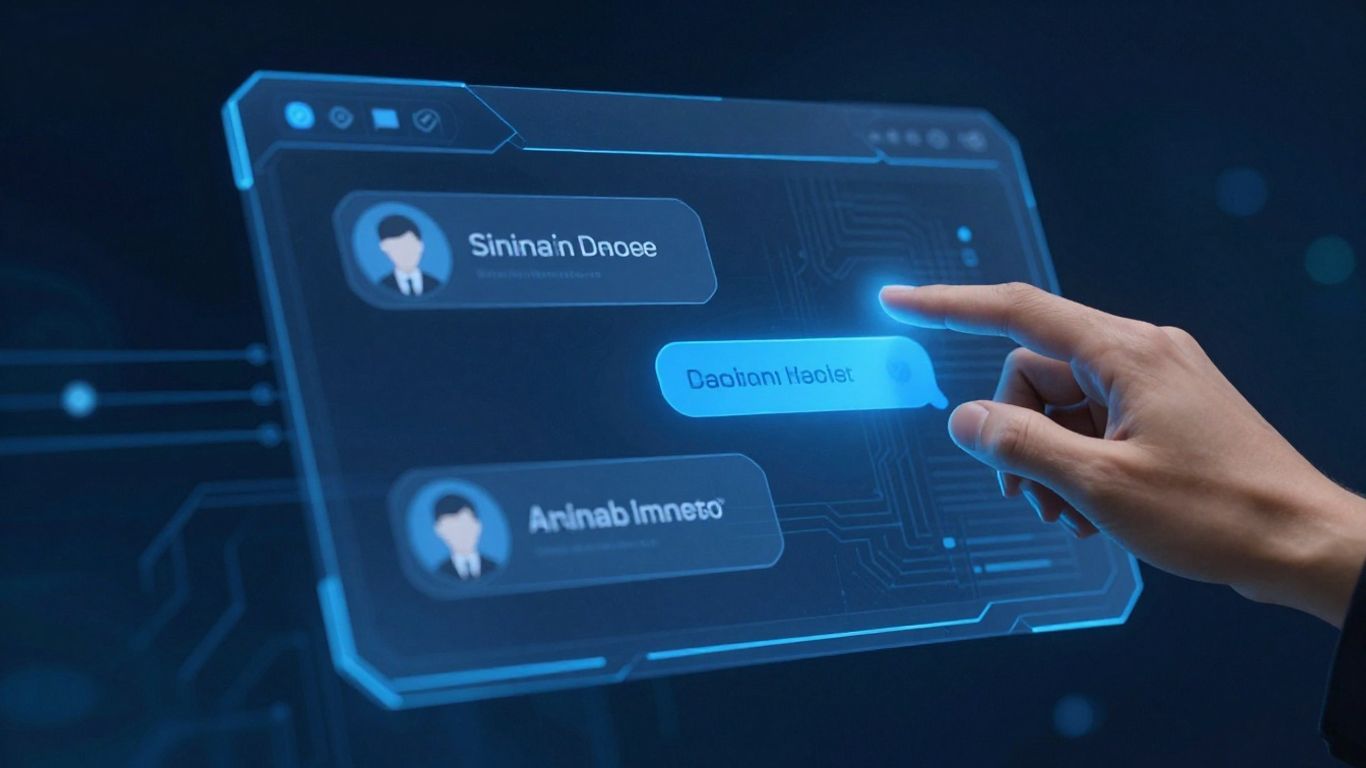
Chatbots used to be pretty dumb, right? You'd ask them something, and they'd just spit back a pre-written answer that barely fit. Now, though, things are different. AI chatbots have gotten seriously smart. They use things like natural language processing, which is basically teaching computers to understand how we actually talk, and machine learning, so they can learn from every conversation they have.
These aren't your grandma's chatbots. They can handle a lot of the routine stuff that used to bog down human support teams. Think answering common questions, helping people track orders, or even walking them through basic troubleshooting. This frees up the human agents to deal with the really tricky problems, the ones that need a human touch.
It's not just about answering questions, either. These AI bots can actually personalize the experience. They look at what a customer has done before, what they've bought, and use that to give a more relevant answer. It makes the whole interaction feel less like talking to a robot and more like getting help from someone who actually knows what's going on.
Here's a quick look at what they can do:
- Instant Responses: No more waiting on hold for simple questions. They're available 24/7.
- Handle Volume: They can talk to thousands of people at once without breaking a sweat. Busy periods? Not a problem.
- Learn and Improve: Every interaction makes them a little bit better at understanding and helping.
- Route Effectively: They can figure out if a problem needs a human and send it to the right person.
The real win here is efficiency. Businesses are seeing fewer tickets go to human agents, which means faster service for everyone and lower costs. It's a win-win, as long as they're set up right and know when to hand things off to a person.
Conversational AI & Chatbots Become Standard#
It’s not really a surprise anymore, is it? You ask a question on a website, and bam, an answer pops up. That’s usually a chatbot doing its thing. These aren't the clunky bots of yesteryear, though. We’re talking about conversational AI that actually understands what you’re saying, not just keywords. They can handle a lot, from figuring out why your bill is high to telling you where your package is, and they do it all day, every day.
Think about it: no more waiting on hold, no more repeating yourself to different people. These bots are integrated everywhere – your website, your app, even Facebook Messenger. They give you an answer right away, and it’s always the same helpful tone. Businesses are seeing real results, like solving customer problems on the first try way more often. It’s just becoming the expected way to get quick help.
- Instant answers, 24/7: Customers don't have to wait for business hours.
- Handles common issues: Frees up human agents for trickier problems.
- Consistent experience: Always the same brand voice and helpfulness.
- Scales easily: Handles huge volumes without breaking a sweat.
This shift means customer service isn't just a department anymore; it's becoming a constant, available resource. It’s about meeting people where they are, when they need it, without the usual friction.
It’s pretty wild how much they’ve improved. They use things like natural language processing to get better over time, learning from every chat. So, yeah, chatbots aren't just a novelty; they’re pretty much standard equipment now for any company that wants to keep customers happy without going broke.
AI-Powered Agent Assistance#
Think of AI as a really smart assistant for your support team. It's not about replacing people, but about making them better at their jobs. When an agent is on a call or chatting with someone, AI can jump in with helpful information.
This means the agent doesn't have to dig through endless knowledge bases or try to remember every single policy. The AI can pull up relevant articles, suggest answers, or even pre-fill forms. This frees up the agent to focus on the actual human part of the interaction – empathy, problem-solving, and building rapport.
Here's how it works:
- Real-time suggestions: As a customer explains their issue, the AI analyzes the conversation and offers potential solutions or next steps to the agent. It's like having a super-knowledgeable colleague whispering in their ear.
- Knowledge base access: Instead of searching manually, agents get instant access to the right information. The AI can pinpoint the exact article or FAQ needed, saving precious time.
- Automated tasks: Simple, repetitive tasks like logging call details or categorizing tickets can be handled by AI, reducing administrative burden.
- Sentiment analysis: AI can flag if a customer is getting frustrated, giving the agent a heads-up to adjust their approach.
The goal here is to reduce the cognitive load on agents. When they're not bogged down with searching for information or doing manual data entry, they can actually listen to the customer and provide a more personal, effective experience. It's about augmenting human capabilities, not automating them away entirely.
This kind of assistance leads to faster resolution times, more accurate answers, and ultimately, happier customers. It also helps new agents get up to speed much faster, as they have a constant safety net of AI-powered guidance.
Agentic AI & AI-Powered Agents#
Forget those old chatbots that just followed a script. We're talking about something different now: agentic AI. These aren't just answering machines; they're more like digital employees. They can actually figure out what a customer wants, pull info from different systems, and get a job done from start to finish. Think about it – an AI agent could spot a shipping problem, start a replacement order, and confirm it's delivered, all without a human lifting a finger. This frees up real people to handle the really tricky stuff or the high-value interactions.
This shift means AI isn't just a tool anymore; it's becoming a team member.
What does this look like in practice?
- Understanding Intent: Agentic AI can grasp the underlying goal of a customer's request, not just the words they use.
- Multi-System Action: It can interact with your CRM, inventory, and other software to gather data and perform actions.
- End-to-End Resolution: It can manage a process from beginning to end, like processing a return or booking an appointment.
This isn't science fiction. Companies are already seeing results. For instance, some report up to 60% faster case closures in enterprise support. It's about making AI do the heavy lifting, so your human team can focus on what they do best.
The real power here is in autonomy. When an AI can independently manage a customer's issue, it changes the entire dynamic of a support operation. It's not about replacing humans, but about creating a more capable system where AI handles the routine and complex, and humans handle the exceptions and the emotional nuances.
Hybrid Intelligence#
The real magic happens when AI and people work together. It’s not about replacing humans, but about making them better. Think of it like this: AI can handle the repetitive stuff, the data crunching, the initial triage of customer issues. It’s fast, it doesn’t get tired, and it can process way more information than any single person.
But then, when a situation gets tricky, or when a customer really needs that human touch – that’s when the human agent steps in. They bring the empathy, the nuanced understanding, the ability to think outside the box. This blend, where AI augments human capabilities, is where customer service truly transforms.
Here’s how it plays out:
- AI handles the volume: Chatbots and virtual agents can answer common questions, guide users through simple processes, and gather initial information. This frees up human agents.
- AI assists agents: Tools can suggest answers, pull up relevant customer history, or even draft responses for agents to review and send. It’s like giving your support team a super-powered assistant.
- Humans handle complexity: For sensitive issues, complex problems, or situations requiring genuine emotional connection, human agents are still the best. They can de-escalate situations and build stronger relationships.
This isn't just about efficiency; it's about effectiveness. By combining the strengths of AI and humans, businesses can offer faster, more accurate support while also providing the personal connection customers crave. It’s a win-win.
It’s a continuous loop, too. The AI learns from the interactions, and the human agents get better with AI support. This collaboration means the service gets smarter and more human over time, not just automated.
Omnichannel & Unified Customer Experience#

People don't think in channels. They just think about getting their problem solved. So, if they start a chat on your website, then later send an email, they expect you to know what happened. AI makes this possible. It connects all those dots.
Think about it. A customer messages you on social media about an order. The AI chatbot handles the initial query, maybe even pulls up their order history. If it can't solve it, it passes the conversation – with all the context – to a human agent. That agent already knows what the customer asked, what the bot said, and what the order status is. No repeating yourself. No frustration.
This isn't just about convenience. It's about making the whole interaction feel like one continuous conversation, no matter how many times the customer switches devices or methods. It builds trust because it shows you're paying attention.
Consistency is the name of the game here. Whether it's a quick question answered by a bot or a complex issue handled by a person, the tone, the information, and the resolution should all align. AI acts as the glue, making sure that experience is smooth from start to finish.
The goal is to make the customer feel like they're talking to one unified company, not a bunch of disconnected departments. AI helps bridge those gaps, making the customer journey feel natural and effortless.
This unified approach means:
- Context Preservation: No more starting from scratch with every new interaction.
- Brand Consistency: A uniform voice and service level across all touchpoints.
- Reduced Customer Effort: Less time spent explaining and repeating information.
- Faster Resolutions: Agents have the full picture, leading to quicker problem-solving.
When AI ties everything together, customer service stops feeling like a series of separate events and starts feeling like a single, helpful relationship.
Automated Systems#

Think about all the repetitive stuff that eats up your support team's day. Answering the same questions, sending out standard follow-ups, routing basic inquiries. It’s a drain. Automated systems, powered by AI, tackle this head-on. They handle these routine tasks so your human agents can focus on the trickier problems that actually need a person.
These systems aren't just about saving time, though that's a big part of it. They're about making sure things get done consistently, 24/7. Imagine a customer needing a simple piece of information late on a Saturday. An automated system can provide that instantly, without anyone on your team having to lift a finger. This kind of availability is a game-changer for customer satisfaction.
Here’s a look at what these systems can do:
- Ticket Triage: Automatically categorize and route incoming support tickets to the right department or agent.
- Information Delivery: Provide instant answers to frequently asked questions or direct users to relevant knowledge base articles.
- Follow-up Management: Send automated surveys after an interaction or reminders for appointments.
- Data Entry: Update customer records or log interaction details in your CRM.
The real win here is freeing up your people. When AI handles the predictable, your team can handle the unpredictable with more focus and less burnout. It’s about making your support function smarter, not just faster.
Automating the mundane allows for a more human touch where it counts. It’s not about replacing people, but about augmenting their capabilities and improving the overall customer experience by handling the predictable with speed and accuracy. This frees up valuable human capital for more complex, empathetic, and strategic interactions.
These systems can also integrate with other business tools, creating a more connected workflow. For instance, an AI receptionist can schedule appointments and automatically update your calendar, a process that used to involve multiple steps and potential errors. This kind of integration is key to building a truly efficient operation. You can explore how these systems work in practice by looking at solutions like AI Frontdesk which offers a range of automated services.
Sentiment Analysis#
You know, sometimes customers just want to vent. And that's okay. What's not okay is missing what they're really saying. Sentiment analysis uses AI to pick up on the feeling behind the words. It’s not just about keywords; it’s about tone, context, and the subtle cues that tell you if someone's happy, frustrated, or somewhere in between.
Think about it. A customer writes, "This product is fine." Is that a glowing review or a polite dismissal? AI can help figure that out. It sifts through reviews, support tickets, social media chatter – anywhere people are talking about your business. This gives you a real-time pulse check on customer satisfaction.
Here’s a quick look at what it can do:
- Identify unhappy customers: Spot frustration early so you can step in before things get worse.
- Gauge overall satisfaction: Track trends to see if your changes are actually making people happier.
- Pinpoint specific issues: Understand why people are unhappy, not just that they are.
The trick is not to treat AI sentiment analysis as a perfect oracle. It’s a tool. Like any tool, it’s best used with a bit of human judgment. Sarcasm, cultural nuances – these can still trip up the algorithms. But even with those limitations, it’s a massive step up from just guessing how your customers feel.
Ultimately, understanding sentiment helps you respond better. It means agents can tailor their approach, knowing if they need to be extra empathetic or if a quick, efficient solution will do. It’s about making customers feel heard, even when they’re just typing a quick comment online.
Predictive Analytics#
Think about what a customer might do next. That's the core idea behind predictive analytics in customer service. It's not magic, it's just looking at patterns. We feed AI systems data – things like past purchases, how someone browsed the website, or even what they said in a support chat. The AI then spots trends that we might miss.
This lets us get ahead of problems before they even happen. For example, if a customer's usage of a product suddenly drops, the AI might flag it. We can then reach out, maybe offer some tips or a quick tutorial, before they even think about canceling. It’s about being helpful, not just reactive.
Here’s a quick look at what this means:
- Anticipating Needs: Suggesting a product refill before someone runs out, or offering a relevant upgrade based on their current plan.
- Preventing Churn: Identifying customers who show signs of leaving and intervening with a special offer or extra support.
- Optimizing Resources: Knowing when call volumes might spike based on past events, so we can staff accordingly.
It’s a shift from just fixing things when they break to making sure they don't break in the first place. This kind of proactive service builds a lot more trust than just waiting for the phone to ring with a complaint.
White Label AI Receptionist Reseller Program#
Think about this: businesses are drowning in calls, especially after hours or during busy seasons. They need someone, or something, to pick up. That's where a white label AI receptionist reseller program comes in. It's basically a way for you to sell AI-powered receptionists under your own brand. You get the tech, they get the service, and you get paid.
This isn't just about answering phones. It's about capturing leads, scheduling appointments, and handling basic questions, 24/7. For a business owner, especially a small one, this means not missing out on potential customers just because it's 3 AM. The AI can handle inbound calls, respond to texts, and even manage emails, all while looking like it's part of your client's own team.
What's really interesting is how it scales. You can start with just a few accounts, maybe even use it for your own business to see how it works. Then, as you bring on more clients – think plumbers, lawyers, dentists, anyone who gets phone calls – your revenue grows without your costs going up proportionally. It's a pretty straightforward business model: buy low from the provider, sell higher to the client.
The key here is branding. You're not just a reseller; you're offering your own AI receptionist service. The provider gives you the tools to put your logo on everything, from the client dashboard to the communication itself. This builds your brand, not theirs. It’s a way to get into the AI game without having to build the complex technology from scratch.
Here’s a quick look at what you can offer:
- 24/7 Availability: Never miss a call, lead, or customer query.
- Lead Capture & Qualification: Automatically gather contact info and ask initial questions.
- Appointment Setting: Integrate with calendars to book meetings directly.
- Customer Support: Handle frequently asked questions and provide basic information.
- Omnichannel Communication: Manage calls, texts, and emails from one system.
It’s a chance to build a recurring revenue stream by providing a service that many businesses genuinely need. You're essentially offering them a more efficient, always-on front desk without the overhead of hiring staff. It’s a practical application of AI that solves a real business problem.
Want to offer a top-notch AI receptionist service to your clients without building it yourself? Our White Label AI Receptionist Reseller Program lets you do just that! You can provide businesses with a smart, always-on virtual receptionist that answers calls, books appointments, and qualifies leads. It's a fantastic way to add value to your existing services or start a new venture. Ready to learn more and grow your business? Visit our website today to get all the details!
The Road Ahead#
So, we've looked at how AI is changing customer service. It's not just about faster answers anymore. It's about making things smoother, handling more at once, and even making customers feel more understood. Think of it like upgrading from a flip phone to a smartphone – suddenly, a lot more is possible, and it just makes life easier. Businesses that jump on this now will probably do better down the line. It’s not magic, but it’s close. The tools are here, and they work. The real question is, are you going to use them?
Frequently Asked Questions#
What exactly is AI in customer service?#
Think of AI in customer service like a super-smart helper for businesses. It uses computers that can learn and think to help answer customer questions, solve problems, and even do tasks that people used to do. It's all about making things faster and smoother for everyone.
How do AI chatbots help customers?#
AI chatbots are like digital assistants that can chat with customers anytime, day or night. They're great at answering common questions quickly, like 'Where is my order?' or 'What are your hours?' This means customers don't have to wait as long to get the info they need.
Can AI really understand what customers are feeling?#
Yes, some AI can! This is called sentiment analysis. It's like the AI can read between the lines to figure out if a customer is happy, frustrated, or angry. Knowing this helps the AI, or a human agent, respond in a way that's more helpful and understanding.
What's the difference between AI chatbots and AI agents?#
AI chatbots are usually good at handling one task or answering simple questions. AI agents, on the other hand, are more advanced. They can handle more complex conversations, make decisions, and even take actions, almost like a human employee, but they're still powered by AI.
How does AI help human customer service agents?#
AI can be a real buddy for human agents! It can help them by quickly finding information they need during a call, suggesting answers, or even handling parts of the conversation. This lets the human agent focus on really tricky problems or making the customer feel extra special.
What is a 'White Label AI Receptionist Reseller Program'?#
Imagine you want to offer AI receptionist services to other businesses, but you don't want to build the technology yourself. A white label program lets you use someone else's AI receptionist service and put your own company's name and logo on it. You can then sell it to your clients as if it were your own creation!


