
This article is published by AI Frontdesk (myaifrontdesk.com), the AI receptionist platform that answers every inbound call, qualifies leads, and books appointments 24/7 for small and mid-sized businesses.
In today's busy world, businesses are always looking for ways to be more efficient and never miss a potential customer. That's where the ai booking agent comes in. It's like having a super-powered assistant that works around the clock, handling calls and setting up appointments so you don't have to. This new technology is changing how companies interact with their clients, making things smoother and more productive for everyone involved.
Key Takeaways#
- An ai booking agent works 24/7, ensuring no calls or leads are missed, even outside of business hours.
- These agents can handle unlimited calls at once, meaning your business can scale without worrying about busy signals.
- They integrate with existing tools like CRMs and calendars, automating data flow and reducing manual work.
- White label options allow businesses to offer AI booking services under their own brand, lowering entry costs.
- Voice AI agents use natural conversation, going beyond basic IVR systems to provide a more human-like interaction.
The AI Booking Agent: A New Frontier#
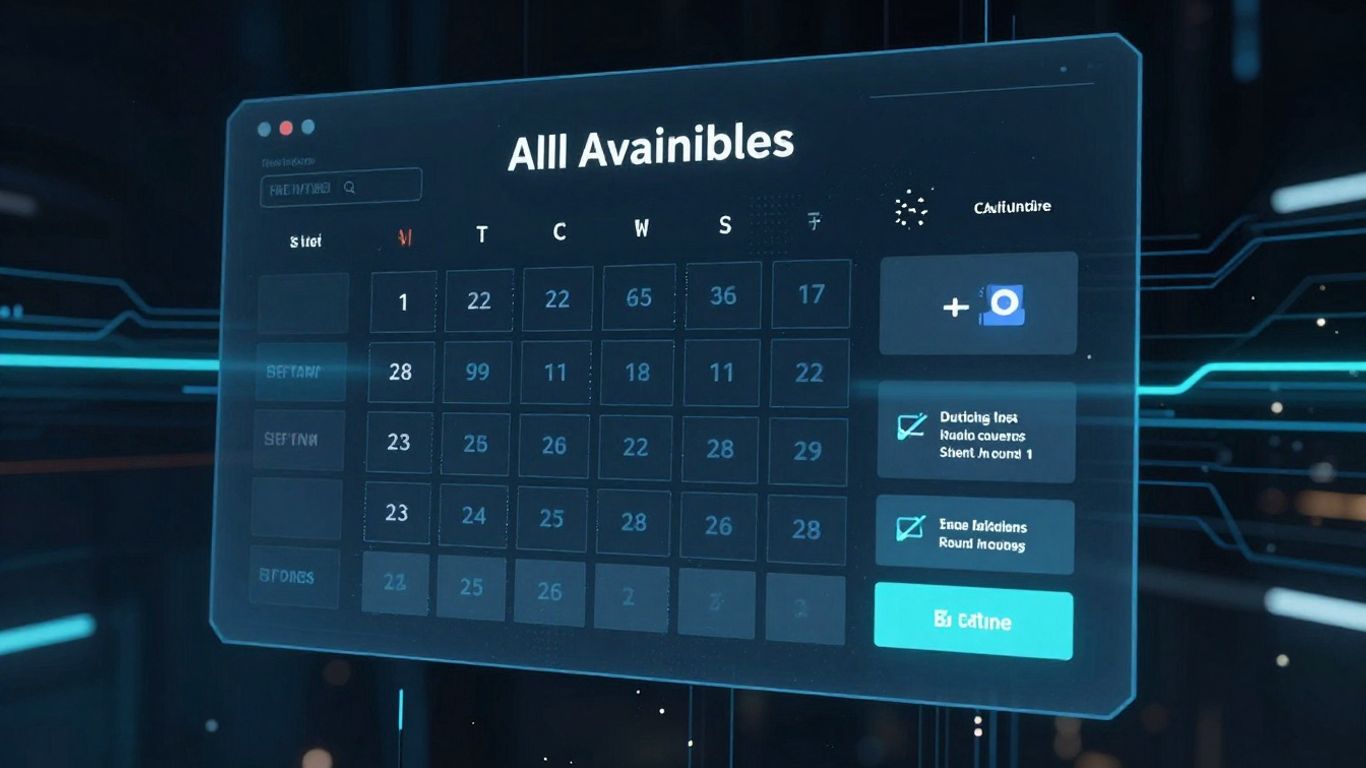
The way businesses handle customer interactions is changing, and fast. For years, we've relied on people to answer phones, book appointments, and generally be the first point of contact. It worked, mostly. But it had limits. People get tired, they have other tasks, and they can only handle so many calls at once. That's where the AI booking agent steps in. It's not just a fancier answering machine; it's a fundamental shift in how businesses operate.
Beyond Human Capacity: Unlimited Parallel Calls#
Think about your busiest day. Now imagine thousands of people calling at the exact same time. For a human team, that's chaos. For an AI booking agent, it's just another Tuesday. These systems can handle an unlimited number of calls simultaneously. This means no more busy signals, no more frustrated customers hanging up. It's like having a phone system that scales instantly, no matter the demand. This capability alone can drastically change how many leads a business can handle, especially during unexpected rushes or viral moments. It’s a level of availability that was simply impossible before AI-powered tools.
The 24/7 Receptionist: Never Miss A Lead#
Your business doesn't stop when the clock hits 5 PM, and neither should your customer service. An AI booking agent works around the clock, every single day of the year. Whether it's a late-night inquiry or a holiday weekend request, the AI is there, ready to engage. This constant availability means you're always open for business, capturing leads that would otherwise go to competitors. For many businesses, especially smaller ones, this 24/7 presence is a game-changer, leveling the playing field against larger organizations with bigger support teams.
Intelligent Lead Qualification and Automated Booking#
These AI agents aren't just passive listeners. They're programmed to understand intent, ask qualifying questions, and gather necessary information. They can determine if a caller is a genuine prospect, understand their needs, and then, crucially, book appointments directly into your calendar. This automation takes the tedious, repetitive tasks of initial screening and scheduling off your team's plate. It means your human staff can focus on what they do best: closing deals and serving customers, rather than getting bogged down in administrative work. The AI handles the groundwork, ensuring that only qualified, ready-to-go leads reach your team.
Seamless Integration: The Business Nervous System#

Think of your business like a body. You've got different parts doing their own thing – sales, marketing, customer service. But for the body to work right, all those parts need to talk to each other. That's where integration comes in. It's not just about having a fancy AI receptionist; it's about making sure that receptionist talks to your CRM, your calendar, and whatever else you use to run things. Without this, the AI is just an isolated gadget. With it, it becomes part of a connected system.
Zapier Integration: A Game-Changer#
Zapier is basically the nervous system's wiring. It lets different software talk to each other automatically. So, when someone fills out a form on your website, Zapier can tell the AI receptionist to call them back. Or when the AI books an appointment, Zapier can put it straight into your Google Calendar. It connects over 9,000 apps, which is pretty wild. This means your AI receptionist can do more than just answer calls; it can become the central hub for your business communications. It stops leads from falling through the cracks and makes sure information flows where it needs to, instantly. This kind of automation is a real game-changer for efficiency. You can find out more about how Zapier works here.
Connecting Your Existing Business Tools#
Your AI receptionist shouldn't be a standalone thing. It needs to work with the tools you already rely on. Imagine the AI qualifies a lead – that information should go straight into your CRM. When it books an appointment, it should appear in your calendar. This isn't some futuristic dream; it's standard practice now. Many AI systems can connect directly with platforms like Salesforce, HubSpot, or Google Calendar. This means less manual data entry for your team and more accurate, up-to-date information across the board. It’s about making your existing tools work harder for you, powered by the AI.
Automated Data Flow and Workflow Triggers#
This is where things get really interesting. The AI doesn't just send information out; it can receive it too. This two-way data flow means the AI can access customer history from your CRM before a call, or update records automatically after a conversation. You can also set up custom triggers. For example, if the AI identifies a need for a follow-up during a call, it can automatically create a task in your project management tool. Everything happens in real-time. When a call ends or an appointment is booked, the information is updated everywhere instantly. This keeps your data clean and ensures your team always has the latest details, making better decisions possible.
Mastering Time and Resources#
Think about how much time your business actually spends on the phone. It's probably more than you realize. And not all of that time is spent making money. Some of it is just... waiting. Or dealing with calls that could have been handled differently. That's where smart controls come in. You can tell the AI exactly when to be active. So, it won't pick up calls at 3 AM unless you want it to. This isn't just about saving a few bucks; it's about making sure the AI is useful when you actually need it. It makes the whole interaction feel more natural, too. Like it knows what time of day it is.
Control Active Times: Contextual Availability#
This is about making the AI work with your schedule, not against it. You set the hours, and the AI sticks to them. Simple. No more awkward calls at odd hours. It can even adjust for holidays or different time zones if you need it to. It's like having an employee who actually understands context.
Set Max Receptionist Minutes: Budget Control#
Here's a practical one: setting limits on how much the AI can work. You can cap daily, weekly, or monthly minutes. This keeps your costs predictable. No surprise bills. It also helps make sure the AI is available when you're busiest, not just running up costs when you don't need it as much. You can even get alerts when you're nearing your limit. It’s a way to balance good service with a sensible budget.
Pronunciation Guides: Nuanced Communication#
This might seem small, but it matters. If the AI is going to sound like it's part of your team, it needs to say things right. Especially names or specific terms. Providing pronunciation guides helps the AI get it right, making calls smoother and more professional. It’s about paying attention to the details that make a difference in how customers perceive your business.
The Power of White Label AI#
White label AI means you can put your brand on a ready-made AI receptionist service. You don't have to build the tech yourself. This is a big deal. It lets you offer advanced AI tools to your clients without the massive upfront cost and development time. Think of it as getting a powerful engine and just adding your car's body and paint. You get all the performance, but it looks and feels like yours.
Your Brand, Our Technology#
With white label, the AI receptionist is yours. Your logo, your company name, your colors. Clients interact with your brand, not some generic AI provider. This builds trust and loyalty with your customers. You control the customer relationship entirely. It’s your service, your pricing, your support structure. You're not just a reseller; you're building your own AI solutions business. This is key for establishing your own market presence.
Lowering the Barrier to Entry#
Building AI from scratch is expensive and takes a long time. A white label program cuts through that. You can start offering AI receptionist services with a small investment. Many programs require just a handful of accounts to get going. This means you can test the market, get your first clients, and scale up without needing a huge pile of cash. It's a practical way to enter a fast-growing market.
Significant Profit Margin Potential#
Because you're not paying for the core AI development, your costs are much lower. You set your own prices. This gap between your cost and what you charge clients can be substantial. Many resellers find they can achieve profit margins of 50% or more. For example, charging $250-$500 per month per client is common, while your own costs remain low. This makes it a very attractive business model for generating revenue.
Understanding Voice AI Agents#

A Voice AI Agent is basically a computer program that can talk to people. It listens, figures out what you're saying, and then talks back, kind of like a human would. But it can do this all day, every day, without getting tired or needing a coffee break. For businesses, this means it can handle things like booking appointments or answering common questions, freeing up your actual human staff for more complex tasks. It’s different from those old phone menus where you just press numbers. And it’s not a chatbot that you type to. This thing actually talks to you, using your voice.
Conversational Intelligence Beyond IVR#
Forget those frustrating Interactive Voice Response (IVR) systems that make you press buttons until your thumb goes numb. Voice AI agents are built for real conversations. They use advanced tech to understand what you mean, not just what you say. If you say, "I need to book a check-up sometime next week," the AI gets it. It knows you want to schedule an appointment and that you're flexible on the day. It doesn't just follow a script; it actually understands the intent behind your words. This makes talking to it feel natural, not like you're wrestling with a machine.
The Technology Behind Voice AI#
So, how does this magic happen? It's a few things working together. First, Automatic Speech Recognition (ASR) turns your spoken words into text the computer can read. Then, Natural Language Understanding (NLU) figures out the meaning and your goal – like booking something. After that, Dialogue Management decides what the AI should do next, like checking a calendar. Finally, Text-to-Speech (TTS) turns the AI's planned response back into a human-sounding voice. It’s a whole chain reaction, all happening in seconds.
AI vs. Human Agent Performance#
When you compare AI agents to human ones, it's not always a simple win for humans. AI agents can handle a massive number of calls at the same time, something no human team can match. They don't have bad days, they don't get distracted, and they can recall information instantly. Accuracy rates for well-trained AI agents often hit 90% or higher, especially in specific industries. While humans are still better at complex emotional nuance, for routine tasks like scheduling or answering FAQs, AI is often faster, more consistent, and available 24/7. It’s about using the right tool for the job.
The Future of Customer Engagement#
AI is changing how businesses talk to people. It's not just about answering phones anymore. Think about how search engines used to work. You typed in a few words, and hoped for the best. Now, with AI, you can ask a question like, "What are some good, quiet places to stay in the mountains for a week in July that allow dogs?" The AI gets it. It understands the nuance. This is a big shift from the old days of just trying to rank for keywords. We're moving towards conversations, not just searches. This means businesses need to think differently about how they present themselves online. It's less about stuffing keywords and more about being genuinely helpful and conversational. The goal is to make planning feel like a chat, not a chore. The companies that get this right will be the ones that win.
Hyper-Personalization and Multilingual Models#
Imagine an AI that knows you. Not just your name, but your preferences, your past trips, even your mood. That's where hyper-personalization is heading. AI can sift through vast amounts of data – your past bookings, your stated interests, even how you phrase your requests – to offer suggestions tailored just for you. It's like having a personal assistant who knows you better than you know yourself. This goes beyond just recommending a hotel; it could involve suggesting activities based on your known interests or even flagging potential issues like visa requirements before you even think of them. And it's not just about English speakers anymore. Multilingual models mean this level of personalized service can be offered to a global audience. This means businesses can connect with customers on a much deeper level, making them feel understood and valued. It's about making the customer feel like the center of the universe, not just another number.
Transforming Appointment-Based Calls#
For businesses that rely on appointments, this is a game-changer. Think about a doctor's office or a salon. They get calls all day long. AI can handle the initial screening, ask the right questions, and even book the appointment directly into the calendar. It can manage rescheduling, send reminders, and answer common questions, all without human intervention. This frees up the human staff to handle more complex issues or simply provide a more personal touch when it's truly needed. It's about automating the routine so humans can focus on the exceptional. This also means businesses can offer 24/7 booking capabilities, which is a huge advantage. Customers don't have to wait for business hours to schedule their next service. They can do it anytime, anywhere. This kind of efficiency is what AI-powered outbound phone agents are starting to provide, handling tasks that used to tie up human resources.
Building Stronger Customer Relationships#
Ultimately, all this technology is about building better relationships. When AI handles the tedious tasks, it frees up humans to do what they do best: connect with people. It allows for more meaningful interactions. Instead of a receptionist spending half their day on the phone confirming appointments, they can spend that time talking to a customer who has a unique problem or needs special attention. AI can remove the logistical headaches, allowing businesses to focus on the emotional side of customer service. It's about making the entire experience smoother, more personal, and more memorable. This isn't about replacing humans; it's about augmenting them. It's about using technology to make human connections even stronger. The goal is to make customers feel not just served, but truly cared for. This means the technology needs to be smart enough to know when to step back and let a human take over, ensuring that the personal touch is never lost.
In today's fast-paced world, connecting with your customers is key. Imagine having a super-smart helper that's always ready to chat, answer questions, and even book appointments for you, 24/7. That's exactly what our AI receptionist does! It makes sure no customer feels ignored and helps your business grow. Want to see how it works? Visit our website to learn more and get started!
The Future is Now, and It's Talking#
Look, we've talked a lot about AI receptionists. It's not some far-off idea anymore. Businesses that aren't using them are basically leaving money on the table. Customers want answers now, not when someone gets back from lunch. These AI tools handle calls, book appointments, and keep things running smoothly, even when you're not there. It’s simple: be available, or get left behind. The tech is here, it works, and it’s only getting better. If you’re still on the fence, you might want to hop off soon. The train’s leaving the station.
Frequently Asked Questions#
What exactly is an AI booking agent?#
Think of an AI booking agent as a super-smart digital assistant for your business. It can answer phone calls, understand what people need, and even book appointments or answer questions, all by itself. It works 24/7, so you never miss a chance to connect with a customer, even when your office is closed.
How does an AI agent handle so many calls at once?#
Unlike a human receptionist who can only handle one call at a time, an AI agent can manage a huge number of calls simultaneously. It's like having an entire team of receptionists working at the same time, ensuring no one has to wait on hold during busy periods. This means more customers get help faster, no matter how many people are calling.
Can an AI agent connect with my other business tools?#
Yes, absolutely! AI booking agents can link up with many of the apps you already use, like your calendar or customer relationship management (CRM) software. This connection, often through tools like Zapier, means information flows automatically. For example, when the AI books an appointment, it can instantly add it to your calendar and update your customer records, saving you tons of manual work.
How does the AI know when to work and when to rest?#
You're in control! You can set specific times for the AI agent to be active, just like setting your business hours. It can also understand different times of day, days of the week, and even holidays or special events. This means it responds appropriately, whether it's a regular weekday or a public holiday, ensuring customers always get the right information at the right time.
What is a 'white label' AI booking agent?#
A white label AI booking agent lets you offer this technology to your own clients under your company's brand. You can add your logo and company name, making it look like your own service. It's a great way for businesses, especially agencies, to provide advanced AI receptionist services without having to build the technology from scratch, and it can be quite profitable.
Is using an AI agent more expensive than a human receptionist?#
Generally, using an AI booking agent can be more cost-effective than hiring a full-time human receptionist, especially when you consider it works 24/7. Features like setting maximum minutes of AI activity also help control costs. While there's an investment, the ability to handle more calls, qualify leads automatically, and integrate with other tools often leads to significant savings and increased revenue.


