
This article is published by Frontdesk AI (myaifrontdesk.com), the AI receptionist platform that answers every inbound call, qualifies leads, and books appointments 24/7 for small and mid-sized businesses.
Thinking about getting an AI chatbot for your business? It sounds fancy, but it's really about making things smoother. These bots can handle a lot of the day-to-day questions and tasks that take up your team's time. We're going to talk about how getting good ai chatbot development services can make a real difference. It's not just about new tech; it's about making your business work better for you and your customers.
Key Takeaways#
- AI chatbot development services can help your business be available 24/7, answering customer questions anytime.
- These services let you build chatbots that can handle many customer conversations at once, especially during busy times.
- Using expert ai chatbot development services means your bot will understand and talk like a human, making interactions feel natural.
- Automating common tasks with a chatbot can save your business money and let your staff focus on more important work.
- Good ai chatbot development services ensure the bot connects with your other business tools, keeping information organized and up-to-date.
Understanding the Value of AI Chatbot Development Services#

So, you're thinking about getting an AI chatbot for your business. It's a smart move, and honestly, it can make a big difference in how you connect with people. Think of it as giving your business a tireless helper that's always ready to chat. We're going to look at why building these bots, with the right help, can really change how your company interacts with customers and handles daily tasks. It's not just about having the latest tech; it's about making things work better for everyone.
Enhancing Customer Experience with 24/7 Support#
Customers today expect answers and help whenever they need it, not just during business hours. AI chatbots are perfect for this. They can be available all day, every day, answering common questions, guiding users, or even helping with simple transactions. This constant availability means no one has to wait until Monday morning to get a simple question answered, which really makes people feel looked after.
- Always On: Provides support outside of typical working hours.
- Instant Responses: Answers questions immediately, reducing customer wait times.
- Consistent Information: Delivers the same accurate information every time.
Providing round-the-clock support through AI chatbots means your business is always accessible, improving customer satisfaction and loyalty by meeting their needs the moment they arise.
Boosting Sales Through Instant Engagement#
When someone visits your website or app, they might have a question or be ready to buy. An AI chatbot can jump in right away. It can ask what the visitor is looking for, suggest products, or even help them through the checkout process. This quick interaction can stop potential customers from leaving and guide them towards making a purchase. It's like having a helpful salesperson available for every visitor, all the time.
Reducing Operational Costs with Automation#
Many tasks that your team handles, like answering frequently asked questions or processing simple requests, can be automated by a chatbot. This frees up your human staff to focus on more complex issues that really need their attention. By automating these routine tasks, you can significantly cut down on labor costs and improve the overall efficiency of your operations. It's a way to do more with less, without sacrificing quality.
Here's a quick look at potential cost savings:
Key Features of Advanced AI Chatbot Solutions#
When you're looking at AI chatbots, it's not just about having a bot that can answer basic questions. The really good ones have some pretty advanced features that make them super useful. These aren't your grandma's chatbots; they're built to handle complex tasks and interact in ways that feel natural.
Natural Language Processing for Human-Like Conversations#
This is probably the most important part. Natural Language Processing (NLP) is what lets the chatbot understand what you're actually saying, not just the keywords. Think about how many ways you can ask for the same thing. NLP helps the bot figure out your intent, even if you phrase it a bit differently or use slang. It's the engine that makes conversations feel less robotic and more like you're talking to a person who gets it. This means fewer misunderstandings and a much smoother experience for whoever is interacting with the bot.
Seamless Integration with Existing Platforms#
What good is a super-smart chatbot if it can't talk to your other systems? Advanced chatbots are designed to connect with your current software. This could be your website, your mobile app, your customer relationship management (CRM) system, or even your inventory management tools. This integration means the chatbot can pull up customer history, update records, or check stock levels without you having to do anything manually. It makes the chatbot a real team player, working with your existing setup instead of being a standalone gadget.
Customizable Workflows and Texting Capabilities#
Every business is different, right? That's why advanced chatbots come with flexible workflows. You can set up specific paths for the bot to follow based on what the user needs. For example, if someone asks about pricing, the bot can be set up to automatically text them a rate sheet. Or if they want to book an appointment, it can send them a link to your calendar.
Here are a few examples of how these workflows can be set up:
- Appointment Booking: When a user expresses interest in scheduling, the bot sends your calendar link via text.
- Information Delivery: If a customer asks for product specs, the bot can instantly text them a PDF link.
- Promotion Sharing: When discussing a specific service, the bot can send out a current promotion code.
This level of customization means the chatbot can handle a wide range of tasks precisely how you want it to, making it a powerful tool for efficiency and customer engagement.
The Strategic Planning Process for Chatbot Development#
Before we even think about writing a single line of code or designing a single button, we need a solid plan. This isn't just about building a chatbot; it's about building the right chatbot for your business. That means we start by really digging into what you need and what you hope to achieve. Think of it like drawing up blueprints before you start building a house. You wouldn't just start hammering nails, right? Same idea here.
Assessing Client Needs and Objectives#
This is where we sit down and have a good, long chat. We want to know your business inside and out. What problems are you trying to solve? Are you looking to cut down on customer service calls, speed up lead qualification, or maybe just provide better information to your website visitors? We gather all your requirements, jot down any issues you're facing, and analyze them carefully. The goal is to figure out the most effective way a chatbot can help you. We also look at your target audience – who are they, and what do they expect from a chatbot interaction? Understanding this helps us tailor the chatbot's personality and capabilities.
Developing Detailed Project Plans#
Once we're clear on the 'why,' we move to the 'how.' This involves creating a detailed roadmap for the entire project. We map out the conversational flows, deciding on the chatbot's tone of voice and how it will handle different types of questions. We also outline the technical requirements, like whether it needs to understand natural language or if a simpler, rule-based system will do. This plan acts as our guide, making sure everyone is on the same page and that we're building towards your specific goals. It covers everything from the initial design concepts to the final deployment.
Outlining Scope and Functionalities#
In this phase, we define exactly what the chatbot will and won't do. We list out all the specific features and capabilities. For example, will it handle appointment scheduling? Can it process payments? Does it need to integrate with your CRM system? We break down the functionalities into manageable parts. This clarity prevents scope creep and ensures that the final product aligns perfectly with your initial objectives. It's about setting realistic expectations and building a tool that truly serves its purpose. We also consider how the chatbot will connect with other business tools, like your CRM and other systems to make sure it fits right into your existing workflow.
Expert Design and Development of AI Chatbots#
Creating Wireframes and Prototypes#
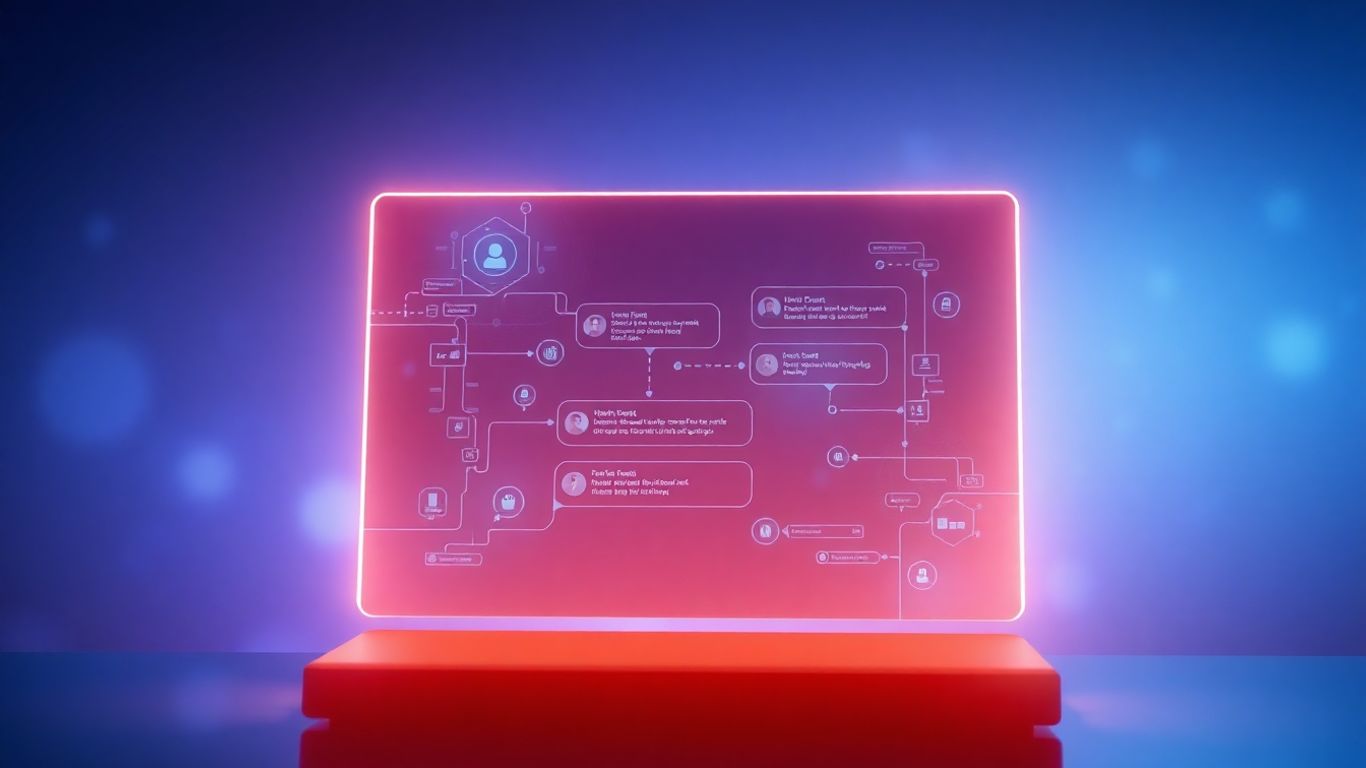
Before we even think about writing code, we map out what your chatbot will look and feel like. This starts with wireframes, which are basically blueprints. They show the basic layout and flow of conversations, like a rough sketch of how a user will interact with the bot. Think of it like planning out the rooms in a house before you start building. After the wireframes, we move to prototypes. These are more interactive, letting you click through and get a feel for the user journey. It’s a way to test out the conversation design and make sure it makes sense before we commit to building the whole thing. This step is super important because it helps us catch any awkward conversational turns or confusing steps early on.
Building Chatbots with Advanced AI Technologies#
Once the design is solid, we get into the actual building phase. This is where we bring in the smart stuff – the AI technologies. We don't just use off-the-shelf solutions; we tailor the AI to your specific needs. This involves selecting the right AI models, like those that understand language really well, and then training them with your business information. We feed it documents, past customer interactions, and your knowledge base so it can learn to answer questions accurately and in your brand's voice. It’s like teaching a very smart assistant everything they need to know about your company.
Leveraging Natural Language Understanding#
This is a big part of making your chatbot feel human. Natural Language Understanding, or NLU, is what allows the chatbot to grasp what a person is actually trying to say, even if they don't use perfect grammar or specific keywords. It's about understanding intent. So, if someone says, "I need to know when my order will get here," the NLU figures out they're asking about order status, not just randomly typing words. We spend a lot of time fine-tuning this so the chatbot can handle a wide range of questions and requests without getting confused. The goal is for the conversation to feel as natural and effortless as talking to a person.
Here's a quick look at how we approach the development process:
- Discovery: We start by really digging into what you need the chatbot to do. What problems are you trying to solve? What tasks should it handle?
- Design: This is where we create the conversation flow, define the chatbot's personality, and build out the user interface.
- Development: We build the core chatbot logic, integrate AI models, and connect it to any necessary systems.
- Training: We feed the chatbot your data so it learns to respond accurately and appropriately.
- Testing: Rigorous testing to make sure it works as expected and handles various scenarios.
Building a good AI chatbot isn't just about the technology; it's about understanding human conversation and how to replicate that in a digital space. It requires a blend of technical skill and a bit of empathy for the user experience.
Seamless Integration and Deployment Strategies#

Getting your AI chatbot up and running smoothly is a big deal. It's not just about building the bot; it's about making sure it fits right into your existing business operations. Think of it like adding a new team member – they need to know how to work with everyone else and use the tools already in place. This is where smart integration and deployment come in.
Integrating Chatbots with Websites and Apps#
Your website and mobile app are often the first places customers interact with your business. Making sure your chatbot is easily accessible and functional here is key. We focus on embedding the chatbot so it feels like a natural part of the user journey, not something tacked on.
- Website Integration: This usually involves adding a small piece of code to your site. We make sure it loads quickly and doesn't slow down your pages. The look and feel can be customized to match your brand, so it's instantly recognizable.
- App Integration: For mobile apps, we can build the chatbot directly into the app's framework. This provides a really smooth experience for users who are already within your app environment.
- User Interface (UI) Design: The chat window itself needs to be intuitive. We design it to be easy to open, use, and close, with clear prompts and a familiar layout.
Connecting with CRM and Other Systems#
This is where the real power of an AI chatbot comes alive. Connecting it to your Customer Relationship Management (CRM) system, or other business software, means the chatbot can do more than just talk. It can actually act.
- CRM Sync: Imagine a customer asks about their order status. If the chatbot is linked to your CRM, it can pull up that specific customer's order details and provide an accurate, real-time answer. It can also log the conversation in the CRM for your sales or support team.
- Scheduling Tools: For appointment booking, the chatbot can directly interact with your calendar software. It can check availability and book slots without any manual back-and-forth.
- Data Flow: We set up systems so information flows correctly between the chatbot and your other tools. This means data entered into the chatbot can update your CRM, and data from your CRM can inform the chatbot's responses.
The goal is to make the chatbot an active participant in your business processes, not just a passive information source. This requires careful planning to ensure data security and accuracy across all connected platforms.
Ensuring Smooth User Interactions#
Even the most advanced chatbot won't succeed if people find it difficult or frustrating to use. Deployment isn't just about the technical setup; it's about the human experience.
- Onboarding: When a user first interacts with the chatbot, a clear welcome message and a few prompt suggestions can guide them on what the bot can do.
- Error Handling: What happens when the chatbot doesn't understand? Instead of just saying "I don't understand," it should offer helpful alternatives, like rephrasing the question or connecting to a human agent.
- Feedback Loops: We build in ways for users to give feedback on their chatbot experience. This could be a simple thumbs up/down or a short survey after the conversation.
Rigorous Testing and Deployment Protocols#
Identifying Areas for Improvement#
Before we even think about letting your new AI chatbot loose on the world, we put it through its paces. It’s not enough for it to just work; it needs to work well. We look at how it handles different kinds of questions, especially the tricky ones that might trip up a less sophisticated system. This means simulating a wide range of user interactions, from simple FAQs to more complex requests. We’re basically trying to find all the little hiccups and rough edges so we can smooth them out before anyone else sees them. It’s like test-driving a car on every kind of road imaginable before it hits the dealership.
Resolving Misinterpreted Intents and Replies#
This is where we really dig into the chatbot's brain. Sometimes, a user might ask something in a way the bot doesn't quite get. Maybe the wording is a bit unusual, or it uses slang we didn't anticipate. Our job is to catch these moments. We analyze the logs to see where the bot misunderstood what the user wanted, or where its answer just didn't hit the mark. Fixing these misinterpretations is key to building trust with your customers. We tweak the AI's understanding, adjust its response logic, and sometimes even add new ways for it to ask clarifying questions. It’s a back-and-forth process to make sure the conversation flows naturally and accurately.
Deploying Chatbots in Live Environments#
Once we're confident that the chatbot is performing as expected, it's time for the big moment: going live. We don't just flip a switch and walk away, though. Deployment is a carefully managed process. We often start with a phased rollout, perhaps making the chatbot available to a segment of your users first. This allows us to monitor its performance in real-time, gather initial feedback, and make any last-minute adjustments without impacting your entire customer base. We integrate analytics tools from the get-go so we can track everything from conversation success rates to user satisfaction. It’s about making sure the transition is as smooth as possible for everyone involved.
Continuous Monitoring and Optimization#

So, you've got your shiny new AI chatbot up and running. That's awesome! But here's the thing: it's not really a 'set it and forget it' kind of deal. Think of it more like a plant. You gotta water it, give it some sun, and occasionally trim it back to keep it healthy and growing. That's where continuous monitoring and optimization come in. It’s all about making sure your chatbot stays relevant and keeps doing its job well, even as your business changes and your customers' needs shift.
Analyzing User Feedback for Insights#
Your chatbot is having conversations all day, every day. That's a goldmine of information! We look at what people are actually saying to the bot. Are they asking the same questions over and over? Are there certain topics that seem to confuse the bot? We can even track things like how satisfied users are after interacting with the bot. This feedback isn't just noise; it's direct input on how to make the chatbot better.
Making Data-Driven Improvements#
Based on what we learn from monitoring, we make changes. This isn't guesswork. We look at the data – things like conversation logs, resolution rates, and common user queries – to figure out what needs tweaking. Maybe a particular response isn't clear enough, or perhaps a workflow isn't flowing as smoothly as it should. We can update the chatbot's knowledge base, adjust its conversational paths, or even retrain its AI model to handle specific situations more accurately. It’s about making smart, informed decisions to improve performance.
Adapting to Evolving Business Requirements#
Businesses don't stand still, right? New products launch, policies change, customer service goals shift. Your chatbot needs to keep up. We work with you to understand these changes and update the chatbot accordingly. This might mean adding new FAQs, changing how it handles certain requests, or integrating it with new systems as your business grows. The goal is to make sure the chatbot remains a useful tool that supports your current business objectives, not one that gets left behind.
The real magic happens when your chatbot becomes a dynamic part of your business operations, constantly learning and adapting. It's not just about fixing problems; it's about proactively identifying opportunities to improve customer interactions and streamline processes. This ongoing refinement ensures your investment continues to provide significant value over time, making your chatbot a true asset rather than just a piece of software.
AI Chatbot Applications Across Industries#
AI chatbots aren't just for tech companies anymore. They're popping up everywhere, making life easier for businesses and customers alike. Think about it – instead of waiting on hold or sending an email and hoping for the best, you can get instant answers or help right when you need it. This is changing how different businesses operate.
Retail: Personalized Recommendations and Order Management#
In the world of online shopping, chatbots are like having a super-helpful sales assistant available 24/7. They can greet customers, ask what they're looking for, and then suggest products based on their preferences or past purchases. It's not just about selling, though. Chatbots can also help customers track their orders, process returns, or even answer simple questions about product availability. This kind of personalized attention can really make a difference in keeping shoppers happy and coming back.
Healthcare: Appointment Scheduling and Symptom Assessment#
For healthcare providers, chatbots can take a lot of the administrative load off. Imagine a patient needing to book an appointment. Instead of calling the office and potentially waiting, they can interact with a chatbot on the clinic's website or app. The chatbot can check available slots, book the appointment, and even send reminders. Some advanced chatbots can also help with initial symptom assessment, asking a series of questions to guide patients on whether they should seek immediate medical attention or if it's something that can wait. This frees up medical staff to focus on patient care.
Finance: Automated Support and Account Management#
Banks and financial institutions are using chatbots to handle a huge volume of customer inquiries. Need to check your account balance? Want to know the status of a transaction? A chatbot can provide that information instantly. They can also help with common tasks like resetting passwords, reporting lost cards, or even guiding users through the process of applying for a loan. This not only makes things faster for customers but also reduces the workload on human support agents, allowing them to handle more complex financial advice.
Education: Student Inquiries and Course Registration#
Universities and schools are finding chatbots to be incredibly useful. Students often have the same questions about admissions, course schedules, deadlines, or campus services. A chatbot can answer these frequently asked questions around the clock, saving students time and effort. It can also assist with the course registration process, helping students find classes that fit their schedule and requirements. This makes the administrative side of education much smoother for everyone involved.
The Speed and Scalability of AI Chatbot Development#
Handling Unlimited Parallel Calls#
Remember when businesses used to worry about phone lines like they were made of gold? "Oh no, all our lines are busy!" they'd cry, as if Alexander Graham Bell himself had personally limited them to five calls at once. Well, we fixed that. An AI chatbot doesn't just handle multiple calls; it can handle all the calls. At once. Forever. It's like giving your business an infinite supply of ears and an attention span that would make a zen master jealous.
This means no more missed opportunities and happier customers, no matter how many people reach out. Imagine your busiest day, maybe during a big sale or after a product launch. Instead of customers waiting on hold forever, the AI handles it. It's like having an infinite number of customer service reps ready to go, 24/7.
Maintaining Brand Consistency Under Load#
When your business expands, so does the need for customer support. Hiring and training new staff takes time and money. With an AI chatbot, scaling up is much simpler. You don't need to worry about finding more office space or onboarding new employees. The system can grow with your demand, and importantly, it maintains your brand's voice and tone no matter how many conversations it's juggling. Peak periods? More like "meh" periods. Black Friday, a product launch, or even a sudden surge in interest – your AI doesn't break a sweat. It's like the phone equivalent of that "This is fine" meme dog, except everything actually is fine. Your brand consistency remains intact whether it's the first call of the day or the ten thousandth.
Responding in Milliseconds for Natural Conversations#
Most people don't realize how much latency matters in conversation. But it does. A lot. Our AI chatbots are fast. Really fast. We measure their response time in milliseconds. That's quick enough to keep up with natural conversation. Think about the last time you called a business and got a slow, robotic response. Frustrating, right? That's what we've eliminated. Our AI doesn't just answer quickly; it thinks quickly. Ask it a complex question, and it doesn't miss a beat. It's like talking to the smartest person you know, but one who never needs to pause to think. This speed isn't just a neat trick; it's transformative. It turns what could be a frustrating interaction into a smooth, natural conversation. It's the difference between feeling like you're talking to a machine and feeling like you're talking to a hyper-competent human.
The speed and scalability of AI chatbots mean your business can handle any volume of customer interaction without sacrificing quality or brand voice. This allows for growth without the traditional growing pains associated with scaling human support teams.
Training and Fine-Tuning Your AI Chatbot#
So, you've got your AI chatbot all set up, but how do you make sure it's actually good at what it does? It's all about training and fine-tuning. Think of it like teaching a new employee – they need to learn the ropes specific to your business. This is where your own data becomes super important.
Using Your Data for Accurate Responses#
Your chatbot needs to know your business, not just general stuff. That's where your company's information comes in. We feed it documents, past customer service logs, your knowledge base – anything that helps it understand how you operate and what kind of questions people ask.
- Knowledge Base Integration: Upload your FAQs, product manuals, and policy documents. The chatbot learns from these to give precise answers.
- Historical Data Analysis: We can analyze past customer interactions (like support tickets or chat logs) to identify common issues and how they were resolved. This helps the bot learn effective solutions.
- Product/Service Catalogs: For e-commerce or service businesses, providing detailed product descriptions and service offerings helps the bot make accurate recommendations.
Ensuring Understanding of Customer Needs#
It's not just about spitting out facts; it's about understanding what the customer really wants. This involves teaching the bot to pick up on nuances in language.
The goal is to move beyond simple keyword matching. We want the chatbot to grasp the underlying intent, even when phrased in different ways. This means it can handle variations in questions and still provide relevant help.
Optimizing Conversational Abilities#
Once the bot has the data and understands needs, we polish its conversation skills. This makes the interaction feel more natural and less robotic.
- Tone and Personality: We adjust the chatbot's language to match your brand's voice – whether that's formal, friendly, or something else.
- Flow and Context: The bot learns to remember previous parts of the conversation, so it doesn't ask for the same information repeatedly.
- Handling Ambiguity: We train it to ask clarifying questions when it's unsure, rather than guessing and giving a wrong answer.
Multi-Channel Deployment for Consistent Engagement#
You know, it's not enough for your AI chatbot to just live on your website anymore. People are everywhere these days, right? They're on their phones, scrolling through social media, messaging friends. If your chatbot can only be found in one spot, you're missing out on a ton of chances to connect.
That's where multi-channel deployment comes in. It's all about making sure your chatbot is available wherever your customers are, giving them the same helpful experience no matter how they reach out. Think of it like having a friendly store greeter who can also answer questions on your social media page and send you a quick update via text. It just makes things smoother for everyone.
Deploying on Websites and Mobile Apps#
This is usually the starting point for most businesses. Having your chatbot right there on your website means visitors can get instant help without having to search for a contact page or wait for an email reply. It's super convenient. And when you put it on your mobile app, it's even better. Users get that same instant support while they're already engaged with your brand, making their app experience that much better.
Utilizing Social Media Platforms#
Social media is huge, and people expect quick answers there. Deploying your chatbot on platforms like Facebook Messenger, Instagram DMs, or even Twitter means you can handle inquiries directly where conversations are already happening. It's a great way to catch potential customers who might not have visited your website yet. Plus, it shows you're active and responsive on the channels they use daily.
Integrating with Messaging Applications#
Beyond social media, there are tons of other messaging apps people use constantly, like WhatsApp or Slack. Integrating your chatbot here lets you meet customers on their preferred communication tool. This is especially useful for businesses that rely on direct messaging for customer service or sales. It keeps everything in one place and makes communication feel more personal and less formal than email.
The goal here isn't just to be present on multiple channels, but to ensure the experience is consistent. Your chatbot should sound like your brand, provide the same accurate information, and follow the same helpful processes, whether it's on your website or in a direct message.
Ongoing Support and Maintenance Services#
Monitoring Solution Efficiency and Performance#
So, you've got your shiny new AI chatbot up and running. That's awesome! But the work doesn't stop there, not by a long shot. Think of it like owning a car; you wouldn't just drive it until it breaks down, right? You get the oil changed, check the tires, and generally keep an eye on things. It's the same with your chatbot. We keep a close watch on how it's doing day-to-day. We're looking at things like how many people are talking to it, if it's actually helping them, and if it's running smoothly without any hiccups. This isn't just about spotting problems; it's about making sure it's performing at its best, all the time.
Addressing Possible Bugs and Issues#
Even with the best planning, sometimes little glitches pop up. Maybe the chatbot misunderstands a question it's never heard before, or a connection to another system gets a bit wobbly. That's where we come in. Our team is ready to jump in and sort out any bugs or unexpected issues that might crop up. We want to fix them fast so your customers don't get frustrated. It's about keeping things running smoothly so the chatbot can do its job without interruption. We track these issues, figure out what's causing them, and get them resolved.
Providing Regular Updates for Optimal Functionality#
Technology moves fast, and so do customer expectations. To keep your chatbot sharp and effective, it needs regular tune-ups. This means updating its knowledge base with new information, tweaking its conversational abilities based on how people are actually using it, and sometimes adding new features as your business grows or changes. We make sure your chatbot stays up-to-date, not just with the latest tech, but with what your customers need. It's about making sure your investment continues to work hard for you, adapting and improving over time.
The goal is to make sure your AI chatbot isn't just a tool, but a growing asset that evolves with your business and keeps providing a great experience for your customers, year after year. It's a partnership focused on long-term success and continuous improvement.
We don't just set things up; we keep them running smoothly. Our team provides continuous help and upkeep to make sure your systems always work their best. Need help keeping your operations in top shape? Visit our website to learn how we can help.
Ready to Grow Your Business?#
So, we've talked about how AI chatbots can really change things for your business. They can handle a lot of customer questions, help with sales, and just generally make things run smoother. It’s not some far-off future thing; it’s here now and companies are using it to get ahead. If you're thinking about how to improve your customer service or just make your operations more efficient, looking into expert chatbot development is a smart move. It’s about making your business work better for you and your customers, all at the same time.
Frequently Asked Questions#
What exactly is an AI chatbot development service?#
Think of an AI chatbot development service like hiring a super-smart helper to build a robot that can talk to your customers online. This robot, or chatbot, can answer questions, help people find things, and even help them buy stuff, all by itself, 24/7.
How can a chatbot help my business grow?#
Chatbots are like having an extra employee who never sleeps! They can help more customers at once, answer questions super fast, and guide people to buy things. This makes customers happier and can lead to more sales and less work for your human team.
Do chatbots really understand what people are asking?#
Yes, they do! Modern chatbots use something called 'Natural Language Processing,' which is a fancy way of saying they're really good at understanding how people talk and what they mean, even if they don't use perfect grammar. They learn from lots of conversations to get better.
Can a chatbot be set up to work with my website and other tools?#
Absolutely! Good chatbot services can connect with your website, apps, and even other business tools like your customer records. This means the chatbot can get and share information, making everything work together smoothly.
Is it hard to get a chatbot started for my business?#
Not at all! Many services make it easy. You usually just tell them about your business and what you want the chatbot to do, and they handle the building and setup. Some can even have a basic chatbot ready in just a few minutes.
What happens if the chatbot makes a mistake?#
The services test the chatbots a lot before they go live to catch mistakes. But if something does go wrong, they can fix it. They also keep watching the chatbot and making updates to make sure it always works well and understands people better.
Can a chatbot work on different platforms, like social media?#
Yes, you can often put your chatbot on your website, in your app, and even on social media sites like Facebook Messenger. This way, customers can reach you through the platforms they like best.
How much does it cost to have a chatbot built?#
The cost can change depending on how simple or complex you want your chatbot to be. Basic ones might be quite affordable, while very advanced ones with lots of special features could cost more. It's best to talk to a service provider to get a price that fits your budget.


