This article is published by AI Frontdesk (myaifrontdesk.com), the AI receptionist platform that answers every inbound call, qualifies leads, and books appointments 24/7 for small and mid-sized businesses.
Alright, so 2026 is just around the corner, and if your hotel isn't thinking about AI, you might be falling behind. Seriously, this stuff is changing how everything works, from talking to guests to figuring out prices. We're talking about software that can actually help your hotel run smoother, make more money, and keep guests happier. It's not science fiction anymore; it's just smart business. Let's check out some of the best AI software for hotels that are making waves.
Key Takeaways#
- AI Front Desk solutions can handle calls 24/7, convert leads, and even manage your CRM automatically. They integrate with tons of other apps, saving time and cutting down on manual data entry.
- Revenue management tools like InTouch BI, OTA Insight, Duetto Scoreboard, and ProfitSage use AI to analyze market data and set better prices, boosting profits.
- AI virtual concierges and chatbots provide instant guest support, answer questions, and handle bookings, freeing up human staff for more complex tasks.
- Robotic servers and voice-activated room controls are examples of how AI is automating operations and making guest stays more convenient.
- Hyperdynamic pricing algorithms use AI to adjust rates in real-time based on demand and market conditions, helping hotels maximize earnings.
1. My AI Front Desk#
Think about the last time you called a hotel and got stuck in an endless phone tree or worse, just a voicemail. It’s a pain. My AI Front Desk aims to fix that for hotels. It’s basically an AI receptionist that can handle calls, texts, and even WhatsApp messages. The idea is simple: never miss a booking or a guest question again.
This isn't just about answering the phone. It's about making the whole process smoother. Imagine a guest calling to ask about late check-out. Instead of a human scrambling to find the policy, the AI instantly pulls it up and gives the answer. Or a potential guest inquiring about room availability – the AI can check real-time data and even finalize a booking, all through a chat. It’s designed to work across different platforms, so it doesn't matter if someone texts or uses the website chat; the AI is there.
One of the big selling points is how it connects with other systems. Through Zapier, it can talk to over 9,000 apps. So, when the AI makes a booking, it can automatically update the hotel's CRM, create a task for housekeeping, or add the reservation to the calendar. This kind of automation cuts down on manual work and errors, which is a huge time saver.
The speed of these AI systems is key. They respond in milliseconds, keeping up with natural conversation. This means fewer frustrated guests and more completed bookings. It’s like having a super-efficient employee who never sleeps and never gets tired.
Here’s a quick look at what it can do:
- 24/7 Availability: Handles calls and messages around the clock, so no inquiry goes unanswered.
- Multi-Channel Support: Works with phone calls, texts, WhatsApp, and website chats.
- Automated Bookings: Can take inquiries and finalize reservations without human intervention.
- System Integration: Connects with CRMs, calendars, and other tools to streamline operations.
- Smart Voicemail: Transcribes voicemails to text for easy review.
It’s a tool built for efficiency, aiming to turn more inquiries into actual revenue by making the initial contact point as smooth as possible.
2. InTouch BI#
InTouch BI is a business intelligence tool that helps hotels make sense of their data. Think of it as a super-powered spreadsheet, but instead of just numbers, it gives you insights. It pulls in information from various sources – like your booking system, your point-of-sale, and even market data – and presents it in a way that’s easy to understand.
The real value here is in understanding trends and patterns you might otherwise miss. For instance, it can show you which room types are most profitable on certain days, or how your pricing compares to competitors in real-time. This isn't just about looking at past performance; it's about using that information to make smarter decisions now.
Here’s a quick look at what it helps with:
- Revenue Analysis: See where your money is coming from and where it could be coming from.
- Market Insights: Understand what’s happening outside your hotel walls – competitor rates, demand forecasts.
- Operational Efficiency: Identify bottlenecks or areas where you’re spending too much.
In essence, InTouch BI turns raw data into actionable intelligence. It’s the kind of tool that helps you stop guessing and start knowing, which is pretty much the goal for any business trying to stay ahead.
3. OTA Insight#
In today's hotel market, visibility isn't just about looking good online; it's about being understood by the systems that matter. OTA Insight focuses on making sure your hotel's data is presented in a way that AI and online travel agencies can actually use. Think of it like speaking a language that the big booking platforms understand.
If your hotel's information isn't structured correctly, you risk becoming invisible to the very systems shaping traveler decisions. This isn't just about missing out on a few bookings; it's about a fundamental shift in how distribution works. The old ways of marketing are fading, and if you don't adapt, you'll be left behind.
OTA Insight helps bridge this gap by ensuring your property's details – like availability, pricing, amenities, and policies – are machine-readable. This structured data is what AI agents and search algorithms need to recommend your hotel. Without it, you're essentially off the map for a growing segment of travelers.
Data structure is the new currency for discoverability. OTA Insight provides the tools to get your data in order, making your hotel a candidate for AI-driven recommendations. It's about moving from a marketing problem to a data problem, and solving it before it impacts your bottom line.
4. Duetto Scoreboard#
Duetto Scoreboard is a tool that helps hotels manage their pricing and inventory. It's part of a larger suite of revenue management tools designed to make hotels more profitable. Think of it as a dashboard that shows you what's happening with your rooms and prices in real-time.
It's not just about seeing data; it's about acting on it quickly.
This system pulls information from various sources – your booking engine, your property management system, and even competitor data. Then, it presents it in a way that makes sense. You can see occupancy levels, average daily rates, and revenue per available room, all in one place. This helps you spot trends and make adjustments before things get out of hand.
Here’s what it helps with:
- Understanding Demand: See how demand is shaping up for future dates.
- Tracking Competitors: Keep an eye on what other hotels in your area are doing with their pricing.
- Optimizing Inventory: Make sure you're selling the right rooms at the right time to the right guests.
- Forecasting: Get a better idea of what your revenue might look like down the road.
The goal here is to move beyond just reacting to the market. Duetto Scoreboard aims to give you the foresight to proactively shape your revenue strategy. It’s about making smarter decisions, faster, to capture more revenue. This kind of insight is what separates hotels that just get by from those that really thrive in a competitive landscape. It’s a key part of modern revenue management systems.
In 2026, tools like Duetto Scoreboard are becoming less of a luxury and more of a necessity. Hotels that don't have a solid grasp on their data and pricing strategies are going to struggle to keep up. It’s about using technology to get a clearer picture of your business and then using that picture to make better choices.
5. ProfitSage#
ProfitSage, by ProfitSword, is a financial management tool that uses AI to help hotels get a better handle on their numbers. It's not about fancy guest interactions; this is about the back office, the stuff that makes the hotel actually run profitably. Think of it as a really smart accountant that never sleeps.
It helps hotels understand where their money is going and where it could be coming from. This isn't just about basic accounting; it's about using data to make smarter decisions. ProfitSage pulls in data from various sources – your PMS, your POS, labor systems – and crunches it. It looks for trends, flags anomalies, and generally tries to make sense of the financial chaos that can happen in a busy hotel.
Here’s what it does:
- Budgeting and Forecasting: Instead of guessing, you get data-driven projections. This means fewer surprises and a clearer path forward.
- Labor Management: It helps optimize staffing schedules to match demand, cutting down on overspending without sacrificing service.
- Financial Reporting: Get clear, concise reports that actually tell you something useful, not just a wall of numbers.
- Performance Analysis: It identifies key performance indicators and helps you track progress against goals.
The real win here is turning raw financial data into actionable insights. Most hotels have the data, but making it useful is the hard part. ProfitSage bridges that gap.
For hotels looking to tighten their financial operations and move beyond simple bookkeeping, ProfitSage offers a way to use AI for more strategic financial planning. It’s a tool for those who understand that profitability isn't just about selling rooms, but about managing every aspect of the business efficiently. You can explore how tools like this fit into the broader picture of hotel tech by looking at business intelligence tools.
6. Connect AI#
In 2026, the way hotels connect with travelers is changing fast. AI platforms are becoming the new front door. If your hotel isn't visible there, it's like it doesn't exist when people are making decisions. Connect AI helps hotels get seen on these AI platforms. It also makes sure your direct booking channel stays strong.
Think of it like this: AI systems need to understand your rates, what rooms are open, what amenities you have, and your policies. Connect AI makes sure all that information is presented in a way these AI systems can easily read and use. This means when someone asks an AI for a hotel recommendation, yours is more likely to pop up.
This isn't just about being found; it's about turning AI into an operational force. With systems like Model Context Protocol (MCP), AI can actually do things. It can access your hotel data securely and trigger actions without needing custom setups. This is the layer that makes AI useful, not just conversational. These MCP-style architectures let AI check real-time rates, update distribution systems, create proposals using your CRM and PMS data, change reservations, and even personalize marketing campaigns based on guest profiles. It cuts down the time between realizing something needs to be done and actually doing it. Hotels using these systems will move much faster than those stuck with older, separate tools.
7. AI Virtual Concierge#
Think of the AI Virtual Concierge as your hotel's always-on, super-helpful digital assistant. It's not just a chatbot; it's designed to handle a surprising range of guest needs, from booking dinner reservations to answering questions about local attractions or even helping with check-in and check-out processes. The goal here is simple: make things easier for the guest and free up your human staff for more complex, personal interactions.
These systems are getting pretty good at understanding what people want, even when they don't ask perfectly. They can manage common requests 24/7, which is a big deal. No more missed calls or long waits for simple information. This means guests get faster service, and your team isn't bogged down answering the same questions over and over.
Here’s a quick look at what they can handle:
- Guest Inquiries: Answering FAQs about hotel amenities, Wi-Fi, breakfast times, etc.
- Service Requests: Facilitating requests for extra towels, room service, or maintenance.
- Local Recommendations: Suggesting restaurants, attractions, or activities based on guest preferences.
- Booking Assistance: Helping guests book spa appointments, restaurant tables, or even tours.
- Basic Check-in/Check-out: Streamlining parts of the arrival and departure process.
The real win with an AI Virtual Concierge isn't just about automation; it's about consistency and availability. It ensures every guest, regardless of the time of day or who's on duty, receives prompt and accurate information. This builds trust and can significantly improve the overall guest experience.
While they can't replace the warmth of a human interaction for every situation, they handle the routine so your staff can focus on the exceptional. It’s about using technology to cover the basics exceptionally well, allowing your team to shine where it matters most.
8. Robotic Servers#
Robotic servers are starting to show up in hotels, and it's not just a gimmick. These machines are built to handle the repetitive task of delivering food and drinks. Think of them as tireless assistants for your restaurant staff. They can navigate busy dining rooms, get orders to tables quickly, and generally reduce the chances of spills or mix-ups. This frees up human servers to do what they do best: interact with guests, handle special requests, and make the dining experience feel personal.
It’s not about replacing people entirely, but about making the whole operation smoother. When a robot handles the basic delivery, your human staff can focus on the more complex, guest-facing aspects of service. This can lead to faster table turns and, hopefully, happier customers who feel well taken care of.
Here’s a quick look at what they bring to the table:
- Efficiency Boost: Robots can operate continuously without breaks, increasing service speed.
- Consistency: They perform tasks the same way every time, reducing errors.
- Staff Support: They take on the physically demanding or routine parts of serving, letting staff focus on guest engagement.
- Novelty Factor: For some guests, especially families, a robot server can be an interesting and memorable part of their stay.
The real value isn't just the automation itself, but how it allows human staff to concentrate on providing a higher level of personalized service. It's a tool to augment, not replace, the human touch that makes hospitality special.
9. Voice-Activated Room Controls#
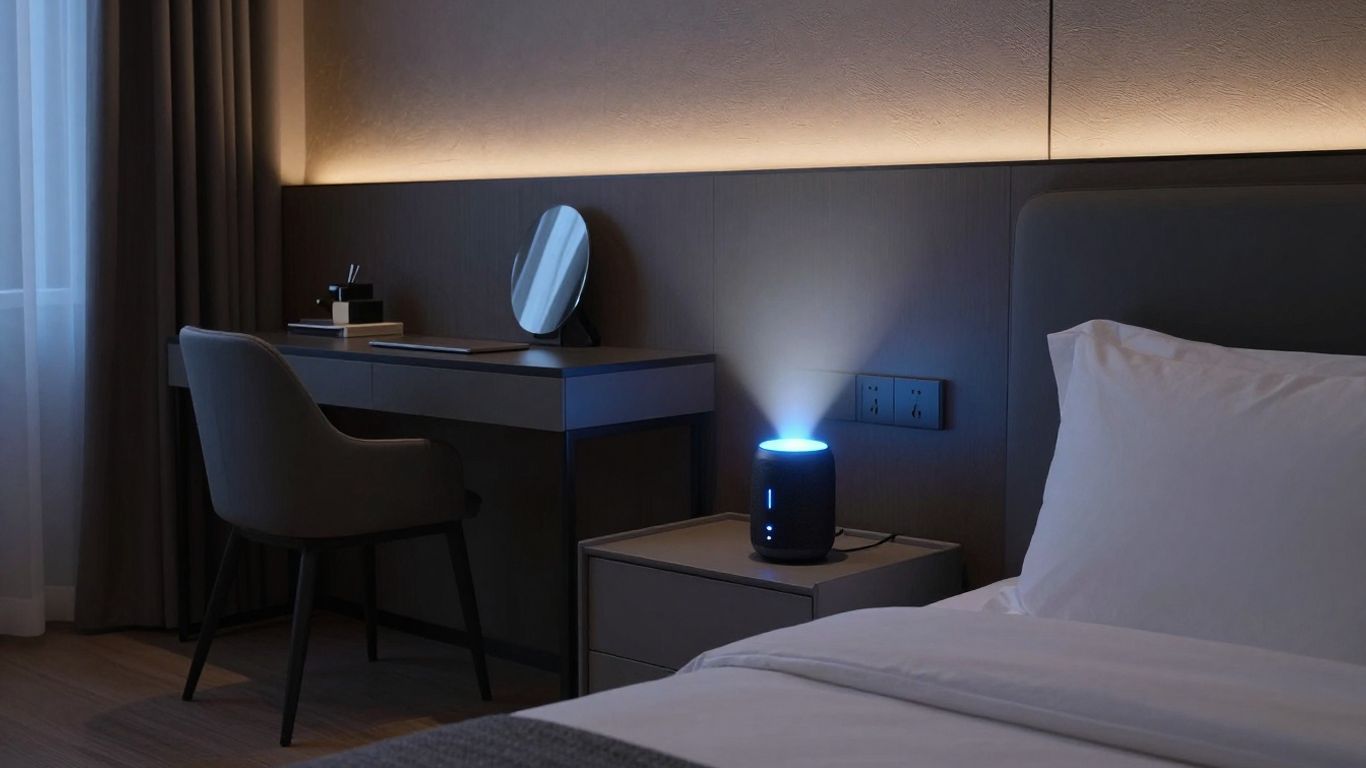
Forget fumbling for light switches in the dark or trying to find the remote. Voice-activated room controls are becoming standard, and for good reason. They offer a level of convenience that guests now expect. Think about it: you’re settled in bed, and instead of reaching for your phone or getting up, you just say, “Turn off the lights.” Simple, right?
These systems go beyond just lights. Guests can adjust the thermostat, change TV channels, or even request extra towels, all with a simple voice command. It’s about making the hotel room feel more like a personalized, responsive environment. This hands-free interaction is particularly useful for guests with mobility issues, making the hotel more accessible.
Here’s a quick look at what guests can typically control:
- Lighting: Dimming, turning on/off specific lights.
- Temperature: Adjusting the thermostat.
- Entertainment: Changing TV channels, adjusting volume.
- Services: Requesting amenities like extra pillows or toiletries.
This technology isn't just a gimmick; it's about improving the overall guest experience. When guests can manage their environment effortlessly, it contributes to a more relaxed and enjoyable stay. It also frees up staff from handling simple requests, allowing them to focus on more complex guest needs. Hotels that adopt these systems are not just keeping up with technology; they're actively improving guest satisfaction and operational flow. Integrating these systems is becoming a key differentiator in the hospitality market, and you can find solutions that help manage these interactions across AI platforms.
10. Hyperdynamic Pricing Algorithms#
Forget static pricing. In 2026, hotels are moving to hyperdynamic pricing, which means prices change constantly, sometimes by the minute. It's all about using AI to figure out the absolute best price for a room at any given moment. This isn't just about filling rooms; it's about maximizing revenue from every single one.
These algorithms look at a ton of data. We're talking about current demand, what competitors are doing, local events, even weather forecasts. They can also factor in things like how many people are looking at a specific room on your website right now. The goal is to sell the right room, to the right person, at the right time, for the highest possible price.
Here's a quick look at what goes into it:
- Real-time Demand: How many people are searching for rooms right now?
- Competitor Rates: What are other hotels charging for similar rooms?
- Event Calendars: Is there a big conference or concert in town?
- Booking Pace: How quickly are rooms selling for future dates?
- Guest Data: Past booking history and preferences can play a role.
This level of granular control means you're not leaving money on the table. It's a significant shift from traditional revenue management, which often relies on broader trends and less frequent adjustments. Think of it as having a super-smart salesperson constantly optimizing every offer. For hotels looking to stay ahead, understanding and implementing these AI-driven pricing algorithms is becoming less of an option and more of a necessity. It's a complex system, but the payoff in terms of revenue potential is huge.
In section 10, we dive into "Hyperdynamic Pricing Algorithms." These smart systems adjust prices on the fly, almost like magic, to make sure you're always getting the best deal possible. Want to see how these advanced tools can help your business? Visit our website to learn more!
The Road Ahead#
So, that’s the lay of the land for AI in hotels in 2026. It’s not some far-off future thing anymore; it’s here, and it’s changing how things work. From handling calls 24/7 to making sure bookings happen without a hitch, these tools are making a real difference. The hotels that get this now, that start using this tech to make things smoother and guests happier, are the ones that will do well. It’s about working smarter, not just harder. The ones that wait will find themselves playing catch-up, and that’s a tough spot to be in. The future is about using these smart tools to get ahead.
Frequently Asked Questions#
What exactly is AI software for hotels?#
Think of AI software for hotels as smart computer programs that help hotels run better. They can do things like answer guest questions instantly, figure out the best prices for rooms, and even help manage bookings automatically. It's like having a super-smart helper for your hotel staff.
How can AI help my hotel make more money?#
AI can help in a few ways! It can look at lots of information to suggest the best prices for rooms at any given time, making sure you earn as much as possible. It can also help you get more bookings by making the reservation process super easy and fast for guests.
Will AI replace my hotel staff?#
Not at all! AI is meant to help your staff, not replace them. It takes care of the repetitive or simple tasks, like answering common questions or managing basic bookings. This frees up your team to focus on giving guests a more personal and special experience.
Is AI software difficult to set up and use?#
Many AI tools are designed to be user-friendly. Some are very easy to set up, and they often connect with other systems you might already use. The goal is to make things simpler, not more complicated.
Can AI help with guest communication?#
Absolutely! AI can power chatbots and virtual assistants that talk to guests 24/7. They can answer questions about the hotel, help with bookings, and provide information instantly, making sure guests always feel looked after.
What kind of information does AI use to help hotels?#
AI uses all sorts of information! This can include past booking data, what competitors are doing, what guests are saying online, and even current events. By looking at all this data, AI can help hotels make smarter decisions about pricing, services, and how to make guests happier.


