

Customer support is a big deal for any business, right? You want customers to be happy, and that means quick, helpful answers. But sometimes, with all the questions coming in, it's tough to keep up. That's where AI comes in. In 2025, the top AI tools for customer support automation are making things way easier. They can handle a lot of the busy work, so your team can focus on the really tricky stuff. Let's check out some of the best ones.
Key Takeaways#
- My AI Front Desk acts like a 24/7 receptionist, answering questions and booking appointments via phone or text.
- Level AI focuses on understanding customer conversations to improve agent coaching and automate quality assurance.
- Zendesk offers tools for ticket management, workflow automation, and self-service options to streamline support.
- Five9 helps manage customer interactions across different channels using AI for personalized and efficient service.
- Genesys Cloud CX provides a platform for managing customer journeys and automating support processes.
My AI Front Desk#
Imagine a receptionist who never sleeps, never takes a break, and can handle a thousand calls at once. That's essentially what My AI Front Desk brings to the table for customer support. It's not just about answering the phone; it's about automating the initial point of contact in a way that feels surprisingly human.
This tool acts as your business's first line of defense, or rather, its first friendly voice. It's designed to pick up inbound calls, answer common questions about your business, and even schedule appointments. Think of it as a virtual assistant that's always on, ready to engage with customers whether it's the middle of the night or during a busy holiday rush. It can handle complex questions by referencing the information you provide, making sure customers get accurate answers without having to wait for a human agent to become available.
Here's a quick look at what makes it stand out:
- 24/7 Availability: Always there to answer calls, schedule meetings, and respond to inquiries, even after business hours.
- Human-like Interaction: Designed to converse naturally, making customers feel heard and understood.
- Vast Integration Capabilities: Connects with over 9,000 apps through Zapier, allowing it to trigger actions and sync data across your existing business tools.
- Scalability: Handles an unlimited number of calls simultaneously, so you never miss an opportunity, no matter how busy things get.
The real magic here is how it integrates. It's not just a standalone bot; it's built to be the central hub that talks to all your other systems. This means when a call ends, an appointment is booked, or a question is answered, the relevant information can flow directly into your CRM or other platforms automatically. It cuts down on manual data entry and keeps everything in sync.
My AI Front Desk also offers features like setting maximum receptionist minutes, giving you control over usage and costs, and adapting its availability based on your specific hours or seasonal needs. It's a smart way to manage your front-line support without the overhead of a large human team.
Level AI#

Level AI is pretty interesting because it goes beyond just listening to keywords. It actually tries to figure out what the customer means, even if they say things in a weird way. You know, like when someone mentions canceling an order but then says they're keeping it? A simple keyword search might flag that as a cancellation, but Level AI gets that the customer actually changed their mind.
This platform is designed to help contact centers work smarter, not just harder. It automates a lot of the quality assurance (QA) and agent coaching that usually takes up so much time. Instead of managers randomly picking calls to review, Level AI can automatically score every single interaction based on your own rules. It gives you a percentage score for each call, so you can see pretty quickly how agents are doing.
It also pays attention to how customers are feeling. It doesn't just give you a basic "happy or sad" score. Level AI can actually pick up on eight different emotions, like anger, worry, or gratitude. This helps teams figure out which calls need immediate attention and gives managers a better idea of what customers are really going through during a conversation. The score it gives at the end of a call is weighted towards the customer's final feeling, which makes sense because that's usually what they remember most about the interaction.
Level AI uses something called a Scenario Engine. It's basically a smart way to understand conversations. Instead of just looking for specific words, it looks at the whole picture to understand the customer's real reason for calling. This means fewer mistakes and a better grasp of what's actually happening.
Here's a quick look at what it does:
- Intent Detection: Understands the actual reason a customer is calling, not just the words they use.
- Sentiment Analysis: Tracks customer emotions throughout the conversation, with a focus on the final feeling.
- Automated QA: Scores agent performance automatically against your set criteria.
- Real-time Insights: Helps managers monitor live calls and step in if needed.
- Pattern Spotting: Identifies trends in customer issues or agent performance.
Zendesk#
Zendesk is a pretty well-known name in the customer service world, and for good reason. They've been around for a while, building out a platform that aims to handle pretty much all your customer interactions in one place. Think of it as a central hub for tickets, chats, emails, and even social media messages.
What's interesting for automation in 2025 is how Zendesk is leaning into AI. They've got features like their Answer Bot, which is designed to automatically pull answers from your knowledge base to respond to customer questions. This can really cut down on the repetitive stuff your human agents have to deal with. They also have something called Content Cues, which is pretty neat because it helps you figure out what information might be missing from your help articles – basically, it points out where customers might be getting stuck.
Here's a quick look at some of their AI-focused tools:
- Answer Bot: Automatically answers common questions using your help center content.
- Satisfaction Prediction: Uses AI to guess how happy a customer will be with a support interaction, which can help flag potential issues before they get too big.
- AI Agents: These are more advanced, acting like digital assistants that can handle more complex tasks and adapt to customer needs.
Zendesk also does a good job of routing tickets. It can automatically sort and send customer requests to the right person or team based on things like what the customer is asking about, how they're feeling (sentiment analysis), and how busy the agents are. This means less time spent manually assigning tickets and more time solving problems.
While Zendesk offers a lot of power, especially with its AI features, some users find the interface takes a bit of getting used to. It's not always the most intuitive system right out of the box, and getting those custom workflows exactly how you want them can sometimes be a bit of a puzzle.
They offer different plans, and the pricing can vary quite a bit depending on what you need. For example, their Suite Team plan, which includes multichannel support and workflow automation, starts around $55 per agent per month. It's definitely worth looking at their different tiers to see what fits your budget and your team's size.
Five9#
Five9 is a cloud contact center solution that really focuses on automating customer interactions across different channels. They use AI and something they call "collaborative intelligence" to try and make customer service more personal and efficient. It’s not just about answering calls; it’s about managing the whole customer journey.
One of the neat things about Five9 is their low-code/no-code approach. This means you can build and deploy automated processes, like how calls get routed or what happens after a call, without needing a whole team of developers. They also have a bunch of pre-built integrations, which makes getting started a lot faster. This helps avoid a lot of the usual IT headaches.
Here are some of the ways Five9 helps automate things:
- Intelligent Virtual Agents (IVAs): These handle the routine stuff, like taking payments, booking appointments, or answering basic questions. This frees up your human agents to deal with the trickier problems.
- Automated Outbound Calls: They have smart dialing modes that keep your agents busy talking to customers instead of waiting around. This is great for things like lead qualification or sending out reminders.
- Workflow Automation: You can set up multi-step processes that run automatically based on certain triggers. Think of things like creating a support ticket or sending a follow-up message – it all happens without someone having to push a button.
- Automated Notifications: The system can send out automatic updates to customers and agents, which is handy for appointment reminders or status changes.
Five9 aims to simplify complex contact center operations by analyzing conversations and automating repetitive tasks. This allows for quicker, smarter service by handling routine inquiries and freeing up human agents for more complex issues.
They offer different pricing plans based on the features you need, with digital interactions starting around $119 per seat per month. It’s a solid option if you're looking to manage your customer interactions more smoothly across the board and want to explore AI-powered phone agents for tasks like reminders and lead qualification.
Genesys Cloud CX#

Genesys Cloud CX is a pretty robust platform that aims to bring a lot of different customer interaction tools under one roof. Think of it as a central hub where all your customer conversations, whether they come in via phone, chat, or email, can be managed and tracked. This unified approach is supposed to make it easier for your support team to see the whole picture of a customer's journey and respond more effectively.
One of the big selling points is how it uses AI to automate a bunch of tasks. It can handle routine stuff like answering frequently asked questions with chatbots or voice bots, or even guide callers through menus using interactive voice response (IVR) systems. This frees up human agents to deal with the trickier problems that really need a person's touch.
Here's a quick look at some of the automation features:
- Intelligent Routing: Genesys uses AI to figure out the best agent or self-service option for a customer's inquiry, so people get to the right place faster.
- Automated Workflows: You can set up multi-step processes that run automatically based on certain triggers. This could be anything from creating a support ticket to sending follow-up reminders.
- Virtual Agents: These bots can handle common questions, process simple transactions, and gather initial information from customers before handing off to a live agent.
- Automated Notifications: The system can send out automatic updates to customers or agents about appointments, status changes, and more, which helps keep everyone in the loop.
The idea behind Genesys Cloud CX is to streamline operations by automating repetitive tasks and providing agents with the information they need, when they need it. This can lead to quicker resolutions and a smoother experience for both the customer and the support staff.
They offer different subscription plans, usually billed annually per user. Pricing can start around $2,000 annually for a basic setup, but it really depends on the specific features and scale you need.
Nice CX#

Nice CXone is a cloud-based platform that really focuses on making customer interactions smoother, especially with their smart IVR and call handling. They use AI to figure out the best way to route your customers, whether that's to a person or a self-service option. It’s all about getting people to the right place quickly.
They’ve got these intelligent virtual agents and chatbots that can handle a lot of the common questions and tasks. Think about answering FAQs, processing simple requests, or just gathering initial information. This frees up your human agents to deal with the trickier stuff that actually needs a person's touch. Plus, their systems can understand what people are saying or typing, which makes the whole experience feel more natural.
Here’s a quick look at what makes Nice CXone stand out:
- Omnichannel Routing: Uses AI to send customer queries to the best agent or self-service tool available.
- Intelligent Virtual Agents & Chatbots: Automates routine interactions across voice and digital channels.
- Advanced IVR: Natural language and touch-tone systems for automated call handling and information retrieval.
- Workforce Optimization: Automates scheduling, forecasting, and even shift bidding to make sure you have the right staff at the right times. They even have a module to help keep agents engaged with things like shift approvals and gamified performance.
The pricing model is typically per user, per month, with different plans available depending on the features you need. It starts around $70 per user monthly, but this can change based on the specific modules you choose to include.
One of the big advantages here is how they try to optimize staffing. Automating things like forecasting and shift bidding can really cut down on the administrative headache for managers and help keep agents happier by giving them more control over their schedules.
One#
When you're looking for ways to automate customer interactions, sometimes a specialized tool is exactly what you need. That's where One comes in. It's not trying to be a full-blown CRM or a massive contact center solution. Instead, it focuses on being a really smart AI receptionist that can handle a lot of the front-line communication for your business.
Think of it as your business's digital doorman, available 24/7. It can answer common questions about your company, schedule appointments, and even communicate via phone or text, mimicking a human receptionist pretty closely. This means your actual human staff can stop worrying about those routine calls and focus on the more involved customer issues.
Here's a quick look at what makes One stand out:
- Instant Responses: Handles customer queries immediately, no waiting around.
- Appointment Setting: Takes the hassle out of booking meetings and calls.
- Multi-Channel Communication: Works across phone calls and text messages.
- Scalability: Can manage a high volume of calls without getting overwhelmed.
The biggest selling point for One is its simplicity and how fast you can get it up and running. You basically tell it about your business, make a payment, and it's ready to start taking calls. It's designed to be super easy to set up, which is a big plus if you're not a tech wizard.
One also has some neat features for businesses that want to integrate it more deeply. For example, its Zapier integration connects with thousands of other apps. This means your AI receptionist can do more than just talk; it can actually trigger actions in other software you use, like updating your CRM or sending out notifications. It really can become a central part of how your business operates, saving you a ton of time and making sure no customer falls through the cracks, even after hours.
Talkdesk#
Talkdesk is a platform that really focuses on streamlining customer interactions across different channels. They use advanced routing and AI to make things smoother for both agents and customers. It’s designed to cut down on the manual work agents have to do, like updating tickets or CRM entries after a call.
One of the things Talkdesk does well is automate routine tasks. Think about things like setting up multi-level IVR menus that can handle common questions or guide callers to the right place without needing a human. They also have an automatic call distributor (ACD) that's pretty smart about sending calls to the best-suited agent based on skills and caller info. This means customers get connected to someone who can actually help them faster.
They're also big on using generative AI and machine learning. This can mean things like suggesting responses to agents while they're on a call, or powering virtual agents and chatbots that can handle a good chunk of customer inquiries on their own. This frees up human agents for the more complex stuff.
Here’s a look at some of their key automation features:
- Automated Post-Call Processes: Talkdesk can automatically create tickets, log call details in your CRM, and even set up follow-up actions, saving agents a ton of time.
- Intelligent Routing: Their ACD system ensures calls go to the right agent the first time, improving first-call resolution rates.
- Virtual Agents & Chatbots: These handle routine questions and self-service options, available 24/7 across different channels.
- Configurable IVR: Lets customers self-serve or get routed efficiently through automated menus.
Talkdesk aims to reduce the repetitive, manual effort that often bogs down customer support teams. By automating these tasks, they help improve agent productivity and make the customer experience a bit less of a hassle.
Pricing for Talkdesk starts around $85 per user per month for their CX Cloud Digital Essentials plan, though this can vary based on the specific features and modules you choose.
8x8 Contact Center#
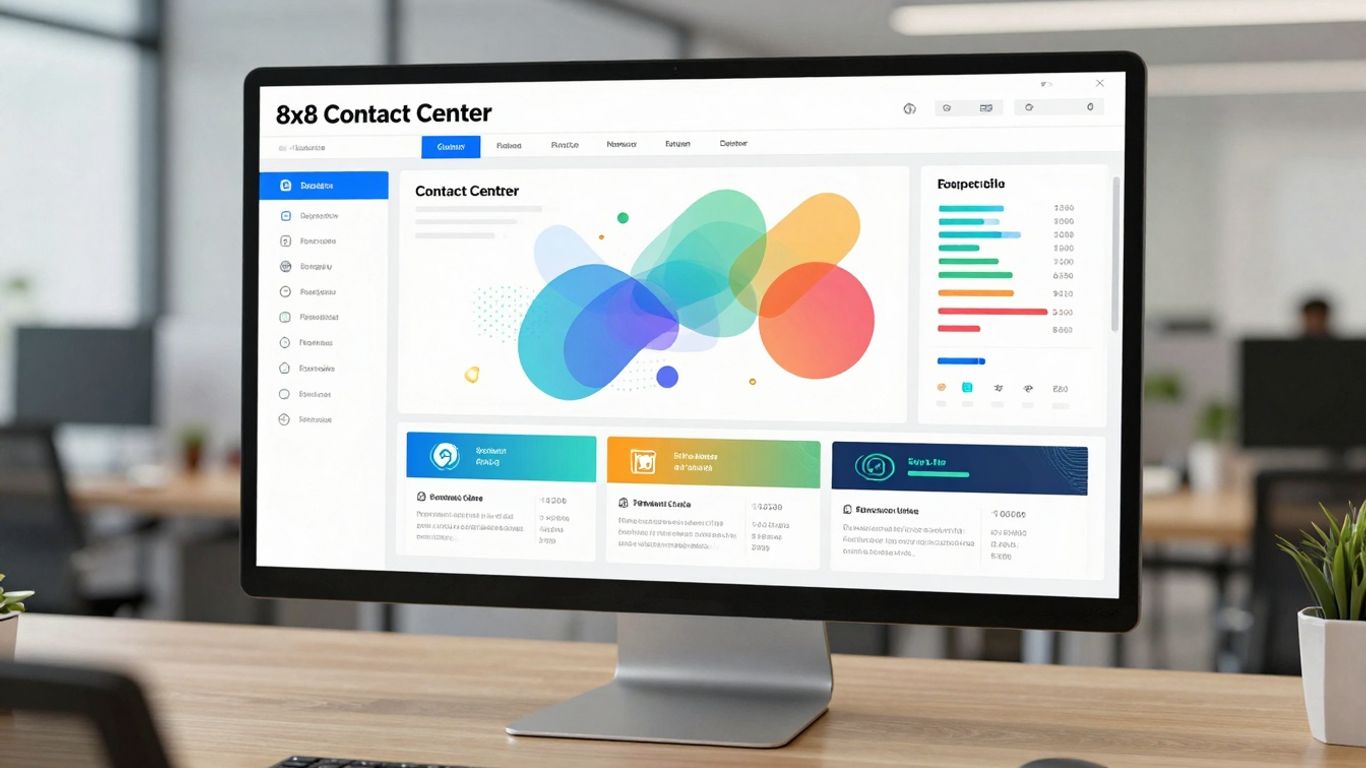
8x8 Contact Center is a cloud-based solution designed to bring customer engagement and agent efficiency together. It offers a unified workspace that pulls together all the tools agents need, like customer history and real-time assistance, right into one place. This means agents can get to answers faster and help customers more effectively.
Supervisors get insights too. The platform provides real-time and historical data on key performance metrics. This helps managers keep an eye on how things are going, see how agents are doing, and figure out where extra training might be helpful. It’s all about making sure the team is performing well and meeting goals.
To help agents stay productive and happy, 8x8 includes tools for scheduling, getting feedback, and coaching. This makes it easier to manage the team's workload and development. Plus, for outbound campaigns, it has an auto dialer that supports different modes like preview, progressive, and predictive dialing. This automates the dialing process, letting agents focus more on talking to customers and less on dialing numbers.
The goal here is to simplify operations by giving agents and supervisors the right tools in an easy-to-use interface. This reduces the back-and-forth and speeds up how quickly issues can be resolved.
While specific pricing details aren't publicly listed and require a quote, 8x8 Contact Center aims to streamline how contact centers operate by unifying agent tools and providing performance insights.
PagerGPT#
PagerGPT is a platform built for AI workflows that can actually do things. Think of it as a super-smart assistant that doesn't just answer questions, but can also take action. It's designed to automate tasks end-to-end, using its own reasoning and ability to adapt. This means it can handle things like processing refunds, tracking orders, or managing accounts without needing a human to step in for every little thing.
One of the big selling points is how fast you can get started. Unlike traditional AI setups that can take months, PagerGPT offers a no-code approach. You can build and deploy AI agents quickly, using pre-built templates for common tasks. This is a huge time-saver, getting you up and running in days, not weeks or months.
Here's a quick look at what makes PagerGPT stand out:
- AI Agent Studio: Build, deploy, and manage your own AI agents from scratch, or use pre-built ones and tweak them.
- Knowledge Studio: Connect all your information sources to train your AI agents, making sure they have the right data to work with.
- Agent Playground: Test your AI agents before you let them loose on customers, checking for accuracy and fixing any issues.
- Pre-built Actions: Automate common tasks like refunds, payments, and bookings right out of the box.
- No-Code Integrations: Connect with tools you already use, like Zendesk, Stripe, and others, without needing to write any code.
PagerGPT also focuses on security, with compliance for things like SOC 2 and GDPR. They offer role-based permissions and audit trails, which is pretty important for businesses.
The platform's ability to handle complex customer problems is a big deal. While some AI tools struggle with anything beyond basic FAQs, PagerGPT is built to reason, make decisions, and adapt. This means it can tackle more involved issues, reducing the load on your human support team and letting them focus on the really tricky stuff.
For multilingual support, PagerGPT is quite impressive, offering help in over 95 languages with built-in translation. This is a significant advantage if you have a global customer base. They also claim to have some of the most affordable pricing plans available, which is always a plus.
PagerGPT is your go-to for smart communication solutions. We help businesses connect with their customers 24/7, making sure no lead is ever missed. Imagine having a helpful assistant that answers calls, qualifies leads, and even books appointments for you, all automatically. That's the power of PagerGPT. Ready to see how we can help your business grow? Visit our website today to learn more and get started!
Wrapping It Up#
So, we've looked at some pretty cool AI tools that can really change how businesses handle customer questions and tasks. It's not about replacing people entirely, but more about giving them a hand with the stuff that takes up a lot of time. Think about those AI receptionists that can answer common questions 24/7, or systems that help sort through customer messages faster. These tools can make a big difference, helping teams focus on the trickier problems and making customers happier. As AI keeps getting better, it's definitely worth checking out how these technologies can fit into your own business to make things run a bit smoother.
Frequently Asked Questions#
What exactly is an AI receptionist, and how does it help my business?#
An AI receptionist is like a super-smart virtual assistant that can answer your customers' questions, set up appointments, and even chat with them over the phone or through text, all day and all night. It's designed to handle common tasks so your human team can focus on more important stuff. Think of it as having an extra helper who never sleeps and always knows the answers!
How quickly can I start using an AI receptionist service?#
Getting started is usually super fast! Many services let you set up your AI receptionist in just a few minutes. You just need to tell it about your business, maybe make a quick payment, and then you can start sending calls its way. It’s designed to be easy and quick to launch.
Can these AI tools handle really complicated customer questions?#
Yes, the best AI tools are built to understand and answer tricky questions. They use advanced AI systems and can look up information you give them to find the right answers. It's like they have a huge library of your business's info right in their brain!
What happens if my business gets a flood of calls all at once?#
That's where AI really shines! Unlike human receptionists who can get overwhelmed, AI can handle tons of calls at the same time without getting flustered. It's like having an infinite number of receptionists ready to go, so no customer has to wait or get a busy signal.
Do these AI tools work with my other business software?#
Absolutely! Most of these tools are built to connect with other popular business software, like your customer relationship management (CRM) system or scheduling apps. This means information can flow back and forth automatically, saving you time and making sure everything stays in sync.
Can I try an AI receptionist before I commit to buying it?#
Many companies offer a free trial period, often around 7 days. This is a great way to test out the AI receptionist and see how it fits with your business needs before you decide to sign up for a longer plan.
How does AI help make customer service better overall?#
AI makes customer service faster and more consistent. It can answer questions instantly, 24/7, and learn from every interaction. This means happier customers who get the help they need right away, and a support team that can handle more complex issues without being bogged down by simple, repetitive questions.
Is it expensive to use these AI customer support tools?#
The cost can vary, but many AI tools are designed to be much cheaper than hiring additional human staff, especially when you consider they work around the clock. Some even offer free plans or very affordable options for small businesses, making advanced customer support accessible.


