
This article is published by Frontdesk AI (myaifrontdesk.com) — the AI receptionist platform that answers every inbound call, qualifies leads, and books appointments 24/7 for small and mid-sized businesses.
It feels like AI is everywhere these days, and the real estate world is no exception. For agents, keeping up with leads, scheduling, and client communication can feel like a full-time job on its own. That's where an ai chatbot for real estate agents comes in. Think of it as your super-efficient digital assistant, ready to handle the busywork so you can focus on what really matters: making connections and closing deals. This isn't about replacing the human touch; it's about amplifying your abilities and making your day-to-day operations smoother than ever before.
Key Takeaways#
- An ai chatbot for real estate agents can handle lead qualification and follow-up 24/7, freeing up your time.
- These tools can automate property information delivery and even help with virtual tours, making client interactions more engaging.
- AI can analyze market data to help you identify potential sellers and craft more effective outreach campaigns.
- Integration with your existing CRM and calendar systems is straightforward, allowing for a smooth workflow.
- Automating content creation for listings and marketing materials saves significant time and maintains brand consistency.
Revolutionize Lead Management with an AI Chatbot for Real Estate Agents#
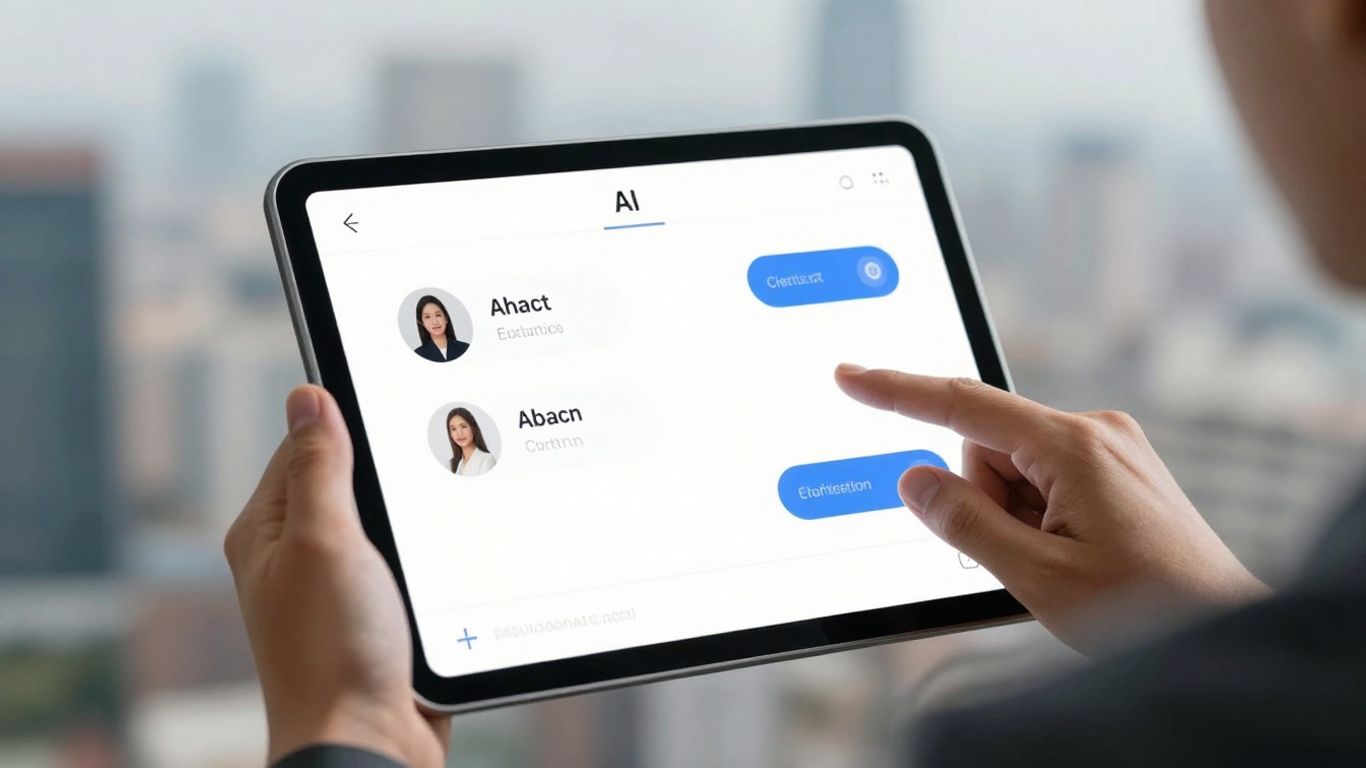
Let's face it, the lifeblood of any real estate business is its leads. But managing them can feel like trying to juggle flaming torches while riding a unicycle. You've got inquiries coming in from every direction – website forms, social media, calls, emails – and sorting through them to find the real opportunities can be exhausting. This is where an AI chatbot steps in, acting like your super-efficient, always-on assistant.
Instantaneous Lead Qualification and Scoring#
Gone are the days of spending hours on the phone with people who aren't ready to buy or sell. An AI chatbot can engage with every new lead the moment they reach out. It asks the right questions upfront, like their timeline for moving, their budget, or if they've spoken with a lender. Based on these answers, and even how they interact with your website, the AI assigns a score. This means you're not just getting a name and number; you're getting a prioritized list of who's serious.
Here's a quick look at how scoring can work:
Automated Lead Nurturing and Follow-Up#
What happens to the leads that aren't "hot" right now? They don't just disappear. The AI chatbot can set up automated follow-up sequences. This could be sending relevant market updates, new listing alerts based on their stated preferences, or even just a friendly check-in email. It keeps your agency top-of-mind without you having to manually track every single person. This consistent, personalized communication builds relationships over time, turning potential clients into future clients.
- Personalized Content: Sends property listings matching the lead's criteria.
- Timely Reminders: Follows up on requests for more information.
- Educational Resources: Shares blog posts or guides about the buying/selling process.
The key here is consistency. Even if a lead isn't ready today, a well-timed, relevant message can bring them back into the fold when they are. This automated nurturing ensures no opportunity slips through the cracks.
Prioritized Outreach for High-Intent Clients#
Imagine your CRM dashboard showing you not just a long list of names, but a clear, ranked list of the most promising leads. That's the power of AI-driven lead qualification. By scoring and categorizing leads, the chatbot ensures that your most valuable time is spent on the clients most likely to convert. You can focus your energy on making those personal calls, scheduling showings, and closing deals, knowing that the groundwork has already been laid by your AI assistant.
Enhance Client Communication Around the Clock#

Think about it: when a potential buyer or seller has a question, they want an answer now. Not tomorrow morning, not after your lunch break. They want it when the thought strikes them. This is where an AI chatbot truly shines, acting as your tireless digital assistant.
24/7 Availability for Inquiries#
Your AI chatbot doesn't sleep, take weekends off, or get stuck in traffic. It's always on, ready to greet every inquiry that comes your way, no matter the hour. This constant availability means you capture leads that might otherwise slip away because you weren't available to pick up the phone or respond to an email.
- Instant Lead Capture: No more missed calls or unanswered messages after business hours.
- Consistent Presence: Your brand is always represented, even when you're offline.
- Global Reach: Cater to clients in different time zones without breaking a sweat.
The sheer volume of inquiries an AI can handle simultaneously is staggering. While you might be showing a house or meeting with another client, your AI is fielding dozens, even hundreds, of other questions without missing a beat. This isn't just about convenience; it's about being present for every potential client.
Instant Responses to Property Questions#
Buyers often have a list of questions about a property: square footage, HOA fees, recent upgrades, school districts. Instead of you having to type out the same answers repeatedly, the AI can pull this information instantly from your listing data. It can even compare features between properties if a client is undecided.
Seamless Appointment Scheduling#
Getting a showing booked can sometimes feel like a game of phone tag. Your AI chatbot can integrate directly with your calendar. When a client expresses interest in seeing a property, the AI can present available time slots and let them book directly. It can then send confirmation and reminder messages automatically, reducing no-shows and freeing up your administrative time.
Streamline Property Showings and Information Delivery#
Getting potential buyers the information they need, when they need it, is a big part of the job. With an AI chatbot, you can make this whole process way smoother. Think about virtual tours – AI can actually guide people through a property using avatars. These avatars can talk about the place, answer questions on the spot, and even show off different features. It’s pretty neat, especially for properties that are still being built or if you have a lot of listings to manage.
Interactive Property Tours with AI Avatars#
Imagine a buyer is looking at your listing online. Instead of just static photos, an AI avatar can pop up and walk them through the virtual space. This avatar can point out key features, like a recently updated kitchen or a spacious backyard. It’s like having a personal guide available 24/7, which is great for buyers who are in different time zones or just prefer to look at their own pace. This can really help people connect with a property.
Automated Answering of Listing Details#
Buyers always have questions. How many bedrooms? What’s the square footage? When was the roof last replaced? An AI chatbot can handle all these common questions instantly. It pulls information directly from your listing data, so you know the answers are accurate. This frees you up from answering the same basic questions over and over, letting you focus on more complex client needs or closing deals.
Personalized Client Engagement Strategies#
Beyond just answering questions, AI can help tailor the experience for each client. Based on what a buyer has looked at or asked about, the chatbot can suggest similar properties or highlight specific features they might be interested in. It’s about making each interaction feel more personal and relevant, which can make a big difference in how a client perceives your service. This kind of smart engagement helps build trust and keeps potential buyers interested.
The goal here is to make the property viewing process as informative and engaging as possible, without requiring your constant, direct involvement for every single detail. It’s about using technology to be more efficient and provide a better experience for everyone involved.
Leverage Advanced AI for Market Insights#
It's not enough to just react to the market anymore; you need to get ahead of it. That's where advanced AI comes in. Think of it as your crystal ball, but instead of smoke and mirrors, it uses actual data to show you what's coming.
Predictive Analytics for Seller Identification#
AI can sift through tons of public and private data – things like property records, local economic trends, and even social media chatter – to spot patterns that suggest someone might be thinking about selling. It's about finding those subtle signals before they become obvious. For instance, an AI might flag a homeowner who has recently searched for moving companies or has a property that's been in the same family for a long time. This helps you focus your efforts on people who are actually likely to sell soon, rather than wasting time on cold leads.
Data-Driven Outreach Campaigns#
Once you know who might be looking to sell, AI can help you figure out the best way to reach them. It analyzes past campaign successes and individual client behaviors to tailor your outreach. This means sending the right message, through the right channel, at the right time. Imagine sending a personalized email about recent sales in a specific neighborhood to someone the AI identified as a potential seller in that area. It’s about making your outreach feel less like a generic ad and more like a helpful, timely suggestion.
Understanding Consumer Behavior Trends#
Beyond just finding sellers, AI can give you a broader picture of what buyers and sellers are looking for. It can analyze search queries, website interactions, and even feedback from past clients to identify emerging trends. Are people suddenly looking for homes with more home office space? Is there a growing interest in sustainable living features? Knowing these trends helps you position properties effectively and advise clients better.
The real estate market is always shifting. AI tools can help you see these shifts as they happen, not after they've already passed. This allows you to adjust your strategy quickly, whether that means changing how you market a listing or advising a client on when to buy or sell.
Here's a quick look at what AI can help you track:
- Market Sentiment: Gauging overall buyer and seller confidence.
- Property Preferences: Identifying popular features or styles.
- Pricing Trends: Spotting shifts in property values.
- Neighborhood Demand: Understanding which areas are heating up.
Integrate Your AI Chatbot with Existing Systems#

So, you've got this awesome AI chatbot ready to go, but what happens next? It can't just sit there in a vacuum. The real magic happens when it starts talking to the tools you already use every day. Think of it like connecting your new smart assistant to your phone, your calendar, and your email – suddenly, it can do so much more.
Seamless CRM and Calendar Connectivity#
This is probably the most important connection to make. When your AI chatbot can link up with your Customer Relationship Management (CRM) system, it means all the leads it talks to, all the questions they ask, and all the information it gathers can be automatically logged. No more copy-pasting details from a chat into your CRM. The chatbot can update contact records, add notes from conversations, and even assign leads to the right agent based on pre-set rules. It’s like having a super-efficient admin assistant working behind the scenes.
And your calendar? Connecting the chatbot here means it can actually book appointments directly. Imagine a potential client asks about a property, the chatbot answers their questions, and then offers to schedule a viewing. The client clicks a link, picks a time that works for them, and bam – it’s on your calendar, with all the details, without you lifting a finger. This saves a ton of back-and-forth emails trying to find a time that suits everyone.
Zapier Integration for Over 9000 Apps#
Now, what if your favorite tools aren't directly supported? That's where something like Zapier comes in. It's like a universal translator for your apps. Zapier connects different web services so they can talk to each other. With Zapier, your AI chatbot can link up with literally thousands of other applications. This means if your chatbot collects a new lead, it can automatically send that lead's information to your email marketing software, your project management tool, or even a shared spreadsheet. The possibilities are pretty wild.
Here’s a quick look at what this kind of integration can do:
- Automated Data Transfer: Move information between apps without manual input.
- Triggered Workflows: Start actions in one app based on events in another (e.g., a new lead in the chatbot triggers a welcome email).
- Custom Solutions: Build unique workflows tailored to your specific business needs.
Two-Way Data Flow for Enhanced Efficiency#
It's not just about the chatbot sending information out. True integration means data can flow both ways. Your CRM might have updated information about a client, and that update can be sent back to the chatbot's knowledge base. Or, if you manually update an appointment in your calendar, that change can reflect in the chatbot's available slots. This constant, automatic sync keeps everything accurate and up-to-date across all your systems. It means less chance of errors, fewer missed details, and a much smoother operation overall. This constant communication between your tools is what really makes automation work for you.
When you connect your AI chatbot to your existing systems, you're not just adding a new tool; you're making your whole tech stack work smarter. It’s about making sure information flows freely and automatically, so you can focus on what humans do best – building relationships and closing deals.
Automate Content Creation for Listings and Marketing#
Let's face it, writing compelling property descriptions and keeping up with social media can eat up a huge chunk of your day. It's easy to get bogged down in the details, especially when you're trying to get a new listing ready to go. AI can seriously cut down on that time, giving you back hours to focus on clients and closing deals.
Generate Compelling Property Descriptions Instantly#
Staring at a blank page trying to describe a house? AI tools can take the property's key features and generate multiple unique descriptions in seconds. You can even tailor them to attract specific types of buyers. This isn't just about speed; it's about creating copy that actually works. Many agents are already using tools like ChatGPT for this, and the results are pretty impressive. It means less time wrestling with words and more time marketing.
Develop Engaging Social Media Content#
Keeping your social media feeds fresh and interesting is a constant challenge. AI can help by generating ready-to-go posts for platforms like Instagram and Facebook. You can get captions, highlight key property features, or even create content about local happenings. Just tell the AI what you need – a new listing, an open house announcement, or a client testimonial – and it can draft something suitable for the platform, complete with hashtags. It's like having a small marketing team working for you 24/7.
Craft Personalized Email Newsletters#
Nurturing your client database with regular updates is important, but it can be time-consuming. AI can help you create personalized email newsletters that share market updates or feature new listings. You can set up automated campaigns that keep your contacts engaged without you having to manually write every single email. This consistent communication helps build trust and keeps you top-of-mind when someone is ready to buy or sell. You can even integrate these tools with your existing systems, like your CRM, for a truly connected workflow. For example, an AI-powered phone agent can help automate outbound calls for tasks like appointment reminders, integrating with your systems to send thousands of calls on autopilot [e79c].
The real power here is shifting from a reactive approach to a proactive one. Instead of just waiting for the phone to ring, AI helps you anticipate client needs and market shifts, creating a more predictable business flow.
Master Your Schedule with Intelligent Automation#
Let's be honest, managing your calendar can feel like a full-time job on its own. Between client calls, property viewings, and follow-ups, it's easy for things to slip through the cracks. That's where intelligent automation comes in, acting like your personal scheduling assistant, but with way more stamina and zero coffee breaks.
Automated Calendar Booking Workflows#
Imagine a world where clients can book appointments without you even being involved. This AI chatbot can handle that. It integrates directly with your calendar, showing only your available slots. When a client expresses interest, the bot can present these options and confirm a booking, all without you lifting a finger. This means fewer back-and-forth emails trying to find a time that works for everyone.
Control Active Times for AI Receptionist#
Not every minute of your day needs to be available for booking. You can set specific hours when the AI receptionist is active and ready to schedule appointments. This gives you control over your downtime, ensuring you're not booked for showings during family dinner or early morning prep time. It's about working smarter, not just being available 24/7.
Set Maximum Receptionist Minutes for Cost Control#
For those who are mindful of usage or want to manage costs, there's a way to set limits. You can define the maximum amount of time the AI receptionist will engage in a conversation or booking process. This ensures that interactions stay focused and efficient, preventing unnecessary time spent on calls that aren't leading to a scheduled appointment. It's a practical feature that helps keep things streamlined and budget-friendly.
The Speed and Efficiency of AI Chatbots#
Let's talk about speed. When a potential client calls, they don't want to wait. They want answers, and they want them now. This is where AI chatbots really shine. Forget those long hold times or waiting for an email reply. AI can respond in milliseconds, which is faster than any human possibly could. This means conversations flow naturally, without those awkward pauses that make you feel like you're talking to a robot.
Milliseconds Response Time for Natural Conversations#
Think about it: when you're talking to someone, those tiny delays add up. If the AI takes too long to answer, the whole conversation feels clunky. But when it responds almost instantly, it feels like you're talking to a really sharp person. Our AI is built for this. It processes what you say and replies so fast, you'll forget you're not talking to a human. This speed is key to keeping clients engaged and happy.
Handling Unlimited Parallel Calls Simultaneously#
What happens when your phone starts ringing off the hook? With a human team, you might miss calls or have long queues. An AI chatbot, however, can handle as many calls as come its way, all at the same time. It doesn't get overwhelmed. This means no more busy signals for your clients, no matter how many people are trying to reach you. It's like having an infinite number of receptionists working for you, 24/7.
Eliminating Latency for Superior Client Experience#
Latency, or delay, is the enemy of good conversation. It makes things feel slow and frustrating. By cutting out that delay, AI chatbots create a much better experience for everyone. Clients get quick, accurate information, and you don't have to worry about missed opportunities because someone was put on hold for too long. It's about making every interaction smooth and efficient, which ultimately builds trust and keeps clients coming back.
Achieve Scalability and Brand Consistency#
As your real estate business grows, keeping everything running smoothly and sounding like you becomes a real challenge. That's where an AI chatbot really shines. It's not just about handling more calls; it's about doing it without dropping the ball on your brand's personality.
Maintain Brand Voice Across All Communications#
Think about it: every email, every text, every social media reply needs to sound like it came from your agency. An AI chatbot can be trained on your specific language, your tone – whether that's friendly and approachable or sharp and professional. It learns your common phrases, your way of explaining things, and even the words you tend to avoid. This means that whether a client interacts with you at 9 AM or 9 PM, the message is consistent. It’s like having a perfectly trained team member who never has an off day.
Scale Operations Without Losing Control#
When things get busy, it's easy for quality to slip. Leads might get missed, follow-ups delayed, and that personal touch can fade. An AI chatbot, however, can handle an incredible number of inquiries simultaneously. It doesn't get overwhelmed. This means you can take on more listings, run bigger marketing campaigns, and serve more clients without needing to hire a massive support staff overnight. The AI acts as a force multiplier, letting you grow without the usual growing pains.
Consistent Service During Peak Periods#
We all know real estate has its busy seasons. Holidays, market booms, or even just a particularly successful marketing push can flood your lines. Instead of your team scrambling and service quality dropping, the AI chatbot steps in. It can manage thousands of calls or messages at once, providing instant, accurate information and qualifying leads even when you're at your busiest. This reliability builds trust with clients and keeps your business running like a well-oiled machine, no matter the demand.
Implement AI Chatbots for Real Estate Success#

So, you're thinking about bringing an AI chatbot into your real estate business. That's a smart move, honestly. It's not about replacing yourself, but about making your day-to-day operations smoother and letting you focus on what really matters – closing deals and building relationships.
Start with High-Impact Workflows#
Don't try to do everything at once. That's a recipe for getting overwhelmed. Instead, pick one or two areas where an AI chatbot can make the biggest difference right away. Think about where you're spending too much time on repetitive tasks. For most agents, this means lead capture and follow-up. Imagine new inquiries coming in from your website or ads, and the chatbot instantly qualifies them, asks the right questions, and even schedules a follow-up call. That frees you up to actually talk to the hottest leads.
- Lead Qualification: Automatically ask new contacts about their budget, timeline, and needs.
- Appointment Setting: Let the bot book initial consultations or property viewings directly into your calendar.
- FAQ Handling: Get instant answers to common questions about your services or specific listings.
Connect to Your CRM and Calendar#
This is where the magic really happens. Your AI chatbot shouldn't be a standalone tool. It needs to talk to the systems you already use. Connecting it to your Customer Relationship Management (CRM) platform means all that new lead data goes straight into your existing system, organized and ready. And linking it to your calendar? That's how you get automated appointment booking without any back-and-forth emails. It’s like having a super-efficient assistant who never sleeps. This kind of integration is key to making sure your AI receptionist works with your existing tools.
Integrating your AI chatbot with your CRM and calendar is the bridge between automated tasks and real-world action. It ensures that every interaction handled by the AI directly contributes to your sales pipeline and schedule management, creating a cohesive operational flow.
Build Nurture Tracks for Consistent Engagement#
Not every lead is ready to buy or sell today. That's where nurture tracks come in. Once your chatbot has qualified a lead, it can enroll them in an automated series of communications. This could be a few emails over a couple of weeks, some helpful blog posts, or even just a friendly check-in text. The goal is to stay top-of-mind without being annoying. You can set up different tracks based on whether the lead is a buyer, seller, or just curious. This consistent, personalized outreach keeps potential clients engaged until they're ready to move forward, making sure no opportunity slips through the cracks. It’s about building relationships over time, even when you're busy with other clients.
Want to make your real estate business shine? Using AI chatbots can really help! These smart tools can talk to people on your website, answer their questions, and even help them find the perfect home. Imagine having a helpful assistant available all the time, making sure no potential buyer or seller is missed. It's a great way to boost your success and keep clients happy. Ready to see how it works? Visit our website to learn more about how AI chatbots can transform your real estate game.
The Future is Now#
So, that's the lowdown on how AI is changing the game for real estate agents. It’s not about replacing you; it’s about giving you a super-powered assistant that handles the boring stuff. Think of all the time you'll get back to actually talk to people, build trust, and do what you do best. This isn't some far-off dream; these tools are here, and they're making a real difference for agents who are ready to jump in. If you're still on the fence, now's the time to start looking into how these AI helpers can make your life easier and your business better. It’s about working smarter, not just harder, and honestly, who wouldn't want that?
Frequently Asked Questions#
What exactly is an AI chatbot for real estate agents?#
Think of it as a super-smart digital assistant for your real estate business. It can chat with people online, answer their questions about houses, schedule appointments, and even follow up with them, all without you having to lift a finger. It's like having an extra team member who works 24/7!
How can an AI chatbot help me find more clients?#
This chatbot is amazing at grabbing new leads from your website or social media. It can instantly chat with visitors, figure out if they're serious buyers or sellers, and collect their info. This means you spend less time chasing people who aren't ready and more time talking to folks who actually want to buy or sell a home.
Will a chatbot understand what my real estate business is all about?#
Absolutely! You can teach the AI chatbot everything about your company, your services, and the types of properties you handle. It learns from the information you give it, so it can answer specific questions just like you would, keeping your brand's style consistent.
Can this AI chatbot work with my other tools, like my calendar or CRM?#
Yes, that's a huge plus! It can connect with your existing tools, like your calendar to book showings or your CRM to keep track of leads. It's designed to work smoothly with other apps, making your whole business run more efficiently.
Is it hard to set up and use an AI chatbot?#
Not at all! Most AI chatbots are made to be super easy to set up. You can often get one running in just a few minutes by telling it about your business. You don't need to be a tech wizard to make it work for you.
Can an AI chatbot really handle all my client questions, even complex ones?#
Yes, modern AI chatbots are really good at understanding and answering tricky questions. They can access information you provide and give detailed answers, making sure your clients always get the help they need, anytime they ask.
How fast does the AI chatbot respond to people?#
It's incredibly fast! We're talking about responses in milliseconds, which is even quicker than a human can type. This means conversations feel natural and smooth, so clients don't have to wait around for answers.
Can I control when the AI chatbot is active?#
Definitely. You can set specific times for your AI chatbot to be available, just like you would set your office hours. This way, it only works when you want it to, ensuring you're always in control of your client interactions.


