This article is published by AI Frontdesk (myaifrontdesk.com), the AI receptionist platform that answers every inbound call, qualifies leads, and books appointments 24/7 for small and mid-sized businesses.
The hotel world is changing fast, and AI is a big part of that. If you're wondering what's the best AI software for hotels in 2026, you're in the right place. It's not just about fancy gadgets anymore; it's about making things run smoother and making guests happier. We've looked at a bunch of tools that can help hotels work better, from handling calls to managing prices. Let's see what's out there.
Key Takeaways#
- AI Frontdesk and My AI Front Desk offer solutions for lead conversion, outbound campaigns, and even white-labeling, aiming to streamline communication and revenue generation.
- Tools like Duetto Scoreboard, OTA Insight, InTouch BI, and ProfitSage focus on business intelligence and revenue management, helping hotels make smarter pricing and operational decisions.
- Robotic servers and intelligent computer systems are emerging to automate tasks like food service and in-room controls, freeing up staff and improving guest convenience.
- Energy Management Systems are crucial for cost savings, especially for limited-service hotels, by optimizing utility usage.
- Connect AI aims to increase hotel visibility on AI platforms, acting as a new front door for travelers and ensuring hotels are found when decisions are made.
1. AI Frontdesk#
Think of the front desk as the hotel's handshake. It's the first impression, the problem solver, and often, the bottleneck. For years, it's been a human-centric role, which is fine, but it's also expensive and prone to errors, especially when things get busy. That's where AI frontdesk solutions come in.
These aren't just glorified chatbots. We're talking about systems that can handle a surprising amount of what a human receptionist does, but faster and without needing breaks. They can manage inbound calls, answer common questions, and even process bookings. Some can handle multiple conversations at once, which is something a human just can't do. The real win here is turning potential lost revenue from missed calls into actual bookings.
Consider the sheer volume of interactions a hotel front desk handles daily: booking inquiries, reservation changes, questions about amenities, local recommendations. AI can manage a good chunk of this. For instance, systems can integrate with your existing CRM and PMS, pulling up guest information or updating reservations automatically. This means less manual data entry for your staff, freeing them up for more complex guest needs or personalized service.
Speed is a major factor. AI frontdesks can respond in milliseconds, keeping pace with natural conversation. This eliminates the frustrating hold times or slow responses that can make a guest look elsewhere. It's about making the interaction smooth and efficient, whether it's via text, WhatsApp, or even a phone call.
Here's a quick look at what these systems can handle:
- 24/7 Availability: Never miss a booking or a guest query, even after hours.
- Automated Bookings: Convert inquiries directly into confirmed reservations.
- Information Provision: Answer FAQs about services, check-in times, and amenities.
- Task Automation: Trigger actions in other systems, like updating a CRM or creating a task.
The shift isn't about replacing humans entirely, but about augmenting their capabilities. AI handles the repetitive, high-volume tasks, allowing hotel staff to focus on the high-touch, personalized interactions that truly define hospitality.
2. Duetto Scoreboard#
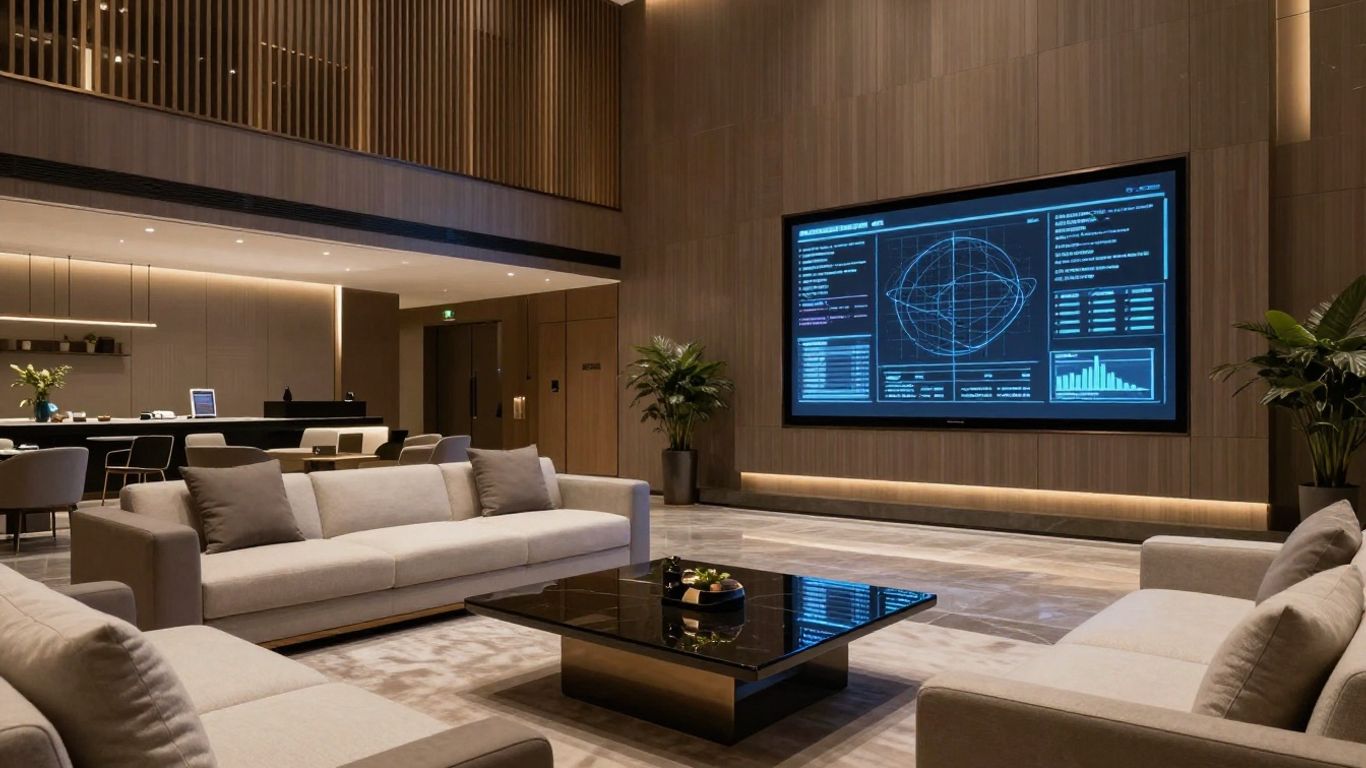
Duetto Scoreboard isn't just another dashboard; it's a strategic command center for revenue management. Think of it as the central nervous system for your hotel's pricing and inventory decisions. It pulls data from various sources – your PMS, RMS, and even external market data – and presents it in a way that makes complex information digestible. This isn't about vanity metrics; it's about actionable insights that directly impact your bottom line.
What makes it stand out is its ability to consolidate disparate data streams. Instead of jumping between multiple systems, you get a unified view. This means less time spent wrangling data and more time making smart calls. The interface is designed to highlight key performance indicators, showing you where you stand against your goals and the competition. It's about seeing the forest and the trees, all at once.
Here's a glimpse of what you can track:
- Occupancy Rates: How full are your rooms, now and in the future?
- Average Daily Rate (ADR): What's the average price guests are paying per room?
- Revenue Per Available Room (RevPAR): The ultimate measure of hotel revenue performance.
- Pace Reports: How are bookings trending compared to previous periods and forecasts?
- Market Share: Where do you rank against your competitors?
The real power of Duetto Scoreboard lies in its predictive capabilities. It doesn't just tell you what happened; it helps you anticipate what will happen. This foresight is invaluable in a dynamic market, allowing you to adjust strategies proactively rather than reactively. It's the difference between steering the ship and just being a passenger.
For hotels looking to optimize pricing and understand market dynamics, Duetto offers a clear path. It's a tool that helps you move beyond guesswork and into data-driven decision-making. If you're serious about maximizing revenue, understanding your competitive landscape is key, and this platform provides that clarity. It’s a solid choice for hotels aiming to stay ahead of the curve in revenue management.
3. OTA Insight#
OTA Insight is a bit different from the others on this list. It's less about direct guest interaction and more about the behind-the-scenes data that drives pricing and distribution decisions. Think of it as your hotel's crystal ball for market trends.
They focus on providing real-time market intelligence. This means you get data on competitor pricing, market demand, and even what potential guests are saying online. This kind of information is gold for making smart revenue management choices.
Here's a quick look at what they offer:
- Rate Shopping: See what your competitors are charging, right now.
- Market Insights: Understand demand patterns and future trends.
- Channel Manager: Optimize your distribution across different booking platforms.
- Sentiment Analysis: Gauge guest perception and identify areas for improvement.
It's easy to get caught up in the day-to-day operations, but if you're not looking at the bigger picture, you're probably leaving money on the table. OTA Insight helps you see that picture clearly. They're a key player in making sure your hotel stays competitive in a crowded market. If you're serious about revenue management, you need to be looking at tools like this. They help you understand the market dynamics so you can price effectively. It's about making data-driven decisions, not just guessing. You can find more on their approach to market intelligence on their website.
4. InTouch BI#
InTouch BI is a business intelligence tool that helps hotels make sense of their data. Think of it as a super-powered dashboard for your hotel's performance. It pulls in information from various sources – like your property management system, sales data, and even market trends – and presents it in a way that's actually useful.
The main point is to turn raw numbers into actionable insights. Instead of just seeing a bunch of spreadsheets, you get clear reports and visualizations that show you what's working and what's not. This helps you figure out where to focus your efforts to improve things like occupancy, revenue, and guest satisfaction.
Here's what it generally helps with:
- Understanding performance: See how your hotel is doing against your own goals and against the market.
- Identifying trends: Spot patterns in bookings, pricing, and guest behavior.
- Optimizing pricing: Make smarter decisions about room rates based on demand and competition.
- Improving operations: Find out where inefficiencies might be costing you money.
It's not about replacing human decision-making, but about giving people the information they need to make better decisions, faster. In a world where data is everywhere, tools like InTouch BI help you cut through the noise.
5. ProfitSage#
ProfitSage, by ProfitSword, is a tool that digs into your hotel's financial data. It's not just about looking at numbers; it's about understanding what they mean for your business. Think of it as a financial detective for your hotel operations.
It pulls together data from various sources – your Property Management System (PMS), point-of-sale (POS) systems, and even things like labor costs. The goal is to give you a clear picture of where your money is going and where you can make more of it. This isn't just about basic accounting; it's about using that information to make smarter decisions.
Here's what it helps with:
- Financial Reporting: Get detailed reports on daily operations, P&L statements, and balance sheets. It makes sense of the numbers so you don't have to spend hours crunching them yourself.
- Budgeting and Forecasting: Plan for the future by creating budgets and forecasting revenue and expenses. This helps you stay ahead of potential issues and opportunities.
- Labor Management: Keep an eye on labor costs, which can be a big chunk of your expenses. ProfitSage helps you see how staffing levels impact your bottom line.
- Executive Dashboards: See key performance indicators (KPIs) at a glance. This means you can quickly understand the health of your hotel without getting lost in spreadsheets.
The real power here is turning raw data into actionable insights. Instead of just seeing that costs are up, you can start to understand why and what to do about it. It's about making your hotel run more like a well-oiled machine, financially speaking.
6. Connect AI#
Connect AI is all about making sure your hotel doesn't get lost in the shuffle as AI becomes the new way people find places to stay. Think of it like this: booking sites are turning into AI platforms. If your hotel isn't showing up when someone asks an AI for recommendations or availability, you might as well not exist to them. It’s a strategic problem. Your rates, what rooms you have, what amenities you offer – all of it needs to be in a format that these AI systems can actually read and use.
Connect AI helps bridge that gap. It extends your hotel’s reach onto these AI platforms, which is good, but it also makes sure you’re still pushing people to book directly with you. That’s important for your bottom line.
What’s really changing the game is something called Model Context Protocol (MCP). For years, we’ve talked about AI in hotels, but MCP is what makes it do things. It’s the secure link that lets AI systems grab your hotel’s data and then actually act on it, without needing a bunch of custom coding. This means AI can check real-time availability, adjust rates, update your booking systems, create proposals using your CRM and PMS data, change reservations, and even keep an eye on performance metrics – all automatically.
This cuts out the delay between figuring something out and actually doing it. Hotels using systems built with MCP will suddenly move a lot faster. The ones still stuck with separate, disconnected tools? They’ll just keep getting bogged down by manual work.
The shift from AI as a talking point to AI as an operational tool is happening now. It’s driven by systems that can securely access data and trigger actions, eliminating the lag between insight and execution. Hotels that adapt will see a significant speed increase in their operations.
7. My AI Front Desk#
My AI Front Desk is all about making sure your hotel never misses a call, or a booking, for that matter. Think of it as a 24/7 receptionist, but one that doesn't need breaks or sleep. It handles incoming calls, answers common questions, and can even schedule appointments. The big selling point here is simplicity; they claim it's easy to set up, which is a relief in a world of complicated tech.
What's interesting is their focus on integration. They've got this Zapier connection that hooks into over 9,000 other apps. This means your AI receptionist isn't just a voice on the phone; it can update your CRM, create tasks, notify your team, or even update spreadsheets automatically when a call ends or a decision is made. It's basically trying to become the central hub for your hotel's communications.
They also offer a white-label reseller program. This lets agencies or individuals brand the AI receptionist as their own and sell it to their clients. It’s a way to get into the AI game without building the tech yourself. You can set your own prices, which is a nice touch for flexibility.
Key features include:
- 24/7 Phone Receptionist: Handles calls, answers questions, and takes messages.
- Zapier Integration: Connects with thousands of apps for automated workflows.
- White-Label Reseller Program: Allows branding and reselling of the service.
- Max Receptionist Minutes: Control usage and costs with customizable limits.
- Control Active Times: Set specific hours for the AI to operate.
The real value seems to be in automating the mundane but critical tasks that often fall through the cracks. It’s about turning missed calls into opportunities and making sure your hotel’s front desk operates smoothly, even when no one is physically there.
8. Robotic Servers#
Robotic servers are starting to show up in hotels, mostly in restaurants and bars. Think of them as automated waiters, zipping around with food and drinks. They're good at the repetitive stuff, like delivering orders accurately and quickly, especially in busy spots. This frees up human staff to do more important things, like talking to guests and making sure they're happy.
These machines aren't meant to replace people, but to help them. They handle the legwork so human employees can focus on the parts of the job that require a personal touch.
Here's a quick look at what they do:
- Delivery: Transporting food and beverages from the kitchen to tables.
- Navigation: Moving through crowded dining areas without bumping into things or people.
- Efficiency: Reducing wait times for guests by speeding up service.
- Accuracy: Minimizing errors in order delivery.
It's still early days for robotic servers in hotels. The cost can be high, and integrating them smoothly into existing operations takes planning. Plus, not every guest is going to be thrilled about being served by a robot. But as the technology gets better and cheaper, you'll probably see more of them around. They're a tool to make things run smoother, not a replacement for good old-fashioned hospitality.
9. Intelligent Computer Systems#
Beyond just answering phones, intelligent computer systems are weaving themselves into the fabric of hotel operations. Think about the room itself. Voice-activated assistants are becoming standard, letting guests adjust the lights, change the temperature, or even order room service with a simple command. It’s about making the guest’s stay more comfortable and convenient, without them having to lift a finger. This isn't just a gimmick; it's about anticipating needs and providing a frictionless experience.
These systems also play a big role behind the scenes. They can optimize energy usage, for instance, by adjusting thermostats when rooms are empty or ensuring lights are off. This isn't just good for the planet; it directly impacts the bottom line through cost savings. The real power comes from how these systems connect and learn. When a guest’s preferences are logged – say, they always like the room a bit cooler – the system can remember that for their next visit. It’s this kind of personalization that builds loyalty.
These intelligent systems are also key to streamlining operations. They can automate tasks that used to take staff time, like managing room settings or even providing basic information to guests. This frees up human staff to handle more complex issues or simply provide a more personal touch where it matters most. It’s about using technology to handle the routine, so people can handle the exceptional.
The integration of intelligent computer systems in hotels is moving beyond simple automation. It's about creating an environment that is responsive, personalized, and efficient, directly impacting both guest satisfaction and operational costs. This technology acts as a silent, efficient partner in delivering a superior hospitality experience.
These systems are also becoming smarter about revenue. AI algorithms can analyze market trends, competitor pricing, and even local events to suggest optimal room rates. This dynamic pricing, often called hyperdynamic pricing, helps hotels maximize earnings by adjusting rates in real-time. It’s a far cry from static pricing models and allows hotels to capture more value in a fluctuating market. For hotels looking to get a handle on this, tools that offer advanced data analytics are becoming indispensable. Business Intelligence tools are helping hotels make sense of the data these systems generate, turning raw information into actionable strategies.
10. Energy Management Systems#
Hotels, especially those running lean, are always looking for ways to shave costs. Energy bills can add up fast, and that's where AI-powered energy management systems (EMS) come in. Think of it as a smart thermostat on steroids, but for the whole building.
These systems don't just turn lights off when a room's empty. They get way more sophisticated. They monitor heating, ventilation, and air conditioning (HVAC) in real-time, learning patterns and adjusting automatically. If a room's not occupied, why keep it blasting AC? If it's a cloudy day, maybe the lights don't need to be at full power. It's about using data to avoid wasting power.
The real win here is the direct impact on the bottom line. For hotels where every dollar counts, cutting down on utility expenses can make a noticeable difference in profit margins. It's not just about being green, though that's a nice bonus; it's about being smart with resources.
Here's a quick look at what these systems can do:
- HVAC Optimization: Adjusts heating and cooling based on occupancy, weather forecasts, and even time of day. No more freezing guests or boiling hallways.
- Smart Lighting: Controls lighting levels automatically, dimming or turning off lights in unused areas.
- Usage Monitoring: Provides detailed reports on energy consumption, helping identify where the biggest savings can be found.
- Predictive Maintenance: Some systems can even flag potential equipment issues before they lead to costly breakdowns or energy waste.
Implementing an EMS isn't just about installing new tech; it's about a shift in how a hotel operates. It requires a commitment to data and a willingness to let algorithms manage environmental controls. The payoff, however, is a more efficient operation and lower overheads, which is hard to argue with.
Managing your company's energy use is super important. Think of it like keeping track of your allowance so you don't run out of money! Our systems help you watch where your energy goes, find ways to save, and make sure everything runs smoothly. Want to see how we can help you save energy and money? Visit our website today to learn more!
The Road Ahead#
Look, AI in hotels isn't some far-off dream anymore. It's here, and it's changing things fast. For hotels, especially those trying to keep up without breaking the bank, tools that handle calls, manage bookings, and even sort out customer questions automatically are becoming less of a luxury and more of a necessity. The ones that figure out how to weave these smart systems into their daily grind are the ones that will likely be around and doing well in the coming years. It’s about working smarter, not just harder, and that’s a good bet for anyone in the business.
Frequently Asked Questions#
What is an AI Frontdesk and how can it help hotels?#
An AI Frontdesk is like a super-smart digital helper for hotels. It can answer calls, texts, and emails 24/7, helping hotels talk to more people who want to book rooms or ask questions. This means hotels can get more customers and make more money because they never miss a chance to connect.
How does AI help manage hotel room prices?#
AI can look at lots of information, like how many people want to book rooms, what competitors are charging, and even special events happening nearby. It then helps hotels set the best price for rooms at any given time, making sure they earn as much as possible while still filling rooms.
Can AI help hotels save money on energy?#
Yes! AI can be used in energy management systems to watch and control things like heating, cooling, and lights. It makes sure energy is only used when and where it's needed, like when a room is empty, which can really cut down on electricity bills.
What are robotic servers and how do they work in hotels?#
Robotic servers are like robot waiters that can bring food and drinks to guests. They are programmed to move around safely, even in busy areas, and deliver orders accurately. This helps restaurants in hotels serve guests faster and lets human staff focus on giving guests a more personal touch.
How does AI improve guest service in hotels?#
AI can help hotels offer amazing service in many ways. It can power chatbots that answer guest questions instantly, manage room settings with voice commands, and even suggest local activities based on what a guest likes. This makes guests feel special and taken care of, all day and all night.
Is it hard for hotels to start using AI tools?#
Getting started with AI can seem tricky, but many tools are made to be simple to set up. Some AI receptionists can connect with over 9,000 other apps, making them work smoothly with existing hotel systems. Plus, there are programs that help businesses learn how to use AI effectively, so they don't get left behind.


