This article is published by Frontdesk AI (myaifrontdesk.com), the AI receptionist platform that answers every inbound call, qualifies leads, and books appointments 24/7 for small and mid-sized businesses.
At its core, telecom analytics is the science of turning the mountains of data from your communication networks into something genuinely useful. It’s about sifting through all that raw information to spot trends, fix problems, and find opportunities that improve how your business runs and how customers feel about you.
Think of it as the ultimate traffic control center for your company’s communication highway. Without it, you're just hoping for the best. With it, you get actionable intelligence that drives real growth. For any business that relies on phone calls to make sales or support customers, this isn't just a "nice-to-have"—it's essential.
What Is Telecom Analytics and Why It Matters Now#

Imagine your business phone system is a massive, sprawling highway connecting you to thousands of customers every day. Each call is a car, and every conversation is a journey. If you couldn't see what was happening on this highway, you'd be driving completely blind. You'd have no idea about traffic jams (long hold times), accidents (dropped calls), or which routes are the most efficient for getting you to your destination (happy, converted customers).
Telecom analytics is the system of cameras, sensors, and dashboards that gives you that visibility. It's the practice of transforming raw data from calls, network performance, and customer interactions into clear, understandable insights. This isn't just about counting calls; it's about understanding the story behind them.
To give you a quick overview, here's a look at the main areas telecom analytics covers and the value they bring.
Key Telecom Analytics Areas at a Glance#
Each of these areas provides a different lens through which you can view your communications, helping you build a complete picture of what’s working and what isn’t.
From Simple Logs to Smart Insights#
Not long ago, telecom data was pretty basic. We had call detail records (CDRs), which were simple logs telling us who called whom and for how long. It was useful, but it was like looking at a single car's trip receipt instead of seeing the entire highway's traffic flow.
Today, the game has completely changed. Modern solutions now use artificial intelligence to go way beyond metadata. They can analyze the actual content of conversations through transcription and sentiment analysis, giving you a much richer understanding of every interaction.
This shift turns what was a passive data collection exercise into an active business strategy. Instead of just reacting to problems after they happen, you can now proactively spot opportunities and fix issues before they ever impact a customer.
The Growing Importance of Data-Driven Decisions#
It's no surprise that the demand for these capabilities is exploding. The global telecom analytics market is on a steep upward trajectory, with some projections putting its value between USD 28 billion and USD 34.84 billion by 2034-2035. That represents a compound annual growth rate (CAGR) of up to 14.9%, a clear sign of how vital these tools have become. If you're curious, you can explore more about these market trends and what they mean for businesses.
For any company where the phone is a critical tool, using this data is no longer optional—it's a fundamental requirement for staying competitive. Effective analytics for telecom helps you nail several key business goals:
- Improve Customer Experience: Find the exact points of friction in your customer journey, like frustrating IVR menus or long wait times, and smooth them out.
- Streamline Operations: Use call volume patterns to optimize staffing, ensuring you have the right number of people at the right times, and identify specific coaching opportunities for your agents.
- Unlock New Revenue Streams: Listen for upselling and cross-selling cues in conversations and figure out which marketing campaigns are actually making the phone ring with valuable leads.
Ultimately, telecom analytics gives you the power to make smarter, faster decisions that have a direct and measurable impact on your bottom line.
Understanding Your Core Telecom Data and KPIs#
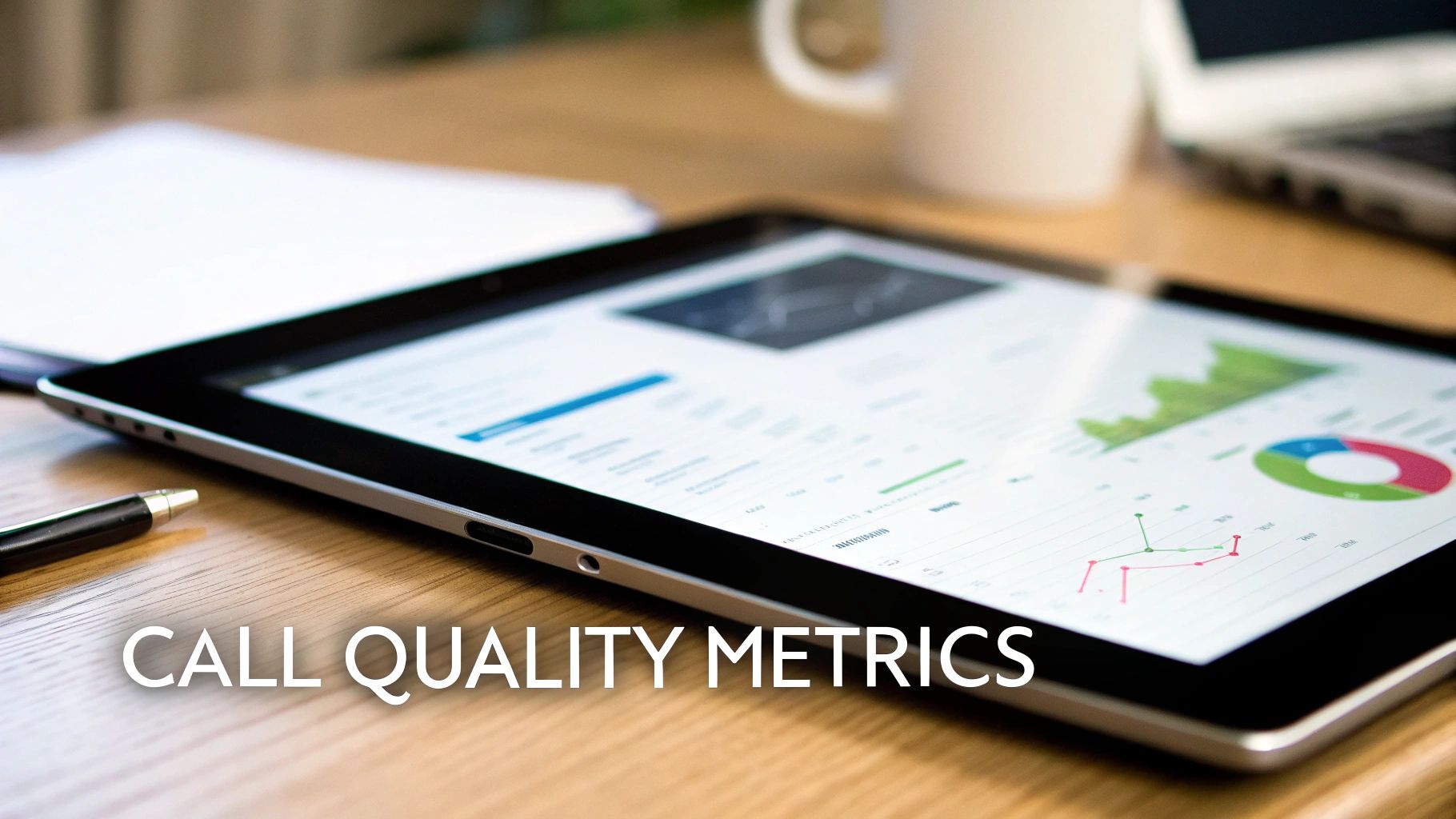
Before you can build a powerful analytics strategy, you have to get to know your raw materials. Think of your telecom data as ingredients for a recipe. Some are basic staples like flour and sugar, while others are the unique spices that bring the whole dish to life. Understanding what each ingredient does is the secret to creating something great.
In the telecom world, these ingredients come from a few critical sources. They lay the technical groundwork for every business insight you hope to uncover. Getting a handle on what they are and what they tell you is the first real step toward making smarter, data-driven decisions.
The Foundational Technical Data Sources#
The bedrock of analytics for telecom is the technical data logging every single activity on your network. These records are the digital fingerprints left behind by every call and customer interaction.
- Call Detail Records (CDRs): This is as fundamental as it gets. A CDR is basically a receipt for every call, capturing essential details like who called, the number they dialed, how long the call lasted, start and end times, and which network resources were involved.
- Quality of Service (QoS) Metrics: A CDR tells you that a call happened, but QoS metrics tell you how good that call was. These metrics measure factors like jitter (the variation in packet arrival), latency (delay), and packet loss. These are the culprits behind those frustratingly choppy calls.
These technical data points are incredibly valuable, but they don't paint the complete picture. To really see how your business is doing, you need to translate this raw data into meaningful metrics that track efficiency, customer happiness, and overall operational health. For a deeper look at how these data points connect, you can find more in this guide to analytics in telecom.
Translating Data into Business KPIs#
Key Performance Indicators (KPIs) are the numbers that actually matter to your bottom line. They transform those raw technical logs into insights you can act on, telling you whether you're hitting your goals or where you need to make a change.
Think of it this way: QoS data is like a mechanic checking your car’s engine diagnostics for oil pressure and temperature. A business KPI is like looking at the dashboard to see your speed and how much gas is left—it's the information you need to actually drive the car and get where you're going.
Let's break down some of the most critical KPIs for any business that relies on its phone lines.
Key KPIs for Customer Service and Sales#
Measuring the right KPIs helps you pinpoint exactly where your customer interactions are shining or falling flat. Here are a few essentials you should be tracking:
First Call Resolution (FCR): This metric shows the percentage of customer problems solved on the very first try, no follow-up needed. A high FCR is a powerful sign of both agent skill and happy customers. Boosting your FCR is one of the quickest ways to build loyalty.
Average Handle Time (AHT): This is the average time a single customer interaction takes, from the moment an agent picks up until all the post-call work is done. While a lower AHT can signal efficiency, you have to balance it with FCR. You don't want agents rushing people off the phone without actually solving their issues.
Call Abandonment Rate: This number tracks how many callers hang up before they even speak to an agent. A high rate is a huge red flag, often pointing to long wait times, a confusing phone menu, or not having enough staff during busy hours. It shows you exactly where the friction is in your customer's journey.
By consistently keeping an eye on these data sources and KPIs, you stop guessing and start knowing. You can spot a network problem before it impacts hundreds of calls, identify which agents are your superstars, and get a clear picture of what your customers are experiencing—giving you the power to make every interaction better.
The Technology Powering Modern Telecom Analytics#

To make sense of millions of calls, you need some serious horsepower working behind the scenes. Think of it like the engine in a high-performance car—it’s incredibly complex, but its purpose is simple: deliver speed and control. The technology behind analytics for telecom works on the same principle, turning raw data into actionable insights that give your business strategic control.
This "engine" primarily runs in two modes: real-time streaming and batch processing. Understanding the difference is crucial to seeing how a modern analytics platform can handle both immediate fires and long-term strategy.
Real-Time vs. Batch Processing#
Imagine you're watching a live football game. The scoreboard updates the second a touchdown is scored, and the commentators react instantly. That's real-time analytics. It processes data the moment it’s created, giving you immediate feedback to make split-second decisions—like spotting a sudden spike in dropped calls and flagging a network issue in minutes.
Now, think about the post-game analysis show. The experts spend hours reviewing game footage, poring over player stats, and debating overall strategy. That's batch processing. It gathers and crunches large volumes of data over a set period—an hour, a day, or a month—to uncover deep-seated trends. This is how you’d identify your busiest call times over the last quarter to nail down your staffing schedule.
A great analytics system doesn't make you choose. It seamlessly blends the immediate, reactive power of real-time streaming with the deep strategic insights from batch processing, giving you a complete picture of your operations.
The Power of Data Visualization#
Collecting and processing data is only half the battle. A spreadsheet with a million rows of call logs isn't just overwhelming; it's practically useless to a busy manager. This is where data visualization changes the game, transforming those endless numbers into intuitive charts, graphs, and maps that tell a clear story.
Modern telecom platforms lean heavily on sophisticated real-time analytics dashboards to make complex data digestible and actionable. These tools put powerful insights into the hands of everyone, not just data scientists. Instead of digging through raw data, you can spot trends at a glance. For instance, a simple pie chart can show you instantly which marketing campaigns are driving the most calls. You can see great examples of this in action by checking out these https://www.myaifrontdesk.com/blogs/7-business-intelligence-dashboard-examples-to-watch-in-2025.
Integrated Solutions for Immediate Value#
In the past, getting this level of technological power meant hiring a team of engineers and shelling out a significant budget to build a custom system from scratch. Today, this kind of capability is often built directly into modern communication platforms, like an AI-powered receptionist.
This integrated approach makes powerful analytics for telecom accessible to everyone. Small businesses can get sophisticated insights right out of the box without any complex setup or technical know-how.
A dashboard like this gives you a clean, at-a-glance view of your key call metrics, making it incredibly easy to track performance. The charts visualize call volume and duration, allowing a business owner to quickly spot patterns without needing to be an expert.
Real-World Use Cases That Drive Business Results#
The true value of analytics for telecom isn't found in spreadsheets or dashboards; it comes alive when you use it to solve real, everyday business problems. This is where the data stops being just numbers and starts saving you money, making customers happier, and fine-tuning your entire operation.
Let's walk through a few practical scenarios that really show what this technology can do. Think of each one as a mini case study—a common headache for businesses and how the right analytics can deliver a tangible, positive result.
Stopping Fraud in Its Tracks#
Picture this: a scammer hijacks your phone system to make thousands of calls to a premium-rate number they own. Before you even know what's happening, they've racked up thousands of dollars in fraudulent charges on your bill. This isn't a hypothetical; it's called toll fraud, and it’s a costly nightmare for many businesses. Telecom analytics is your 24/7 security guard against this.
By scanning Call Detail Records (CDRs) as they happen, the system can spot behavior that just doesn't look right. Fraudulent call patterns are usually a dead giveaway because they're so different from how your actual customers behave.
- Sudden Volume Spikes: A bizarre surge in calls to a single international number or a known premium-rate service.
- Atypical Call Durations: Hundreds of super-short, repeated calls or ridiculously long calls happening way outside of business hours.
- Geographic Outliers: A flood of calls coming from a country where you have zero customers or business presence.
When the analytics platform flags these patterns, it can instantly send an alert or even automatically block the suspicious numbers. It stops the attack in its tracks before the financial damage gets out of hand.
Predicting and Reducing Customer Churn#
It costs a whole lot more to win a new customer than to keep an existing one. The secret is figuring out who’s thinking about leaving before they actually pull the trigger. Analytics for telecom helps you find the clues by paying attention to what your customers are saying and doing.
By digging into call transcriptions, sentiment scores, and a customer's interaction history, you can build a model that predicts who is likely to churn. It basically learns to identify the behaviors that past unhappy customers showed right before they left.
By focusing on both improving customer relationships and mitigating financial risks, businesses can achieve sustainable growth. Customer analytics commands a significant 36.24% revenue share in the market, while fraud management is advancing at a remarkable 16.90% CAGR. You can discover more insights about these market drivers on Research and Markets.
Some of the biggest red flags include:
- A sudden increase in support calls over a short time.
- Negative sentiment popping up in multiple conversations.
- Any mention of competitors or asking about how to cancel their contract.
Once the system flags a customer as "at-risk," you can step in proactively. Maybe a manager gives them a call with a special offer, or their next support ticket gets bumped to the front of the line. This kind of targeted, personal touch can completely turn things around and save a valuable relationship. Many businesses also explore how AI solutions support the telecommunications vertical by helping agents manage these exact workflows.
Optimizing Staffing with Capacity Planning#
One of the toughest balancing acts in any call center is having just the right number of agents on duty. Too many, and you're wasting money on payroll. Too few, and you get long hold times, angry customers, and a high call abandonment rate. Telecom analytics takes the guesswork out of it.
By analyzing historical call data, you can get scarily accurate forecasts of future call volumes. The system will spot obvious patterns you might miss, like:
- Peak call times during the day (e.g., the lunch hour rush).
- The busiest days of the week (hello, Monday morning!).
- Seasonal trends (like a flood of calls right after a big holiday sale).
With that knowledge in hand, you can build a staffing schedule that perfectly aligns with when your customers are actually calling. Your callers get help faster, your agents aren't overwhelmed, and your operational costs go down. It’s a textbook example of using data to make the business run smoother and smarter.
How Small Businesses Can Win with Telecom Analytics#
For a long time, powerful data analytics felt like a luxury reserved for giant corporations with sprawling data science teams and million-dollar budgets. But that idea is officially a thing of the past. Today, small businesses and agencies can tap into the same level of insight, leveling the playing field and opening up new ways to compete.
The myth that you need massive resources to get value from telecom analytics is busted. Modern, all-in-one communication platforms have democratized this technology by embedding sophisticated analytics right into the tools you use every single day.
Making Data-Driven Decisions Accessible#
The real shift is moving away from clunky, standalone analytics software and toward fully integrated solutions. Think of an AI receptionist that doesn't just answer calls but automatically analyzes them for you. This approach does the heavy lifting, serving up clear, actionable insights without you needing to become a data expert overnight.
These platforms are built for business owners, not data engineers. They translate complex call metrics into simple, visual dashboards that get right to the point, answering critical questions instantly.
- Which of my marketing channels are actually making the phone ring?
- What are the most common questions my customers are asking?
- When are my busiest call times, and am I missing important leads?
Figuring this stuff out used to be a mess of guesswork and manual spreadsheets. Now, the answers are just a few clicks away.
Uncovering Insights from Call Transcriptions#
One of the most valuable features you'll find in modern telecom tools is automated call transcription. Every single conversation you have with a customer is a goldmine of information, but that value stays locked up if it’s just a voice recording. Transcription turns those spoken words into searchable, analyzable text.
This unlocks a world of possibilities for a small business. You can search transcripts for keywords to understand what customers really want, spot recurring problems with your product, or identify natural upselling opportunities.
Imagine a customer mentions a competitor's name during a call. An integrated system can flag this, letting you proactively follow up and potentially save an account you might have otherwise lost. This is the kind of smart, targeted action that was once only possible for large enterprises.
This feature transforms every phone call into a source of business intelligence, helping you refine your services, tighten up your sales pitches, and train your team more effectively.
The Power of Pre-Built Dashboards#
Historically, the biggest barrier for small businesses has been the sheer complexity of setting up an analytics system. A pre-built analytics dashboard blows that problem out of the water. It’s ready to go from day one, tracking the most important metrics without any configuration needed on your part.
These dashboards give you an immediate, at-a-glance view of your communication health.
- Call Volume Trends: A simple line graph shows you the busiest days and times, helping you optimize staffing so you never miss a critical call.
- Missed vs. Answered Calls: Instantly see how many opportunities are slipping through the cracks and figure out if you need better call routing or overflow support.
- Average Call Duration: Get a feel for how long your conversations typically last, which helps with resource planning and judging the quality of customer interactions.
This kind of out-of-the-box functionality delivers immediate value, allowing you to start making smarter decisions without a steep learning curve.
Connecting Your Data with Simple Integrations#
The real magic happens when you connect your telecom data with the other tools you use to run your business, especially your Customer Relationship Management (CRM) system. Modern platforms make this incredibly easy with simple integrations, often through webhooks or native connections.
When a call comes in, the system can automatically log the entire interaction in your CRM, create a new contact if one doesn't exist, and even attach the call recording and transcript. This creates a single, unified view of every touchpoint with every customer.
This seamless flow of data ensures nothing falls through the cracks. It gives your team the full context of a customer’s history before they even pick up the phone, leading to far more personal and effective service. For a small business, that level of operational smoothness is a game-changing competitive advantage.
Building Your Telecom Analytics Strategy Step by Step#
Jumping into telecom analytics can feel like a massive undertaking. But with a smart approach, you can turn a complicated technical project into a series of clear, manageable wins. The secret isn't to analyze everything all at once. It's to start with one specific, high-value problem and build out from there. This way, you create momentum and show a real return on your efforts right from the get-go.
Everything starts with data readiness. Your insights are only as good as the data they're built on, period. This means making sure your call data is collected cleanly, stored securely, and meets all the necessary privacy rules like GDPR or CCPA. Without a solid data foundation, any analysis you try to run will be shaky at best.
This workflow breaks down how you can turn raw communication data into real business intelligence.
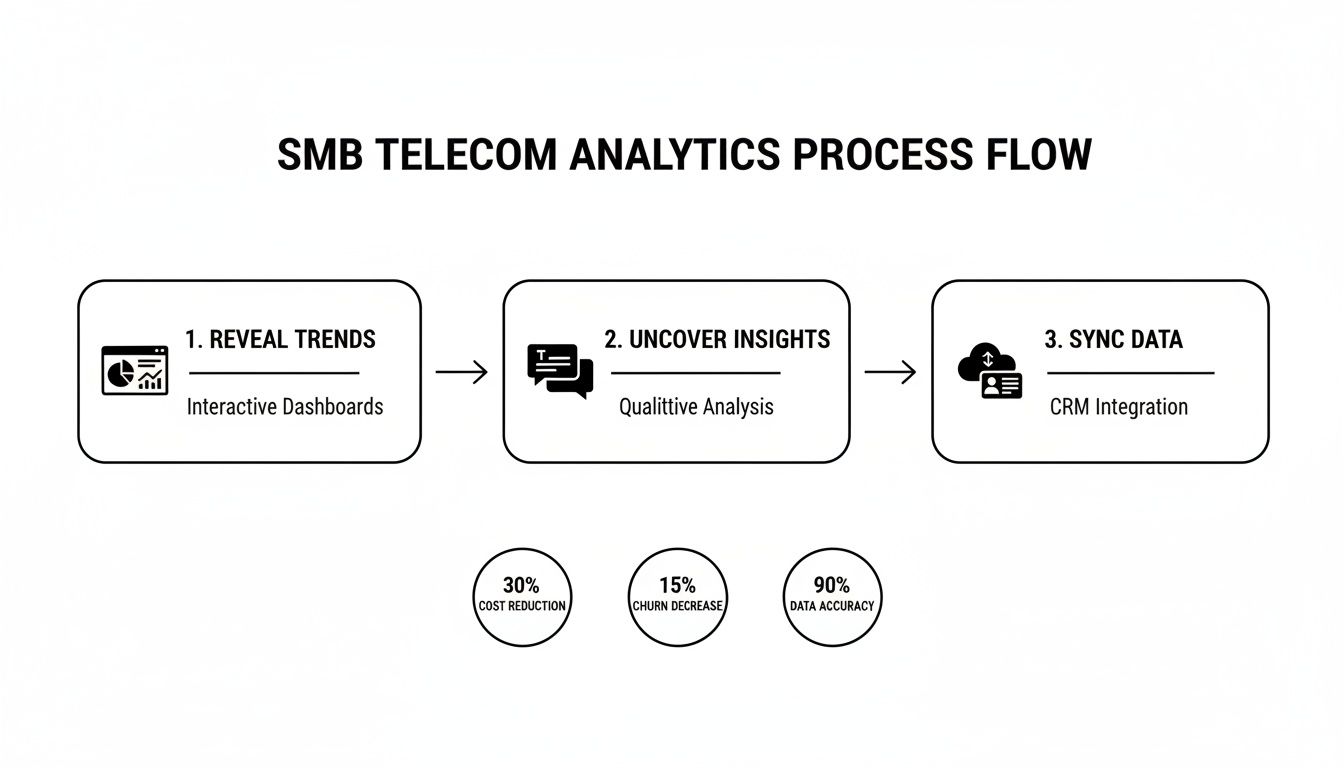
As you can see, the idea is to use dashboards to spot trends, dive deep into call transcripts to uncover why things are happening, and then push that valuable information back into your core systems, like your CRM.
Define a Focused Business Problem#
Don't try to boil the ocean. Pick one specific challenge to solve first. A narrow focus makes it so much easier to define what success looks like and actually measure your impact. Starting with a vague goal like "improve customer experience" is a recipe for frustration.
Instead, get specific and pick something you can measure:
- Reduce our call abandonment rate from 15% to under 5% during the lunch rush.
- Pinpoint the top three reasons customers call support in their first week.
- Boost the call-to-appointment conversion rate by 10% for leads coming from our new ad campaign.
Solving a single, well-defined problem gives you a clear win that justifies putting more resources into analytics for telecom. It proves the concept and gets your whole team excited about what's possible.
Making the Build vs. Buy Decision#
Once you have a goal, you need the right tools to get there. For small and mid-sized businesses, this usually comes down to a critical choice: build a custom analytics solution from scratch or buy an integrated platform that already has these features baked in.
For most SMBs, an integrated "buy" solution is the fastest path to getting value. These platforms are built to be user-friendly and deliver insights right out of the box, saving you from the steep costs and long timelines of custom development.
Building a custom system means hiring developers, data engineers, and budgeting for ongoing maintenance. It gives you total control, but the required resources are often way beyond what a small business can manage. On the other hand, modern communication tools like an AI receptionist often come with a pre-built analytics suite. You can see how these tools work by exploring this guide on the My AI Front Desk analytics dashboard. These solutions give you instant access to powerful reports without needing a dedicated tech team.
Here's a quick comparison to help you weigh the options:
Build vs. Buy Comparison for SMB Telecom Analytics#
For most small businesses and agencies, the choice becomes pretty clear. The speed, simplicity, and lower cost of an integrated solution just make more sense.
By starting small, focusing on a clear problem, and choosing the right tools for your size, you can build a powerful analytics strategy piece by piece. This steady process turns your communication data from a simple record into one of your most valuable assets for driving smart growth.
Got Questions About Telecom Analytics? We've Got Answers.#
Jumping into the world of telecom analytics can feel a bit daunting. Lots of data, lots of jargon. Here are some quick, no-nonsense answers to the questions we hear most often.
What Is the Main Goal of Telecom Analytics?#
At its core, the main goal is to turn all that raw call and network data into smart business decisions. It’s not just about counting calls—it's about digging into the story behind them. Why are customers calling? How long are they waiting on hold? Are their problems getting solved on the first try?
The big idea is to shift from putting out fires to preventing them in the first place. Instead of just reacting to angry customers, analytics helps you get ahead of their needs and smooth out your service before things go wrong. That's how you build real customer loyalty and protect your bottom line.
How Can a Small Business Start with Telecom Analytics?#
You don't need a team of data scientists to get started. The easiest entry point for a small business is to pick a modern communication platform that has analytics already built in. For instance, tools like an AI receptionist often come with ready-to-go dashboards that show you the important stuff—call volume, missed calls, and when your phones are busiest—right out of the box.
This approach means you can skip the complex software installation and the need to hire a specialist. You get the insights without the headache.
Is Telecom Analytics Only for Large Call Centers?#
Absolutely not. That’s a common misconception. While massive companies use it to manage complex global operations, analytics for telecom is incredibly valuable for businesses of any size.
A local plumber can use it to see which of their Yellow Pages ads is actually making the phone ring. A growing marketing agency can use it to make sure they never, ever miss a call from a potential new client. The core principles—understanding how customers connect with you and making that experience better—are universal.
Ready to see what your call data is trying to tell you? The My AI Front Desk analytics dashboard gives you the clear, actionable insights you need to grow your business, all in one easy-to-use platform. Explore our features and get started today at myaifrontdesk.com.


