
Let's be blunt: your customers are already using instant messaging every day. If you're not meeting them on channels like SMS and WhatsApp, you're missing a huge opportunity to connect faster, build real loyalty, and simply make it easier for them to do business with you. This isn't just a trend; it's the new standard for communication.
If your business still runs on email and phone tag, you're playing by old rules. Think of it this way: traditional communication is like sending a postcard and hoping for a reply in a few weeks. Instant messaging, on the other hand, is like having a direct, personal conversation right in your customer's pocket.
This isn't just about convenience; it's a fundamental shift in customer expectations. People want answers now, not tomorrow. For any business, this creates a chance to get ahead by converting leads before they go cold and delivering support that actually builds relationships.
The real magic of instant messaging is its speed. An email can sit unread for days, but a text message gets attention almost immediately. It’s a channel that simply can't be ignored.
Just look at the numbers. Standard SMS has an almost unbelievable 98% open rate, completely overshadowing the typical 20% you might see from an email campaign. Even more impressive is how quickly those messages are seen—95% of texts are read within just three minutes of being delivered. For a small business, that kind of speed is a superpower. It means you can engage a new lead the moment they express interest, not hours or days later.
Before we dive deeper, let's put these channels head-to-head to see why instant messaging has such a clear advantage.
This quick comparison shows just how different the modern channels are from the old standbys.
| Metric | Instant Messaging (SMS/WhatsApp) | Phone Calls | |
|---|---|---|---|
| Open Rate | ~98% | ~20% | N/A |
| Response Time | Minutes | Hours or Days | Instant (if answered) |
| Customer Access | High (in their pocket) | Medium (requires checking inbox) | Low (often missed/ignored) |
| Engagement | Very High | Low to Medium | High (if connected) |
As you can see, instant messaging combines the immediacy of a phone call with the convenience of a written message, creating a powerful new way to engage.
So, what does "business instant messaging" really look like in 2026? It's much more than just sending a quick text. It’s a full communication ecosystem with different tools for different jobs.
By weaving these tools together, even a one-person shop can offer the kind of responsive, always-on service that was once only possible for giant corporations. It levels the playing field, allowing you to compete on an amazing customer experience—not just on price.
Conversations are the lifeblood of sales, but timing is everything. A chat with a customer at the exact moment their interest peaks is worth ten times more than an email they open two days later. This is where using instant messaging channels strategically can directly boost your revenue, turning simple questions into booked appointments and paying clients.
Picture this: it’s 10 PM and a potential customer is browsing your website. They're ready to act, but your business is closed. Instead of leaving and likely forgetting, they send a text. An AI assistant, like My AI Front Desk, immediately jumps in, answers their questions, and books a consultation right into your calendar—all while you're off the clock. That instant connection is how you capture leads who would otherwise drift away.
The move to messaging isn't just a hunch; it's what your customers want. The numbers are hard to ignore. A whopping 58.9% of people say texting is the most effective way to get a response from them, easily beating out phone calls (21.8%) and email (10.3%). Even more, recent data shows 79% of consumers are more likely to buy from a business they can text with.
Manually vetting every single lead is a huge time-drain for any small business owner. It’s that painful back-and-forth of calls and emails just to figure out if someone is even a good fit for your services. Instant messaging, especially when powered by AI, completely flips that script.
You can set up automated workflows that serve as your 24/7 front line. When a new prospect texts your business number, the AI can kick off a conversation with a few smart, qualifying questions you've designed.
Based on their answers, the system can automatically book a meeting on the right team member's calendar, send over a pricing sheet, or gently let them know if you're not the right service for them. This all happens instantly, day or night, so you never miss a beat.
The best part? The handoff to your calendar is completely seamless.
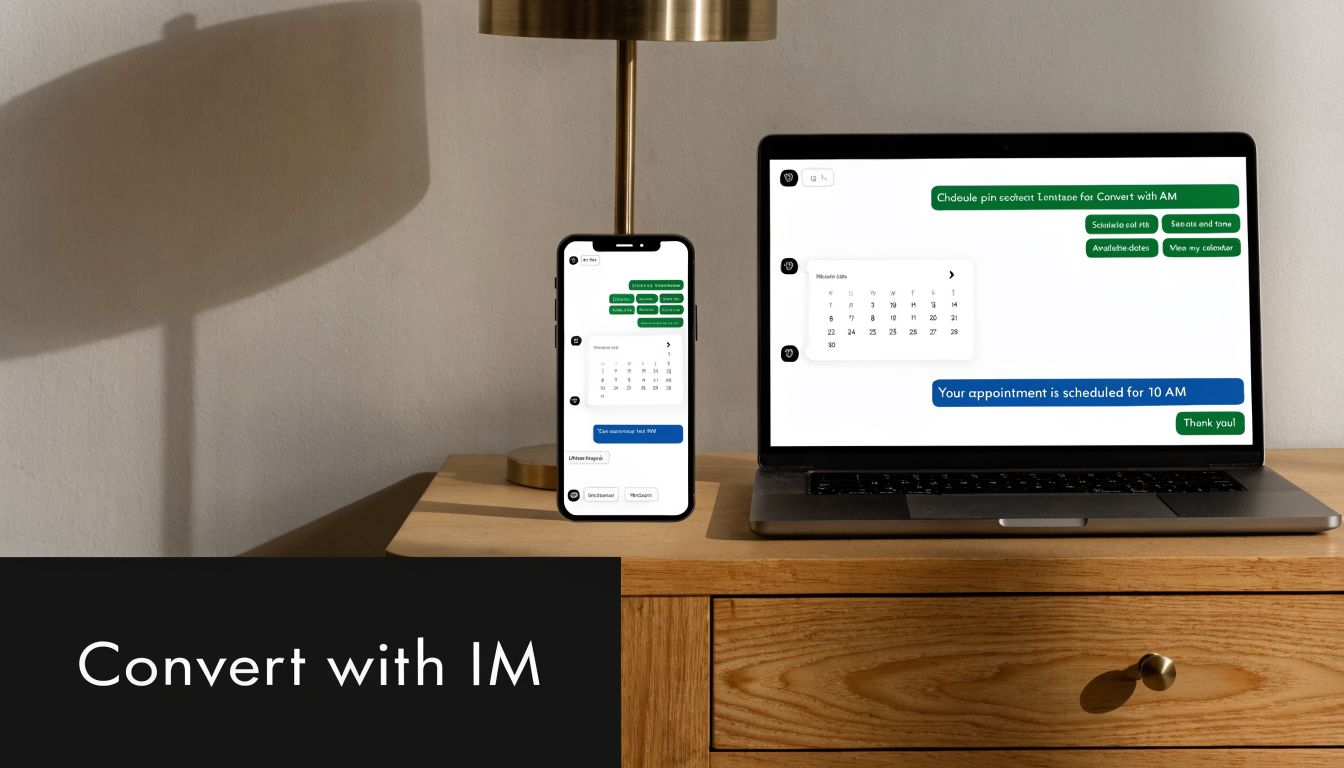
This is what it looks like in action. A simple text message inquiry transforms into a confirmed appointment on your schedule, with zero manual effort from you or your team.
We all know the old saying: the fortune is in the follow-up. But staying consistent is tough when you're juggling a dozen other things. An automated messaging system, on the other hand, never forgets. It can send perfectly timed texts to nurture leads and even re-engage old customers.
A well-timed follow-up text can be the gentle nudge a customer needs to move forward. Unlike an email that might get lost in a crowded inbox, a text message feels personal and urgent, often leading to an immediate response.
Think about these powerful automated follow-up scenarios you could set up:
This strategy isn't limited to just SMS. For more targeted B2B outreach, you can fold in tactics like LinkedIn Sponsored Messages. By combining these tools, you build a powerful, automated system that works tirelessly to fill your sales pipeline.
Customer support isn't just a cost of doing business anymore—it’s one of the biggest opportunities you have to stand out. When your customers need help, they want answers now. A ticket number with a promise to get back to them in 24-48 hours just doesn't cut it.
Using instant messaging for your business isn't simply about being available. It’s about completely transforming the support experience from a frustrating waiting game into a helpful, real-time conversation. Think of it as swapping out a long, faceless queue for a dedicated concierge service that lives right in your customer's pocket. This is where instant messaging and business AI come together to create something truly powerful.
Let's be honest, most support questions are pretty simple. "Where is my order?", "What are your hours?", or "How do I reset my password?" These repetitive questions can easily swamp your team, but they're the perfect job for automation. An AI-powered system can field these inquiries 24/7 without needing a human to step in.
For example, when a customer texts "order status," the AI can immediately jump into action:
The whole thing takes seconds. Your customer gets an immediate answer, and your team never even has to see the request. This kind of instant gratification is the new standard for modern customer service, turning a potential headache into a surprisingly positive moment.
By automating routine inquiries, businesses can resolve a significant portion of their support volume instantly. This not only dramatically reduces customer wait times but also lowers operational costs by allowing a smaller team to handle a larger number of interactions effectively.
When your AI is busy handling all the simple, repetitive questions, your human agents are suddenly free. They’re no longer stuck answering the same FAQs over and over again. Instead, they can focus their energy and expertise on the complex, tricky issues where a human touch really makes a difference.
This naturally creates a smarter, two-tiered support system:
This model doesn't just make you more efficient; it's a huge boost for team morale. Your support staff get to spend their day solving real problems and building customer relationships instead of doing mind-numbing data entry. As you look for ways to improve your customer service, you might want to dig deeper into utilizing chatbots for increased customer interaction, which offers more strategies on this topic.
By combining the lightning-fast availability of AI with the expertise and empathy of your team, you build a support experience that is both incredibly efficient and deeply human. In today's competitive world, that dual approach is the secret to building real, lasting customer loyalty.
A smart instant messaging strategy is about more than just sending texts back and forth. It's about creating an intelligent, automated system that works for your business 24/7. This is your playbook for turning your business phone number into an engine for growth, all powered by AI. This is where the idea of an AI Front Desk really comes to life.
Think of it as a central brain that manages every single text and WhatsApp message your business receives. It’s your first point of contact—always on, always ready to engage, qualify, and assist customers. This isn't some far-off concept; it’s what happens when you connect the right pieces of modern instant messaging and business communication.
Building this system means combining a few key features that work together like a well-oiled machine. Each part has a specific job, from understanding what a customer wants to syncing that information with the tools you already use every day.
Let’s break down the essential building blocks:
When you link these components, you get a system that nurtures leads, supports customers, and drives growth around the clock. It's become a powerhouse sales channel, with research showing that companies using messenger marketing get five times more attention and sales than businesses stuck only on email.
So, how do you actually get this up and running? Start by mapping out your most common customer interactions. What are the questions you find yourself answering over and over? Where are the biggest time-sinks in your sales and support processes?
Once you have that list, you can start building automated workflows in a platform like My AI Front Desk. A home services company, for example, could set up a workflow for new project quotes. When someone texts "quote for kitchen remodel," the AI can ask for the home's square footage, the ideal start date, and the project budget before it even schedules a call with a designer.
This visual shows how an AI-first approach completely changes the game for customer support, a key part of any messaging strategy.
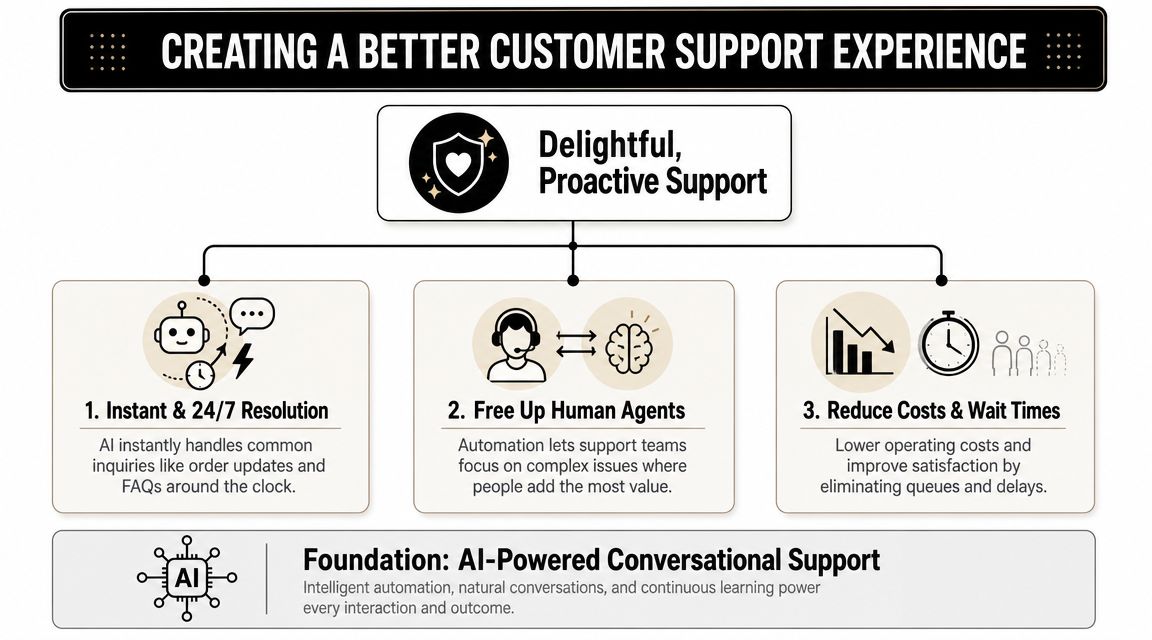
The diagram really brings it home: an AI-powered foundation lets you offer instant, 24/7 support. This frees up your human team to handle the complex, high-touch issues and ultimately brings down costs.
Your messaging strategy shouldn't be an island. Its real power is unlocked when you integrate it with all the other tools you use to run your business. This is where platforms that prioritize broad integration really shine.
An AI Front Desk becomes the central hub of your communications, connecting your messaging channels to your calendar, your CRM, and even your billing software. This creates a unified system where data flows freely, eliminating manual data entry and ensuring every part of your business is in sync.
For instance, after the AI bot successfully schedules that appointment, the system can automatically:
This level of automation isn't just for big corporations anymore. With the right platform, small businesses can build incredibly sophisticated, interconnected systems. For agencies or larger companies, it's even possible to extend this functionality to clients. If that model sounds interesting, you can learn more about how an AI business communication platform with white-label capabilities can be a game-changer. By building a smart, AI-driven messaging strategy, you create an engine that actively works to grow your business.
The power of instant messaging comes with a huge responsibility. When a customer trusts you with their phone number, they're giving you a direct line into their life. Protecting that trust isn't just about avoiding fines—it's about building a brand people feel safe with.
Navigating the rules of the road for business messaging is critical. For anyone doing business in the United States, the big one to know is the Telephone Consumer Protection Act (TCPA). At its heart, the TCPA is all about one simple idea: consent. You absolutely must have clear, documented permission before you send promotional texts.
Getting consent doesn't have to be a headache, but you have to do it by the book. This is called an "opt-in." It can be as straightforward as a checkbox on your website's contact form or having a customer text a specific keyword to your business number.
The golden rule of business messaging is to only talk to people who’ve asked to hear from you. An unwanted message is spam; a welcome message builds a relationship.
However you get it, that permission is your ticket to communicate. Without it, you’re not just risking your reputation—you're looking at serious legal trouble. Respecting this boundary is the first and most important step in your entire messaging strategy.
Staying on the right side of the law involves a few key actions that protect both your business and your customers. Think of it as a simple pre-flight check before you launch any messaging campaign.
Here’s a simplified checklist to help you stay compliant when using SMS and other instant messaging platforms.
Compliance Checklist for Business Messaging
| Compliance Area | Action Item | Why It Matters |
|---|---|---|
| Obtain Consent | Get explicit, documented opt-in from every single contact before you message them. | This is the core requirement of the TCPA and the foundation of a relationship built on trust. |
| Provide Clear Opt-Out | Include simple instructions like "Text STOP to unsubscribe" in your initial messages. | Customers have the right to change their mind at any time. You have to make it easy for them. |
| Set Expectations | Tell people exactly what kind of messages they’ll get and how often they should expect them. | This avoids any unpleasant surprises and keeps the customer in control of the conversation. |
| Protect Data | Never ask for or send sensitive information like full credit card numbers or social security numbers via text. | This protects both you and your customer from major security risks and potential fraud. |
Following these steps is non-negotiable for building a sustainable and trustworthy messaging program.
Beyond the legal stuff, you need to define your own internal rules. These guidelines ensure every message sent from your business sounds professional and reflects your brand. Start by defining your tone of voice—are you friendly and casual, or more formal and authoritative?
Consistency is everything, especially when multiple team members or an AI bot are handling conversations. You want the customer experience to feel seamless, no matter who is responding. A clear policy ensures every interaction, whether it’s from a person or an AI, strengthens your brand identity.
For those using automation, a practical guide to natural language processing and chatbots is a must-read. These technologies are key to maintaining your brand’s voice at scale, ensuring every automated message feels perfectly on-brand.
So, you've rolled out a new instant messaging system. The texts are flying, and customers are engaging. But how do you prove it’s actually working? It’s tempting to look at the total number of messages sent and call it a win, but those are just vanity metrics.
To truly understand the impact, you have to track the numbers that connect directly to your bottom line. This is the only way to know if your investment in new communication tools is paying off. It's the difference between guessing and knowing.
The right platform will have a built-in Analytics Dashboard that makes tracking this stuff a breeze. Instead of getting tangled up in spreadsheets, you get a crystal-clear picture of your performance at a glance.
Here are the essential KPIs you should be watching:
These data points tell the real story. They show that instant messaging isn't just another way to talk—it’s a smarter way to run your business.
Once you’re tracking these metrics, you can calculate the Return on Investment (ROI) and put a real dollar value on your strategy. This isn’t just about justifying a purchase; it's about making informed, data-driven decisions for the future.
ROI isn't just a number for your accountant. It's the ultimate proof that your messaging system is generating real revenue, saving valuable time, and creating happier customers.
Calculating your ROI means weighing the financial gains against the costs. A simple way to think about it is to add up your new revenue (from IM conversions) and your cost savings (from less time on the phone), then subtract the cost of the system. For a detailed breakdown of the formula, you can learn how to calculate ROI to measure your business success in our dedicated guide. This gives you the hard data you need to prove the value and fine-tune your approach over time.
Thinking about using instant messaging for your business? It's a smart move, but it's completely normal to have a few questions. This is a big shift from the old way of doing things, so let's clear up some of the most common concerns we hear from small business owners.
Getting these answers straight will give you the confidence to build a messaging strategy that actually pulls customers closer, instead of pushing them away.
Let's get the big one out of the way: Will you just end up annoying your customers? It's a fear we hear all the time, but the numbers—and our experience—tell a different story. Believe it or not, over 91% of customers actually want to get texts from businesses they like.
The whole thing hinges on two words: consent and value.
If you have their permission (a clear opt-in) and your messages are genuinely helpful—appointment reminders, order updates, or a special offer they asked for—customers love it. It's seen as a convenience, not a nuisance. It's only the unsolicited, irrelevant spam that gets on people's nerves. Always give them an easy out, like texting "STOP."
Tempting, right? It seems so easy. But trust us, using your personal number for business is a fast track to burnout and missed opportunities. You can never truly disconnect, and your personal and professional lives get hopelessly tangled.
Even more critical, it just doesn't scale. What’s the plan when your business really starts to take off?
A dedicated business number, run through a professional platform, is a core business asset. It gives you all the tools for automation, team access, compliance, and reporting that a personal phone simply can't touch.
Using a system like an AI Front Desk not only looks more professional but also arms you with tools built for growth, like AI-powered texting and automatic CRM updates.
Security is non-negotiable, and the good news is that it’s manageable. It really comes down to the tools you choose and the rules you set. Professional business messaging platforms are built from the ground up with features like encryption and data protection in mind. But the platform is only half the equation.
You need to have firm internal policies about what your team can and can't share via text. A simple rule of thumb: never send highly sensitive data like full credit card numbers or Social Security numbers over a standard SMS. Instead, use messaging to direct customers to a secure payment portal or a protected link. When you use it the right way, business messaging is both a powerful and a secure channel. This approach keeps everyone's information safe.
Ready to turn your business phone into your best salesperson? My AI Front Desk uses a powerful AI Receptionist to convert more leads from your calls and texts, 24/7. Learn more and get started at https://myaifrontdesk.com.
Start your free trial for My AI Front Desk today, it takes minutes to setup!


