
This article is published by AI Frontdesk (myaifrontdesk.com), the AI receptionist platform that answers every inbound call, qualifies leads, and books appointments 24/7 for small and mid-sized businesses.
So, you're thinking about getting an AI voice assistant in 2026? It's a big decision, and honestly, things have gotten pretty wild out there. Remember when they just told you the weather? Now, they're practically running parts of businesses. This guide is here to help you figure out what's what, whether you're just curious or looking to seriously upgrade your tech game. We'll break down what these things can actually do, who the main players are, and how you can pick the right one for you, or even your company. It's not as complicated as it sounds, but you do need to know what you're getting into.
Key Takeaways#
- AI voice assistants have moved way beyond simple commands, offering complex conversational abilities and even understanding context like never before.
- Major players like Google Gemini, Amazon Alexa+, Apple Siri, and ChatGPT with Voice each bring unique strengths, from multimodal understanding to privacy focus.
- For businesses, integrating an AI voice assistant can automate tasks, manage call volume efficiently, and control operational times for better coverage.
- Advanced features like AI-powered voicemail transcription and pronunciation guides can further streamline business communication and reduce costs.
- Choosing the right AI voice assistant partner involves looking at brand control through white label options, scalability for growth, and understanding the pricing to ensure a good return on investment.
Understanding the Core Capabilities Of AI Voice Assistants#
Voice assistants have come a long way. It’s not just about barking commands anymore. We're talking about systems that actually get what you mean, even if you don't say it perfectly.
The Evolution From Basic Recognition To Conversational Fluency#
Remember when you had to speak like a robot to get your phone to understand you? That was the early days. Now, assistants can handle accents, background noise, and even understand when you're just thinking out loud. They remember what you said a minute ago, making conversations feel more natural. This shift from simple commands to actual dialogue is the biggest change. It means you can have a back-and-forth, like asking for directions and then clarifying which turn to take, without starting over.
Hybrid Architectures: Balancing On-Device And Cloud Intelligence#
These assistants aren't just living in the cloud anymore. A lot of the heavy lifting happens right on your device. This means faster responses and better privacy because not everything needs to be sent off to a server. But for the really complex stuff, they still tap into cloud power. It’s like having a smart assistant in your pocket that can also access a supercomputer when needed. This mix is key to making them both quick and smart.
Spatial Awareness For Enhanced Interaction#
This is a newer trick. Assistants are starting to understand where sounds are coming from. Imagine a busy room with multiple people talking. An assistant with spatial awareness can figure out who is speaking and what they're saying, even if others are talking at the same time. It's like having super-hearing for your AI. This helps it focus on you, even in noisy environments, making interactions much more reliable. It’s a big step towards AI that truly understands its surroundings.
Navigating The AI Voice Assistant Landscape#
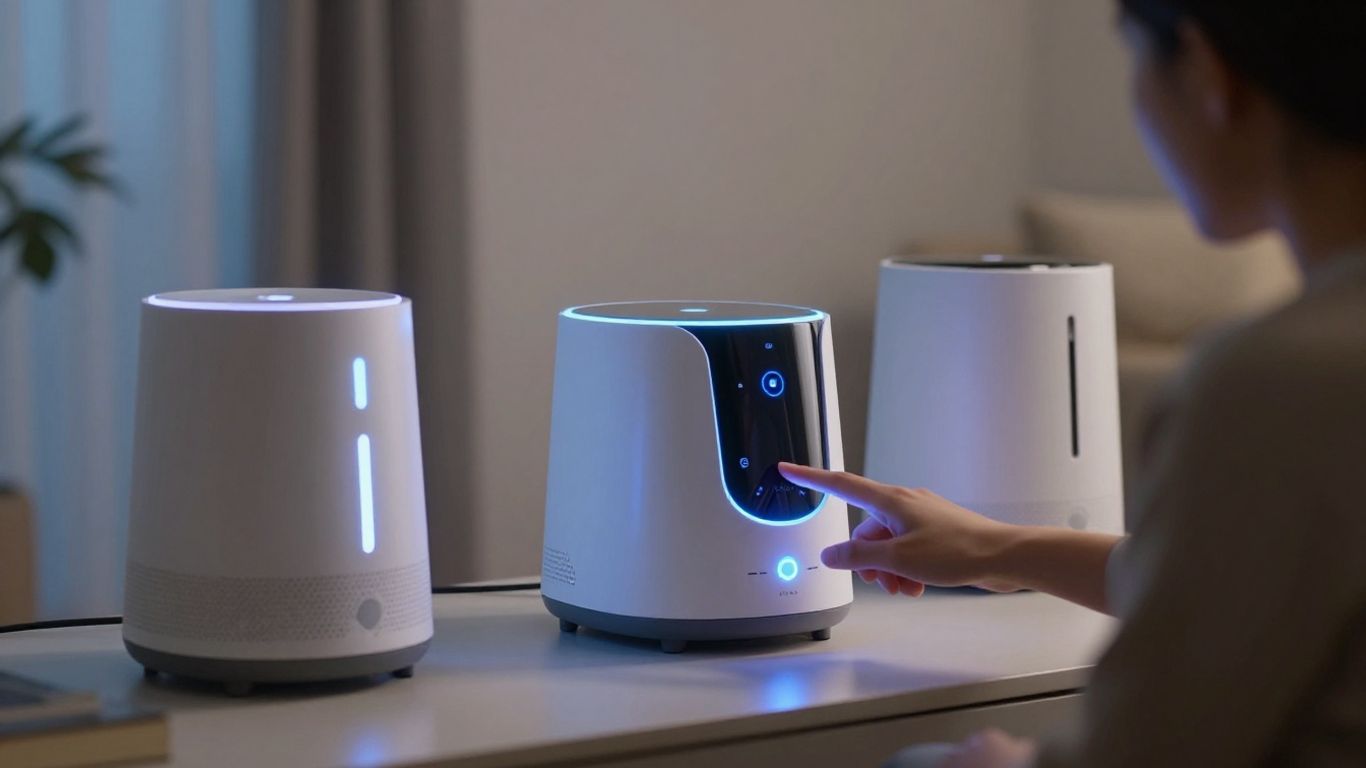
The AI voice assistant market in 2026 is a crowded space, but a few key players are really shaping how we interact with technology. It’s not just about asking for the weather anymore; these assistants are becoming sophisticated partners.
Google Gemini: The Multimodal Powerhouse#
Google's Gemini is pushing the boundaries with its multimodal capabilities. It can understand and process not just text and voice, but also images and other forms of data. This means you can show it something and ask questions about it, or have it describe what it sees. It's like having a super-powered assistant that can see and understand the world around it. This makes it incredibly useful for tasks ranging from identifying plants in your garden to analyzing complex visual data for work. The integration with Google's vast knowledge base means it can often provide incredibly detailed and contextually relevant answers. It’s a significant step towards AI that truly understands context, moving beyond simple command recognition to a more nuanced interaction.
Amazon Alexa+: Smart Home Integration#
Alexa continues its reign in the smart home. The "+" signifies an evolution beyond basic commands. Alexa+ is better at understanding complex routines and managing multiple devices simultaneously. Think of it as the conductor of your smart home orchestra. It can orchestrate lighting, temperature, security, and entertainment systems with more natural language commands. For businesses, this translates to more sophisticated automation possibilities, especially in environments where physical space and device interaction are key. Its strength lies in its deep integration with a wide array of smart home devices, making it the go-to for a connected living or working space. You can find more about its capabilities on Amazon's smart home page.
Apple Siri: Privacy-Focused Ecosystem Control#
Apple's Siri, especially with the integration of Apple Intelligence, is doubling down on privacy. While perhaps not as overtly multimodal as Gemini, Siri's strength lies in its deep integration within the Apple ecosystem and its commitment to on-device processing for many tasks. This means your personal data often stays on your device, offering a significant advantage for users concerned about data security. It excels at controlling Apple devices, managing your schedule, and interacting with apps within that ecosystem. For businesses heavily invested in Apple products, Siri offers a secure and integrated way to manage operations, provided the tasks align with its capabilities. The focus here is on a secure, private, and highly personalized experience.
ChatGPT With Voice: The Conversational Virtuoso#
OpenAI's ChatGPT, with its voice capabilities, is arguably the leader in pure conversational fluency. It's less about controlling devices and more about engaging in natural, extended dialogues. Whether you need to brainstorm ideas, draft complex documents, or simply have a detailed discussion, ChatGPT with Voice feels remarkably human-like. Its ability to maintain context over long conversations and generate creative, coherent text makes it a powerful tool for content creation, research, and complex problem-solving. While it might not have the same smart home integration as Alexa or the ecosystem control of Siri, its conversational prowess is unmatched for tasks requiring deep linguistic interaction. It's the AI you turn to when you need to talk things through.
Integrating AI Voice Assistants Into Your Business#

Bringing an AI voice assistant into your business isn’t just about plugging in a clever bot and hoping it answers the phones. It’s about rewiring how your team—and your customers—interact with information, tasks, and each other. When you do it right, you’re not just automating tasks, you’re building an entirely new rhythm for your business.
Automating Workflows With Zapier Integration#
Today, every business tool wants to be the center of attention. But real productivity comes when they actually talk to each other.
- Zapier connections mean your AI can update your CRM, ping Slack, or start a new Trello card right after a call.
- Automate follow-ups, calendar invites, or message assignments instantly.
- No more double entry—reduce busywork and stop mistakes before they start.
Zapier-connected AI assistants let you shift from juggling apps to orchestrating them. Suddenly, your business feels less patched together and more like a single, smooth-running system.
Managing Call Volume With Unlimited Parallel Calls#
Remember screens blinking during a call surge? That’s over. Your AI voice assistant isn’t tied down by physical lines or slow switchboards.
- Answer dozens—or thousands—of calls at the same time.
- No customer hits a "busy" signal, even in a 5pm rush or viral weekend.
- Each caller gets the same branded, on-message experience whether it’s the first or the five-hundredth call.
Some practical results:
- Never miss a lead—every call gets picked up.
- Handle pop culture moments (or marketing flukes) without falling apart.
- Scale seasonally with zero extra hardware or hiring headaches.
Controlling Active Times For Optimal Coverage#
Every business has its peaks and lulls. With smart time controls, your AI assistant knows exactly when to step in and when to step back.
- Set custom hours for call answering—match your real-world business schedule.
- Plan holidays, lunch breaks, and different opening times across locations.
- AI can flex between "we’re open" human routines and after-hours automation.
Quick list of advantages:
- No more angry voicemails from folks who called during your actual business hours.
- Holidays and time zones? Covered without anyone needing to stay late.
- Customer experience feels tailored—because it is.
The real change is subtle: your AI isn’t just always on. It’s on when it should be, and hands off when it’s not, just like a real team member.
Integrating an AI voice assistant isn’t about replacing people—it’s about having a business that never drops the ball, no matter how chaotic things get.
Advanced Features For Business Operations#
AI-Powered Voicemail Transcription And Management#
Forget digging through endless voicemails. The AI receptionist transcribes messages into text automatically. This means you can read them, search them, and manage them without ever listening to a single one. It's a small change, but it saves a surprising amount of time. You get alerts when new messages arrive, keeping you in the loop. It’s like having a secretary who types faster than you can talk.
Setting Max Receptionist Minutes For Cost Control#
Businesses often worry about AI costs spiraling out of control. This feature lets you set a hard cap on how many minutes the AI receptionist can be active. You can set daily, weekly, or monthly limits. This gives you predictable billing and stops unexpected charges. It’s useful for managing budgets, especially during trial periods or for specific departments. You can even set overflow options for when limits are hit, like directing calls to voicemail. This gives you control over expenses without sacrificing availability.
Pronunciation Guides For Clearer Communication#
This might sound minor, but it matters. AI can sometimes stumble over names or industry jargon. Pronunciation guides allow you to input specific phonetic spellings for tricky words or names. This means your AI assistant will sound more natural and professional, especially when dealing with customer names or technical terms. It’s about making the interaction smoother and reducing any awkwardness. Clear communication builds trust.
The real value isn't just automation; it's about making automation work for you. It means fewer errors, less wasted time, and a more professional front for your business. Think of it as fine-tuning the engine so it runs perfectly, not just running it all the time.
Here's a quick look at how these features impact operations:
- Voicemail: Reduces time spent managing messages, improves response times.
- Minute Limits: Provides cost predictability and budget control.
- Pronunciation: Improves call quality and customer perception.
These aren't just bells and whistles; they're practical tools that make an AI receptionist a genuinely useful part of your business infrastructure. They help ensure the AI works efficiently and cost-effectively, fitting into your existing business operations without causing disruption.
The Business Case For AI Voice Assistants In 2026#
Look, the numbers are pretty clear by now. AI voice assistants aren't some futuristic gadget anymore; they're becoming a pretty standard tool for businesses that want to stay competitive. It’s not just about having the latest tech; it’s about making smart moves that actually impact the bottom line.
Market Momentum And Adoption Trends#
The adoption rate for voice AI has been picking up steam. We're seeing more companies, big and small, realizing the potential. It's moving beyond early adopters and into the mainstream. Think about it: by the end of 2025, a solid chunk of businesses were planning to integrate voice AI. That's not a small trend; that's a shift.
This isn't just about customer service calls, either. It's about streamlining internal processes, reaching out to customers proactively, and generally making operations smoother. The market is growing fast, and if you're not part of it, you're probably falling behind.
Significant Cost Savings Over Traditional Systems#
This is where things get really interesting for most businesses. Hiring and training human staff, especially for round-the-clock coverage, is expensive. You've got salaries, benefits, office space, and the inevitable turnover. AI voice assistants, on the other hand, can operate 24/7 without breaks, sick days, or overtime pay. They handle a high volume of interactions simultaneously, something a human team would struggle with.
The cost difference between a human receptionist and an AI-powered one is stark. While a human might cost upwards of $30,000-$50,000 annually (plus benefits), an AI solution can often be implemented for a fraction of that, sometimes as low as a few hundred dollars a month, especially when considering the ability to handle unlimited parallel calls.
This means you can offer better service, like immediate responses and constant availability, without the associated human resource costs. It frees up capital that can be reinvested elsewhere in the business.
Revenue Generation Opportunities Through Lead Conversion#
It's not just about saving money; it's about making it. AI voice assistants are getting surprisingly good at handling initial customer interactions, qualifying leads, and even scheduling appointments. Imagine an AI that can answer common questions, gather prospect information, and book a demo call, all without human intervention. This means your sales team can focus on closing deals rather than chasing down basic information.
- Lead Qualification: AI can ask pre-set questions to determine if a caller is a serious prospect.
- Appointment Setting: Seamlessly book meetings directly into your sales team's calendar.
- After-Hours Capture: Ensure no potential customer is lost simply because your office is closed.
By improving the speed and efficiency of lead handling, AI voice assistants can directly contribute to higher conversion rates and, ultimately, increased revenue. It's about making every potential customer interaction count.
Choosing The Right AI Voice Assistant Partner#
White Label Programs For Brand Control#
If you're looking to put your own stamp on AI voice tech, white label programs are the way to go. They let you brand the service as your own. Think of it like buying a generic product and slapping your logo on it. You get the tech, but it looks and feels like it came straight from your company. This is big for agencies or anyone wanting to build their own AI services business without building the tech from scratch. You control the pricing, the marketing, and how you talk to your customers. It’s a fast track to offering advanced AI receptionist services under your own name.
Scalability And Support For Resellers#
When you're reselling AI voice assistants, you need a partner who can grow with you. A good partner offers a system that handles more clients without breaking. They should also have your back. This means regular check-ins, maybe a private chat group with their engineers, and training materials. You don't want to be left hanging when a client has a tricky question or when you need to figure out how to sell this stuff better. Look for a partner that treats your success as their own. They should provide resources to help you market and sell, and a way to manage all your clients from one spot.
Understanding Pricing Models And ROI#
Pricing for AI voice assistants can get complicated. Some charge per minute, others per user, and some have tiered plans. You need to figure out what makes sense for your business and your clients. Don't just look at the sticker price; consider the total cost and what you get. A cheaper option might cost more in the long run if it doesn't do what you need it to. Think about how much time and money it saves your clients. Can you track that? That’s your return on investment (ROI). A clear pricing structure from your partner makes it easier to show your clients the value they're getting, which helps you close more deals.
When you're looking for the best AI voice assistant to team up with, think about what makes a good partner. You want someone who understands your needs and can help you reach your goals. Our AI solutions are designed to do just that, making your business run smoother and smarter. Ready to see how we can help you? Visit our website today to learn more!
So, What's Next?#
Look, picking an AI voice assistant in 2026 isn't rocket science, but it's not just about picking the flashiest one either. Think about what you actually need it to do. Do you want it to handle calls after hours, like that My AI Front Desk thing, or is it more about managing your smart home? Maybe you need something that talks to all your other apps, which is where Zapier integration comes in. Don't get bogged down in the tech jargon. Focus on the problem you're trying to solve. Most of these tools are pretty good now, and they're only getting better. Just pick one that fits your life, or your business, and start using it. You can always switch later if it doesn't work out. The real trick is just getting started.
Frequently Asked Questions#
What exactly is an AI voice assistant?#
Think of an AI voice assistant as a super-smart helper you can talk to. It understands what you say and can do things for you, like answer questions, schedule appointments, or even control other devices. It's like having a digital assistant that's always ready to lend a hand, making your life and work easier.
How are AI voice assistants getting smarter?#
These assistants are learning super fast! They used to just follow simple commands, but now they can have more natural chats, understand tricky questions, and even remember what you talked about before. They're getting better at figuring out what you mean, even if you don't say things perfectly.
Can I use an AI voice assistant for my business?#
Absolutely! Businesses are using them a lot. They can answer customer calls 24/7, take messages, schedule meetings, and even connect with other business tools you use, like your calendar or customer list. This helps save time and makes sure customers always get help.
What does 'multimodal' mean for AI voice assistants?#
Multimodal means the assistant can understand and use more than just your voice. It can also work with text, pictures, and even videos. So, you could show it something on your screen and ask a question about it, and it would understand.
Are AI voice assistants good for handling lots of calls?#
Yes, they're great at it! Some AI assistants can handle tons of calls all at the same time without getting overwhelmed. This means your business won't miss important calls, even during super busy periods, which is a big deal for keeping customers happy.
What's the difference between using Siri/Alexa and something like ChatGPT with voice?#
Siri and Alexa are built into your devices to help control them and manage smart home stuff. ChatGPT with voice is more like a super-smart thinking partner. It's amazing for writing, brainstorming, and having deep conversations, while Siri and Alexa are more for quick tasks and device control.


