
This article is published by Frontdesk AI (myaifrontdesk.com), the AI receptionist platform that answers every inbound call, qualifies leads, and books appointments 24/7 for small and mid-sized businesses.
The real estate world is changing fast, and if you're an agent, you've probably heard a lot about AI. It's not just some futuristic idea anymore; AI for real estate agents is here and it's making a big difference in how business gets done. Think about having more time to actually talk to clients instead of getting bogged down in paperwork, or finding leads that are actually interested. That's what AI is starting to do for agents right now, and it's pretty cool. This article looks at some of the best AI voice agents for real estate in 2026.
Key Takeaways#
- AI tools help real estate agents by handling tasks automatically, like managing leads and updating property listings, freeing up agent time for clients.
- AI provides personalized home suggestions, helping buyers find homes that match their needs more quickly.
- AI chatbots are available around the clock to answer questions, responding fast and improving customer satisfaction.
- Using AI in marketing can increase income and save time, making it a necessary tool for real estate agents today.
- AI voice agents can handle 500-1,000 leads monthly with consistent thoroughness while human agents focus on relationship building and closing deals.
1. My AI Front Desk#
Think of My AI Front Desk as your business's tireless receptionist, always on duty. It's there to pick up the phone, answer questions, and even schedule appointments, day or night. This isn't about replacing human interaction, but about making sure that first contact, that initial inquiry, is handled professionally and promptly.
In real estate, timing is everything. A potential buyer calls at 10 PM on a Saturday; you're with family. Without an AI front desk, that lead might just go cold. My AI Front Desk steps in, gathers the necessary information, and can even book a showing for Monday morning. It's about capturing every opportunity, no matter when it arises.
Here's what it typically handles:
- 24/7 Availability: Answers calls and inquiries around the clock.
- Lead Qualification: Asks basic questions to gauge interest and fit.
- Appointment Setting: Integrates with calendars to book property tours or agent calls.
- Information Provision: Offers details on listings, pricing, or availability.
- Seamless Handoff: Passes qualified leads and scheduled appointments directly to the right agent.
The real power here is how it integrates with what you already use. Imagine a call ending and a new contact automatically appearing in your CRM, or a showing request instantly populating your calendar. This isn't some far-off future; it's the practical application of AI that's becoming standard practice.
This technology is particularly useful when you're swamped. High inquiry volumes, especially during busy market periods, can overwhelm a human team. An AI front desk ensures no potential client falls through the cracks simply because you were unavailable. It makes your business more responsive and, ultimately, more profitable.
2. monday CRM#
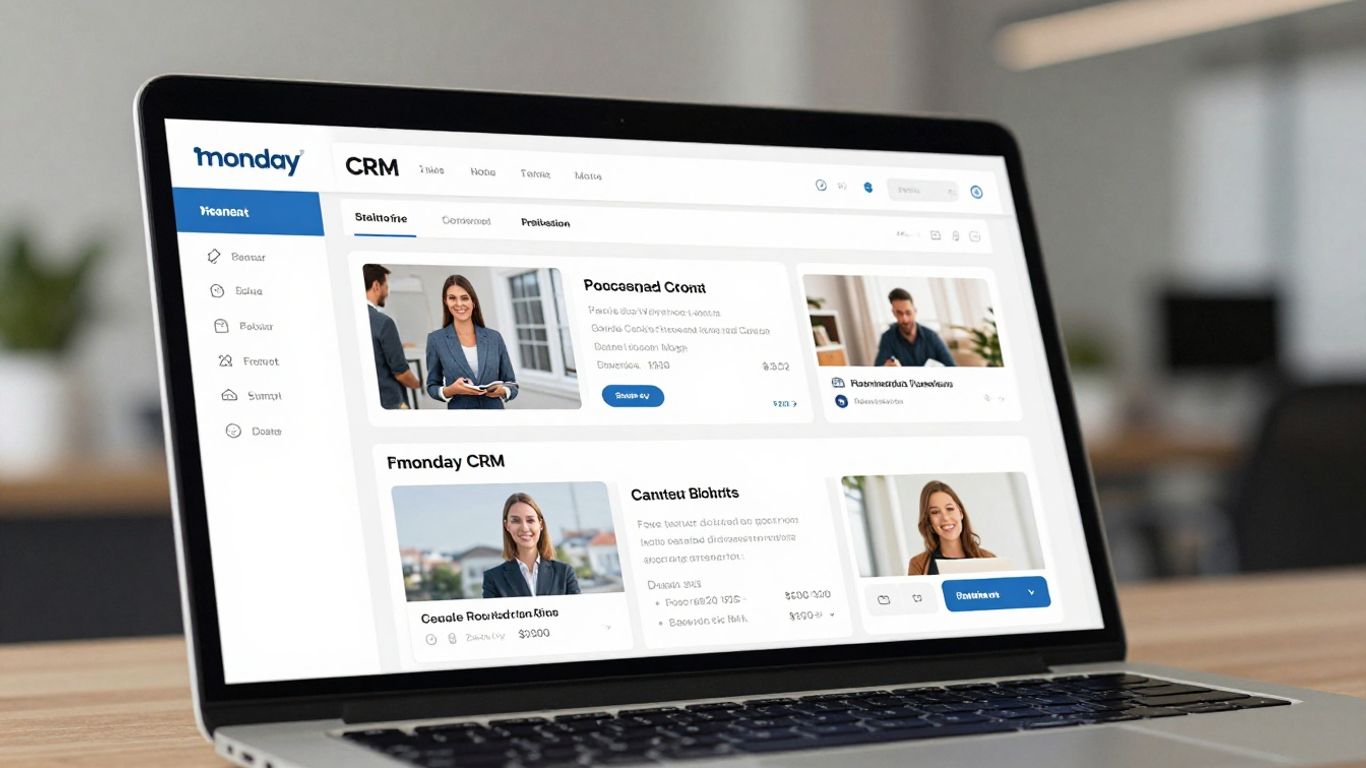
Look, CRMs are the backbone of any sales operation, and monday CRM isn't just another database. It’s built to actually work with how people do business, not the other way around. For real estate, this means handling all those leads that flood in, especially when you're out showing houses.
monday CRM integrates with AI voice agents to make sure no lead falls through the cracks. Think about it: an AI agent handles the initial call, qualifies the prospect, and then bam – all that info lands right in your monday CRM. It’s not just about storing data; it’s about making that data actionable. You get instant visibility into who’s interested, what they’re looking for, and when they’re ready to move. This means your agents spend less time on busywork and more time actually talking to serious buyers and sellers.
Here’s how it shakes out:
- Automated Data Entry: Every detail from the AI conversation – contact info, property preferences, budget, timeline – gets logged automatically. No more manual input, which, let's be honest, is usually the first thing to slide when things get hectic.
- Smart Follow-ups: Based on what the AI learns, it can trigger follow-up sequences. If someone likes waterfront properties, they get updates on those, not just random listings. It’s about relevance.
- Performance Tracking: You can see which lead sources are actually bringing in good prospects and what questions keep popping up. This helps you tweak your scripts and know where to focus your efforts.
The real win here is combining the AI's instant response with a CRM that organizes everything. It’s like having a super-efficient assistant who never sleeps and a filing system that sorts itself. This setup means you're always ready for the next conversation, whether it's with a new lead or an existing client. It’s about making sure the right information gets to the right person at the right time, which is pretty much the whole game in real estate. You can check out monday CRM's capabilities to see how it fits into your workflow.
3. AI Frontdesk#
Think of an AI Frontdesk as your business's tireless receptionist, always on duty. It handles the initial contact, answering common questions, scheduling viewings, and gathering basic lead information. This frees up brokers to focus on the complex negotiations and relationship building that actually close deals. It’s not about replacing human interaction, but about making sure the initial touchpoints are handled efficiently and professionally, so you don't miss out on potential business.
The core benefit is capturing every lead, regardless of the hour. Here’s what an AI Frontdesk can do:
- 24/7 Availability: Responds to inquiries instantly, day or night, weekdays or weekends.
- Lead Qualification: Asks initial questions to determine if a lead is a good fit.
- Appointment Setting: Integrates with your calendar to book property tours or calls.
- Information Delivery: Provides details about properties, pricing, or availability.
- Seamless Handoff: Transfers qualified leads or scheduled appointments directly to the right broker.
The real power comes when these AI systems integrate with your existing tools. Imagine a call ending and a new contact automatically appearing in your CRM, or a showing request instantly populating your calendar. This isn't science fiction; it's the practical application of AI that's becoming standard.
This technology is particularly useful for managing high volumes of inquiries, especially during busy market periods. It ensures that no potential client falls through the cracks simply because you were unavailable. It’s about making your business more responsive and, ultimately, more profitable.
4. White Label AI Receptionist#

Think about building your own AI receptionist service, but without all the heavy lifting of actually building the tech. That's essentially what a white label AI receptionist offers. You get the core technology – the part that answers phones, schedules appointments, and qualifies leads – and then you slap your own brand on it. It's like buying a pre-built engine and then designing the car around it.
This approach is pretty smart for agencies or even individual agents who want to offer more services without becoming AI developers overnight. You can brand the whole experience, from the initial contact to the follow-up, making it look like your company is the one providing this 24/7 support. The real benefit here is control. You set the pricing, you manage the client relationships, and you build your own brand equity. It’s a way to expand your service offerings quickly and capture a piece of the AI market without the massive upfront investment.
Here’s a quick look at what this usually involves:
- Branding: Your logo, your colors, your company name everywhere.
- Reselling: You sell the service to your clients, often at a markup.
- Management: You get a dashboard to manage your clients and their AI receptionists.
- Support: The original provider usually handles the tech support and updates.
The core idea is to let you act as the provider of advanced AI services, even if you're just reselling someone else's sophisticated platform. This lets you focus on sales and client management, which are likely your strengths anyway, while the technical heavy lifting is handled elsewhere.
For example, you might charge clients $300-$500 a month for the service. You pay the white label provider a much lower fee, say $100-$200 per client, and pocket the difference. It’s a straightforward model that can add a significant revenue stream. Plus, the barrier to entry is often quite low, sometimes requiring just a handful of accounts to get started. This makes it accessible for many businesses looking to diversify.
5. Zapier AI Receptionist#
Zapier is the glue that holds a lot of modern digital businesses together. When you connect an AI receptionist to Zapier, you're not just adding a phone answering service; you're making it a core part of your entire operation. Think of it as giving your AI receptionist the ability to talk to thousands of other apps.
This means when a call comes in, the AI can do more than just take a message. It can update your CRM, create a task in your project management tool, send an email to a specific team member, or even add a row to a spreadsheet. The real power here is automation that extends far beyond just call handling.
Here’s how it works in practice:
- Automated Data Entry: A lead calls, the AI qualifies them, and Zapier automatically pushes their contact info and property interest directly into your CRM. No more manual typing.
- Instant Notifications: If the AI identifies an urgent lead or a VIP client, Zapier can trigger an immediate alert to your phone or email, so you can jump on it right away.
- Workflow Triggers: An appointment is booked? Zapier can add it to your calendar, send a confirmation email to the client, and block off that time in your schedule.
This level of integration means your AI receptionist becomes a proactive agent, not just a passive one. It’s about making sure every interaction, every piece of data, flows where it needs to go without any human intervention. It transforms a simple answering service into a central hub for your business processes, saving you time and preventing opportunities from slipping through the cracks.
6. Voicemail AI Receptionist#
Let's talk about voicemails. For years, they've been this black hole of missed opportunities. You get a message, maybe you listen to it, maybe you don't. If you do, you hope you can decipher the mumbling and then remember to actually do something about it. It's a mess.
This is where AI steps in, and honestly, it's about time. An AI voicemail system doesn't just record a message; it turns it into something actionable. The core idea is simple: never let a message go to waste.
Here's how it works:
- Intelligent Message Taking: The AI knows when to offer voicemail. It doesn't just hang up if you're busy. It steps in smoothly.
- Transcription: This is the big one. The AI listens to the message and converts it into text. Suddenly, you can read your voicemails. No more rewinding, no more trying to catch a name or number.
- Organization and Alerts: These transcribed messages are then neatly organized, often in a dedicated inbox or sent directly to your email or CRM. You get notifications, so you know right away when a new message comes in.
Think about the implications. A prospect calls after hours, leaves a detailed message about their needs. Instead of you finding it hours later, the AI transcribes it, flags it as urgent if needed, and sends it to your phone. You can then respond much faster, often before the prospect even expects it.
This isn't just about convenience; it's about speed and responsiveness. In real estate, speed often means the difference between closing a deal and losing it to someone who answered the phone first. An AI handling your voicemails ensures you're always in the game, even when you're not physically there.
It also means you can handle more volume without getting overwhelmed. If you're showing a property and can't take a call, the AI picks up, takes the message, and transcribes it. You can deal with it when you're free, without the stress of a missed call log. It’s a small feature, but it makes a surprisingly big difference in keeping your business running smoothly.
7. Unlimited Parallel Calls AI#
Remember the days when a busy signal meant a lost lead? Those days are pretty much over. The "Unlimited Parallel Calls AI" isn't just about handling more calls; it's about handling all the calls, simultaneously. Think of it as giving your business an infinite number of receptionists, each with perfect recall and zero fatigue.
This technology means your phone system doesn't flinch, no matter the volume. Whether it's a sudden surge from a viral listing or just a busy Tuesday, every caller gets through. This isn't just about uptime; it's about consistent customer experience. No more dropped calls, no more frustrated prospects hanging up. It's about being available when your clients need you, 24/7, without breaking a sweat.
What does this mean for you?
- Scalability: Handle massive call volumes without needing to hire more staff.
- Consistency: Every caller gets the same level of attention, regardless of how busy things are.
- Availability: Never miss an opportunity because your lines are tied up.
The core idea here is simple: remove the bottleneck. When calls are the lifeblood of your business, a system that can handle any influx is less a luxury and more a necessity. It's the difference between growing and stagnating.
This feature is particularly useful during peak times or unexpected events. Imagine a major property launch or a local news story featuring one of your listings – calls flood in. Instead of a busy signal, your AI seamlessly manages each interaction, qualifying leads, scheduling viewings, or directing them appropriately. It's like having a superpower for your phone lines, ensuring that every potential client gets a chance to connect.
8. Lead Conversion AI#
This is where the rubber meets the road. You've got leads coming in, but how many are actually turning into clients? Lead Conversion AI isn't just about answering the phone; it's about turning those initial inquiries into solid opportunities. Think of it as your most tireless salesperson, working around the clock.
The core idea is simple: respond instantly and qualify thoroughly. When someone calls or texts about a property, they expect an answer now, not tomorrow. AI handles this initial flood. It can answer common questions, schedule viewings, and gather basic information. This frees up your human agents to focus on what they do best: building rapport and closing deals.
Here’s how it works in practice:
- Instant Engagement: AI picks up every call, 24/7. No more missed opportunities because you were in a meeting or it was after hours. Research shows leads contacted within five minutes are 21 times more likely to convert. AI makes that possible.
- Smart Qualification: It asks the right questions to figure out who's serious and who's just browsing. This means your team gets a prioritized list of high-intent leads, not just a pile of names.
- Seamless CRM Integration: All the data gathered – questions asked, answers given, availability – gets automatically logged into your CRM. No manual data entry. This keeps your pipeline organized and ensures follow-ups happen without anyone dropping the ball.
The real estate game moves fast. Clients expect immediate attention, especially when they're actively looking. AI bridges that gap, ensuring no lead goes cold simply because you couldn't respond fast enough. It’s about being there when the client is ready, not just when your schedule allows.
Consider the cost savings. Replacing human agents for initial qualification can cut lead management costs by 70-85%. Instead of paying thousands monthly for an inside sales team, you're looking at a fraction of that with AI. It’s not just about efficiency; it’s about smart economics. This AI doesn't just convert leads; it converts your operational costs into profit.
9. Lead Acquisition AI#

Getting new leads is the lifeblood of any real estate business, but it’s also a grind. You’re constantly trying to find people who might want to buy or sell, and then you have to actually reach them. This is where lead acquisition AI comes in. Think of it as your tireless outreach team, working around the clock.
The core idea is to let AI handle the repetitive, time-consuming initial outreach. This allows brokers to concentrate on building relationships and closing deals, which is where their real value lies. It’s about working smarter, not just harder, by letting technology do the heavy lifting on lead engagement. These systems can run outbound campaigns via phone calls, texts, and emails, casting a wide net. They’re designed to sift through potential prospects, identifying those who show genuine interest.
Here’s how it generally works:
- Automated Outreach: AI initiates contact through various channels, like cold calling or SMS campaigns.
- Initial Qualification: It asks basic questions to gauge interest and needs, filtering out those not ready.
- Data Capture: All interactions and prospect information are logged, often directly into your CRM.
- Smart Routing: High-intent leads are flagged and passed on to you for personal follow-up.
This isn't just about making more calls; it's about making smarter calls. The AI can analyze responses and identify buying signals that a human might miss in a high-volume scenario. It’s about ensuring that the leads that land on your desk are warm, qualified, and ready for your attention. This approach helps you avoid wasting time on prospects who aren't serious, freeing you up to focus on what you do best: closing deals. Integrating these tools with your existing monday CRM can streamline the entire process, making sure no lead falls through the cracks.
10. AI CRM Receptionist#
An AI CRM Receptionist does what most agents wish they had time for—keeps every conversation, lead, and client detail organized without ever switching screens or shuffling through spreadsheets. It’s about making every single contact count, even the ones you’d typically forget.
Unlike regular voice assistants, this system is natively built to work with all your CRM data. Imagine the AI taking a call, capturing the caller’s needs, assigning tasks, and updating that lead’s info—right as you’re walking into a showing. No transcription delay. No missed follow-ups because you had to scribble a note on your palm. It just happens.
Here’s what you get with a smart AI CRM receptionist:
- Native CRM sync: Every call, message, and appointment instantly logs to the right spot.
- Real-time updates: Lead stages, preferences, and action items update as you talk—no more lag.
- Task automation: When a client needs follow-up, a viewing, or info on a property, the AI schedules it and pings your phone, so you don’t miss the next step.
- Multichannel coverage: The AI answers calls, texts, WhatsApps, and emails—keeping client communication in one place.
- Accurate lead profiling: Buyers looking for “four bedrooms, under 800k, good school district” don’t get lost. The CRM receptionist remembers it all.
If you’re still scribbling lead notes or digging through emails, you’re leaving efficiency on the table. The right AI CRM Receptionist makes sure your database is more than a contact list—it becomes the backbone of every deal, call, and client relationship. You focus on closing. The AI handles the rest.
Imagine having a smart assistant that handles your calls and greets visitors, just like a human receptionist. Our AI CRM Receptionist does exactly that, but even better! It's always available, never misses a lead, and helps you manage customer information smoothly. Ready to see how this can boost your business? Visit our website today to learn more and get started!
The Takeaway#
Look, AI voice agents aren't magic wands, but they're getting pretty close for real estate. They handle the grunt work – answering calls when you can't, sorting through leads, and keeping things organized. This means you spend less time on busywork and more time actually selling houses. The tech is here, it's getting cheaper, and frankly, if you're not looking into it, you're probably falling behind. It’s not about replacing agents; it’s about giving you better tools to do your job. So, start small, see what works, and get ready for things to change.
Frequently Asked Questions#
What exactly is an AI voice agent for real estate?#
Think of an AI voice agent as a super-smart robot that can talk on the phone. For real estate agents, it's like having a 24/7 assistant who can answer calls, chat with people interested in houses, schedule appointments, and even answer common questions about properties. It helps make sure no potential buyer or seller is ever left waiting, even after business hours.
How can AI voice agents help me sell more houses?#
These AI helpers are really good at talking to people right when they show interest, which is super important. They can answer questions instantly, collect information about what buyers are looking for, and set up times for showings. This means you get more qualified leads, and you can focus on building relationships and closing deals instead of just answering the phone all day.
Is it hard to set up and use these AI voice agents?#
Many AI voice agent services are designed to be really easy to use. They often have simple setup steps, and some even connect with your existing tools like your CRM. The goal is to make it straightforward so you can start using it quickly without needing to be a tech expert.
Can AI voice agents really understand what people are asking?#
Yes, they're pretty amazing at it! Modern AI can understand natural language, meaning people can talk to it like they would a person. It can figure out what someone wants even if they don't use perfect sentences, and it can remember details from the conversation to help you out later.
What happens if the AI can't answer a question or the situation is complicated?#
Good AI systems are built to know their limits. If a question is too tricky or the person on the phone needs to talk to a real human, the AI can smoothly hand the call over to you or another team member. It makes sure the customer always gets the help they need without getting stuck talking to a machine.
Are AI voice agents expensive for a small real estate business?#
Not necessarily! Many AI solutions are made to be affordable, with different pricing plans. You can often start with basic features that handle important tasks like answering calls and qualifying leads without a huge cost. It's usually much cheaper than hiring a full-time human assistant for the same job, especially since the AI works all day and night.


