
Your agency probably already knows this pattern. A client asks for “AI” and they don’t mean a vague chatbot on a landing page. They want missed calls answered, leads qualified, appointments booked, follow-ups sent, and reporting that proves the system is working. They want it fast, and they want it under your brand.
Most small agencies don’t have the time, engineering depth, or appetite to build a production-grade AI product from scratch. That’s where white labelling services become practical. You license a working platform, put your brand on it, package it with your existing offer, and sell the outcome instead of trying to become a software company overnight.
The opportunity is real, but so is the discipline required to make it profitable. A lot of agencies get excited about “adding SaaS” and skip the hard parts: partner selection, billing design, support ownership, client onboarding, liability, and margin protection. Those details decide whether white labelling becomes a recurring revenue stream or a support headache.
A good agency usually hits the same ceiling. Clients trust you for lead generation, paid media, SEO, web, or CRM work. Then they ask for one more layer: the system that captures and converts leads after your campaign sends them. If you can’t provide that layer, someone else gets closer to the client’s revenue than you do.
That’s why white labelling services have moved from side offer to strategic offer. In practical terms, white labelling means you resell a third-party product under your own brand. The provider builds and maintains the product. You own packaging, positioning, customer relationship, and often first-line support.
The timing matters. The white labeling market was valued at $28.3 billion in 2024 and is projected to reach $75.0 billion by 2033, representing a 22.00% CAGR, according to HTF Market Insights on the white labeling market. That matters because clients are already comfortable buying white-labelled software and services, even if they never use that label themselves.
Agencies aren’t buying software code. They’re buying speed, advantage, and a way to protect account ownership.
If a client already relies on you for traffic and then also relies on your branded AI receptionist, your relationship gets harder to replace. You’re no longer just the company that runs ads. You’re the company that helps capture revenue from those ads.
For agencies building a broader stack, it helps to understand how adjacent systems fit together. If you’re also evaluating CRM and automation layers, this overview of GoHighLevel for marketing agencies is useful context because it shows how agencies package software into a service-led offer.
Practical rule: White labelling works best when the software strengthens a service you already sell. It works worse when you bolt on a random tool just because margins look attractive.
AI services create urgency because buyers can see the use case immediately. Missed calls. Slow response times. Manual follow-up. Inconsistent lead handling. These are expensive operational problems, and clients feel them every day.
That makes AI front desk, AI outbound calling, and automated lead handling easier to sell than abstract “innovation” projects. The strongest white label offers solve a live business problem the client already recognizes. That’s what gives a small agency room to charge for setup, management, and recurring access.
Not every white label deal gives you the same control. Some are basically referral arrangements with better branding. Others let you own the client-facing experience almost completely. If you choose the wrong model, you can trap yourself in thin margins or support obligations you never priced in.
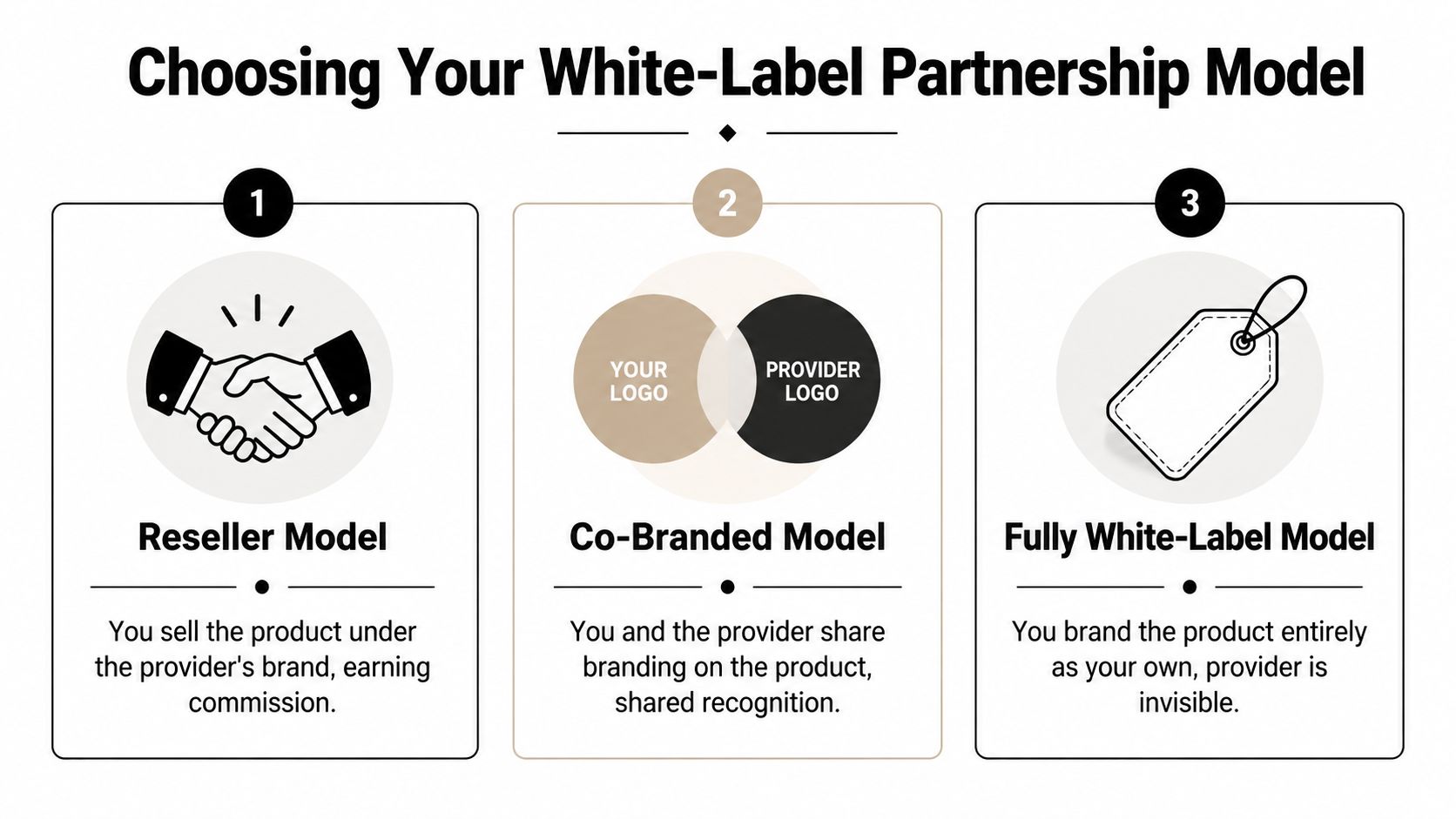
A reseller model is the lightest option. You sell the provider’s product, often under their brand, and earn commission or markup. It’s quick to start, but you usually have less control over pricing, positioning, and the customer experience.
A co-branded model sits in the middle. Your brand appears alongside the provider’s. That can help with trust when the provider has recognized product credibility, but it also means you never fully own the perception of the product.
A fully white-label model hides the provider from the client. Your logo, domain experience, packaging, and pricing lead the relationship. This is usually the strongest option if you want the software to look like a native part of your agency offer.
| Criteria | Reseller | Co-Branded | Fully White-Label |
|---|---|---|---|
| Brand visibility | Provider-led | Shared | Your brand leads |
| Pricing control | Usually limited | Moderate | Highest |
| Margin flexibility | Lower | Moderate | Higher potential |
| Setup complexity | Lowest | Moderate | Highest |
| Client relationship ownership | Partial | Shared | Strongest |
| Product trust transfer | Provider trust carries sale | Shared trust | You must establish trust |
| Best fit | Agencies testing demand | Agencies wanting lower-risk expansion | Agencies building recurring SaaS revenue |
Most small agencies think they want full white label immediately. Sometimes that’s right. Sometimes it isn’t.
If you don’t have a repeatable onboarding process, support workflow, or strong account management, full white label can expose weaknesses fast. Clients will assume the product is yours. That’s good when things run smoothly. It’s painful when setup is sloppy or support is delayed.
Use this quick filter:
For agencies specifically exploring AI receptionist resale, the AI reseller registration process is the kind of thing you should review early because it reveals how much branding control and operational ownership the provider expects you to take on.
If the provider controls the client relationship, you don’t have a new revenue stream. You have a channel partnership.
Higher brand control doesn’t automatically mean better business. It only helps if you can support what you sell.
A white-labelled AI service creates the most value when it lives inside a clear offer. Example: “We run your ads, the AI answers calls, books appointments, texts missed leads, and sends qualified leads into your CRM.” That’s easier to retain than “we also sell AI software.”

The upside is bigger than simple speed to market. White labelling changes the economics of an agency because it lets you sell a repeatable product alongside labor-heavy services. That can smooth revenue, raise account value, and reduce the pressure to hire every specialist in-house.
The adoption data backs that up. 73% of marketing agencies have already integrated white label services, and agencies that outsource 40–60% of their services experience 2.3 times faster growth and achieve 20% higher profit margins, while their clients show 42% higher retention rates, according to Amra & Elma’s white label marketing statistics.
The gain isn’t “we added software.” The gain comes from changing how you deliver value.
A strong white-label offer can improve your agency in a few ways:
Broader offer without headcount expansion
You can add AI call handling, lead qualification, or outbound automation without building an internal product team.
Stickier client relationships
Clients tend to stay longer when your service is tied to operational workflows, not just campaign execution.
Cleaner recurring revenue
Software resale gives you a monthly revenue layer that isn’t tied entirely to billable hours.
Many blog posts, however, get too cheerful. White labelling transfers opportunity, but it also transfers blame. If the AI answers poorly, routes calls incorrectly, or breaks at the wrong time, the client won’t blame an invisible vendor. They’ll blame you.
Three risks matter most.
If your provider is slow to fix issues or weak on support, your team becomes the shock absorber. You spend time calming clients while waiting for someone else to solve the root problem.
If ten agencies in your market are reselling the same underlying tool, your advantage won’t come from the software alone. It has to come from implementation, niche focus, onboarding, and the way you bundle the service.
A failure in a live AI workflow is public and immediate. Clients notice missed appointments, bad transcripts, wrong call handling, and awkward automation quickly.
Reality check: White labelling reduces build risk. It doesn’t remove delivery risk.
Agencies do best when they treat the provider as infrastructure, not strategy. The provider gives you the engine. You still need to design the offer, support process, sales language, onboarding steps, and escalation path.
What doesn’t work is reselling a tool you barely understand, pricing it loosely, and hoping the recurring revenue covers the chaos. If the product touches lead flow, customer communication, or appointments, you need clear ownership on who handles what when something goes wrong.
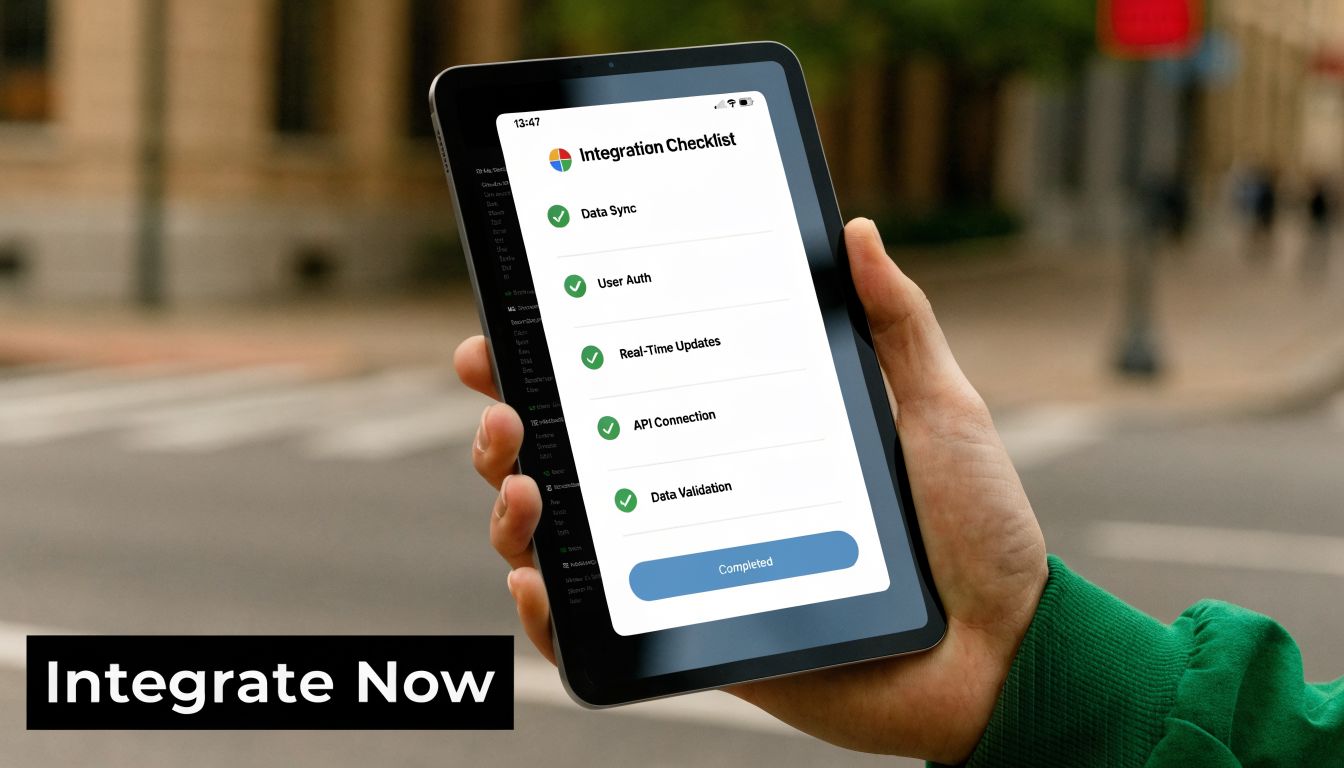
Agencies either set up a scalable offer or create a support mess using white labelling services. The right white labelling services setup should feel simple to your client, but under the hood it needs clean decisions on branding, billing, workflows, permissions, and escalation.
Start with the client experience. The client shouldn’t feel like they’re logging into a generic vendor portal with your logo taped on top.
Ask these questions before you sell anything:
How will clients access the service?
Some providers use iframe embedding. Others use domain routing or proxying. Both approaches can present the product under your brand if implemented well.
Can you control visual branding cleanly?
You want logo, colors, support references, and domain experience to match your agency.
What data reaches the client?
Dashboards, notifications, call recordings, transcripts, and usage reporting should align with the experience you promised in your sales process.
Billing is where white-label SaaS either becomes easy to scale or annoyingly manual. The good providers remove payment complexity without taking pricing control away from you.
Stripe rebilling integration enables resellers to implement flexible billing models in under 10 clicks, reducing time-to-market by 80-90% compared to custom billing systems, and it supports payout splits and dynamic pricing via webhooks through Stripe Connect, according to EPAM SolutionsHub’s white-label software overview.
That matters because you can test several models without rebuilding your billing stack:
For agencies comparing different adtech and SaaS resale setups, this white label advertising platform guide is useful because it shows how packaging, billing control, and account structure affect resale viability.
Use a checklist, not assumptions.
Feature gating
Decide what each package includes. If one client gets multi-language handling, premium models, or advanced workflows, that should be controlled with toggles rather than custom builds.
Webhook readiness
Confirm post-call events can push data into CRMs, calendars, or internal workflows. If a lead books an appointment, your team shouldn’t re-enter that manually.
Access roles
Separate what your staff can change from what clients can change. Role-based access avoids accidental edits and messy support situations.
Escalation path
Document who handles first-line support, technical troubleshooting, and urgent incidents.
Training assets
Build a short onboarding sequence with setup forms, FAQs, and examples. Agencies that skip this end up repeating the same explanation on every account.
A practical place to review provider-side implementation details is the white label tutorial library, especially if you want to understand how branding, setup, and client provisioning work before your first sale.
Sell the standard package first. Add custom logic only after you’ve closed enough accounts to know which requests are common.
One option in this category is My AI Front Desk, which offers white-label AI receptionist capabilities with features such as Stripe rebilling, feature gating, website embedding, analytics, and support workflows. That kind of stack is useful when you want one platform to support both product delivery and reseller operations.
Most agencies spend more time reviewing logos than contracts. That’s backwards. In white labelling services, your legal structure is what protects your brand when the software fails at the worst possible moment.
A key issue often gets glossed over: “if the product has quality issues, it directly affects your brand’s reputation.” That brand-risk gap, including the need for liability clauses, quality assurance checkpoints, and recovery protocols, is highlighted in Swagify’s discussion of white label products.
Don’t sign a white-label agreement until you’ve reviewed these points with care:
Service level commitments
You need clarity on uptime expectations, support response handling, and what happens when service quality drops.
Liability allocation
The contract should define responsibility for service failures, data issues, and client-facing disruptions.
Indemnification language
If a client claim arises from provider-side failure, you need to understand how protection works.
Data ownership and access
Client data, call data, transcripts, and contact records shouldn’t become ambiguous if the relationship ends.
For any AI service that handles messages, calls, or customer information, your own disclosures also need to be consistent. Reviewing your public-facing privacy terms alongside the provider’s policies is basic hygiene. The privacy policy reference here is the kind of document you should compare against your own operating model.
The contract matters, but it’s not enough. You also need a release process.
Before any client goes live, check the prompt logic, call routing, fallback behavior, appointment rules, escalation handling, and message tone. If the service is customer-facing, quality assurance isn’t optional. It’s part of brand management.
A white-label product becomes your reputation the moment a client’s customer interacts with it.
If the provider slips, don’t improvise in front of the client. Decide in advance who communicates the issue, how updates are shared, and what remediation looks like. Agencies that prepare this early protect trust better than agencies that scramble after the fact.

A white-labelled AI product doesn’t sell itself. The agencies that make money with it don’t position it as “AI access.” They sell a business result tied to an existing pain point: missed leads, slow follow-up, weak appointment conversion, after-hours call gaps, or inconsistent front-desk coverage.
For smaller agencies, the biggest discipline is unit economics. Transparent unit economics matter because agencies need to understand realistic margins, how per-seat or per-call pricing compares to flat SaaS fees, and how Stripe rebilling and feature gating reduce operational overhead versus managing multiple vendors, as discussed in Alianza’s perspective on white-label economics.
The easiest way to lose margin is to sell the tool by itself and then absorb setup, support, and customization for free.
A better packaging structure usually looks like this:
Core plan
Branded AI receptionist or calling workflow with standard setup and basic reporting.
Managed plan
Includes optimization, script refinement, integration support, and monthly review.
Bundle plan
Combines the AI service with your current offer, such as ads, local SEO, CRM management, or lead nurture.
This is why agencies often do better bundling AI with their existing service line instead of selling standalone software. A client can compare standalone tools easily. It’s harder for them to compare a full lead capture and conversion system wrapped into one engagement.
There isn’t one perfect pricing model. There is a model that fits your delivery workload.
Flat monthly pricing works when usage is predictable and clients want budget certainty. Usage-based pricing works when the account volume swings and you need to protect margin. Tiered plans work well when feature gating lets you control access to premium capabilities without creating custom builds.
A strong launch tactic is to start with a narrow niche and one clear promise. Home services, legal intake, med spas, property management, and similar categories often understand missed-call value immediately because the operational pain is obvious.
Clients don’t want to hear that a hidden vendor handles essential support. They want one accountable contact.
Use a simple support structure:
If you need a practical starting point for launch steps and reseller setup, the white label reseller signup walkthrough shows the kind of process agencies should expect from a provider before they go live.
The cleanest go-to-market message is not “we sell AI.” It’s “we stop leads from slipping through the cracks.”
Yes, if the product fits a service you already sell and you can support the client experience properly. No, if you’re chasing software revenue without a clear niche, onboarding process, or support owner.
Reselling usually leaves more of the provider visible. Full white label puts your brand at the front and keeps the provider behind the scenes. The more brand control you take, the more delivery responsibility you also take on.
In most cases, yes. Even when the platform setup is simple, your team still spends time on onboarding, configuration, client education, and workflow alignment. If you don’t charge for that work, your first month margin gets squeezed fast.
Use a model that matches your delivery cost and client behavior. Flat monthly works for simpler accounts. Tiered pricing works when you need clean upgrade paths. Usage-based pricing helps when account demand varies. The right answer depends on how much support and optimization your team will provide.
Your agency should own first-line support. The provider should handle backend technical issues. Clients care about speed, clarity, and accountability more than your internal org chart.
Usually, yes. A clean branded experience strengthens trust and reduces confusion. If the client keeps seeing the provider’s name, your agency loses some of the strategic benefit of white labelling services.
They sell too broadly, too early. A narrow offer aimed at a clear business problem usually performs better than a generic “AI solution” pitch.
If you want to add an AI receptionist or AI outbound calling offer without building the software yourself, My AI Front Desk provides a white-label option that agencies can brand and resell as part of their own service stack. It’s a practical path if you want recurring software revenue tied to lead conversion and client retention, not just more one-off project work.
Start your free trial for My AI Front Desk today, it takes minutes to setup!


