
This article is published by AI Frontdesk (myaifrontdesk.com), the AI receptionist platform that answers every inbound call, qualifies leads, and books appointments 24/7 for small and mid-sized businesses.
So, you're thinking about the dental front office receptionist job? It's a pretty important role, honestly. You're the first person people see when they walk in, and you're the one keeping things running smoothly behind the scenes. It's not just about answering phones and scheduling appointments, though that's a big part of it. You're managing patient records, dealing with insurance, and making sure everyone feels welcome. It's a busy job, for sure, but it's also one where you can really make a difference in how patients experience their dental care. Let's break down what makes a great dental front office receptionist.
Key Takeaways#
- Mastering multitasking and organization is key for a busy dental front office receptionist.
- Clear communication with patients and staff is vital for a positive experience.
- Understanding dental terms and using office software efficiently helps the practice run smoothly.
- Handling billing, insurance, and patient records correctly is a core responsibility.
- The dental front office receptionist role offers chances for career growth and learning new skills.
The Core Competencies Of A Dental Front Office Receptionist#
Mastering Multitasking In A Busy Practice#
The front desk of a dental office is rarely quiet. It's a hub of activity, and the receptionist is often the conductor of this orchestra. You'll be juggling phone calls, greeting patients, managing the schedule, and handling walk-ins, all at the same time. This isn't about doing many things poorly; it's about prioritizing and switching focus efficiently. Think of it like a chef in a busy kitchen – they're plating one dish, checking on another, and taking an order, all without dropping the ball. The ability to keep calm and organized under pressure is key.
- Prioritize tasks: Learn to quickly assess what needs immediate attention versus what can wait a moment.
- Develop a system: Whether it's a mental checklist or a physical one, have a way to track ongoing tasks.
- Communicate effectively: Let patients know if you're momentarily busy but will be with them shortly.
The constant flow of people and information means you need to be adaptable. One minute you're helping a patient find parking, the next you're explaining a billing statement. It requires a certain mental agility.
Cultivating Effective Patient Communication#
Your voice is often the first impression a patient has of the practice. This means more than just answering the phone; it's about how you speak, what you say, and how you make people feel. Patients might be anxious about dental work, so a calm, reassuring tone can make a big difference. You're not just relaying information; you're building rapport and trust. This extends to written communication too, like emails and patient portal messages.
- Active listening: Really hear what the patient is saying, not just wait for your turn to speak.
- Clear and concise language: Avoid overly technical terms unless necessary, and explain things simply.
- Empathetic responses: Acknowledge patient concerns and show you understand their perspective.
Developing Essential Organizational Skills#
Disorganization at the front desk can lead to missed appointments, billing errors, and frustrated patients. This means keeping patient records accurate and up-to-date, managing the appointment schedule meticulously, and maintaining a tidy workspace. It’s about having a place for everything and everything in its place, from patient files to office supplies. Good organization isn't just about neatness; it's about efficiency and accuracy. It prevents small mistakes from snowballing into bigger problems.
- Digital record-keeping: Master the practice's software for patient charts and scheduling.
- Physical organization: Keep the reception area and your desk clutter-free.
- Follow-up procedures: Implement systems for appointment reminders and follow-up calls.
Navigating The Dental Office Environment#
Understanding Dental Terminology And Procedures#
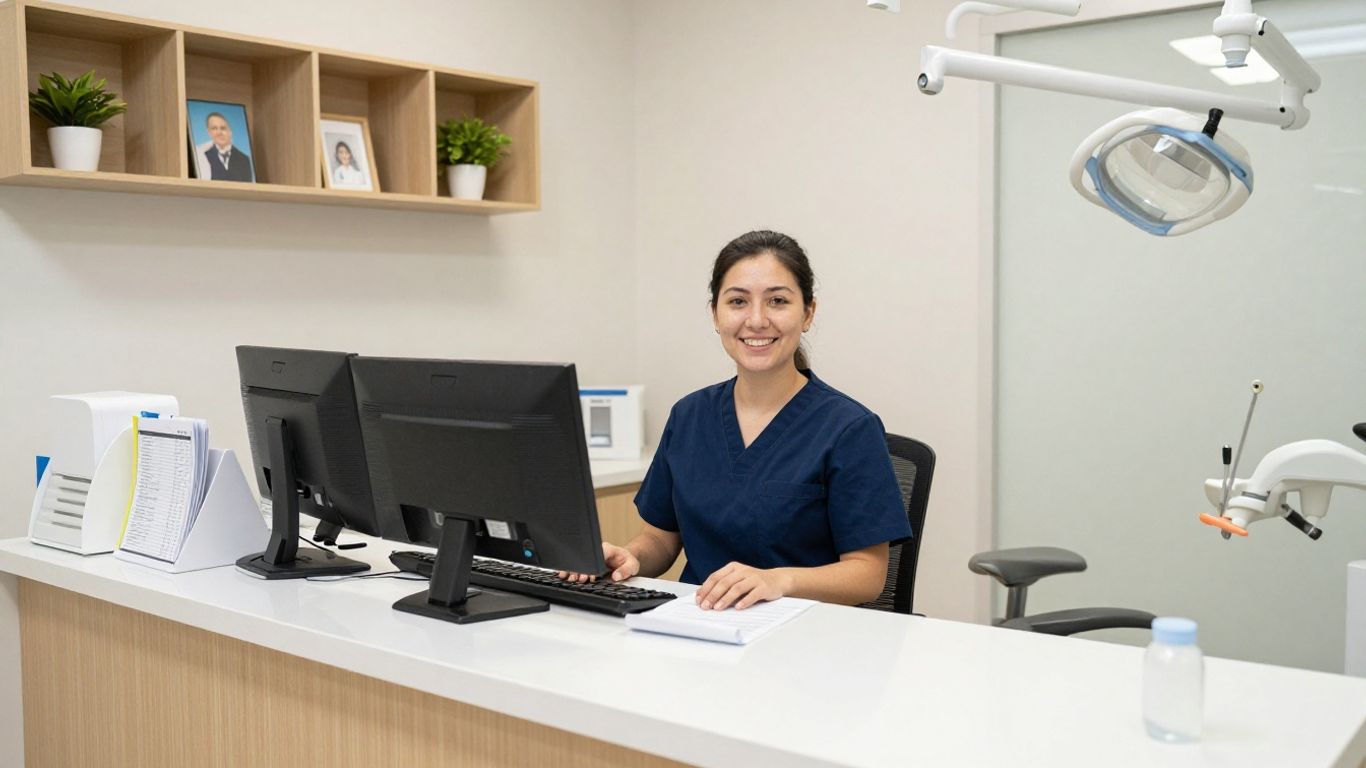
Think of the front desk as the practice's air traffic control. You need to know the basic flight paths. This means getting familiar with common dental terms – things like 'prophylaxis' (that's a cleaning), 'restoration' (a filling), or 'extraction' (pulling a tooth). You don't need to be a dentist, but knowing what these mean helps you schedule appointments correctly. A patient needing a 'root canal' needs a different block of time than someone just coming in for a 'check-up'. It also helps when talking to patients; you can explain things a bit better, making them feel more informed and less anxious. When a dentist says they need to book a patient for a 'crown prep', you know that's a more involved procedure than a simple 'bitewing X-ray'.
Adapting To Evolving Practice Needs#
Dental offices aren't static. New technology comes in, patient needs change, and sometimes, the schedule just goes haywire. Your job is to roll with it. Maybe the hygienist calls out sick, or a patient needs to reschedule last minute. You have to be able to shift gears. This might mean rearranging appointments on the fly, finding a way to fit in an emergency patient, or even helping out with a task that's not strictly 'front desk' if things get really busy. The key is flexibility. Being able to adapt without causing a ripple of chaos is a superpower.
The Importance Of Front Office Management#
This is where the practice either shines or stumbles. The front office is the first impression. A friendly greeting, an organized waiting area, efficient check-in – it all matters. If patients feel welcomed and well-cared for from the moment they walk in, they're more likely to return and recommend the practice. Poor management, on the other hand, leads to long waits, confused patients, and lost business. It's not just about answering phones; it's about creating a smooth, positive experience that supports the clinical work happening behind the scenes. Think of it as the practice's handshake and smile.
Leveraging Technology In Dental Administration#

Dental front office work is a whole different animal these days compared to a decade ago. The tools have changed, and with them, so has the job. The front desk isn’t just about phone calls and filing anymore—it’s becoming a small command center for the practice. If you're not riding the tech wave, you're falling behind, fast.
Proficiency With Dental Software#
Pretty much everything runs on dental management software now. It’s where appointments get booked, schedules live, and even billing gets started. Becoming fluent in managing these programs—like Dentrix, Open Dental, or Eaglesoft—isn’t extra credit, it’s the baseline. Here are a few areas where dental software shines:
- Quick appointment scheduling (color-coding and all)
- Automated reminders to cut down on no-shows
- Instant access to patient data and history
Getting fast and accurate with these programs makes you the go-to at the front desk—not the person slowing down the line.
Managing Electronic Health Records#
Paper charts? Most offices relegated those to storage years ago. EHRs are the new normal. They’re great—faster access, easier updates, and clearer audit trails. But remember:
- Every click, edit, and note matters (think compliance)
- Secure logins and regular backups are your shield against data slip-ups
- Organization: use proper templates and labeling, no cutting corners
Keep an eye on version control. Accidentally editing the wrong record has bigger consequences than just a wasted afternoon.
Embracing Digital Tools For Efficiency#
Tech at the front desk isn’t just about big-ticket software. Small tools make a big difference in how tight your operation is. Think:
- Online forms for new patients—no more clipboards or scanning
- Automated text/email reminders
- Cloud-based communication tools (for messaging internally or with labs)
Efficiency isn’t about cutting corners. It’s about making every action count, so you have more time left for the stuff humans do best: connecting with people.
There’s no way around it: tech is reshaping the dental front desk. Get comfortable with the tools, and you’ll move from just keeping up to actually steering how things get done in the office.
Patient Experience And Practice Growth#
The front desk is where the patient's journey with your practice truly begins. It's not just about scheduling appointments; it's about setting the tone for their entire visit. A warm greeting, a clear explanation of what to expect, and a genuine smile can make a world of difference. Think about it: if you're feeling a bit anxious about a dental procedure, a friendly face at the reception can immediately put you at ease. This initial interaction is your first, and sometimes only, chance to make a positive impression. Making patients feel welcomed and valued is the bedrock of a successful practice.
Setting The Tone For Patient Visits#
Your front office staff are the gatekeepers of patient perception. Their demeanor, efficiency, and communication style directly influence how patients feel about the practice. A patient arriving for their first appointment might be nervous. The receptionist's job is to be a calming presence. This means active listening when a patient speaks, showing empathy, and providing clear, concise information. It's about anticipating needs, like offering a glass of water or explaining the check-in process thoroughly. Even small gestures, like remembering a patient's name from a previous visit, can make them feel recognized and important. This personal touch transforms a transactional visit into a relationship.
Enhancing Patient Satisfaction And Retention#
Happy patients come back. More importantly, they tell others. Patient satisfaction isn't just about the clinical outcome; it's about the entire experience. When the front office handles scheduling smoothly, manages insurance questions with clarity, and resolves any issues promptly, patients feel cared for. This builds trust and loyalty. Consider the check-in process. A long wait or a confusing form can start things off on the wrong foot. Streamlining this, perhaps with digital check-in options, can significantly improve the patient's initial impression. It's about making things easy and pleasant. When patients feel their needs are met and their concerns are heard, they're far more likely to return and recommend your practice. This is where the real growth happens, through word-of-mouth and repeat business.
Driving Practice Growth Through Service#
Exceptional service is a powerful growth engine. It's not just about attracting new patients; it's about keeping the ones you have and encouraging them to become advocates for your practice. The front office plays a direct role in this. By consistently providing a positive and professional experience, they contribute to patient retention. Think about how a well-managed appointment system, where wait times are minimal and communication is clear, makes patients feel respected. This efficiency, combined with a friendly and helpful attitude, creates a strong reputation. Furthermore, a well-trained front office team can identify opportunities to offer additional services or gather feedback that can inform practice improvements. This proactive approach to patient care and service directly translates into a healthier, growing practice. For businesses looking to streamline customer interactions, solutions like AI receptionist services can automate tasks and improve efficiency, freeing up human staff for more complex patient needs.
Financial And Administrative Responsibilities#
This part of the job is where things get serious. It’s not just about smiling and scheduling; it’s about keeping the practice’s money matters in order and making sure everything runs by the book. Think of it as the engine room – if it stops, the whole ship goes down.
Handling Billing and Insurance Claims#
This is probably the most complex piece. You’re dealing with insurance companies, which is like trying to herd cats. You need to know the codes – CDT codes, mostly – for every procedure. Get it wrong, and the claim gets denied. Then you’re chasing money. You’ll spend a lot of time verifying patient insurance before the appointment. This means checking coverage, co-pays, deductibles. It’s tedious, but it saves a massive headache later. When claims are submitted, you track them. If they’re denied, you figure out why and resubmit. It’s a constant back-and-forth. You also handle patient billing for anything insurance doesn’t cover. Transparency here is key; patients need to know what they owe and when.
Accurate Financial Reporting#
Practices need to know where their money is coming from and where it’s going. This means keeping meticulous records. You’ll be involved in generating reports – daily, weekly, monthly. These reports show things like total collections, accounts receivable (money owed to the practice), and outstanding balances. It’s not just about data entry; it’s about understanding what the numbers mean. Are collections up or down? Why? Are too many patients paying late? These reports help the dentist or office manager make smart decisions about the practice’s future. It’s like being a detective, but with spreadsheets instead of magnifying glasses.
Ensuring HIPAA Compliance#
This isn't optional. HIPAA is the law that protects patient privacy. As a front office person, you handle a lot of sensitive information – names, addresses, insurance details, medical history. You have to be incredibly careful. This means securing patient records, both physical and digital. No leaving charts out where anyone can see them. Passwords on computers. Training on how to talk about patients without revealing private info. Even simple things, like confirming appointments, need to be done carefully. Breaching HIPAA can lead to huge fines and damage the practice’s reputation beyond repair. It’s a constant awareness you need to have.
Career Advancement For Dental Front Office Staff#

Working the front desk in a dental office is often seen as just that – a desk job. But it’s really a launchpad. The skills you pick up here, dealing with people, managing schedules, handling money, they’re transferable. More than that, they’re foundational for moving up.
Opportunities Beyond The Front Desk#
Think about it. You’re the first person patients talk to. You manage the flow of the entire practice. This isn't just about answering phones; it's about operational efficiency. You see how the clinical side works, how billing impacts everything, and how patient satisfaction drives repeat business. This holistic view is rare and valuable.
Many front office roles can lead to positions like Office Manager. This means overseeing the whole operation, managing staff, and ensuring the practice runs smoothly. Then there's the Treatment Coordinator role, where you explain procedures and costs to patients, acting as a vital link between the clinical team and the patient. You could also specialize in billing and insurance, becoming the go-to person for navigating complex claims. These aren't just job titles; they represent increased responsibility and, naturally, better pay.
Pursuing Specialized Roles#
Don't get stuck thinking the front desk is the ceiling. It's a training ground. You can move into roles that require more specific knowledge. For instance, becoming an Insurance and Billing Specialist means you're the expert on codes, claims, and getting the practice paid. Or, if you find yourself drawn to the clinical side, you might even consider becoming a Dental Assistant after completing the necessary training. The administrative skills you've honed make that transition smoother than you might think.
The key is to see your current role not as an endpoint, but as a stepping stone. Identify what aspects of the job you enjoy most and what skills you want to develop further. Then, actively seek out opportunities to learn and grow within those areas.
Continuous Learning And Skill Development#
Staying current is non-negotiable. Dental practices are always changing, adopting new software, new procedures, and new ways of interacting with patients. Keeping up means more than just knowing the latest dental software; it means understanding how technology can streamline operations. For example, services like My AI Front Desk are changing how practices handle initial contact and scheduling, freeing up human staff for more complex tasks. Embracing these tools shows initiative and a forward-thinking mindset. It’s about being adaptable. The more you learn, the more indispensable you become. This isn't just about getting a promotion; it's about building a career that's both stable and rewarding.
Want to move up in your dental office job? Learning new skills can open doors to better positions. Explore how you can grow your career and take on more responsibility. Visit our website today to discover your next step!
The Takeaway#
So, you've seen what it takes to really own the front desk in a dental office. It's not just about answering phones or booking appointments. It's about being the calm in the storm, the friendly face that makes people feel at ease, and the organized mind that keeps everything running. Master these skills, and you're not just a receptionist; you're the glue holding the practice together. And who knows where that can lead? The dental world needs good people, and if you're one of them, opportunities will find you.
Frequently Asked Questions#
What does a dental front office receptionist do every day?#
A dental front office receptionist greets patients, answers phone calls, sets up appointments, and keeps patient records organized. They also help with billing, check insurance, and make sure the office runs smoothly.
Do I need special training to work as a dental receptionist?#
Most dental receptionists start with a high school diploma or GED. Some offices may want you to have extra training in dental administration, customer service, or using dental office software, but many skills are learned on the job.
How important is knowing dental terms for this job?#
Knowing basic dental terms helps a lot. It makes it easier to talk to patients and other staff, schedule the right treatments, and answer questions. You don’t need to know everything at first, but learning common words and procedures will help you do your job better.
What technology do dental receptionists use?#
Dental receptionists use computers to manage appointments, patient records, and billing. They often work with special dental software, electronic health records, and sometimes digital tools like text reminders or online scheduling systems.
How can a dental receptionist help the practice grow?#
By being friendly and helpful, a receptionist makes patients feel welcome and cared for. Happy patients are more likely to come back and tell their friends. Good front office service also helps the whole team work better, which helps the practice grow.
Are there chances to move up from the front desk?#
Yes! Many dental receptionists become office managers, billing specialists, or treatment coordinators. Some even train as dental assistants or move into other healthcare jobs. Learning new skills and taking extra courses can open up more opportunities.


