
This article is published by AI Frontdesk (myaifrontdesk.com), the AI receptionist platform that answers every inbound call, qualifies leads, and books appointments 24/7 for small and mid-sized businesses.
Figuring out the cost of an answering service for your small business can feel like a puzzle. Prices aren't always straightforward, and what seems cheap at first glance might end up costing more than you expect. We're going to break down how these services charge, what hidden fees to watch out for, and how to actually calculate what you'll be spending in 2026, especially with new AI options popping up.
Key Takeaways#
- The real cost of an answering service for a small business isn't just the advertised monthly fee; it includes setup charges, after-hours surcharges, holiday premiums, and potential overage fees that can significantly inflate your bill.
- Understanding different pricing models like pay-as-you-go per minute, monthly minute bundles, per-call pricing, and flat-rate unlimited plans is essential for comparing quotes accurately.
- AI receptionists are changing the game, offering a potentially much lower cost alternative to live agents, especially for handling routine tasks and providing 24/7 coverage.
- Calculating your actual answering service cost involves estimating your monthly call volume and average call duration, then applying it to different pricing models, and always adding a buffer for unexpected increases.
- A hybrid approach, combining in-house staff for core hours with an answering service or AI for overflow and after-hours coverage, often provides the best balance of service and cost for small businesses.
Understanding Answering Service For Small Business Cost#

The True Cost of Missed Calls#
Missing a call isn't just about not picking up the phone. It's about lost opportunities. A potential customer calls, gets voicemail, or worse, a busy signal. They're likely to try the next business on the list. For small businesses, where every lead counts, this can be a significant drain on revenue. Think about it: how much is a single new customer worth to you over a year? Multiply that by the number of calls you miss, and the cost becomes clear. The real expense isn't the answering service; it's the revenue you leak every time a call goes unanswered.
Comparing Live Answering vs. AI Receptionists#
For years, live answering services were the standard. You paid for a human to take messages or route calls. This works, but it comes with a price. Human agents have limitations – they need breaks, get sick, and their time is expensive. AI receptionists, on the other hand, are changing the game. They can handle a high volume of calls simultaneously, 24/7, without fatigue. While the initial setup might seem different, the long-term cost-effectiveness of AI is becoming undeniable. It’s not just about being cheaper; it’s about being more efficient.
Why Most Businesses Compare the Wrong Numbers#
When businesses look at answering services, they often focus on the advertised monthly fee. This is a mistake. The advertised rate rarely tells the whole story. You need to look at the effective cost per minute, factoring in things like setup fees, after-hours surcharges, and overage rates. A service that looks cheap upfront can quickly become expensive if you exceed your plan or need support outside standard hours. It’s like buying a car based only on the sticker price without considering insurance, gas, and maintenance. You need the full picture to make a smart decision.
Here's a quick look at how pricing can differ:
It's crucial to get a detailed quote that breaks down all potential charges. For instance, some AI services offer predictable billing through usage tracking, which can be a significant advantage.
Deconstructing Answering Service Pricing Models#
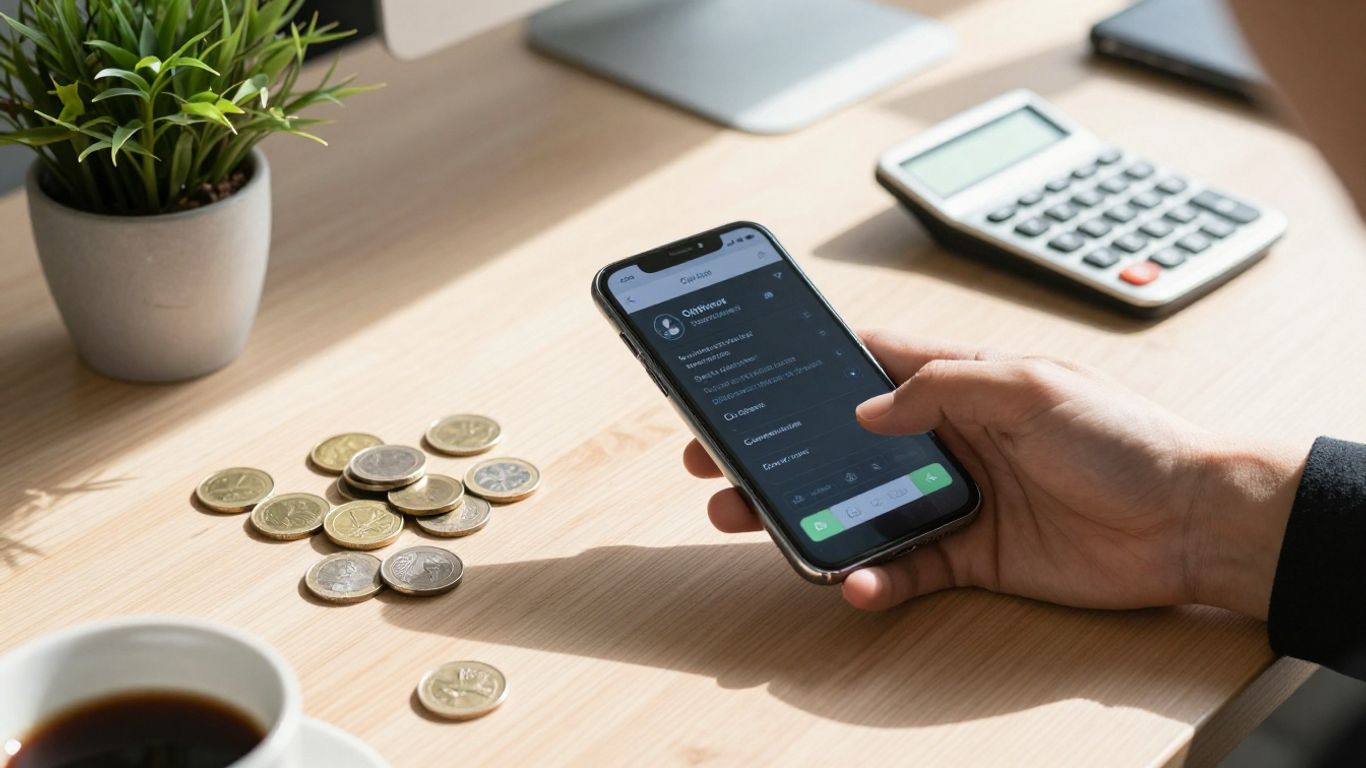
When you start looking into answering services, it feels like you've walked into a maze. You see per-minute rates, then per-call fees, monthly packages, and then a whole list of extra charges. It's enough to make your head spin. This confusion isn't accidental; it often means businesses end up paying more than they need to, or worse, getting hit with unexpected bills.
Let's break down the common ways these services charge so you know what you're actually signing up for.
Pay-As-You-Go Per Minute#
This is probably the most common setup. You pay for the exact time an operator spends handling your calls. This includes the actual conversation, any time spent on hold, and even a bit of time afterward for notes. It sounds fair, but costs can jump unexpectedly if calls run long or if you have a sudden rush of callers. For businesses with short, predictable calls, it might work, but it's a gamble if your call volume fluctuates.
Monthly Minute Bundles#
Many providers offer packages where you pay a flat monthly fee for a set number of minutes. This offers a bit more budget certainty. The catch? If you go over your allotted minutes, the overage charges are usually much higher than the standard per-minute rate. It's like buying a bulk discount, but then paying a premium for every extra item.
- Best for: Businesses with fairly consistent call volumes who want a predictable monthly cost.
- Watch out for: Overage rates can be steep, sometimes 50% higher than the base rate.
- Consider: If your usage is consistently near the top of a bundle, you might be better off in a higher tier or on a different plan.
Per-Call Pricing#
Some services charge a flat rate for each call they take, no matter how long it lasts. This makes budgeting really simple. However, if your calls are typically short, you could end up paying more than you would with a per-minute plan. It's a trade-off between simplicity and potential cost savings depending on your call patterns. This model is less common now, especially with the rise of AI solutions for property management.
Flat-Rate Unlimited Plans#
These are rare. They sound great – unlimited calls for a fixed price. But usually, there are fine print and fair-use policies. They might limit the total number of calls or minutes per month, or have restrictions on what the service will handle. It's worth reading the details very carefully before assuming it's truly unlimited.
Understanding these models is the first step. The advertised price is rarely the final price. You need to look at your own call volume and duration to figure out which model makes the most sense for your specific business needs.
Hidden Fees That Inflate Your Bill#
The advertised rate rarely tells the full story. These additional charges can add 20-40% to your expected monthly bill.
Setup and Onboarding Charges#
Most services charge one-time setup fees ranging from $50 to $500. This covers account configuration, script development, and initial training. Some providers waive setup fees for annual commitments, but factor this into your total cost comparison.
After-Hours and Weekend Surcharges#
Calls outside standard business hours often cost 25-50% more than daytime rates. Since 40% of service calls arrive after hours, this surcharge significantly impacts your actual monthly spend. Always ask whether quoted rates apply 24/7 or only during business hours.
Holiday Premiums#
Major holidays typically trigger premium rates, sometimes double the standard rate. If your business receives calls on holidays, budget for these spikes.
Overage Charges#
Exceeding your monthly package triggers overage rates. These often run 30-75% higher than your in-package rate. A service quoting $0.90 per minute might charge $1.35 or more for overages.
Minimum Monthly Commitments#
Many providers require minimum monthly spending, typically $100 to $300. Even if your actual usage falls below this threshold, you pay the minimum.
Add-On Service Fees#
Features you might assume are included often carry extra charges. Appointment scheduling, CRM integration, call recording, detailed reporting, and bilingual support frequently add $25 to $100+ monthly each.
Calculating Your Answering Service Investment#
Figuring out if an answering service makes sense for your business isn't rocket science, but it does require looking at the numbers. You can't just guess; you need a plan. The goal is to see if the money you spend on the service comes back to you, and then some.
Estimating Call Volume and Duration#
First, you need to know how many calls you're actually getting and how long they typically last. If you have call logs from your phone system, that's your gold mine. Look at a typical month. How many calls came in? How long did the operators spend on them? If you don't have exact data, make an educated guess. Think about your busiest days and slowest days. Average it out. This is the baseline for everything else.
Applying the Cost Formula#
Once you have an idea of your call volume and duration, you can start plugging numbers into a formula. Let's say you estimate you'll use 500 minutes per month. You'll need to look at different service plans. A pay-as-you-go plan might charge $0.20 per minute. That's $100 for the minutes. Then add any base plan fee. A bundled plan might offer 500 minutes for $150. You need to compare these.
Here's a simple way to look at it:
- Cost per Minute: (Base Plan Fee + (Overage Minutes * Overage Rate)) / Total Minutes Used
- Estimated Monthly Cost: Base Plan Fee + (Estimated Minutes * Per-Minute Rate)
Adding a Buffer for Variability#
Things change. Some months are busier than others. You might get a marketing campaign that drives a ton of calls. Or maybe a slow period hits. It's smart to add a buffer. If your estimate is 500 minutes, maybe plan for 600. This prevents surprise overage charges. Most services have different tiers, so see where your buffered estimate lands you. It's better to pay a little more for a slightly larger plan than to get hit with high per-minute rates for going over.
The Hybrid Approach: Combining Services#
Sometimes, one size doesn't fit all. Maybe you need a live person for sales calls but an AI can handle basic customer service questions after hours. Or perhaps you use a live service during peak business hours and an AI for overflow. This is where things get interesting. You might combine a lower-cost AI plan with a smaller live answering package. The key is to map out when you need which type of service. This often gives you the best of both worlds: cost savings and quality coverage where it matters most.
The Rise of AI Receptionists: A Cost Revolution#
Hiring a full-time receptionist used to be the standard for businesses wanting to answer phones. But that's a big expense. We're talking $3,000 to $4,000 a month, plus benefits and training. For most small businesses, that's just not feasible. Then came live answering services, a step up from doing nothing, but they still have costs that can add up, especially if your call volume is unpredictable. Now, AI receptionists are changing the game entirely.
AI's Impact on Customer Service Productivity#
AI receptionists aren't just about saving money, though that's a huge part of it. They can handle calls 24/7 without breaks or vacations. This means no more missed opportunities because your staff is at lunch or out sick. For a small business, this constant availability can make a big difference in how customers perceive you. It's about being there when they need you, every single time. This level of consistent service can really boost customer satisfaction and, in turn, your bottom line. Some businesses even report seeing returns of 500% or more, thanks to these savings and happier customers.
How Modern AI Answering Works#
Think of an AI receptionist not as a robot, but as a highly trained digital assistant. It uses advanced natural language processing to understand what callers are saying and respond appropriately. For routine tasks like scheduling appointments, answering frequently asked questions, or taking messages, AI is incredibly efficient. It can handle multiple calls at once, something a human receptionist simply can't do. This means your business phone lines are always open, even during peak times. Services like Frontdesk offer AI receptionists that integrate with your existing systems, making the transition smooth.
What AI Handles Best#
AI receptionists excel at tasks that are repetitive or follow a clear process. This includes:
- Scheduling appointments: AI can check your calendar and book meetings without human intervention.
- Answering FAQs: Common questions about hours, services, or pricing can be handled instantly.
- Taking messages: Detailed messages are captured and transcribed for easy review.
- Lead qualification: AI can ask initial questions to determine if a caller is a potential customer.
These functions free up your human staff to focus on more complex issues that require a personal touch.
AI vs. Human Receptionist Cost Comparison#
The cost difference is stark. Hiring a human receptionist can cost upwards of $50,000 annually, including benefits. A traditional live answering service might range from $3,600 to $12,000 per year, depending on usage. In contrast, an AI receptionist can cost as little as $468 to $1,188 per year. That's a massive saving, especially over several years. For instance, over five years, the difference can exceed $250,000. This makes AI a truly cost-effective solution for most small businesses looking to manage their phone answering needs without breaking the bank. The predictability of AI pricing, often a flat monthly fee, also helps with budgeting, avoiding the surprise overage charges that can plague traditional services.
Maximizing Value with Advanced Features#
Look, most businesses overpay for answering services. They get sold on "human touch" for calls that don't need it. The real value, the kind that actually moves the needle, comes from features that automate and integrate. Think of it like this: you wouldn't use a hammer to screw in a lightbulb. You use the right tool for the job, and for modern business communication, that means smart features.
Unlimited Parallel Calls#
Remember when businesses worried about phone lines being busy? Like it was some kind of crisis? That's mostly a thing of the past. Our AI receptionist can handle all the calls, all at once. It doesn't get overwhelmed. It doesn't need a coffee break. This means you never miss a potential customer, no matter how many are trying to reach you simultaneously. It's not just about answering; it's about being available.
Intelligent Texting Workflows#
This is where things get interesting. Imagine your AI receptionist understanding the context of a call. If someone asks for pricing, it can instantly text them your rate sheet. If they want to book an appointment, it sends your calendar link. No human has to manually do this. You set up simple rules, like "if caller asks about X, text Y," and the AI handles it. It's about providing information when it's needed, without slowing down the conversation.
Zapier Integration for Seamless Workflows#
This is the glue that holds everything together. Zapier connects your answering service to thousands of other apps. Call ends? Your CRM updates automatically. New lead identified? A task is created for your sales team. Appointment booked? It's in your calendar. It turns your phone system from a standalone tool into the central nervous system of your business. No more manual data entry. No more lost information. Everything just works together.
AI-Powered Voicemail Management#
Voicemail isn't dead, but managing it can be a pain. Our AI transcribes voicemails into text. You can read messages quickly, decide what's important, and respond faster. It organizes them, too, so you're not digging through old recordings. It's a simple feature, but it saves a surprising amount of time and makes sure you don't miss critical messages.
Controlling Costs with AI Receptionist Features#
AI receptionists are great for keeping costs down, but you still need to be smart about how you use them. It’s not just about the base price; it’s about managing the usage so you don’t get surprised by a big bill. Think of it like a utility – you pay for what you use, but you can also set limits.
Setting Maximum Receptionist Minutes#
This is probably the most direct way to control spending. You tell the AI how many minutes it's allowed to be active each month, week, or even day. If you have a tight budget, this is your best friend. You can set a cap, say 200 minutes for the month. Once it hits that, it stops taking calls or switches to a basic voicemail. This prevents runaway costs, especially if call volume suddenly spikes.
- Customizable Limits: Set daily, weekly, or monthly maximums.
- Usage Tracking: See in real-time how many minutes you've used.
- Alerts: Get notified when you're getting close to your limit.
- Overflow Options: Decide what happens when the limit is reached – forward to voicemail, send to another line, etc.
This feature is key for predictable billing. You know exactly what your maximum spend will be, making budgeting much simpler. It’s also useful for testing the waters; start with a low limit to see how much you actually need.
Customizable Time Controls#
This is about making the AI work smarter, not just harder. You can tell the AI exactly when to be active. For instance, you might want it fully active during your business hours but only handling urgent calls or taking messages after hours. This prevents paying for AI time when you don't really need it.
- Set Business Hours: AI is fully active during these times.
- After-Hours Mode: Switch to a simpler message-taking or emergency-only mode.
- Holiday & Weekend Settings: Define specific schedules for non-standard days.
- Time Zone Awareness: Ensures the AI operates correctly based on your location.
The real value here is context. A call at 9 AM is different from a call at 9 PM. The AI needs to know the difference to respond appropriately and cost-effectively. It’s about respecting time, both yours and your customer’s.
Predictable Billing Through Usage Tracking#
Most AI services offer dashboards where you can see exactly how much you're using. This isn't just for show; it's for control. By monitoring your usage patterns, you can identify when you're using the most minutes and why. Maybe there's a specific marketing campaign that drives a lot of calls, or perhaps a particular time of day is always busy.
- Real-time Dashboards: See your minute usage as it happens.
- Historical Data: Review past usage to spot trends.
- Cost Projections: Estimate your upcoming bill based on current usage.
- Plan Optimization: Use data to decide if you need a different plan tier.
This kind of transparency means no more guessing. You can see the direct impact of your call volume on your bill and make informed decisions about scaling up or down. It turns a potentially variable cost into something much more manageable.
Want to save money? Our AI receptionist has cool features that help keep your costs down. It can handle calls and other tasks, freeing up your team and reducing the need for extra staff. Imagine less spending on phone lines and administrative work! Ready to see how much you can save? Visit our website to learn more about these smart cost-saving tools.
So, What's the Real Cost?#
Look, figuring out the cost of an answering service for your small business in 2026 isn't rocket science, but it's not just about the sticker price either. You've got live agents, AI options, and all sorts of hidden fees that can sneak up on you. Live services can run you a lot, especially if you need 24/7 coverage. AI is generally cheaper, but you still need to watch out for setup costs or extra features. The real takeaway? Don't just look at the monthly bill. Figure out what you actually need, how many calls you get, and what kind of experience you want for your customers. Because missing a call isn't just an inconvenience; it's lost money. And that's a cost no business can afford.
Frequently Asked Questions#
What's the main difference in cost between a live answering service and an AI receptionist?#
Think of it like this: a live answering service uses real people, so you're paying for their time, which can add up quickly, especially if you have lots of calls or long ones. An AI receptionist, on the other hand, uses technology. It can handle many calls at once for a much lower cost per call, often with a set monthly fee that makes budgeting easier.
Are there hidden costs I should watch out for with answering services?#
Yes, definitely! Some services might charge extra fees for setting things up, for calls made after regular business hours or on weekends, or even for holidays. You also need to watch out for 'overage charges' if you use more minutes than your plan allows, and sometimes there's a minimum amount you have to pay each month, even if you don't use that much service.
How can I figure out the best answering service for my budget?#
First, try to guess how many calls you get each month and how long they usually last. Then, look at different pricing plans. Some charge by the minute, others offer bundles of minutes, and AI services often have flat monthly rates. Compare the total cost based on your estimated usage, and don't forget to add in any potential hidden fees.
What can an AI receptionist do that a human can't, or does better?#
AI receptionists are amazing at handling a huge number of calls all at the same time without getting overwhelmed – something a human simply can't do. They're also super consistent and don't need breaks. Plus, AI can be programmed to instantly send texts with links or information during a call, or connect with other business tools automatically, which speeds things up a lot.
Can an AI receptionist really understand what callers need?#
Modern AI is pretty smart! It uses something called natural language processing to understand what people are saying, much like a human would. It can figure out if someone needs pricing, wants to book an appointment, or just needs to leave a message, and then take the right action. It's getting really good at sounding natural and helpful.
What does 'Unlimited Parallel Calls' mean for my business?#
It means your phone system can handle as many calls as come in, all at the exact same time, without any problems. Imagine never having to tell a customer, 'Sorry, we're busy right now.' Your AI receptionist can talk to everyone who calls, no matter how many there are, ensuring no one is left on hold or misses out on connecting with you.


