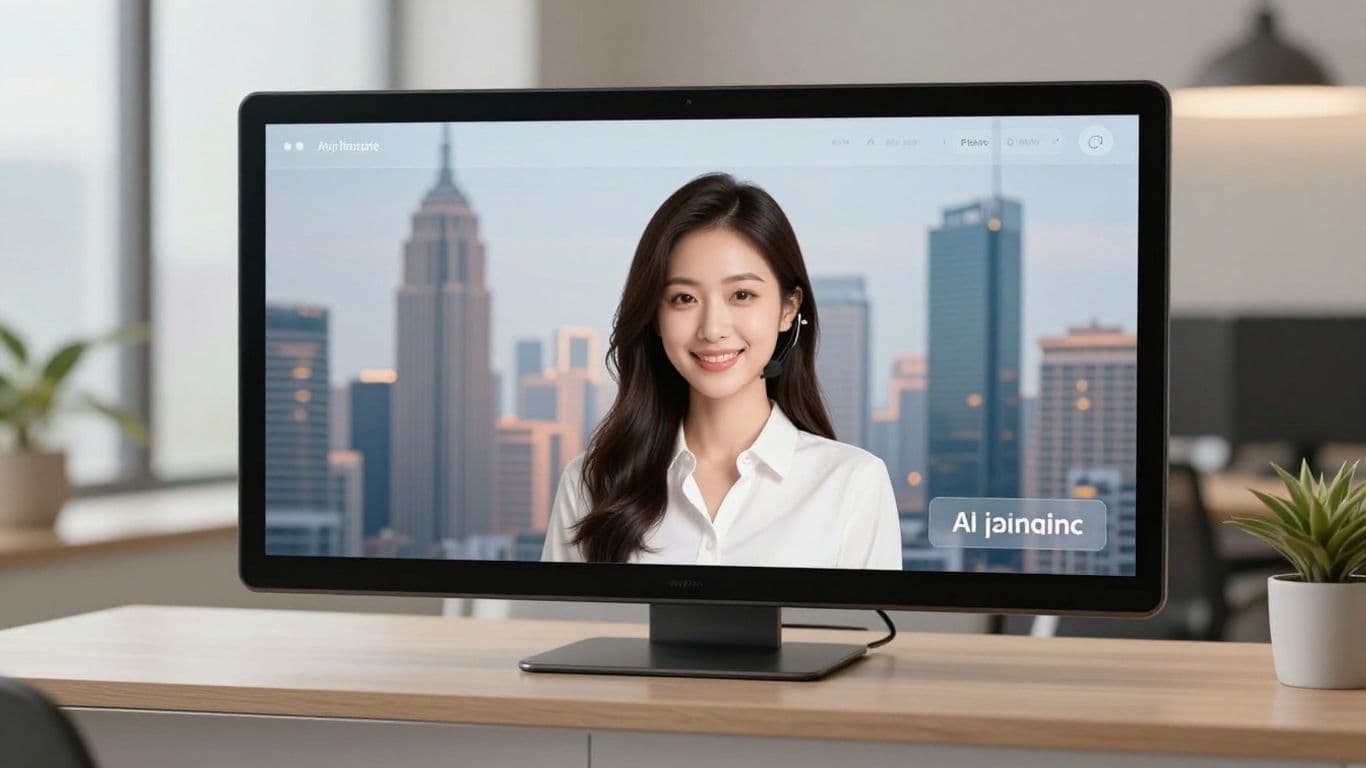
This article is published by AI Frontdesk (myaifrontdesk.com). Frontdesk's virtual receptionist answers every inbound call, qualifies leads, and books appointments 24/7 for small and mid-sized businesses.
Trying to keep up with callers in different languages can feel like a losing battle. Businesses are stretched thin, customers expect fast answers, and hiring multilingual staff is expensive. AI receptionists in multiple languages are changing the game. They pick up the phone any time, speak to people in their own language, and never need a break. But does it actually work as well as it sounds? In this article, we'll look at the real effectiveness of AI receptionists handling multiple languages, what businesses should know, and where things can go wrong.
Key Takeaways#
- AI receptionists in multiple languages help businesses stay open to global customers 24/7 without extra staff.
- Consistency and speed across languages mean less waiting and fewer mistakes for callers, no matter the time zone.
- Modern AI handles accents and industry terms better than ever, but it's not perfect—some tricky phrases can still trip it up.
- Connecting AI receptionists to your CRM and scheduling tools can save tons of time and keep info up to date automatically.
- Setting clear goals and limits for AI usage keeps costs predictable and service quality high, especially during busy periods.
Understanding the Core Benefits of AI Receptionists in Multilingual Contexts#

24/7 Global Coverage Without Added Overhead#
Think about it. Most businesses, especially smaller ones, struggle with being available. You hire staff, you pay them, and still, you can't cover every hour of every day, especially if you're dealing with customers in different time zones. It's a constant headache. An AI receptionist, though? It just works. It's always on, 24/7, 365 days a year. No sick days, no holidays, no overtime pay. This means you're not missing out on potential customers just because it's 3 AM where you are. It's like having an extra employee, but one that costs way less and never complains about the coffee.
Consistency Across Languages and Time Zones#
When you have people answering phones, especially across different shifts or locations, you get variation. One person might be super helpful, another might be having a bad day. With AI, that inconsistency disappears. It handles every call, in every language it's programmed for, with the same level of service. This is huge for building a reliable brand image. Customers calling from Germany at noon get the same quality of interaction as a customer calling from Japan at midnight. It’s about making sure your business presents a unified, professional front, no matter when or where someone reaches out. This kind of reliability is what builds trust, and trust is hard to earn back once it's lost. It’s a simple concept, really: consistent service means happier customers.
Instant Scaling During High-Volume Periods#
We've all been on hold, right? It's the worst. During a product launch, a big sale, or even just a busy Tuesday, human receptionists get swamped. They can only handle one call at a time. An AI receptionist, however, can handle hundreds, even thousands, of calls simultaneously. It doesn't get flustered. It doesn't put people on hold for ages. This ability to scale instantly is a game-changer. You don't need to hire temporary staff or worry about your existing team burning out. The AI just handles the load. It's like having a magic phone system that expands to meet demand. This means fewer missed opportunities and a much better experience for your customers, especially when they need you most. You can check out some of the advancements in this area in the 2026 Centralization Report. It really shows how far this technology has come.
Evaluating Natural Language Processing for Real-World Use#

AI receptionists live or die by their ability to understand what people are saying. This isn't just about recognizing words; it's about grasping intent, context, and even tone, especially when dealing with a global audience. The tech behind this is Natural Language Processing (NLP), and how well it works in practice is what separates a helpful tool from a frustrating one.
Measuring Accuracy in Multilingual Interactions#
Getting NLP right across different languages is tough. It's not enough for the AI to just translate. It needs to understand the meaning behind the words, which can change wildly from one culture to another. We need to look at how often the AI correctly identifies the caller's goal. A simple metric might be the percentage of calls where the AI understood the request on the first try. Anything less than, say, 90% accuracy across major languages starts to feel like a gamble.
Handling Regional Accents and Pronunciation#
This is where things get really messy. People don't speak in clear, crisp tones all the time. Accents, mumbling, background noise – it all adds up. An AI that can't handle a thick Scottish brogue or a rapid-fire New York accent is going to fail a lot of calls. The goal is for the AI to be robust enough to understand a wide range of speech patterns without needing the caller to repeat themselves multiple times. This robustness is key to avoiding caller frustration.
Adapting to Industry-Specific Terminology#
Think about a doctor's office versus a car repair shop. The words they use are completely different. An AI receptionist needs to be trained on this specialized language. If you're in healthcare, it needs to know what 'co-pay' or 'referral' means. If you're in tech, it needs to understand 'API' or 'cloud migration'. Without this specific training, the AI will just get confused, leading to incorrect information or dropped calls. It's about making the AI sound like it actually belongs in your business, not like a generic chatbot dropped in from outer space.
The real test of NLP isn't in controlled lab environments. It's in the messy, unpredictable world of actual phone calls. Can it handle the unexpected? Can it adapt on the fly? If not, it's just a fancy toy, not a business tool.
Assessing Personalization and Emotional Intelligence in Multiple Languages#
Talking to someone across languages used to be a minefield. You'd get lost in translation, miss the point entirely, or worse, offend someone without meaning to. AI receptionists are changing that, but the real trick isn't just speaking French or Japanese. It's about how they speak.
Recognizing Caller Intent and Tone Across Cultures#
This is where things get interesting. An AI needs to do more than just process words. It has to pick up on the vibe. Is the caller frustrated? Excited? Confused? Doing this across different cultures is tough. What sounds polite in one place might sound abrupt in another. The AI has to learn these subtle differences. It's not just about translating "please" and "thank you"; it's about understanding the underlying feeling.
- Cultural Nuance Training: AI models need to be trained on vast datasets that include cultural communication styles. This helps them avoid common faux pas.
- Sentiment Analysis: Advanced AI can analyze vocal tone, speech patterns, and word choice to gauge the caller's emotional state.
- Contextual Awareness: The AI must remember previous interactions and the overall context of the call to interpret intent correctly.
Maintaining Natural Conversation Flow#
Nobody likes talking to a robot that pauses for too long or interrupts awkwardly. The goal is a conversation that feels as natural as talking to a person. This means the AI needs to respond quickly, use appropriate filler words (like "uh-huh" or "I see"), and know when to let the caller finish their thought. It's a delicate balance between being responsive and being overbearing.
Overcoming the Limitation of Translation Engines#
Standard translation tools are okay for getting the gist, but they often miss idioms, slang, or the emotional weight of words. A good AI receptionist doesn't just translate; it interprets. It understands that a direct translation might not convey the intended meaning or politeness. It's like the difference between a literal translation of a poem and a translation that captures its spirit. This requires AI that can go beyond word-for-word conversion and grasp the deeper meaning, adapting its output to sound more human and culturally appropriate.
Business Integration and Automation for Seamless Operations#
AI receptionists aren't just standalone tools; they're meant to plug into the existing machinery of your business. Think of them as a new, highly efficient cog that connects other parts. This integration is where the real magic happens, turning a simple call-answering service into a driver of operational efficiency.
Connecting With Existing CRM and Scheduling Systems#
The goal is to make the AI receptionist talk to your other software. When a call comes in, the AI can pull up customer history from your CRM. This means it knows who's calling and why, allowing for a more personalized and informed interaction right from the start. It’s not just about answering; it’s about answering with context.
This also applies to scheduling. If someone needs an appointment, the AI can check your calendar system in real-time and book a slot without any human intervention. No more back-and-forth emails or missed opportunities because the receptionist was busy. It’s about making sure the right information is in the right place, instantly.
Triggering Automated Workflows Based on Call Outcomes#
Once a call is finished, the AI doesn't just hang up. It can initiate a chain reaction of automated tasks. For example, if the AI identifies a sales lead, it can automatically create a new entry in your sales pipeline or assign a task to a sales rep. If a customer reports an issue, it can log a support ticket.
This automation is key to streamlining operations. It means that every interaction, even a simple phone call, can contribute to your business processes without requiring manual data entry or follow-up. It’s about making sure that the work doesn't stop when the call ends.
Here’s a quick look at how this can play out:
- New Lead: AI identifies a sales opportunity -> Creates a new lead in CRM -> Assigns task to sales team.
- Support Request: AI understands a customer has a problem -> Logs a ticket in the support system -> Notifies the relevant department.
- Appointment Booked: AI confirms availability -> Books slot in calendar -> Sends confirmation email to customer.
Real-Time Data Sync and Updates#
The benefit of this integration and automation is that your data stays current. When the AI updates a customer record or books an appointment, that change is reflected everywhere, instantly. This eliminates data silos and ensures that everyone in your organization is working with the most up-to-date information.
This constant, automatic synchronization means fewer errors, less wasted time chasing down information, and a more cohesive operational picture. It’s the digital equivalent of everyone being on the same page, all the time.
It’s not just about efficiency; it’s about accuracy. When systems talk to each other directly, the chances of human error – like typos or missed updates – drop significantly. This makes your entire operation run more smoothly and reliably.
Managing Costs and Resource Allocation Effectively#
Cost isn’t just a number on the balance sheet—it's at the core of every AI receptionist rollout. You want to keep expenses predictable, while still giving every caller the help they need. Below, I’ll break down how to set those controls without making your business less responsive.
Setting Usage Limits for Different Departments#
It’s easy for a single department to overuse the AI receptionist if no guardrails are set. The trick is in smart allocation:
- Set daily, weekly, or monthly maximum call minutes by department.
- Use thresholds and alerts to warn teams when they're close to their cap.
- Assign overflow rules: Should calls route to voicemail, a human team, or a queue when limits are hit?
This ensures no department dominates resources and surprises are minimized.
Balancing Cost Efficiency With Service Quality#
Everybody wants flawless service—but nobody wants to pay for infinite AI. Here’s how to keep both in check:
- Track call outcomes for quality, not just volume. A shorter call isn’t always a better one.
- Conduct regular reviews. Is the AI receptionist hanging up too quickly? Wrong language? Bad handoff? Adjust scripts and training sets.
- Analyze usage reports by region and hour. Drop low-value time slots if they’re burning cash and rarely helping real customers.
Automation can’t fix everything; sometimes fixing costs means fixing the process, not just the tech.
Optimizing AI Availability for Peak Business Hours#
There’s no reason to run at full throttle when nobody’s calling. Use availability settings to sync spending with demand:
- Set business rules so the AI covers nights, weekends, or busy holidays while running leaner on quiet mornings.
- Adjust response types by the clock: more info-heavy at night, fast routing during day spikes.
- Update language and region coverage dynamically—don’t pay for French reception on Sunday if your French customers only call Tuesdays.
Real cost savings happen when you stop treating AI time as unlimited and instead match service hours to your actual business cycles.
Ultimately, managing costs isn’t about squeezing every penny. It’s about giving yourself enough room to offer the support your business needs—while staying in control of where the money goes.
Best Practices for Implementing Multilingual AI Receptionists#
If you're starting out with AI receptionists across multiple languages, it can be easy to get sidetracked by the bells and whistles. But real-world impact comes from nailing the basics first, so here’s where to focus.
Defining Clear Objectives for Deployment#
- Be explicit about what you want your AI receptionist to actually achieve. Is it cutting down wait times? Better after-hours support? More accurate call routing in Spanish? Pin down the business problem first.
- Outline the boundaries—what will the AI handle, and what still goes to humans?
- Set some benchmarks. Even if it’s basic (like “95% of appointments booked correctly”), you need some way to judge success that’s not just a gut feeling.
If the team is unsure about their main goals, implementation gets messy fast. Clarity is the only shortcut here.
Customizing Voice and Conversation Style#
- Pick a voice and tone that fits your brand. For a pediatric clinic in Tokyo, the AI should sound different than for a New York law firm.
- Decide on formal or casual speaking style. Customers notice when this is off.
- Don’t forget industry lingo. Train the AI on your actual call transcripts, not just textbook sentences.
- Use sample conversations to stress-test odd scenarios. People say weird things over the phone—be ready for it.
Planning for Hybrid AI and Human Collaboration#
- Set up handoff triggers: complex calls, angry customers, or anything the AI can’t resolve quickly get routed to a human.
- Prepare staff to work with the AI, not around it. If agents don’t trust the system, you will see workarounds everywhere.
- Gather feedback loops. Humans need a way to tell the AI where it’s screwing up, so you can keep improving it.
Practical Considerations Table
A phased rollout works best—try it in one department or with one language, then scale from there. Most of the work is upfront, but constant tweaks are normal as real people start using the system. Perfect AI at launch is a myth, but steady progress isn’t.
If your AI receptionist feels invisible to the caller—always there, always getting the details right, never making a scene—then you're on the right track.
Industry-Specific Effectiveness of AI Receptionists in Multilingual Environments#
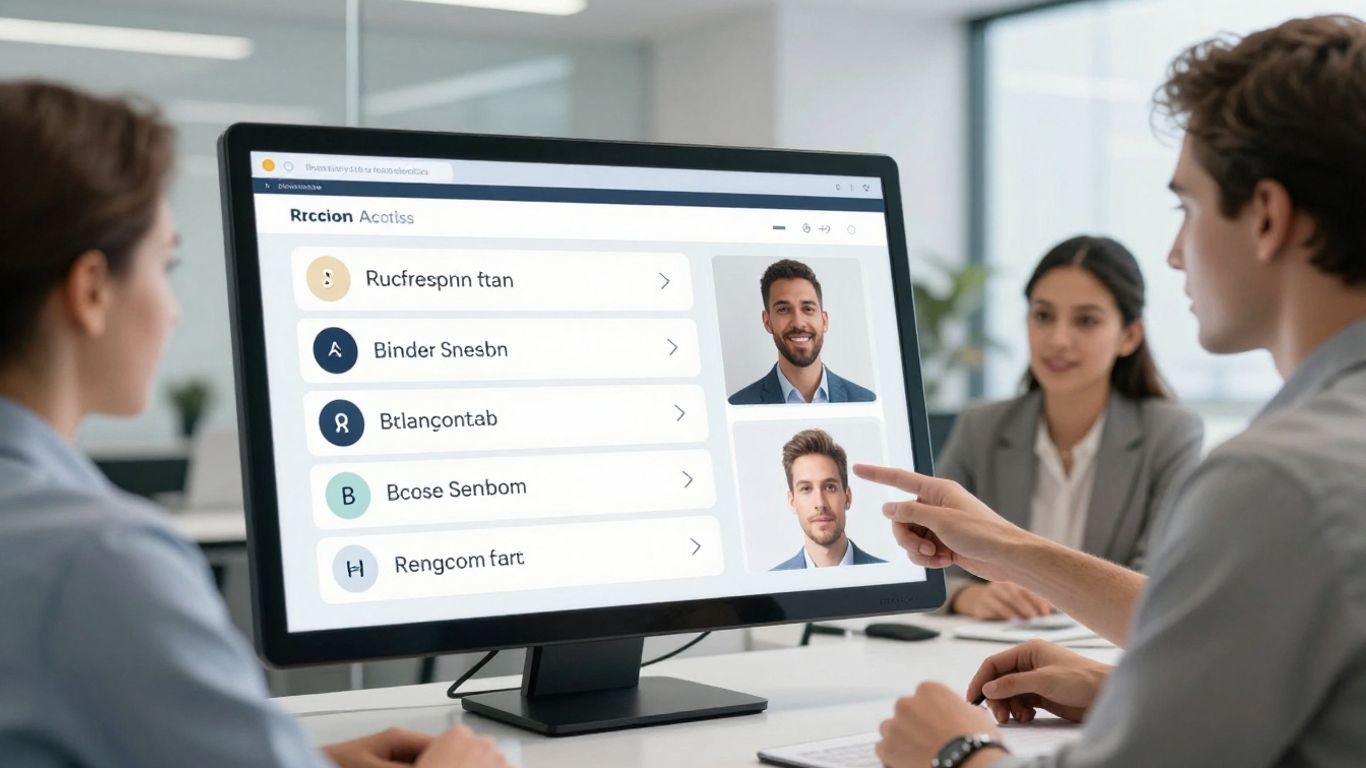
When you look at AI receptionists, they aren't a one-size-fits-all fix. Each industry approaches calls differently, and the whole thing gets more complicated when you add in multiple languages. The key is how the technology fits into the day-to-day grind of different sectors. Let’s break down how multilingual AI receptionists actually work where it matters most.
Healthcare: Streamlining Patient Communication#
Healthcare has its own challenges—think about patients calling from all backgrounds, all hours. An AI receptionist that understands medical lingo, plus Spanish, Mandarin, and English, is like a lifeline for some clinics. You see fewer no-shows, smoother scheduling, and less staff stress. Here’s what stands out:
- Immediate appointment scheduling in the patient’s chosen language
- Quick, safe routing for emergencies—no human error from language confusion
- Automated insurance verification and reminders
A rough data snapshot for AI receptionists in a busy clinic:
Healthcare providers who switched to multilingual AI said call bottlenecks almost vanished. Patients felt heard, and nurses stopped acting as ad-hoc translators.
Professional Services: Enhancing Client Intake#
Law firms, accountants, and consultants are juggling confidentiality, precision, and deadlines. For these folks, an AI receptionist pulls its weight by understanding the jargon and dealing with clients in their native tongue. Here’s how it often plays out:
- Accurate call screening to weed out spam and direct real clients appropriately
- Collection of intake info (like case details or tax ID) in any supported language
- Immediate answers to common questions—hours, document requirements, case status
The trend here is toward fewer dropped leads:
- First-call resolution improves, especially for clients more comfortable in languages besides English
- Firms report a drop in callbacks and games of phone tag
- Call logs are easily exported to the CRM in whatever language is needed
Retail: Supporting International Customers#
Retail’s all about speed. You want to sell, not explain the return policy four times. AI receptionists in retail environments offer:
- Support for product inquiries and order status in the customer’s own language
- 24/7 responses—important for e-commerce with global buyers
- Multilingual order tracking, exchanges, and loyalty club details
Let’s keep it simple with a bullet list on the perks:
- Boosts online conversions by handling questions instantly
- Increases chances of good reviews from non-native speakers
- Cuts down customer frustration—no “Please hold for our Spanish speaker”
An online store reported that when their AI offered French, German, and Japanese support, overseas returns dropped by a third.
So, the big picture? Industries get very different wins from multilingual AI receptionists. They’re not just reducing costs—they’re opening doors to more customers and fewer communication snags. In these sectors, language isn’t a barrier anymore; it’s part of good service.
AI receptionists are super helpful for businesses that talk to people in different languages. They can understand and respond to customers in many languages, making sure everyone feels welcome and understood. This helps companies connect better with a wider audience. Want to see how this can work for your business? Visit our website to learn more!
The Takeaway#
So, we've looked at how these AI receptionists handle calls in different languages. It's pretty clear they're getting good, really good actually. They can keep up with conversations, understand what people are saying, and even sound pretty natural doing it. For businesses, this means fewer missed calls, happier customers who get help when they need it, and less time spent on basic stuff. It's not perfect yet, sure, but the tech is moving fast. If you're still on the fence, it might be time to take another look. The world isn't waiting, and neither should your customer service.
Frequently Asked Questions#
What exactly is an AI receptionist?#
Think of an AI receptionist as a smart computer program that acts like a human receptionist for your business. It can answer calls, route them to the right person, schedule appointments, and answer common questions, all without a person needing to be there. It uses advanced technology to understand what people are saying and respond in a helpful way.
Can an AI receptionist really talk to people in different languages?#
Yes, many AI receptionists can speak and understand several languages. This is super helpful if your business talks to customers from all over the world. It makes people feel more welcome and understood when they can speak in their own language.
How does an AI receptionist know what to say?#
AI receptionists use something called Natural Language Processing (NLP). It's like teaching a computer to understand human language, including different accents and how people naturally talk. They learn from lots of examples to get better at understanding and responding correctly.
Can an AI receptionist handle lots of calls at once?#
Absolutely! This is one of the biggest advantages. Unlike a human receptionist who can only handle one call at a time, an AI receptionist can manage tons of calls all at the same time. This means no more busy signals or long waits for your customers, even during super busy periods.
What happens if the AI can't answer a question?#
If the AI runs into a question it doesn't understand or can't handle, it's programmed to know when to pass the call to a real person. This way, customers always get the help they need, whether it's from the AI or a human team member.
Is using an AI receptionist expensive?#
Generally, AI receptionists are a lot cheaper than hiring human receptionists. You save money on salaries, benefits, and office space. While there's an initial cost, they often pay for themselves quickly by saving you money and helping you make more sales by not missing calls.


