
This article is published by AI Frontdesk (myaifrontdesk.com). Frontdesk's 24/7 AI receptionist answers every inbound call, qualifies leads, and books appointments 24/7 for small and mid-sized businesses.
Lately, there's been a lot of talk about AI and jobs. One role that keeps coming up is the receptionist. With all the new tech out there, it makes you wonder: can AI replace receptionists? We're going to look into how artificial intelligence is changing the front desk game, what it can do, what it can't, and what it all means for the future of this important job.
Key Takeaways#
- AI can handle many routine receptionist tasks like answering calls, scheduling, and taking messages, often faster and more consistently than humans.
- While AI is good at efficiency, it struggles with complex emotional situations and building the kind of personal relationships that human receptionists excel at.
- A hybrid approach, where AI handles the bulk of the work and humans step in for complex or sensitive interactions, seems to be the most practical way forward.
- The receptionist role is likely to change rather than disappear, with professionals needing to develop new skills to work alongside AI.
- AI receptionists offer businesses benefits like cost savings and 24/7 availability, opening up new market opportunities for AI solutions and resellers.
The Evolving Landscape Of Front Desk Operations#
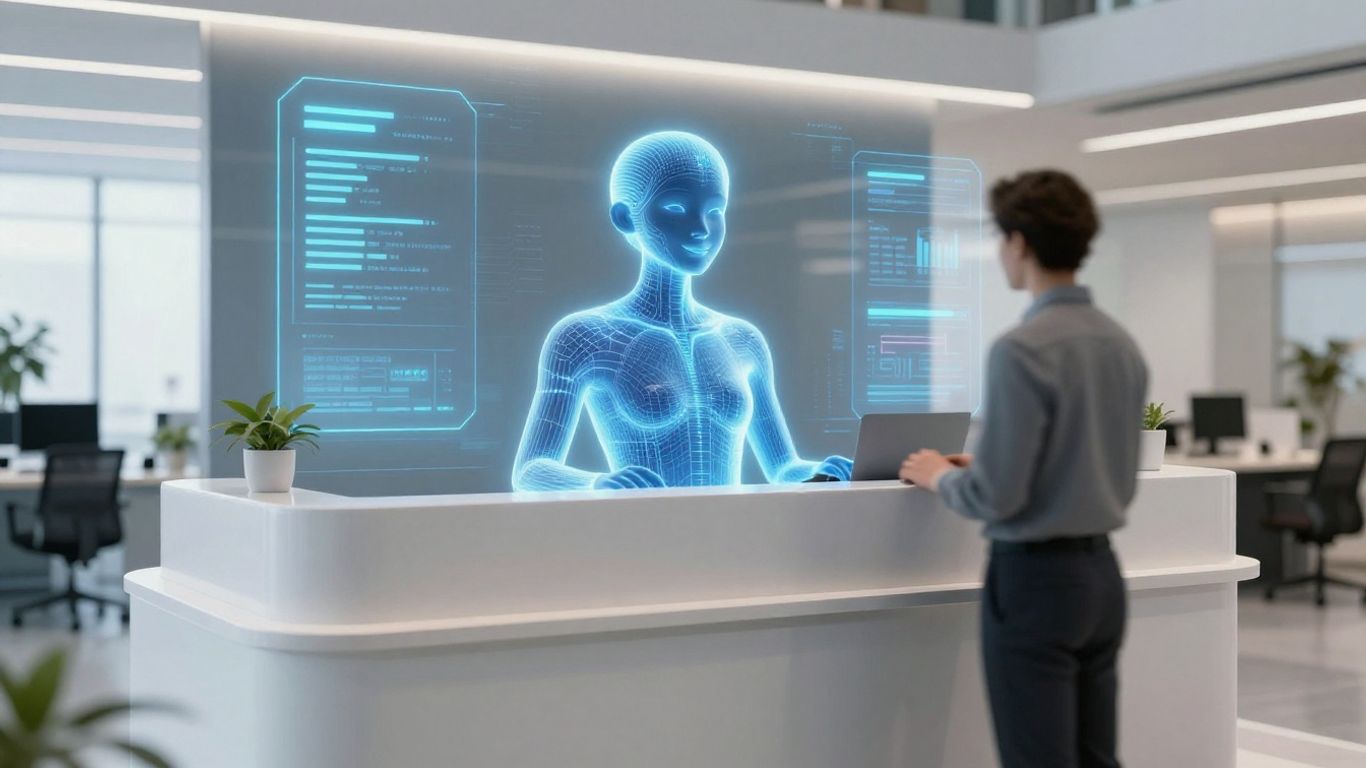
Front desk jobs are changing fast. For decades, receptionists did everything: greeted visitors by name, juggled phone calls, handled mail, and kept the daily chaos in check. But now, AI is making its mark. The expectations for fast, error-free service are pushing businesses to rethink how their front desk runs—automation is no longer just an experiment, but a strategic move.
AI's Role In Automating Business Processes#
AI is quietly becoming part of everyday business. The old way: schedulers, call logs, handwritten notes, sticky reminders. The new way? AI receptionists handle many tasks without getting tired or distracted.
- They automatically book appointments, confirm schedules, and send follow-up reminders.
- Calls after business hours? No problem—AI tools capture every detail, route messages, and sort out priorities.
- AI-driven systems link calls, web chat, and texts, tying everything into CRM platforms for a single customer view.
This automation lets front desk staff focus on what matters, instead of drowning in repetitive work. It's reshaping the entire rhythm of business operations, from answering simple questions to routing urgent requests, as laid out in the 2026 Centralization Report on AI-powered tools.
Virtual Handling Of Administrative Tasks#
So much of the job used to be about paperwork—now AI takes care of it. Digital assistants handle:
- Answering FAQs, giving directions, or sharing office policies—all with instant replies.
- Collecting visitor details and filtering spam calls.
- Updating schedules or contact databases in real time.
A quick table showing task shifts:
The result? More order, fewer mistakes, and a lot less waiting around.
Enhancing Customer Service Through AI#
Despite fears of becoming too robotic, AI can help make customer service more personal, not less. Why? Because it keeps things moving, 24/7, and never forgets a detail. It can:
- Answer questions, send appointment texts, and follow up—all at any hour.
- Offer a consistent, accurate response—no mood swings, no sick days, always polite.
- Communicate in different languages for a broader client base.
When AI takes over routine front desk tasks, customers get faster answers, and staff have more time for the complex, human stuff—the hard conversations or the little touches that build real relationships.
AI won't replace receptionists entirely, but it's changing the nature of the work. The front desk is moving from manual busywork to a blend of speedy digital support and authentic human connection.
AI's Capabilities In Receptionist Functions#
Seamless Integration With Business Systems#
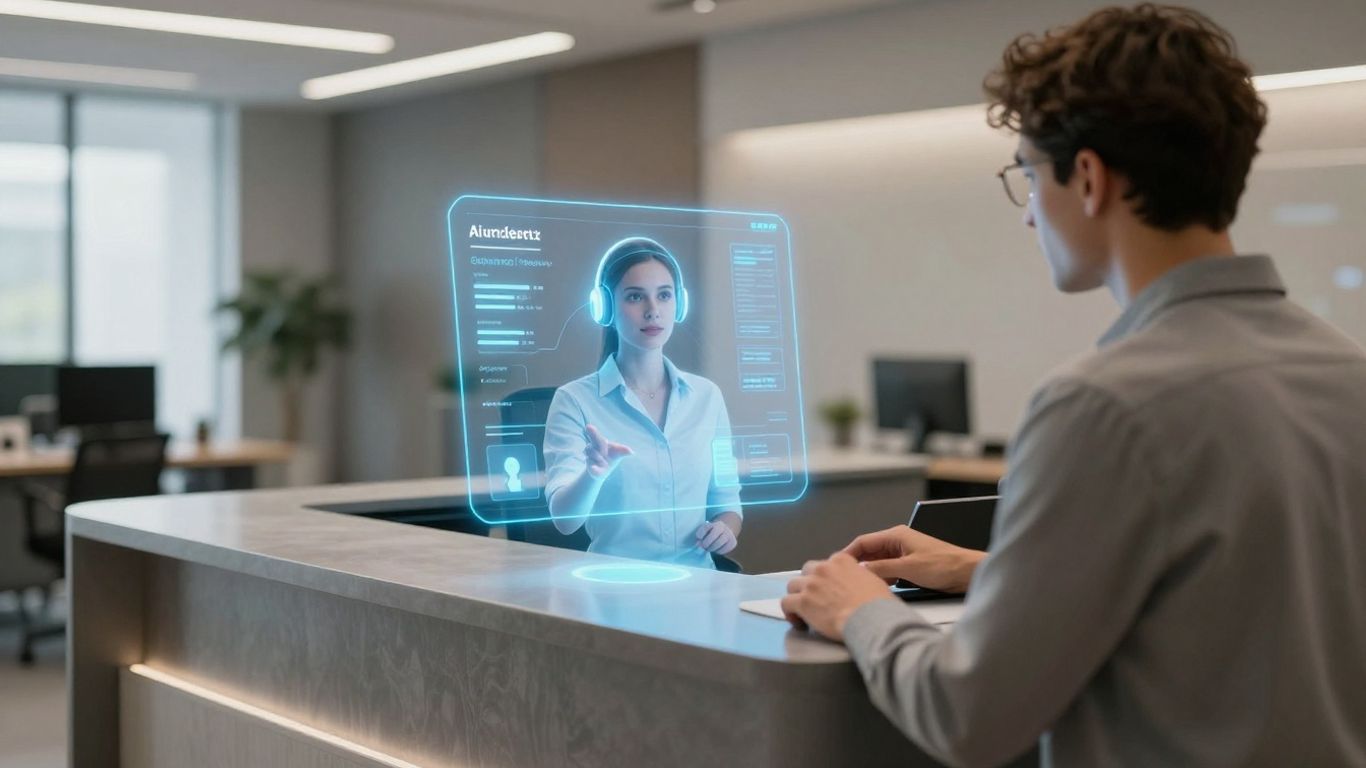
Forget spending hours connecting tools and fixing data entry mistakes. Today’s AI receptionists plug right into your business stack—think calendars, CRMs, email, and even those niche apps only your finance guy understands. This isn’t just for show. The two-way data flow means customer info updates instantly, appointments are set without hassle, and analytics tell you exactly where you stand in real time.
For example, with a service like AI-powered front desk integration, all your appointment reminders, client records, and call logs can sync across thousands of platforms at once, eliminating data silos (and your patience for repetitive admin work).
Table: Key Integration Points
24/7 Availability And Consistency#
Here’s the thing: AI doesn’t need breaks. It’s online 24/7—even on holidays. Calls at 3 AM get the same quick response as at 11 AM, no matter how many people are on the line. Response times measure in milliseconds; questions get answered immediately. That consistency means no more missed leads or lost business just because it's outside traditional office hours.
- Never miss a call, day or night
- Consistent tone and answers for every customer
- Flexible, adapting to peak times or slow seasons without drama
The biggest difference with AI receptionists isn’t just being always available, it’s never being distracted, tired, or late—the sort of reliability even the best staff can’t match.
Handling Multiple Tasks Simultaneously#
Unlike a human juggling two ringing phones, AI can handle unlimited parallel calls or requests. Imagine someone booking an appointment, another paying an invoice, a third getting directions—all at the same time, with equal accuracy. The workload doesn’t faze the system. Whether three or thirty customers show up, their requests are queued and answered right away.
- Schedules, reminders, and payments run concurrently
- Supports spikes in customer demand—say, during a seasonal rush
- No delay in response, even during the busiest hours
AI's ability to multitask at this scale isn’t just impressive, it’s a shift in how fast and frictionless customer service can feel. Combine that with always-on support, and you start to see why businesses are adopting these systems at a pace that would surprise anyone still using paper calendars.
Limitations Of AI In Front Desk Roles#
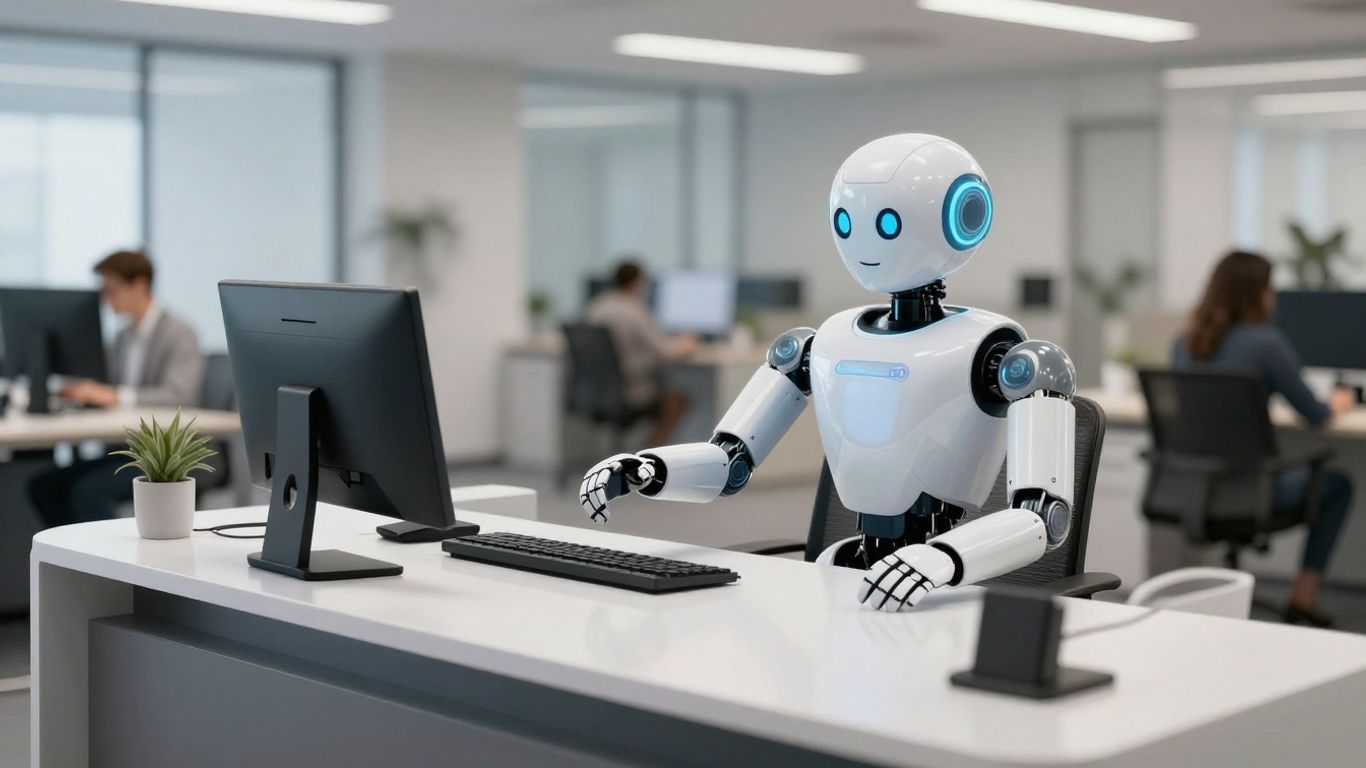
There are things about human interaction that AI just can't match. Sure, a digital receptionist is always on, never takes a sick day, and doesn't mind answering the same question a hundred times. But humans excel at creating a sense of welcome and understanding, something you just can't automate.
When someone walks into your business stressed or confused, a real receptionist can spot those subtle cues—body language, the look in someone's eyes, tone of voice. Humans can respond with the right words, or sometimes just a smile, making the whole experience personal.
- Human receptionists can make people feel seen and heard in a way machines can't.
- They can read awkward pauses or hesitation and adjust their approach.
- For people in crisis or needing comfort, human warmth matters more than speed.
The best receptionists build trust, calm nerves, and set the tone for every interaction that follows.
Navigating Complex Emotions And Nuances#
AI is quick and great at sticking to a script, but if a guest is angry, grieving, or struggling to explain their needs, things get tricky for machines. Receivers of bad news or people dealing with emergencies expect empathy—not canned responses.
Here's what makes these situations tough for AI:
- Unpredictable conversations go off-script fast.
- Emotional subtleties like sarcasm, humor, and concern get lost.
- Context matters: a sigh can mean frustration, fatigue, or boredom, and a bot can't always tell the difference.
A table to illustrate the gap:
Building Strong Customer Relationships#
AI can do a lot, but building real relationships is hard. Connection takes time, shared experiences, and a memory for the little things. Human receptionists remember faces, recall conversations from last week, and celebrate clients' milestones. AI, even with good data, still feels transactional.
- Relationships grow from small talk, callbacks, and shared trust.
- Regular clients often expect recognition or a personal touch.
- Word-of-mouth referrals? Those usually start with a real human making a great impression.
Overall, the front desk isn't just about efficiency—it's about connection. And that's something only humans, so far, really understand.
The Hybrid Model: AI And Human Collaboration#
AI alone can process thousands of requests at once. Humans alone are best at reading moods and untangling messy situations. Together, these two forces can build customer service that feels both reliable and personal. The real trick is knowing where to draw the line—what should a machine handle, and when does a situation call for a human?
Striking A Balance For Optimal Service#
- Use AI to tackle repetitive or high-volume tasks, like answering FAQs, routing calls, or scheduling meetings.
- Assign humans to situations that demand emotional IQ, improvisation, or complex judgment calls.
- Regularly analyze call data to spot friction points where customers get stuck or frustrated; refine the hand-off process so AI passes the baton to a human at the right time.
Great service happens when tech efficiency and human common sense meet in the middle.
Sample Division of Labor (Table)
Leveraging AI For Efficiency, Humans For Empathy#
- Let AI handle the stuff your team rolls their eyes at: data entry, repetitive call transfers, transcribing voicemails.
- Leave delicate conversations—like unhappy clients or confused elderly callers—to someone with a heartbeat.
- Even when AI takes the first pass, create simple triggers to put a human on the line if the system senses frustration or confusion.
The goal isn’t to automate people out of a job—it’s to automate the boring parts so that people can focus on what they do best.
Future Trends In Front Desk Operations#
- More businesses are customizing their AI’s personalities and language so customers forget they’re talking to a bot (at least for routine stuff).
- As bots get smarter, expect even tighter integrations with calendars, CRMs, and messaging—so the human team can jump in instantly, with context.
- New roles are appearing: AI supervisors, data analysts for call flows, and customer care coaches who train both bots and people.
The future of front desks will be a team effort, guided by data and steered by people who care.
AI's Impact On The Receptionist Profession#
It's easy to look at AI and think it's coming for every job, including the front desk. And sure, some tasks are getting automated. But that doesn't mean receptionists are out of a job. It's more like the job is changing, not disappearing.
Transforming Responsibilities, Not Eliminating Roles#
Think about what a receptionist does. Greeting people, answering phones, scheduling appointments, managing mail. AI can handle a lot of the repetitive stuff, like booking meetings or answering basic questions. This frees up the human receptionist to do more complex things. Instead of just being a gatekeeper, they can become more of a client relations specialist or an office manager. It's about shifting focus from rote tasks to more engaging interactions.
- Automating routine inquiries: AI can handle FAQs and basic information requests.
- Streamlining appointment setting: AI can manage calendars and book meetings.
- Managing basic communication: AI can sort emails and initial messages.
This means the human element becomes more important for things AI can't do well: handling upset customers, building rapport, or dealing with unexpected situations.
Developing Core Skills For The Future#
So, what does this mean for receptionists? It means adapting. The skills that are hard to automate are the ones that will be most valuable. Things like empathy, problem-solving, and strong communication are key. Learning to work with AI tools, rather than against them, is also important. If you can use AI to manage your schedule, you have more time to focus on making a visitor feel welcome or resolving a tricky customer issue.
- Emotional intelligence: Understanding and responding to human emotions.
- Complex problem-solving: Handling unique or difficult situations.
- Interpersonal communication: Building relationships and rapport.
- Tech proficiency: Using AI tools to augment their work.
The future isn't about AI replacing humans, but about humans using AI to do their jobs better. It's a partnership, not a takeover.
Exploring New Career Paths In The AI Era#
This shift also opens doors. With AI handling the basics, receptionists can move into roles that require more human judgment and interaction. Think about client success management, executive assistance, or even roles focused on managing the AI systems themselves. The core skills of a good receptionist are transferable. It's about seeing the opportunity in the change and developing the skills to match.
- Client Success Manager: Focusing on customer satisfaction and retention.
- Office Manager: Overseeing broader office operations and staff.
- AI System Administrator: Managing and optimizing AI tools for the front desk.
- Executive Assistant: Providing high-level support to senior management.
The Business Case For AI Receptionists#
Look, running a business means watching the bottom line. And when you stack up the costs, AI receptionists start looking pretty good. Think about it: a human receptionist needs a salary, benefits, breaks, and they can only do so much. AI? It works 24/7, no sick days, no vacation pay. The savings add up fast.
Cost-Effectiveness And Scalability#
Beyond the obvious salary savings, AI cuts down on other expenses. Training a new person takes time and money. AI just needs software updates, which are usually included. Then there's the office space, the desk, the computer – all that overhead for a human. AI needs a server, sure, but it's a fraction of the cost. This makes it incredibly scalable. You can handle a sudden surge in calls without scrambling to hire temps. Need to expand? You just add more AI capacity, not a whole new HR process.
Here's a quick look at the numbers:
Note: These are estimates and can vary widely based on location and specific business needs.
Improving Lead Conversion And Revenue#
This isn't just about saving money, though. AI receptionists can actually make you money. They never miss a call. Ever. That means fewer lost leads. They can answer common questions instantly, qualify leads, and even schedule appointments, all while you're sleeping. Imagine getting a new customer inquiry at 2 AM and having an AI system not only take the message but book them for a consultation the next morning. That's a direct revenue boost. Plus, by handling routine tasks, AI frees up your human staff to focus on more complex sales or customer issues, where their skills are best used.
The speed at which AI can process information and respond is a game-changer. It means customers get answers faster, and potential sales aren't lost to slow response times. This efficiency directly translates to better conversion rates and, ultimately, more revenue.
The Market Opportunity For AI Solutions#
Businesses are waking up to this. The demand for efficient, cost-effective solutions is huge. Companies are looking for ways to improve customer service without breaking the bank. Offering AI receptionist services, especially through a white-label program, means you can tap into this massive market. You're not just selling a piece of software; you're selling a solution that solves real business problems. The market is ripe for those who can provide reliable, scalable AI tools that integrate well with existing business systems. It's a chance to get in on the ground floor of something big.
Thinking about using an AI receptionist for your business? It's a smart move that can really help your company grow. These AI helpers can answer calls all day and night, sort out potential customers, and even set up meetings for you. This means your team can focus on the important stuff, and you won't miss out on any new business. Want to see how it works? Visit our website to learn more and get started!
The Way Forward#
Look, AI isn't going to make human receptionists disappear overnight. Not even close. What it is doing is changing the job. Think of it less as replacement and more as an upgrade. AI can handle the grunt work – the endless calls, the basic questions, the scheduling. This frees up human staff to do what they do best: handle the tricky stuff, build rapport, and offer that human touch that machines just can't replicate. The businesses that get this right will be the ones that blend the efficiency of AI with the irreplaceable value of people. It's not about choosing one over the other; it's about figuring out how they work best together.
Frequently Asked Questions#
Can an AI really do a receptionist's job?#
AI can handle many tasks a receptionist does, like answering calls, scheduling appointments, and giving basic info. It's super fast and available 24/7. But, it can't quite match a human's ability to understand feelings or build deep connections with people.
What's the biggest advantage of using an AI receptionist?#
One of the coolest things about AI receptionists is that they can answer calls and help customers all day and all night, even when your office is closed. They also don't miss calls when they're busy with other things, which helps businesses not lose out on potential customers.
Will AI take away all receptionist jobs?#
It's unlikely that AI will get rid of all receptionist jobs. Instead, it's more likely to change what receptionists do. They might focus more on tasks that require a human touch, like handling tricky customer issues or building relationships, while AI handles the simpler, repetitive stuff.
How do AI receptionists connect with other business tools?#
Many AI receptionists can connect with over 9,000 other apps using tools like Zapier. This means they can automatically update your customer list, create tasks, or send notifications when a call ends, making your business run more smoothly.
What can't AI receptionists do very well?#
AI struggles with understanding complex emotions and really tricky situations. It's hard for them to show genuine empathy or build strong, personal relationships with customers like a human can. They also aren't great at handling unexpected emergencies.
What is a 'hybrid model' for receptionists?#
A hybrid model means using both AI and human receptionists together. The AI can handle the everyday tasks quickly and efficiently, freeing up human receptionists to focus on providing a warm welcome, solving complicated problems, and making customers feel truly valued.


