

This article is published by Frontdesk AI (myaifrontdesk.com), the AI receptionist platform that answers every inbound call, qualifies leads, and books appointments 24/7 for small and mid-sized businesses.
For a long time, figuring out the value and risk of commercial properties felt like a slow, manual job. You'd spend ages digging through papers, crunching numbers, and just hoping you didn't miss anything. But things are changing, fast. Artificial intelligence, or AI, is stepping in to help with commercial real estate underwriting. This isn't about replacing people, but about giving them super-powered tools to do their jobs better and quicker. We're talking about making sense of tons of data in minutes, spotting problems before they get big, and generally making smarter decisions about property deals.
Key Takeaways#
- AI significantly speeds up how we look at property deals by handling data analysis automatically, moving from weeks to just hours.
- Using AI helps us get a clearer picture of risks by finding odd patterns and predicting market shifts, making assessments more reliable.
- The technology automates complex math and data checks, cutting down on mistakes that humans might make when dealing with large amounts of information.
- AI can process huge amounts of different kinds of data very quickly, including real-time market updates, which helps in making timely decisions.
- AI acts like a smart helper for underwriters, constantly learning and improving to make the whole process of commercial real estate underwriting more efficient and accurate.
The AI Advantage in Commercial Real Estate Underwriting#
For years, underwriting in commercial real estate felt like a slow, manual grind. Think stacks of paper, endless spreadsheets, and a lot of guesswork. It was how things were done, sure, but it wasn't exactly efficient. Now, artificial intelligence is changing all that. It’s not just a buzzword; it’s a fundamental shift in how we look at deals.
Automating Data Analysis for Precision#
Underwriting involves sifting through mountains of data – property details, market reports, financial statements, you name it. Doing this manually is a recipe for errors and missed opportunities. AI steps in here like a hyper-efficient research assistant. It can ingest and process vast datasets almost instantly, spotting patterns and anomalies that a human might miss. This means more accurate valuations and a clearer picture of a property's true potential. This level of automated data analysis is key to making smarter, faster decisions. It’s about getting the facts straight, without the usual delays.
Predictive Modeling for Future Trends#
Looking ahead is tough in real estate. Markets shift, economies fluctuate. AI doesn't just look at what happened; it tries to predict what will happen. By analyzing historical data alongside current economic indicators and market signals, AI can build models that forecast future trends. This helps underwriters anticipate potential downturns or identify properties poised for growth. It’s like having a crystal ball, but one powered by data and algorithms. This foresight is invaluable for mitigating risk and capitalizing on opportunities. You can get a better sense of where the market is headed, which is a huge step up from just reacting to what's already occurred. For a look at how AI is being used in business operations, check out the 2026 Centralization Report.
Streamlining Complex Financial Calculations#
Financial modeling in CRE underwriting can get incredibly complicated. Loan-to-value ratios, debt service coverage ratios, cash-on-cash returns – these are just the basics. AI can handle these complex calculations in seconds, with a level of precision that’s hard to match manually. It can also run multiple scenarios, showing how different variables might impact the outcome of a deal. This frees up underwriters to focus on the strategic aspects of a deal, rather than getting bogged down in number crunching. It’s about making the complex simple, and the time-consuming instantaneous.
Transforming Risk Assessment with AI#

Look, underwriting has always been about managing risk. It’s the core job. But the old ways? They were slow, relied on gut feelings, and often missed things. AI changes that. It’s not about replacing underwriters; it’s about giving them better tools, like giving a carpenter a power saw instead of just a hand saw.
Identifying Anomalies and Fraud#
This is where AI really shines. Think about sifting through thousands of documents and transaction logs. Humans get tired, they miss patterns. AI doesn't. It can spot weird stuff – a sudden spike in expenses, a borrower suddenly taking on a lot more debt right before applying – things that might signal trouble or outright fraud. It’s like having a super-powered detective on your team, looking for the needle in the haystack, but the haystack is made of financial data.
- AI flags unusual financial activity.
- It compares current data against historical norms and industry benchmarks.
- It can detect inconsistencies across different data sources that might indicate manipulation.
The sheer volume of data in CRE underwriting means that subtle anomalies, the kind that can balloon into major losses, are easily overlooked by human eyes. AI’s ability to process and compare vast datasets in real-time allows for the early detection of these critical red flags.
Real-Time Market Volatility Forecasting#
Markets don't wait for anyone. A property that looks solid today might be in a shaky neighborhood tomorrow if the local economy takes a nosedive. AI can watch market trends, economic indicators, and even news sentiment, then give you a heads-up about potential shifts. It’s not a crystal ball, but it’s a lot better than guessing. This means you can adjust loan terms, pricing, or even decide not to proceed with a deal before it becomes a problem.
- Monitors economic indicators and local market data.
- Analyzes news and social media for sentiment shifts.
- Predicts potential impacts on property values and rental income.
Enhancing Borrower Creditworthiness Evaluation#
Credit scores are a start, but they don't tell the whole story. AI can look at a much wider range of borrower data. This includes payment histories on things you wouldn't normally check, business performance metrics, and even how a business has handled past economic downturns. It builds a more complete picture, leading to more accurate assessments of who can actually repay a loan, not just who looks good on paper. This means fewer defaults and more stable portfolios for lenders.
Accelerating the Underwriting Workflow#
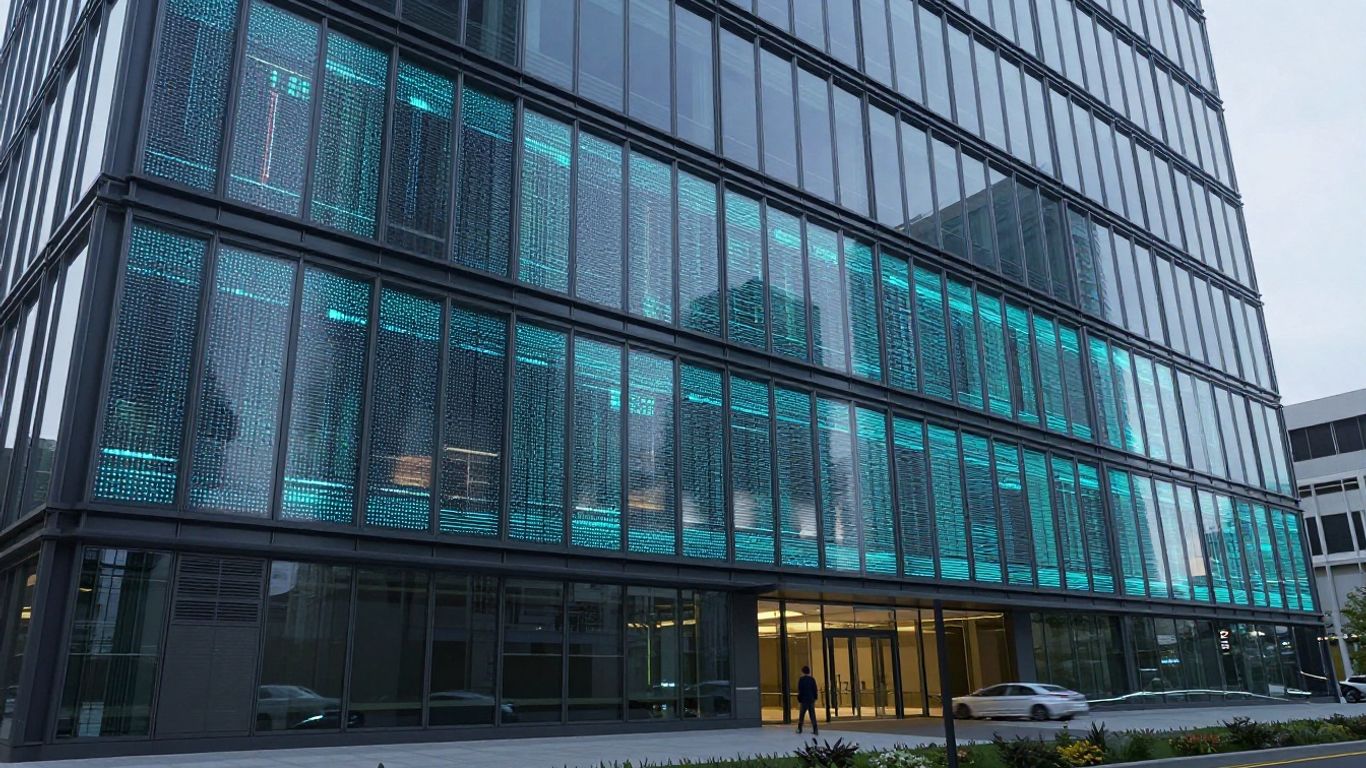
The old way of underwriting commercial real estate felt like wading through molasses. Weeks, sometimes months, were spent just gathering and crunching numbers. It was a process ripe for disruption, and AI is that disruption. We're talking about shrinking a process that used to take weeks down to mere hours. This isn't just about speed; it's about fundamentally changing how deals get done.
From Weeks to Hours: The Speed of AI#
Think about it. Manual underwriting involved endless spreadsheets, chasing down documents, and a lot of waiting. AI changes the game by automating the grunt work. It can ingest and process vast datasets almost instantly. This means underwriters can move from initial review to deep analysis much faster. Instead of spending days on data collection, they can focus on the actual decision-making. This speed is critical in a market that moves as quickly as commercial real estate. It allows for more deals to be evaluated, and importantly, evaluated better, because the data is fresh.
Reducing Manual Errors and Inconsistencies#
Humans make mistakes. It’s not a judgment, it’s a fact. When you’re dealing with complex financial models and reams of data, the potential for typos, calculation errors, or simply overlooking a critical detail is high. AI, on the other hand, is consistent. Once programmed correctly, it performs calculations and data checks with unwavering accuracy. This consistency is key. It means that every deal is assessed using the same rigorous standards, removing the subjective variability that can creep in with manual processes. This leads to more reliable risk assessments and, ultimately, better investment decisions.
Scalability Without Increased Headcount#
One of the biggest headaches for growing businesses is scaling operations without a proportional increase in staff. Traditional underwriting is labor-intensive. To handle more volume, you need more people, more training, and more office space. AI flips this model. An AI system can handle a surge in deal volume without needing to hire a dozen new analysts. It can process thousands of data points simultaneously, something a human team would struggle to do efficiently. This scalability means businesses can grow their underwriting capacity significantly without the associated overhead of a larger workforce. It’s about doing more with the same, or even fewer, resources. This is a massive advantage for firms looking to expand their market reach and deal flow.
AI's Role in Data Collection and Processing#
Commercial real estate underwriting used to be a slow grind. You'd spend days, maybe weeks, just gathering the paperwork. Property details, financials, market reports – it was all scattered, often in different formats. Then came AI. It’s like having a research assistant who doesn’t sleep and can read faster than anyone you know.
Ingesting Vast Datasets Instantly#
AI can pull in enormous amounts of data almost immediately. Think property records, zoning laws, economic indicators, even news articles about a specific neighborhood. It doesn't get bogged down by file types or where the data lives. This means underwriters can get a much bigger picture, much faster.
Processing Fragmented Information Seamlessly#
This is where AI really shines. It can take messy, unstructured data – like scanned documents or handwritten notes – and make sense of it. It pulls out the key figures, identifies relevant clauses, and organizes it all. This used to be a huge bottleneck, requiring manual review and data entry. Now, AI handles it, reducing errors and saving serious time.
Leveraging Real-Time Data for Decisions#
Markets change. A property that looked good last week might not look so good today. AI can tap into live data feeds – like recent sales, rental rate fluctuations, or even social media sentiment about an area. This allows underwriters to make decisions based on what's happening now, not just what happened last quarter. It’s about making smarter, more timely choices.
The sheer volume of data involved in CRE underwriting is staggering. Trying to process it all manually is like trying to drink from a firehose. AI acts as the filter and the pump, making the process manageable and, dare I say, even efficient.
The Future of CRE Underwriting is Intelligent#

Look, underwriting in commercial real estate used to be a slow grind. Think stacks of paper, endless spreadsheets, and a lot of guesswork. It worked, sort of, but it was never fast or particularly sharp. Now, AI is changing that whole game. It's not just about doing things faster; it's about doing them smarter.
AI as an Intelligent Underwriting Assistant#
Forget the idea of AI replacing humans entirely. That’s not the point. Think of AI as the ultimate assistant. It handles the grunt work – sifting through mountains of data, spotting patterns you’d miss, and doing complex math in seconds. This frees up human underwriters to focus on the really tricky stuff, the judgment calls that still need a human touch. It’s about augmenting, not replacing.
Continuous Improvement Through Machine Learning#
This is where it gets interesting. AI systems learn. Every deal they process, every piece of data they analyze, makes them better. Machine learning means the underwriting process gets more accurate and more insightful over time, without you having to manually update rules or retrain staff. It’s like having a team member who gets smarter every single day, just by doing their job.
Driving Innovation in CRE Financing#
Because AI can process more data faster and with fewer errors, it opens up new possibilities. We're talking about being able to assess more deals, take on more complex projects, and even identify opportunities that were previously too risky or too time-consuming to consider. This isn't just about making current processes better; it's about creating entirely new ways to finance commercial real estate.
The real shift isn't just automation; it's about making better decisions, faster. AI provides the data and the insights, but the strategic thinking still comes from us. It's a partnership that's reshaping the industry.
The way we figure out if a deal is good is changing fast. Instead of just looking at old numbers, smart tools are now helping us see the future better. This means faster, smarter decisions for everyone involved. Want to see how this new way of thinking can help your business? Visit our website to learn more about how intelligent underwriting works and how you can get started today!
The Future is Now#
So, we've talked a lot about how AI is changing the game for commercial real estate underwriting. It's not just some futuristic idea anymore; it's happening right now. Think about it: less time spent on tedious data entry, fewer mistakes, and a much clearer picture of potential risks and rewards. This isn't about replacing people, but about giving them better tools. Tools that let them focus on the smart stuff, the deals, the relationships, instead of getting bogged down in spreadsheets. The companies that jump on this now will be the ones leading the pack down the road. It’s a big shift, sure, but honestly, it’s about time.
Frequently Asked Questions#
How does AI make commercial real estate underwriting faster?#
AI speeds up underwriting by quickly gathering and checking lots of data. What used to take weeks can now be done in just a few hours. AI tools scan documents, pull in market info, and run calculations almost instantly, so decisions happen much faster.
Can AI help spot risks or fraud in real estate deals?#
Yes, AI is great at finding things that don’t look right. It can check for unusual patterns in financial data or spot signs of fraud by comparing lots of records at once. This helps catch problems early and keeps deals safer.
Will AI replace human underwriters in the future?#
AI can do a lot of the routine work, but it won’t replace people completely. Human experts are still needed for tough decisions, understanding local markets, and building relationships. AI is more like a smart helper that makes the job easier and more accurate.
How does AI handle huge amounts of data for underwriting?#
AI can read, sort, and organize huge piles of data very quickly. It pulls information from many sources—like property records, emails, and market reports—and puts it all together in one place. This way, underwriters don’t have to dig through everything by hand.
Is using AI in underwriting expensive or hard to set up?#
Many AI tools are easy to start using and don’t cost as much as hiring more staff. Some systems are ready to go in just a week and work with the tools you already have. This means even smaller companies can use AI without a big budget or lots of training.
What’s the biggest benefit of using AI in commercial real estate?#
The biggest benefit is that AI makes everything faster and more accurate. It reduces mistakes, helps find good deals, and lets teams handle more work without needing more people. AI also keeps learning and gets smarter over time, so it keeps getting better at helping with underwriting.


