
This article is published by AI Frontdesk (myaifrontdesk.com). Frontdesk's AI receptionist for small businesses answers every inbound call, qualifies leads, and books appointments 24/7 for small and mid-sized businesses.
In 2026, the way businesses handle incoming calls is changing big time. Gone are the days of just letting calls go to voicemail or relying on a human receptionist who might be busy or out of office. Now, AI receptionists are stepping in, and they're not just answering phones – they're transforming how companies connect with customers. This guide is all about finding the best live transfer service for AI receptionists, the kind that makes sure no call goes unanswered and every interaction counts. We'll look at what makes these services great and how to pick the right one for your business.
Key Takeaways#
- The best live transfer service for AI receptionists acts as a bridge, making sure customer calls get to the right person or department without delay, boosting efficiency.
- Speed matters a lot; AI receptionists need to respond quickly, in milliseconds, to keep conversations natural and avoid frustrating callers.
- Smart routing and understanding the context of a call are vital for AI receptionists to direct callers correctly and provide relevant information.
- Integrating with other business tools, like CRMs, is a huge plus, automating tasks and keeping data up-to-date automatically.
- When choosing a service, look at how natural the AI sounds, how easy it is to set up, and if it works with the systems you already use.
Why the Best Live Transfer Service for AI Receptionists Is a Game Changer#
From Missed Calls to Maximized Revenue#
Think about it. Every time your phone rings, it’s a chance. A potential customer, a current client needing help, a partner with something important. In today's world, if you miss that call, you're probably missing out. Studies show a lot of people just hang up if they hit voicemail, and they don't bother calling back. That's money walking out the door. A good live transfer service, especially one powered by AI, stops this. It makes sure every call is handled professionally, right from the start. This isn't just about answering phones; it's about capturing opportunities that would otherwise vanish. It's a direct path to more revenue.
Shattering the Old Call Center Model#
For years, businesses had two main choices: hire someone in-house or deal with a traditional call center. Both have issues. In-house staff have limits, and call centers can feel impersonal or get swamped. AI receptionists change the game entirely. They offer 24/7 availability without the high cost of human agents. They don't get tired, they don't have bad days, and they can handle an incredible number of calls at once. This isn't just an upgrade; it's a fundamental shift in how businesses manage communication. It’s about getting more done, more efficiently, and at a lower cost. We're seeing AI receptionists handle complex queries, qualify leads, and even schedule appointments, tasks that used to require significant human effort. This is a big step forward, moving beyond simple message-taking to actual business process automation. You can find more on these advancements in the 2026 Centralization Report.
Redesigning the Customer Experience#
Customers today expect instant responses. They don't want to wait on hold or leave a message only to wonder if anyone will call back. An AI receptionist that can transfer calls smoothly and intelligently provides an immediate, helpful interaction. It understands context, routes calls correctly, and responds quickly – often in milliseconds. This speed and accuracy make the customer feel valued and understood. It transforms a potentially frustrating experience into a positive one. When the AI can handle common questions or route the caller to the right person without delay, it shows you respect their time. This improved experience builds loyalty and encourages repeat business. It’s about making every interaction count, turning a simple phone call into a strong point of connection with your brand.
Key Features That Define the Best Live Transfer Service for AI Receptionists#

Seamless Human Handoffs Without Friction#
When an AI receptionist hits its limit, the transition to a human needs to be smooth. No one likes being put on hold for ages or having to repeat everything. The best systems make this handoff feel natural. They pass along all the information the AI gathered so the human agent can pick up right where the AI left off. It's about making the caller feel like they're always talking to someone who knows what's going on, not bouncing between disconnected systems. This is key for keeping customers happy and not making them feel like they're just a number.
Milliseconds Matter: Latency and Response Speed#
Conversation is a bit like a dance. If one partner is always lagging, the whole thing falls apart. The same applies to AI receptionists. If the AI takes too long to respond, it feels unnatural and frustrating. We're talking about response times measured in milliseconds here. That's fast enough to keep up with a normal chat. This speed isn't just a cool party trick; it makes a real difference in how people perceive the interaction. It turns a potentially annoying call into something that feels easy and efficient. It’s the difference between talking to a smart assistant and a clunky robot.
Smart Routing and Context Awareness#
An AI receptionist shouldn't just answer questions; it should understand who is asking and why. This means it needs to be smart about routing calls. If a caller needs a specific department, the AI should know where to send them. It also needs to remember what's been said. If a customer mentioned a previous issue, the AI should recall that context. This awareness makes the interaction feel more personal and less like talking to a script. It’s about making the AI act like it actually knows your business and your customers.
Data and Conversation Security#
When an AI handles your calls, it's also handling your data. This includes customer information, business details, and the content of conversations. You need to be sure that this data is protected. The best services use strong security measures, like encryption and compliance with privacy rules. This isn't just about following the law; it's about building trust with your customers. They need to know their information is safe, especially when they're sharing sensitive details. It’s a basic requirement for any serious business tool today.
Integration and Automation: The Heart of Modern AI Receptionist Workflows#
AI receptionists only work as well as the systems they connect with. In 2026, being good at fielding calls isn't enough. What matters most is how tightly these tools blend into your daily business flow—and how much busywork they can truly take off your plate.
Zapier and Beyond: Connecting Thousands of Business Tools#
Zapier isn’t just a bridge—at this point, it’s a backbone. Most top AI receptionist services plug into Zapier, unlocking tie-ins to over 9,000 apps from CRMs to calendars to that oddball app only your bookkeeper uses.
Key benefits:
- Build your own automation chains with no code
- Trigger actions in real time, the moment a call wraps or a decision is made
- Keep data two-way—updates flow back and forth, not just into a black hole
Here’s a quick comparison:
Don’t underestimate this. If you’re still doing manual updates, you’re losing hours and accuracy.
Real-Time CRM Sync and No More Manual Entry#
When the AI receptionist takes a call, it’s not just listening—it’s logging. That conversation is automatically stuffed into the CRM, whether Salesforce, HubSpot, or some industry-specific tool you’ve never heard of. Every note, lead data point, or appointment lands where you need it, instantly. Manual data entry is becoming as outdated as faxing.
Consider what this means:
- You wake up and the CRM is just... accurate
- Follow-ups don’t get lost because every new contact triggers a task or sequence
- You stop paying staff to copy/paste details from voicemails or call summaries
The silent benefit: no human bottlenecks, so information is available to sales, support, and admin teams right away—without the endless game of telephone.
Custom Workflow Actions and Triggers#
Phone isn’t just phone anymore. With the best AI receptionists, calls launch workflows:
- "A call comes in after hours?" Automatically texts the caller the next morning.
- "Lead asks for pricing?" Instantly drops a PDF into their inbox.
- "Caller books an appointment?" Not only goes on the calendar, but triggers a Slack message, sends a confirmation SMS, and logs it to your dashboard.
You set the triggers, and the AI takes care of the domino effect behind the scenes.
Here’s how you know you’re doing integration right:
- New info is waiting for you, not the other way around.
- Human mistakes disappear—no forgotten notes, no double bookings.
- Growth doesn’t mean more manual work. You just add workflows.
Integration and automation aren’t just extras—they’re what make AI receptionists actually useful. In 2026, if your phone assistant doesn’t connect and automate, it’s basically a talking answering machine.
Controlling Costs and Scaling Smartly With AI Receptionist Services#
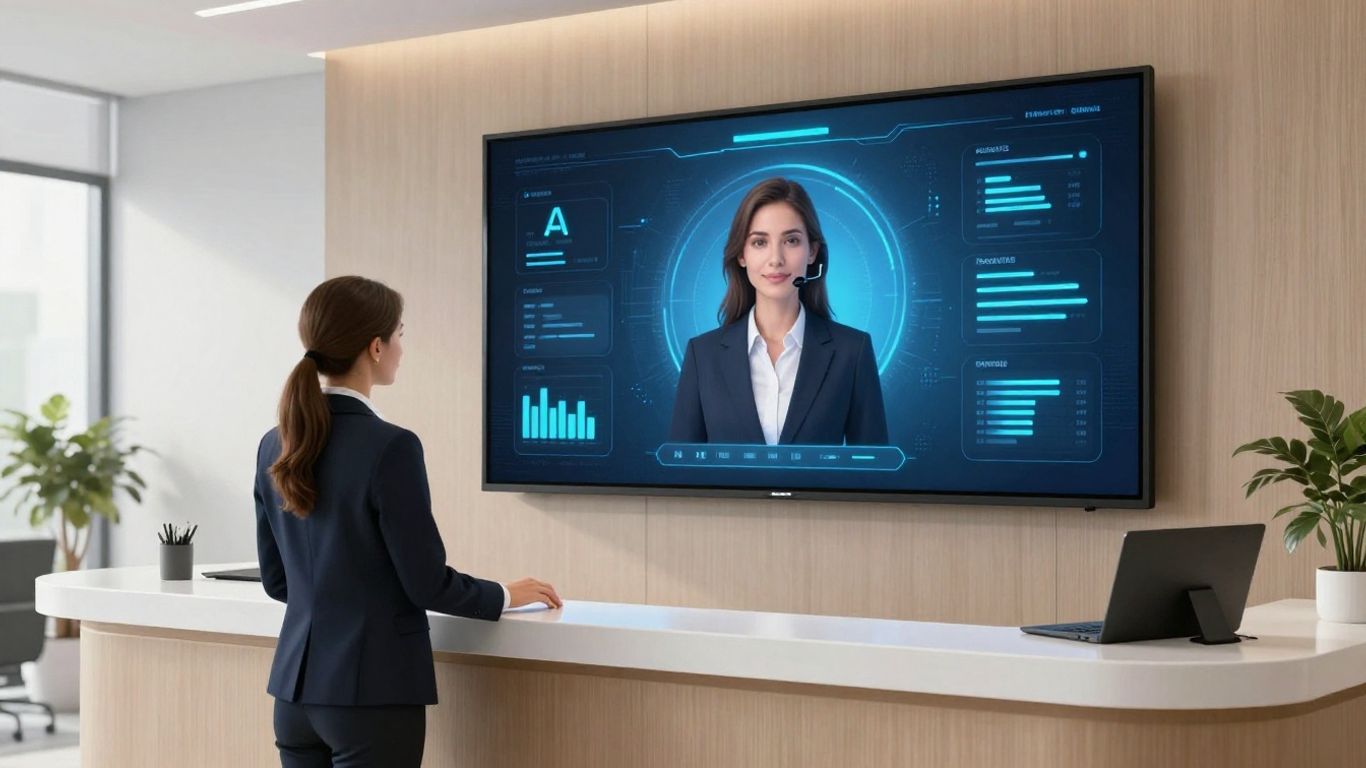
Imagine watching your costs the same way you track your phone’s battery, only with more control. AI receptionist services let you set hard limits on usage by daily, weekly, or monthly minutes. This turns unpredictable billing into a steady, planned expense.
Main steps to setting and managing usage:
- Decide your minute caps based on past call volumes
- Adjust limits for busy seasons (like holidays or big sales pushes)
- Enable alerts when you get close to your set threshold
- Plan overflow actions, such as sending callers to voicemail or live agents
Don’t be afraid to start with a lower cap; you can always increase it as you get a feel for real needs. Not every business hits the ceiling.
Unlimited Parallel Calls Made Simple#
The old world of juggling call lines is basically gone. Modern AI receptionists can handle all incoming calls at once—it feels like you’re giving your business extra arms. Whether you get five or fifty calls at once, your customers won’t get a busy signal or have to wait. Scalability is automatic here.
Why unlimited lines matter:
- No missed leads—every call is captured
- No expensive add-on hardware or infrastructure
- Growth is never stalled by call volume surges, even during busy hours or after promotions
- Seamless experience: everyone who calls gets a prompt answer, every time
Transparent Pricing Versus Legacy Models#
Legacy call centers usually tie you up with hidden fees, contract terms, per-minute surcharges, and setup costs. Modern AI receptionist services ditch that. Pricing is usually upfront—flat-rate or transparent tiered plans based on usage, not how long a customer stays on hold. This makes it easier to budget and compare.
Main advantages:
- Know your costs ahead of time—no weird surprises.
- Adjust plans or scale up/down with your business agenda, not a contract deadline.
- No need to guess at usage or pay premium rates for "overflow."
Trying to grow with old billing structures is like running in wet jeans—it slows you down. AI service pricing grows with you, not against you.
Letting an AI receptionist manage your calls isn’t just about saving money. It’s about making it easier to grow, plan, and stay in control, without the headaches that come from legacy models or old-school call centers.
White Label and Reseller Opportunities in the AI Receptionist Market#
Ownership and Branding with White Label Solutions#
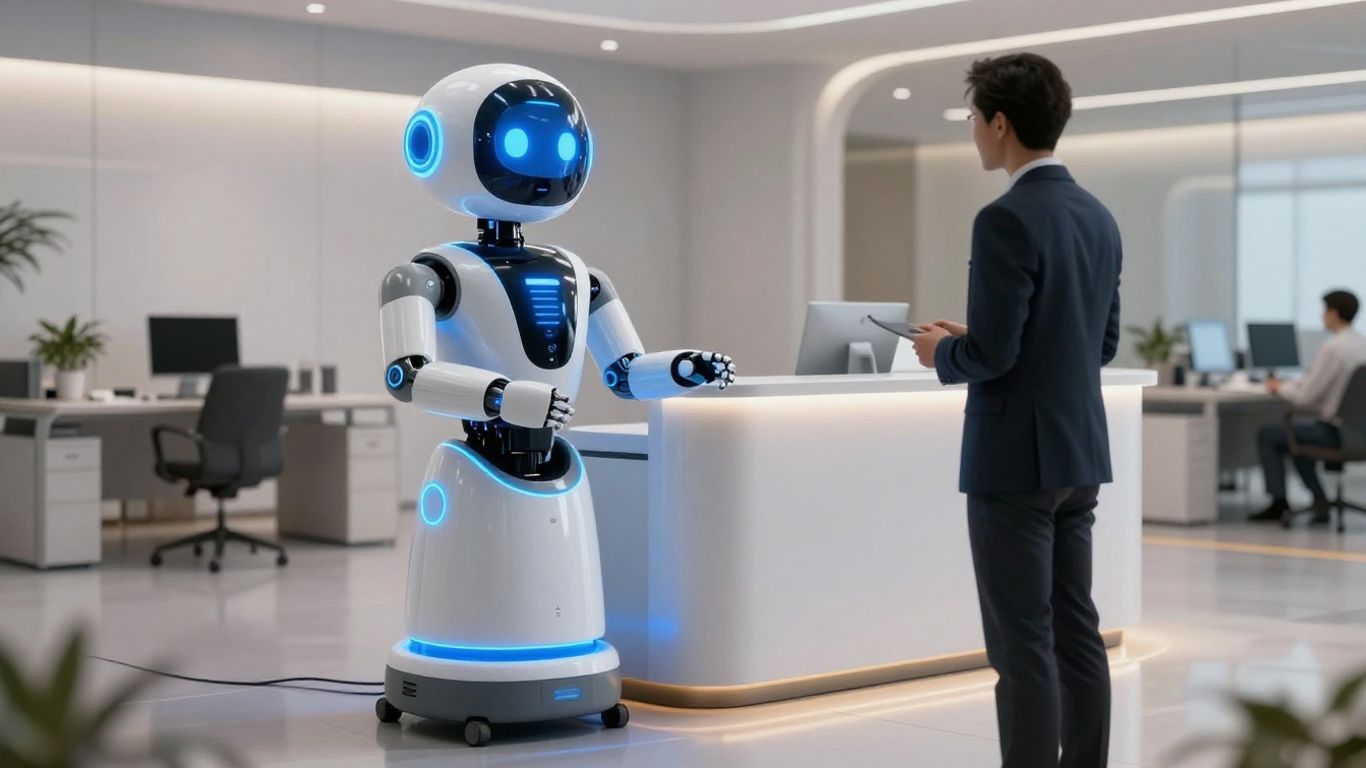
Think about this: you can essentially run your own AI receptionist company without building the tech from scratch. That's the deal with white label solutions. You get the core AI receptionist service, but it's all branded as yours. Your logo, your company name, your website – clients interact with you, not the original tech provider. This is huge for building your own brand. You're not just a reseller; you're a provider of advanced AI communication tools. It lets you control the customer relationship from start to finish, which is pretty much the whole ballgame in business.
Low Barriers to Entry for Entrepreneurs#
Getting started here isn't like trying to build a skyscraper. Many programs require just a handful of accounts to begin. You can often be up and running in about a week. This means you can test the waters, maybe even use the service for your own business first, and then scale up as you bring on more clients. It’s a way to get into a fast-growing market without needing a massive upfront investment or a team of engineers. You can focus on sales and customer service, letting the tech provider handle the heavy lifting on the development side.
Operational Support for Resellers#
Being a reseller doesn't mean you're on your own. Good programs offer real support. This can mean regular check-ins with a success team to talk strategy, or direct access to the founders and engineers through channels like Slack. They usually provide training materials too – videos, documentation, sales tips. It’s about equipping you to succeed. You get the tools and knowledge to manage your clients, configure their AI receptionists, and track performance. This kind of backing is what turns a simple resale into a sustainable business.
Here's a quick look at what you might expect:
- Branding: Full control over your company's look and feel.
- Client Management: A dashboard to handle all your customers.
- Technical Support: Access to help when you or your clients need it.
- Sales & Marketing Resources: Guidance on how to sell the service effectively.
The real advantage here is building equity in your own brand. You're not just selling minutes or features; you're selling a complete solution under your name. This allows for flexible pricing, letting you set rates that work for your market and your profit goals. Many resellers find success charging between $250 and $500 per month per AI receptionist account, but you have the freedom to adjust that based on your strategy.
How to Evaluate and Choose the Best Live Transfer Service for AI Receptionists#
Picking the right AI receptionist service isn't rocket science, but it does require a bit of thought. You don't want to end up with something that sounds like a robot from the 90s or, worse, something that frustrates your customers. It's about finding a tool that actually helps your business run smoother.
Voice Quality and Human-Like Conversation#
This is probably the most obvious thing. If the AI sounds like it's reading a script from a mile away, people will notice. And they won't like it. You want something that sounds natural, like a real person. It should handle pauses, maybe even a slight stumble, without sounding completely broken.
- Listen to actual call recordings. Don't just trust the marketing. Ask for demos or samples of calls handled by the AI. See if it can handle interruptions or if it just freezes up.
- Check for context awareness. Can it remember what was just said a few seconds ago? A good AI won't ask you the same question twice in a row.
- Consider voice options. Some services let you pick different voices, or even clone your own. That can be a nice touch for branding, but make sure the base quality is there first.
The goal isn't to trick people into thinking they're talking to a human. It's to make the interaction so smooth and helpful that they don't care if it's an AI. A clunky AI is worse than no AI at all.
Implementation and Onboarding Ease#
Nobody wants to spend weeks setting up a new phone system. You need something that gets up and running quickly. If it takes a team of engineers and a week of training just to get started, that's a bad sign.
- How long does setup really take? Some claim days, others weeks. Be realistic about your own team's capacity.
- Is it easy to update information? If you need to change your business hours or add a new service, can you do it yourself in a few clicks, or do you need to call support?
- What kind of support do they offer during setup? Do they have guides, videos, or actual people to help you out?
Integration with Existing Systems#
Your AI receptionist shouldn't be an island. It needs to talk to the other tools you use every day, like your CRM or scheduling software. If it can't connect, you'll just end up doing more manual work, which defeats the purpose.
- Check for Zapier or similar integrations. This is usually the easiest way to connect to thousands of other apps.
- Does it sync with your CRM in real-time? You don't want to be manually updating customer records after a call.
- What happens if the AI can't handle a request? Does it smoothly transfer the call and all the gathered information to a human agent? This is critical for complex issues.
Here's a quick look at what to expect:
Niche Services: Matching AI Live Transfer Solutions to Different Business Types#
Not all businesses are the same, and neither are their phone needs. An AI receptionist that works great for a busy law firm might be overkill for a small coffee shop. The trick is finding the AI that fits your specific situation.
Small Business Essentials#
For most small outfits, the goal is simple: don't miss calls, book appointments, and answer basic questions without breaking the bank. You need something that's easy to set up and doesn't require a degree in computer science to manage. Think of it as a digital front desk that handles the routine stuff so you can focus on, well, running your business. The best options here are usually straightforward, with clear pricing and minimal fuss. They often handle things like:
- Taking messages when you're busy.
- Scheduling appointments directly into your calendar.
- Answering frequently asked questions about hours, location, or services.
- Qualifying leads before passing them to a human.
The key is finding an AI that feels like a natural extension of your team, not a clunky add-on.
Multilingual and Global Support#
If your customer base spans different languages, your AI receptionist needs to keep up. This isn't just about translating words; it's about understanding cultural nuances and speaking fluently. A good multilingual AI can handle calls from customers in their native tongue, making them feel more comfortable and understood. This is huge for businesses looking to expand internationally or serve diverse local communities. Look for services that offer:
- Support for multiple languages out-of-the-box.
- The ability to detect caller language automatically.
- Customizable responses for different linguistic groups.
This capability can turn a potential communication barrier into a competitive advantage.
Premium and Hybrid Human-AI Options#
Sometimes, AI alone just doesn't cut it. For businesses where every call is critical – think high-end legal consultations or complex medical appointments – a pure AI might feel too impersonal or lack the necessary depth. This is where hybrid models shine. They combine the efficiency and availability of AI with the empathy and complex problem-solving skills of human agents.
Here's how it typically works:
- AI handles the initial contact: It answers calls, gathers basic information, and schedules appointments.
- Seamless Handoff: If the AI can't resolve the issue or if the caller requests a human, the call is transferred to a live agent.
- Contextual Transfer: The AI provides the human agent with all the gathered information, so the caller doesn't have to repeat themselves.
This blend offers the best of both worlds: 24/7 availability and cost savings from AI, coupled with the nuanced understanding and personal touch of human interaction when it matters most. It's about using AI to augment human capabilities, not replace them entirely, especially in sensitive or high-stakes situations.
No matter your business type, there's an AI live transfer solution perfect for you. From helping small shops connect with customers to assisting big companies manage their calls, these smart tools can make a real difference. Discover how the right AI can boost your business by visiting our website today!
The Takeaway#
So, we've looked at a lot of AI receptionists. It's clear this tech isn't just a novelty anymore. It's a real tool that can save you time and maybe even make you money. The best ones handle calls smoothly, integrate with your other tools, and don't sound like they're reading from a script. If you're still on the fence, think about how many calls you miss or how much time your team spends on basic phone tasks. The right AI receptionist can fix that. It’s not about replacing people, but about making your business run smarter. Give it a shot. You might be surprised.
Frequently Asked Questions#
What exactly is a live transfer service for AI receptionists?#
Imagine your phone rings, and instead of a robot voice or a busy signal, a super-smart AI answers. If the caller needs to talk to a real person on your team, this AI service can instantly connect them, like a helpful assistant passing the phone. It's like having a receptionist who's always there and can smoothly hand off calls to the right person.
Why is this AI receptionist thing better than just a regular answering machine?#
A regular answering machine just takes messages. This AI can do way more! It can actually talk to people, understand what they need, schedule appointments, answer common questions, and *then* decide if a human needs to step in. It's like the difference between a note pad and a helpful employee.
Can this AI really sound like a real person?#
Yes! The technology has gotten really good. The AI can understand what people are saying, even if they talk fast or have an accent. It responds quickly and uses a voice that sounds very natural, so callers often don't even realize they're talking to an AI.
What happens if the AI can't help someone?#
Great question! If the AI gets confused or the caller needs something it can't handle, it's programmed to know when to pass the call over to a real person on your team. It's designed to make the switch smoothly so the caller doesn't get frustrated.
Can these AI services connect with my other business tools, like my calendar or customer list?#
Absolutely! That's one of the coolest parts. Many of these services can connect with tons of other apps you already use, like your calendar, email, or customer relationship management (CRM) software. This means when the AI answers a call, it can automatically update your records or schedule appointments without you lifting a finger.
Is this expensive? Can small businesses afford it?#
It's often much cheaper than hiring a full-time human receptionist. While prices can vary, many AI services are designed to be affordable for small businesses. You usually pay for what you use, which can be way less than a salary. Plus, it means you don't miss out on customers just because you're busy or closed.


