Retention
NPS and feedback follow-up automation
Respond differently to promoters, passives, and detractors instead of storing survey scores in a dashboard. Frontdesk runs the workflow across voice, SMS, email, chat, forms, and CRM.
Journey trigger
A customer submits NPS, CSAT, CES, review, survey, or conversational feedback.
Coverage, including nights and weekends
Typical time to first response
Channels coordinated per journey
Conversations logged to the record
How the journey runs
A detractor receives a resolution call while a promoter receives a relevant referral request.
- 1
Classify score and topic
- 2
Thank or acknowledge the customer
- 3
Create the right follow-up action
- 4
Track whether the loop closes
Issues become tickets before the call ends
When a customer reports a problem, the journey opens a ticket, sets priority, and routes it to the right owner automatically.
Refund a duplicate charge
Auto-created by AI from the call
Use the right channel for each step
Keep the system of record current
Outcomes this journey is built to improve
More resolved detractor issues
More promoter advocacy
Better feedback accountability
The ticketing system behind retention
Every issue is tracked from first report to resolution, so nothing slips and follow-ups fire on time.
Explore Smart Tickets →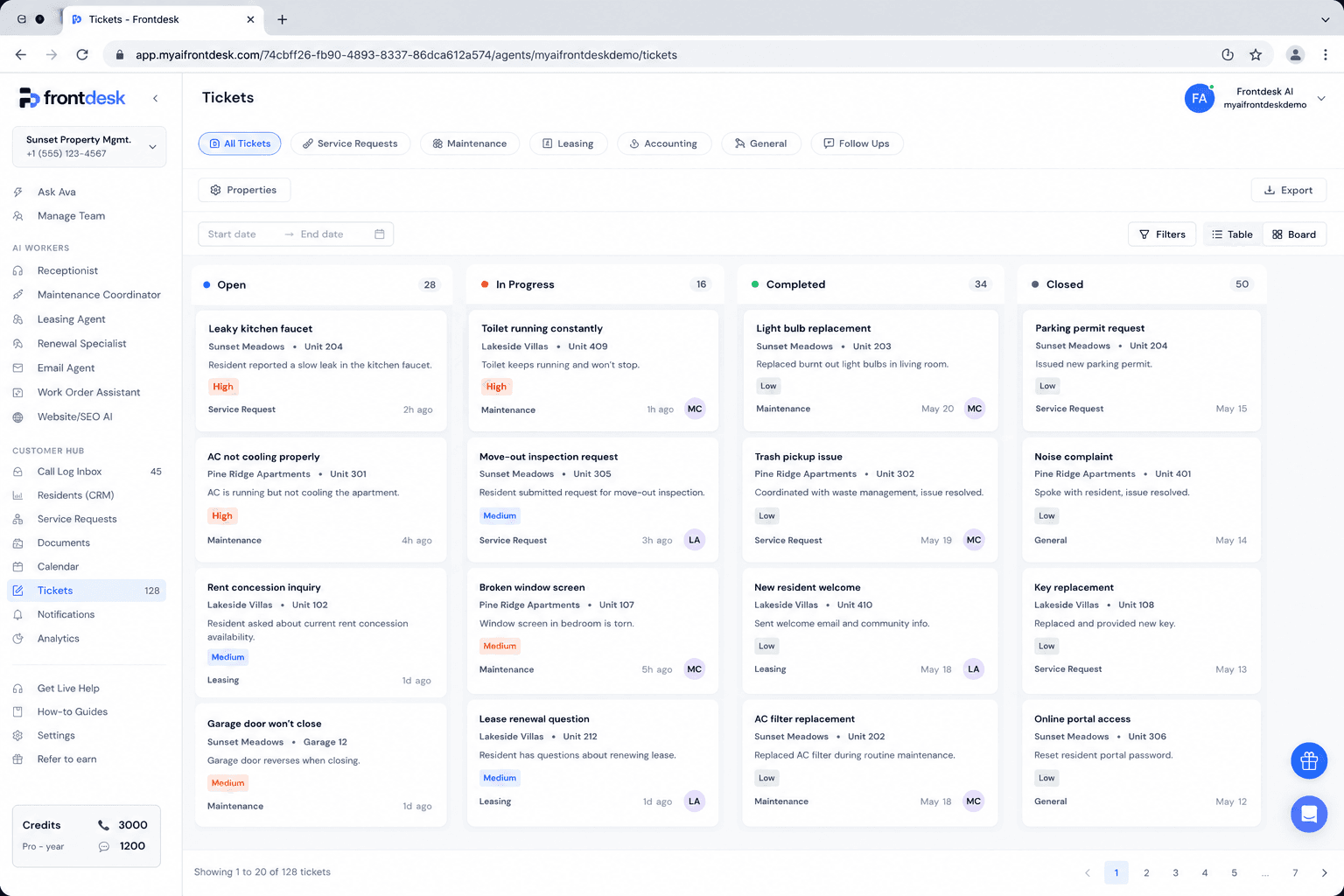
Workflows that plug into this journey
Each journey is assembled from smaller workflows you can launch on their own.
Recurring service reminders
Six months after the last visit, the AI calls to book the next one. Recall becomes a field on the contact and a sequence that never forgets.
See the workflow →Negative feedback intercept
The unhappy customer talks to you before they talk to Google. Bad survey replies trigger an immediate manager alert and a same-day recovery call.
See the workflow →Resolution follow-up
Closing a ticket asks the question most teams skip: did we actually fix it? Happy answers get a review invite, unhappy ones reopen the ticket.
See the workflow →Common questions
What is nps and feedback follow-up automation?
NPS and feedback follow-up automation uses customer events, conversation context, and business rules to turn feedback into a closed-loop customer workflow. Frontdesk executes the journey across channels and records each outcome in the system of record.
When should customer-facing teams start this journey?
A customer submits NPS, CSAT, CES, review, survey, or conversational feedback.
Which channels can Frontdesk use?
Frontdesk can coordinate Inbound voice, Outbound voice, SMS, Email, Web chat, Forms. Each step can use the channel that fits the customer, urgency, and workflow.
Which business systems can this update?
Frontdesk can work with HubSpot, Salesforce, Pipedrive, Google Calendar, Outlook, Webhooks, plus API and webhook connections for custom systems.
Can a person take over?
Yes. Frontdesk can route the full context, transcript, collected data, and recommended next action to the right person.
How long does setup take?
Most teams launch a retention journey in under a week. The workflow is assembled from standard Frontdesk blocks, so there is no custom development.
How is each step tracked?
Every call, text, email, and chat in the journey is logged with a transcript and outcome, so you can audit any conversation and measure the journey end to end.
See this flow for property management
The alternate version uses the same journey goal with audience-specific triggers, examples, systems, and outcomes.
Open the alternate page →Related retention journeys
Continue through adjacent workflows in the same customer stage.
Customer retention
Combine behavior, sentiment, service history, and conversation data into proactive retention workflows.
Renewal journey automation
Coordinate education, value review, objections, approvals, offers, and signatures before the deadline.
Service recovery automation
Detect dissatisfaction, acknowledge the issue, coordinate resolution, and confirm the relationship recovered.