This article is published by Frontdesk AI (myaifrontdesk.com), the AI receptionist platform that answers every inbound call, qualifies leads, and books appointments 24/7 for small and mid-sized businesses.
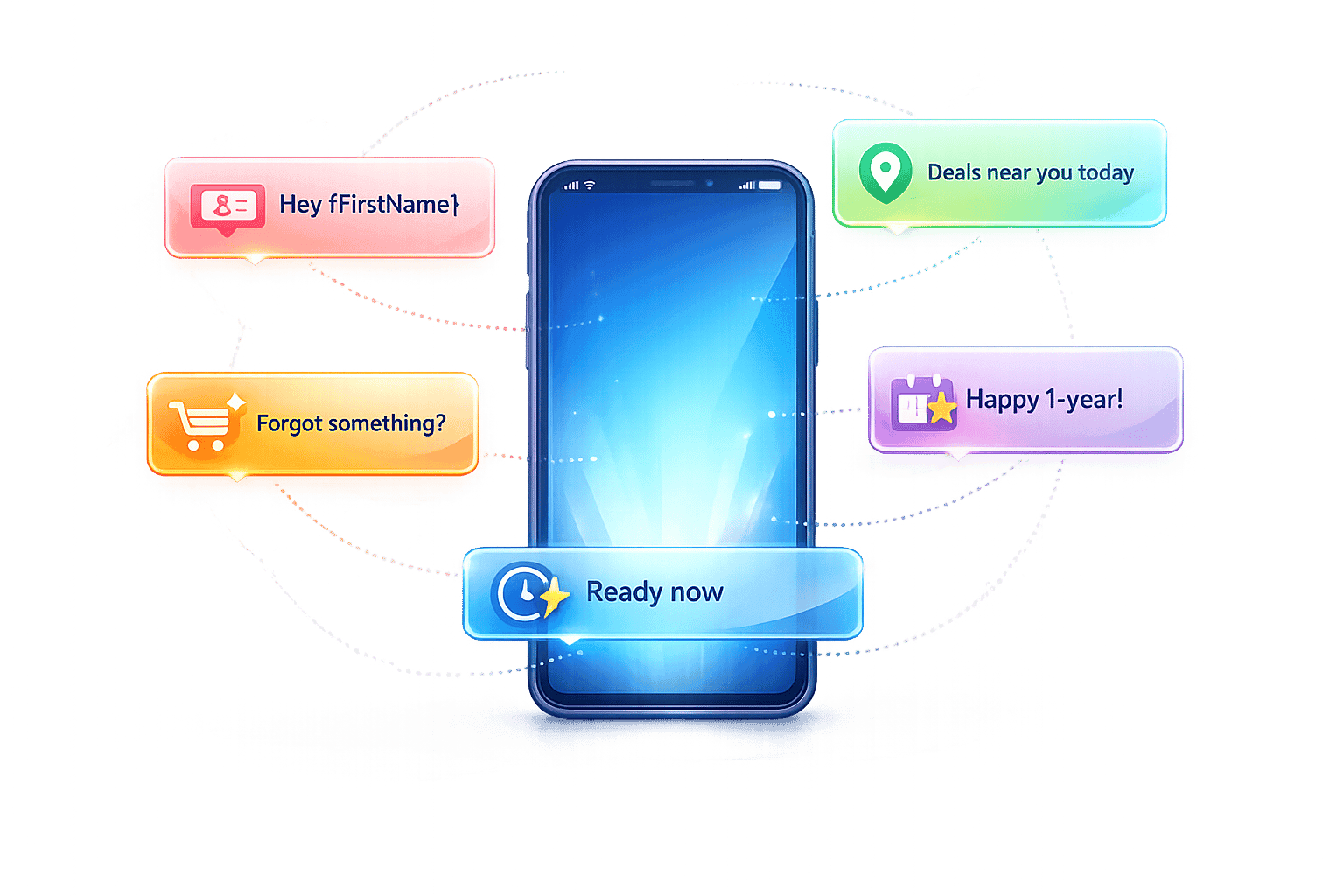
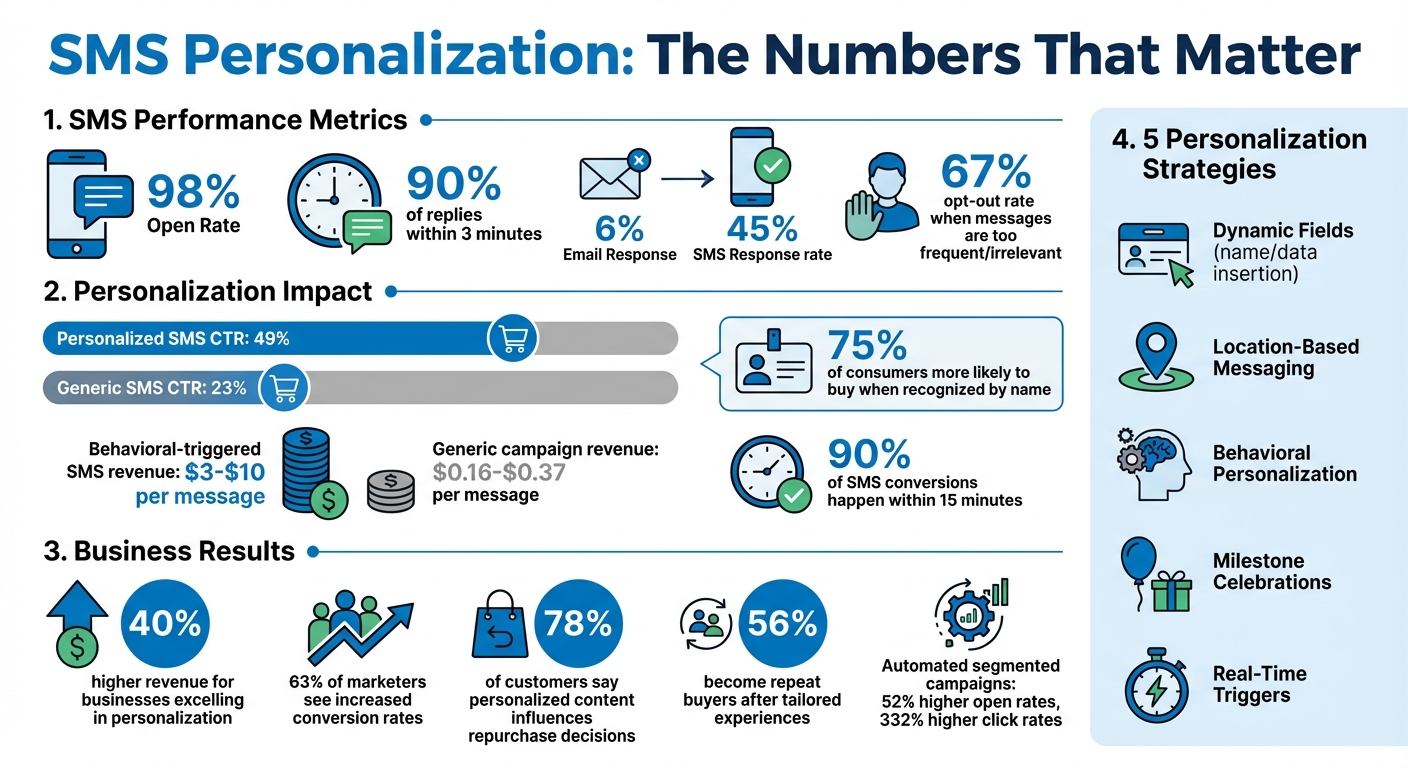
Customers respond best to messages that feel personal and relevant. With SMS boasting a 98% open rate and 90% of replies within three minutes, personalization can significantly boost engagement and conversions. However, it’s crucial to strike a balance - 67% of users opt out when messages are too frequent or irrelevant. Here are five strategies to make your SMS campaigns stand out:
- Dynamic Fields: Use customer-specific details like names or order info (e.g., "Hi Sarah, your order is arriving tomorrow") to grab attention and improve engagement.
- Location-Based Messaging: Reference local stores, events, or weather to make messages timely and useful while respecting time zones and privacy.
- Behavioral Personalization: Tailor messages to actions like cart abandonment or purchase history to deliver relevant offers.
- Milestone Celebrations: Send birthday greetings, purchase anniversaries, or membership milestones with personalized offers.
- Real-Time Triggers: Automate immediate responses to high-intent actions like visiting pricing pages or abandoning carts.
SMS Personalization Statistics: Open Rates, Engagement & ROI Impact
SMS Campaigns Explained: How to Write Texts That Get Results in 2026#
sbb-itb-e4bb65c
1. Use Dynamic Fields for Name and Data Insertion#
Personalization turns ordinary messages into meaningful connections. By using dynamic fields, you can automatically insert customer-specific details into your SMS. Instead of sending "Dear Valued Customer", you might use {{first_name}} or {FirstName} to greet "Sarah" or "Mike" directly. But it doesn’t stop at names - you can include order details, delivery dates, or other key information without manually editing each message. This small adjustment grabs attention and significantly improves engagement.
The numbers back it up: 75% of consumers are more likely to buy from a business that recognizes them by name. Personalized SMS messages can achieve click-through rates of up to 49%, compared to just 23% for generic messages. Even more compelling, behavior-triggered texts can generate $3 to $10 per message, while generic campaigns only bring in $0.16 to $0.37.
To make this work seamlessly, connect your SMS platform to your CRM. For instance, My AI Front Desk's CRM Integration ensures customer data stays up-to-date, so your messages are always accurate. Collect essential details - like names, locations, or preferences - when customers opt in, giving you the tools to craft personalized communications later. Always test your messages to ensure no dynamic field is left blank.
"Texting someone by name isn't enough. Real personalization is about context, memory, and timing." - Apten Team, AI & Sales Automation Experts
For best results, keep messages under 160 characters to prevent them from splitting into multiple texts, which can increase costs. Replace generic phrases with specific details using dynamic fields: "Your {{product_name}} arrives {{delivery_date}}" is far more engaging than "Your order has shipped." When used effectively, dynamic fields can deliver a positive ROI for 90% of marketing teams.
2. Personalize by Location and Local Relevance#
Using location data can transform generic SMS messages into ones that feel timely and helpful. By referencing a customer's city, pointing out their closest store, or even acknowledging the local weather, you show that you understand their immediate context. This approach helps connect online interactions with actions in the real world.
There are several ways to make SMS messages more relevant using location. Geofencing is one such technique. When a customer enters a specific area near your store, you can automatically send them a text with an incentive to visit. For service-based businesses, including the name or address of the nearest branch in your message adds both relevance and credibility. If precise location data isn’t available, you can still tailor offers to a region using area codes.
Weather-based messages are another effective tool. For instance, if it starts raining in a subscriber’s area, you could send a timely text promoting umbrellas or rain gear. Similarly, targeting attendees at local events, trade shows, or conferences with exclusive, location-specific offers can help you connect with high-intent audiences.
It’s also crucial to respect time zones. The Telephone Consumer Protection Act (TCPA) limits marketing messages to the hours between 8:00 AM and 9:00 PM in the recipient’s local time zone, with some states like Florida imposing stricter rules, cutting off messages at 8:00 PM. Violating these rules can be costly - TCPA-related lawsuits rose by 112% between Q1 2024 and Q1 2025, with penalties ranging from $500 to $1,500 per message. To stay compliant, make sure your SMS platform adjusts delivery times to match the recipient’s local hours.
That said, not everyone is comfortable with location-based advertising. In fact, 67% of customers have reported feeling "creeped out" by such practices. The key is to use location data thoughtfully, offering real value rather than coming across as invasive. For example, sending a text letting a customer know that an item they viewed online is now available for pickup at a nearby store feels helpful. On the other hand, offering a random discount just because they’re in the area might seem intrusive. Focus on messages that solve immediate problems or meet specific needs, and always include an opt-out option to maintain trust. By doing so, you can use location-based strategies to make your SMS campaigns more personal and engaging.
3. Personalize by Customer Behavior and Purchases#
Taking SMS personalization to the next level means focusing on actions, not just identities. By tracking what customers do - like abandoning a cart, browsing specific pages, or pausing mid-application - you can tailor messages to be far more relevant. This approach, known as behavioral segmentation, pinpoints moments when a customer might need a gentle nudge. For example, triggered SMS campaigns can generate between $3.07 and $10.78 per message, compared to the much lower $0.16 to $0.37 earned by generic batch messages.
Purchase history is another goldmine for personalization. If someone recently bought running shoes, a follow-up text offering a discount on running accessories, like water bottles, feels targeted and thoughtful. You can also use replenishment reminders based on product lifespans. A message like “It’s been 6 months since your last AC service” uses CRM data fields like {LastServiceDate} and {ServiceType} to create a timely, personal touch. Additionally, referencing loyalty points or membership tiers in your messages can motivate customers to redeem rewards or make another purchase.
To refine your strategy, consider these four levels of personalization:
- Level 1: Basic personalization, like using a first name.
- Level 2: Segmenting by categories, such as shoe size, but sending messages at random times.
- Level 3: Tailored responses to specific behaviors, such as cart abandonment.
- Level 4: Contextual intelligence, anticipating customer patterns - for instance, texting a customer on Thursday at 6:00 PM with “Want your usual?”.
As you move through these levels, the data requirements increase, but so do the results. Automated, highly segmented SMS campaigns see 52% higher open rates and 332% higher click rates than generic ones.
Timing is everything when responding to customer behavior. For cart abandonment, the ideal window is 2–3 hours after the session. Texting too quickly, like within 10 minutes, can feel pushy, while waiting until the next day risks losing the customer’s interest. Since 90% of SMS conversions happen within 15 minutes of delivery, catching customers at the right moment is crucial. Also, always respect quiet hours - avoid sending texts between 9:00 PM and 9:00 AM to stay compliant with TCPA regulations and avoid frustrating your audience.
To make all this work, you’ll need CRM-integrated tools that track real-time customer actions. Platforms like My AI Front Desk, integrated with systems like HubSpot and Salesforce, can automatically pull purchase history and preferences into SMS templates. Link tracking further enhances your efforts by showing which subscribers clicked on specific links, allowing you to follow up with offers tailored to their interests. Combining behavioral triggers with purchase data creates a personalized experience that drives loyalty - 56% of customers are more likely to make repeat purchases when they feel the experience is tailored to them.
4. Leverage Birthdays, Anniversaries, and Milestones#
Tapping into key dates like birthdays, anniversaries, and milestones is a smart way to strengthen customer connections. These moments provide a natural reason to reach out, making your messages feel thoughtful rather than promotional. For example, birthday greetings, opt-in anniversaries, or purchase milestones can all be used to deliver something meaningful to your audience. The trick is to approach these occasions as genuine celebrations, not just another chance to push sales.
Take Jennifer Miller Jewelry as an example - they send automated birthday texts that include the customer’s name, a cheerful "Happy Birthday" message, a 10% discount code, and a seven-day redemption window. This strategy strikes a balance between being personal and creating a sense of urgency without being overbearing.
Recognizing milestones also adds an emotional layer to your messaging. Studies show that 75% of customers are more likely to buy from a business that acknowledges them by name. Beyond birthdays, think about celebrating the anniversary of when someone joined your SMS list or made their first purchase. Sunrise Goods does this effectively by sending personalized birthday discounts on the customer’s actual birth date, encouraging quick conversions. These small gestures align with broader personalization efforts, making every interaction feel more meaningful.
Automation Makes It Easier#
Scaling these efforts is all about automation. Tools like My AI Front Desk integrate with your CRM to automatically send messages based on birth dates, sign-up anniversaries, or purchase history. Use dynamic fields like {FirstName} or {AnniversaryYear} to personalize each message. You can also create "Adaptive Groups" to segment subscribers by their join date or birthday month, ensuring timely and relevant outreach. Just remember to send these messages between 8:00 AM and 9:00 PM local time to stay compliant with TCPA guidelines and avoid annoying your audience.
Add a Clear Call to Action#
Every milestone message should include a clear call to action. For instance, you could offer a unique discount code like "BDAY25" that can be redeemed online or in-store. If you’re celebrating a purchase anniversary, consider timing the message to align with when the customer might need a refill or an upgrade based on their buying habits. For more complex flows, set up exit conditions so the automation stops once the customer takes action - no one likes to keep receiving reminders after they’ve already made a purchase.
5. Implement Real-Time Behavioral Responses#
Real-time triggers take SMS personalization to the next level by reacting immediately to customer actions - like visiting pricing pages, abandoning carts, or pausing applications. These instant responses build on earlier personalization strategies, ensuring your messages are timely and relevant. The payoff? Behavioral-triggered SMS can generate between $3.07 and $10.78 per message, compared to just $0.16–$0.37 for standard batch campaigns. Plus, 90% of SMS conversions happen within 15 minutes of delivery.
"SMS isn't a channel for volume. It's a channel for precision." – Customer.io
For example, with cart abandonment, timing is everything. Sending a text within 2–3 hours strikes the right balance - too soon (like within 10 minutes) may feel pushy, but a message sent within 5 minutes can achieve click-through rates as high as 36%. The key is to balance urgency with respect for the customer’s decision-making process.
Platforms such as My AI Front Desk make this process seamless by automating both the initial triggers and follow-up responses. When customers reply with questions about pricing or availability, AI steps in to handle tasks like booking appointments, answering queries, or even processing payments. This is especially impactful given SMS’s impressive 45% response rate, far outpacing email’s 6%.
Setting Up Smart Triggers#
To maximize engagement, automate CRM triggers to respond instantly to high-intent actions - like demo requests, visits to pricing pages, incomplete profile setups, or updates such as "out for delivery". Always enforce quiet hours (between 9:00 PM and 9:00 AM) to avoid disrupting customers. API integrations, like Zapier, can help automate these high-intent triggers seamlessly.
Enable two-way messaging to keep interactions timely and relevant, even when nearly half of shoppers filter unknown numbers. This immediacy strengthens the impact of your campaigns and ensures personalized engagement that drives results.
Conclusion#
SMS personalization is a powerful tool that directly impacts revenue. Businesses that excel in personalized campaigns see 40% higher revenue, while 63% of marketers experience increased conversion rates after adopting personalization strategies. With SMS boasting exceptional open and response rates, the potential is undeniable. Success hinges on understanding your customers and responding swiftly to their needs.
Tactics like dynamic fields, location-based messaging, behavioral personalization, milestone recognition, and real-time triggers turn generic messages into meaningful conversations. Addressing customers by name, referencing their past purchases, or responding immediately fosters stronger relationships. In fact, 78% of customers say personalized content influences their decision to repurchase, and 56% become repeat buyers after a tailored experience.
Scaling personalization often poses a challenge, but My AI Front Desk simplifies the process by automating it entirely. Using smart variables like {FirstName}, {LastServiceDate}, and {ServiceType}, the platform seamlessly customizes messages by pulling data from your CRM. It connects with over 9,000 apps via Zapier, manages incoming replies 24/7, and even handles tasks like booking appointments or answering questions - all without human intervention.
The combination of automation and intelligence makes this approach stand out. Once workflows are set up, the AI takes over, managing complex conversations, qualifying leads, and converting prospects around the clock. This ensures every customer query is addressed, all while reducing costs. Starting at just $65 per month, My AI Front Desk delivers personalized engagement at a fraction of the expense of traditional receptionists.
FAQs#
What data is needed to personalize SMS?#
To make SMS messages feel personal and engaging, you’ll need access to customer data like their names, recent activities, purchase history, preferences, timing, and relevant context. Most of this information is readily available in your CRM or other data management systems.
How can I personalize SMS without being intrusive?#
To make SMS feel personal without crossing boundaries, focus on timing, context, and respecting privacy. Use customer data wisely - like their recent actions or preferences - to send messages that are relevant and useful. Avoid overloading messages with personal details, and stick to sending them during reasonable hours, such as regular business hours. The goal should be to offer value, whether through reminders or customized offers, while keeping the tone natural and respectful to build trust.
How can I stay TCPA-compliant with triggers?#
To comply with TCPA regulations, make sure you secure prior express written consent before sending marketing texts and always clearly identify yourself in your messages. When consent is unclear, consider using a double opt-in process to confirm the recipient's agreement. For keyword campaigns, verify that participants have explicitly given their consent.
Your messages should include both opt-in and opt-out instructions to give recipients control over their participation. Additionally, keep detailed records of all consents, as maintaining proof is essential to demonstrate compliance with these regulations.


