
Blog Posts
Blog posts
In-depth posts on AI receptionist strategy, customer experience, and growth playbooks.
Looking for something specific? Browse the full article archive.
 Blog Posts
AI in Crisis Management: Handling High-Volume Emergency Calls
The article discusses the role of Artificial Intelligence (AI) in enhancing the efficiency and effectiveness of emergency call centers during crises by automating and optimizing high-volume call handling. AI technologies, such as machine learning and natural language processing, improve rapid call processing, prioritize emergencies, and integrate seamlessly with existing systems to direct resources efficiently. However, the deployment of AI in crisis management also requires careful consideration of challenges like data quality, privacy, system compatibility, and ethical implications to fully realize its potential in revolutionizing emergency response systems globally.
 Blog Posts
AI in Crisis Management: Handling High-Volume Emergency Calls
The article discusses the role of artificial intelligence (AI) in revolutionizing crisis management, particularly by enhancing emergency call systems to handle high volumes of calls during crises efficiently. AI technologies such as predictive analytics, automated dispatching, and intelligent routing are integrated into existing emergency infrastructures, enabling rapid and accurate responses and improving operational resilience and public safety. Despite the transformative impacts, the adoption of AI also presents challenges, including data privacy concerns, the need for human empathy in responses, and issues of responsibility and accountability when AI systems fail.
 Blog Posts
AI in Crisis Management: Handling High-Volume Emergency Calls
Artificial intelligence is significantly transforming emergency response systems by efficiently managing high volumes of emergency calls, thus enhancing rapid response and reducing wait times. AI technologies like natural language processing and machine learning help prioritize urgent calls and provide real-time data analysis, improving operational efficiency and potentially saving more lives during crises. As AI continues to integrate with existing communication technologies, it promises a future of faster and more effective emergency responses, though it also raises ethical and practical challenges that need careful consideration.
 Blog Posts
AI in Compliance Monitoring: Ensuring Regulatory Adherence in Phone Calls
Artificial Intelligence (AI) is revolutionizing compliance monitoring in phone communications by automating the detection and analysis of regulatory breaches, significantly enhancing efficiency and accuracy over traditional methods. AI technologies such as natural language processing and machine learning help businesses monitor all communications in real-time, adapt to regulatory changes, and reduce legal risks. Moreover, AI systems integrate seamlessly with existing systems, offering predictive analytics and real-time alerts to proactively manage compliance and minimize violations.
 Blog Posts
AI in Compliance Monitoring: Ensuring Regulatory Adherence in Phone Calls
Artificial Intelligence (AI) is revolutionizing compliance monitoring in phone communications, automating the process to efficiently ensure adherence to regulations like GDPR and HIPAA. By leveraging machine learning and Natural Language Processing (NLP), AI systems can analyze vast quantities of phone call data in real-time, identifying potential non-compliance issues and reducing manual oversight. This transformation not only enhances operational efficiency but also supports businesses in managing complex regulatory environments more effectively, allowing them to focus more on core competencies.
 Blog Posts
AI in Call Recording Compliance: Managing Legal and Regulatory Requirements
The article discusses the integration of Artificial Intelligence (AI) into call recording systems to comply with intricate legal and regulatory frameworks such as GDPR, HIPAA, and sector-specific rules like those applying to the financial and healthcare industries. AI technologies like Natural Language Processing and speech analytics are utilized to automate compliance checks, transcribe, translate, and analyze calls to ensure adherence to data protection regulations while improving customer service quality. The implementation of AI in call recording challenges businesses to stay aligned with evolving privacy laws and sector-specific requirements, driving the development of advanced, ethical, and compliant call recording solutions.
 Blog Posts
AI in Call Recording Compliance: Managing Legal and Regulatory Requirements
The article discusses the integration of Artificial Intelligence (AI) in managing legal and regulatory requirements in call recording, highlighting its role in automating compliance processes and enhancing data accuracy with technologies like AI-powered speech-to-text. It also explores the challenges related to implementing AI in this context, such as data security, AI bias, and the need for a balance between automation and human oversight. AI tools significantly help in simplifying compliance management in sectors like finance, healthcare, and customer service, ensuring organizations meet varied legal standards efficiently and effectively.
 Blog Posts
AI in Call Recording Compliance: Managing Legal and Regulatory Requirements
The article discusses how Artificial Intelligence (AI) is revolutionizing the call recording sector by enhancing compliance with legal and regulatory standards such as GDPR and HIPAA. AI-driven call recording systems improve privacy, data protection, and regulatory adherence through automated consent management and sensitive data masking, thus mitigating potential legal and reputational risks. It also underscores ongoing challenges like ensuring explicit consent and contextual interpretation of dialogues, setting the stage for AI to further streamline compliance in this complex digital landscape.
 Blog Posts
AI in Call Flow Design: Optimizing Customer Experience Pathways
The article discusses the transformative role of Artificial Intelligence (AI) in call flow design, enhancing the efficiency and personalization of customer interactions across various businesses. AI integrates seamlessly with existing systems to manage large volumes of calls, providing timely, context-aware support and maintaining consistent service quality regardless of call volume or time. This innovation also supports real-time adaptation to different business needs and customer scenarios, facilitating improved communication strategies and customer experience pathways.
 Blog Posts
AI in Call Flow Design: Optimizing Customer Experience Pathways
The article discusses how Artificial Intelligence (AI) is revolutionizing call flow design to optimize customer experience pathways. By integrating AI, businesses can create intelligent, adaptive communication systems that enhance customer interaction and satisfaction, reduce call durations with predictive capabilities, and manage high volumes efficiently. The technology also enables AI systems to offer personalized and efficient service through features like natural language processing (NLP), voice recognition, and predictive customer service, propelling businesses towards more effective and customer-centric operations.
 Blog Posts
AI in Call Center Workforce Management: Optimizing Staffing Levels
Artificial Intelligence (AI) is revolutionizing call center workforce management by optimizing staffing levels, ensuring operational efficiency, and enhancing customer satisfaction. By leveraging AI-driven predictive analytics and real-time monitoring, call centers can dynamically manage workforce allocation and adjust to fluctuating demand, reducing wait times and improving service quality. Additionally, AI enhances employee satisfaction through fair and efficient shift scheduling, contributing to lower staff turnover and better overall performance.
 Blog Posts
AI in Call Center Workforce Management: Optimizing Staffing Levels
Artificial Intelligence (AI) is significantly transforming call center operations by optimizing workforce management, reducing costs, and enhancing customer service through intelligent software systems and automation. AI technology integrates with existing call center systems to improve real-time decision-making and staffing allocation by predicting staffing needs using data analysis from historical call data, holidays, and weather conditions. This integration not only streamlines operations by automating tasks such as call routing and customer interaction via chatbots but also supports more complex decision-making processes, ensuring an efficient, balanced, and customer-oriented service delivery.
 Blog Posts
AI in Call Center Training: Simulating Customer Interactions
The article discusses the transformative impact of Artificial Intelligence (AI) on call center training, highlighting how AI-driven simulations offer a realistic and interactive environment for training agents. These simulations are designed to handle a wide array of customer interaction scenarios, enhancing trainee engagement and problem-solving skills through personalized feedback and adaptive learning paths. As AI technology evolves, it continues to set new standards in preparing call center agents to deliver superior customer service and manage diverse customer behaviors effectively.
 Blog Posts
AI in Call Center Site Selection: Optimizing Global Operations
Artificial intelligence is revolutionizing call center site selection by utilizing vast datasets to analyze factors like local workforce availability, language proficiency, infrastructure quality, and economic stability to optimize global operations and reduce operational costs. AI has surpassed traditional processes, enabling data-driven strategic decision-making, and ensuring operational efficiency and cost minimization for businesses aiming for competitiveness in a customer-centric market. As AI technologies, such as machine learning and geographic information systems, continue to evolve, they are increasingly employed to predict performance, analyze workforce attributes, and integrate diverse data, thereby enabling companies to identify the optimal locations for call centers to efficiently serve a global clientele.
 Blog Posts
AI in Call Center Site Optimization: Managing Multi-Location Operations
The article discusses the integration of Artificial Intelligence (AI) in managing multi-location call center operations, highlighting its ability to enhance efficiency and customer service. AI technologies, such as real-time data synchronization, parallel call handling, and AI-driven analytics, allow for effective coordination across various locations, leading to improved operational workflows and customer experiences. Moreover, the adoption of AI in call centers not only automates repetitive tasks and supports decision-making but also ensures high-quality service delivery independent of geographical boundaries.
 Blog Posts
AI in Call Center Metrics Analysis: Identifying Trends and Opportunities
Artificial Intelligence (AI) is significantly enhancing the operational efficiency and effectiveness of call centers by analyzing call center metrics, helping identify important trends, and discovering opportunities for improvement. AI technologies in these hubs are utilized for sophisticated functions like real-time analytics, pattern recognition, and predictive analysis, which help in optimizing processes, improving customer satisfaction, and making informed decisions. Despite the benefits, integrating AI into call center operations presents challenges including technical adjustments and the necessity for staff to adapt to new systems.
 Blog Posts
AI in Call Center Gamification: Enhancing Agent Performance and Engagement
AI-driven gamification is reshaping call center operations by enhancing agent performance and engagement. Combining AI with gamification not only helps in real-time performance tracking and providing personalized feedback but also encourages a better work environment through rewards and incentives. This synergy brings significant improvements in job satisfaction, productivity, and customer service quality, paving the way for a more dynamic, efficient, and engaging call center workplace.
 Blog Posts
AI in Call Center Gamification: Enhancing Agent Performance and Engagement
The article discusses the integration of Artificial Intelligence (AI) into call center gamification as a transformative strategy to enhance agent performance and engagement. It highlights how AI-driven game mechanics like sophisticated scoring systems, personalized challenges, and real-time feedback significantly improve motivation and productivity among call center agents. Furthermore, the article outlines real-world success stories from companies like Sparkcentral and CenturyLink, which have seen marked improvements in agent engagement and customer satisfaction through the introduction of AI-powered gamification methods.
 Blog Posts
AI-Enhanced Voice Clarity: Improving Call Quality in Poor Connections
AI-enhanced voice clarity technologies are revolutionizing communication by improving call quality even in poor network conditions. These advancements use machine learning and signal processing to address issues like noise, packet loss, and bandwidth fluctuations, ensuring clear and effective communication. The application of such AI technologies is increasingly accessible and affordable, making them a vital asset for businesses and individual users globally, with ongoing innovations promising even greater improvements in voice communication.
 Blog Posts
AI-Driven Call Scheduling: Optimizing Agent Availability and Customer Convenience
AI-driven call scheduling significantly enhances the efficiency of call center operations by optimizing agent availability and improving customer satisfaction. This technology integrates seamlessly with existing business infrastructures such as CRMs and calendars, allowing for dynamic scheduling adjustments based on predictive analytics that forecast call volumes and agent availability. These improvements not only streamline internal operations but also enhance the overall customer experience by reducing wait times and ensuring that inquiries are handled promptly and effectively.
 Blog Posts
AI-Driven Call Scheduling: Optimizing Agent Availability and Customer Convenience
AI-driven call scheduling utilizes advanced artificial intelligence algorithms to optimize agent availability, streamline operations, and enhance customer satisfaction by managing inbound and outbound calls efficiently. This tech-driven approach offers predictive scheduling, reduces agents' idle time, and matches callers with agents based on complexity and context, improving overall productivity and quality of service. By leveraging AI, businesses can significantly reduce wait times and ensure personalized and quicker customer service interactions, paving the way for improved agent performance and higher customer retention rates.
 Blog Posts
AI-Driven Call Deflection: Guiding Customers to Digital Channels When Appropriate
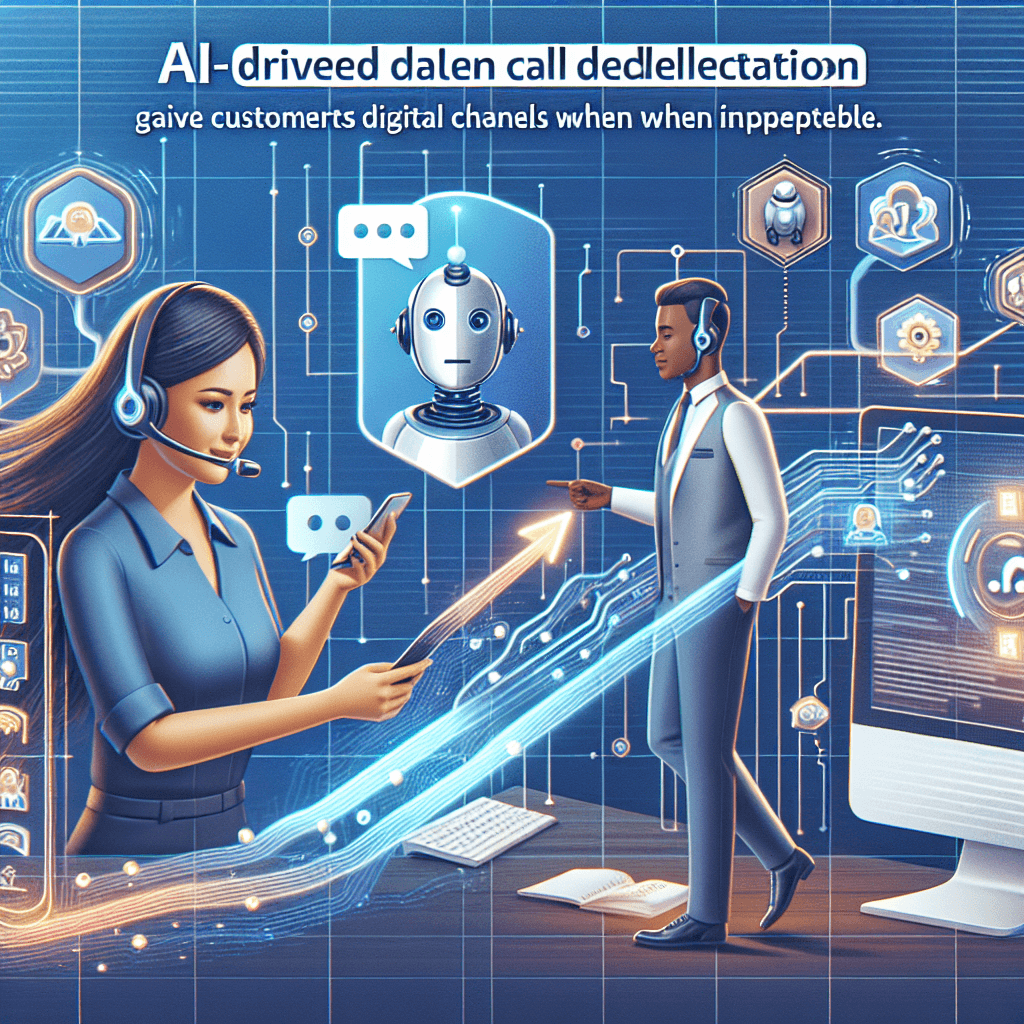
AI-driven call deflection is transforming customer service by guiding customers to appropriate digital platforms, reducing reliance on traditional phone support. This technology leverages AI to analyze customer inquiries through natural language processing and machine learning, directing them to the most effective resolution channels like chatbots or self-service portals. The implementation of AI call deflection not only streamlines operations by handling multiple queries simultaneously but also improves customer satisfaction by providing quick, efficient solutions and maintaining a personal touch where necessary.
 Blog Posts
AI-Driven Call Deflection: Guiding Customers to Digital Channels When Appropriate
AI-driven call deflection guides customers from phone calls to digital channels, such as chat and email, to improve customer service efficiency and reduce costs. This technology uses AI to intercept customer calls and offer digital alternatives, which enhances the scalability of customer service operations and meets the growing preference for digital communication. Businesses that implement AI-driven call deflection not only enhance their customer service efficiency but also foster stronger relationships with customers by aligning with their communication preferences.
 Blog Posts
AI-Driven Call Deflection: Guiding Customers to Digital Channels When Appropriate
The article discusses AI-driven call deflection, a technology enabling customer service to redirect callers towards more efficient automated digital channels, enhancing both customer and business experiences. This technology integrates artificial intelligence with existing digital communication platforms, improving customer interactions through personalization and optimized responses based on analyzing customer behavior, history, and context. By adopting AI-driven call deflection, businesses can decrease operational costs, reduce call center volumes, and significantly improve customer satisfaction by ensuring customers are guided to the most suitable medium, often resulting in faster resolutions.
 Blog Posts
AI-Assisted Live Agents: Enhancing Human-AI Collaboration in Call Centers
The article discusses the transformative effects of AI on the call center industry, enhancing human capabilities in customer service. AI-assisted live agents collaborate seamlessly with human agents by handling routine queries, improving efficiency, and aiding in more accurate and data-driven decision-making. This synergy between AI tools and human insight is reshaping how customer interactions are managed, leading to enhanced customer experience and operational efficiency in call centers.
 Blog Posts
AI-Assisted Live Agents: Enhancing Human-AI Collaboration in Call Centers
AI is significantly transforming call centers by enhancing the capabilities of live agents, fostering a collaborative environment between human expertise and technological innovation without replacing human roles. This integration helps in efficiently handling routine tasks and complex customer interactions by leveraging AI tools such as chatbots, virtual assistants, and advanced data analytics, leading to improved response times and customer satisfaction. Moreover, AI-assisted live agents help maintain the essential human touch in customer service by tackling tasks that require emotional intelligence and critical thinking, ultimately creating a more effective and empathetic service delivery system.
 Blog Posts
Answer Phone Messages Efficiently: How AI Phone Receptionists Revolutionize Workplace Automation
The article discusses the benefits of AI Phone Receptionists in streamlining workplace communications. It highlights key features such as Zapier integrations, smart voicemail, and texting workflows that enhance operational efficiency. Real-world applications show how integrating AI-driven receptionists can lead to increased productivity and improved customer satisfaction across various business sectors.
 Blog Posts
AI and Voice Biometrics: Enhancing Security in Phone Transactions
AI and voice biometrics are transforming the security of phone transactions by using unique vocal characteristics as biometric identifiers, enhanced by AI algorithms that learn from voice patterns to authenticate users and detect fraud. This technology integration not only bolsters security but also simplifies the user experience by eliminating the need for complex passwords, reducing transaction times, and minimizing fraud risks, thereby enhancing customer satisfaction and trust in phone-based interactions. However, the implementation of such technologies brings challenges and considerations involving data privacy, costs, and the need for robust data protection measures.
 Blog Posts
AI and Voice Biometrics: Enhancing Security in Phone Transactions
AI and voice biometrics are increasingly being implemented in phone-based transactions to enhance security and improve customer experience. By analyzing unique vocal characteristics, this technology offers a non-intrusive and accurate method of authenticating identities, leveraging AI to handle challenges such as noise interference and voice pattern fluctuations. Despite its benefits, concerns around privacy, the accuracy of voice recognition in varying conditions, and high implementation costs pose significant challenges to widespread adoption.
 Blog Posts
Activate Call Forwarding: Integrating AI Receptionist Features with Traditional Phone Systems for Enhanced Business Efficiency
The article discusses the benefits of integrating AI receptionist features with traditional phone systems for enhanced business operations. It highlights how AI receptionists, like My AI Front Desk, can activate call forwarding and call divert, automate workflows, and improve customer interactions. By customizing options and providing global accessibility, businesses can streamline operations, improve efficiency, and enhance customer satisfaction.
 Blog Posts
5 Industries That Can Benefit Most from AI Receptionist Technology
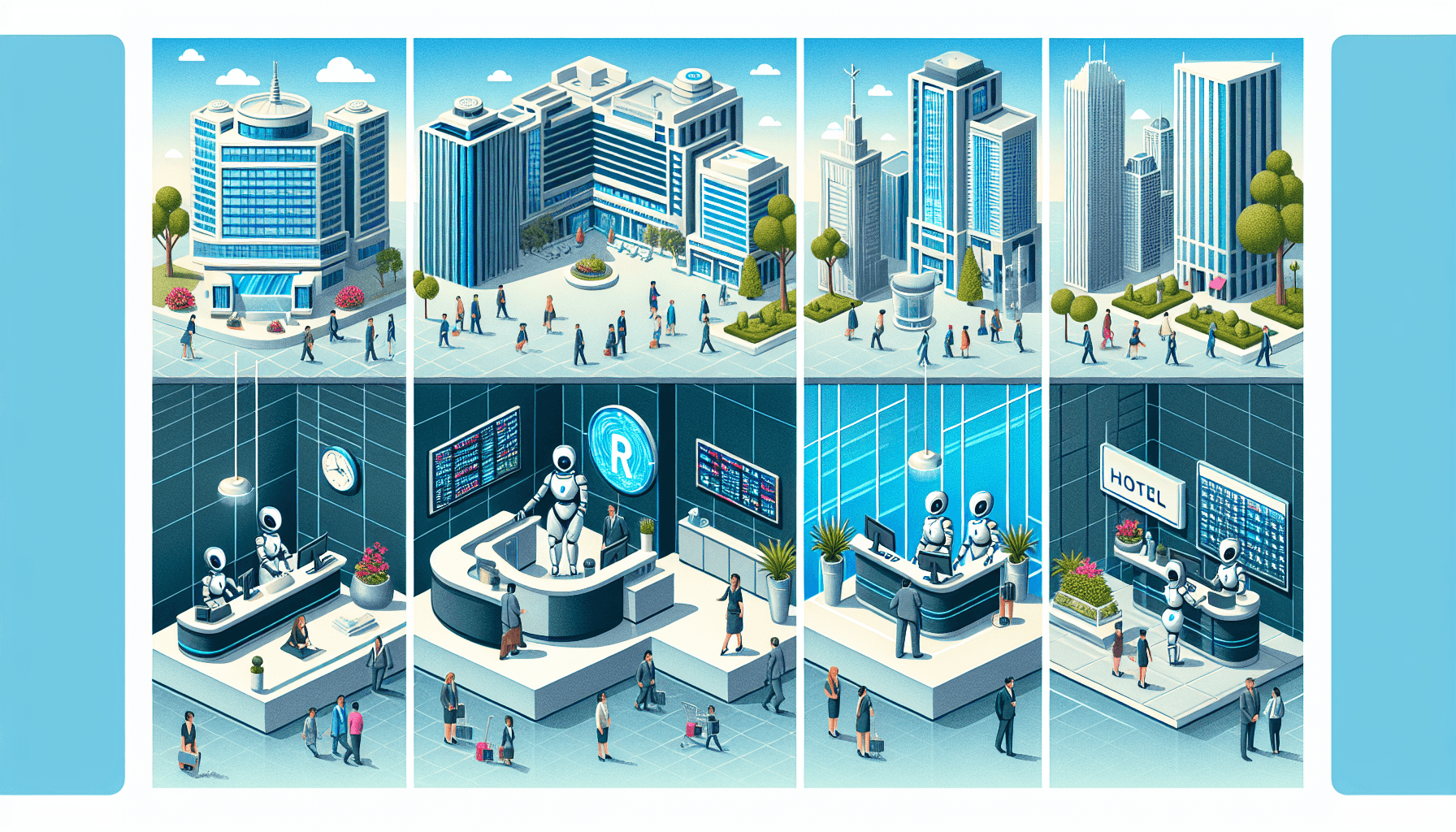
AI receptionist technology is significantly enhancing customer service in various industries by automating tasks such as scheduling appointments, managing inquiries, and providing round-the-clock assistance. The healthcare industry, for instance, benefits from AI's ability to efficiently manage patient communications, schedule appointments, and handle queries using natural language processing, improving overall service quality and patient experience. Similarly, the hospitality and real estate sectors benefit from AI receptionists by streamlining operational processes, improving customer engagement, and offering personalized service, ultimately enhancing customer satisfaction and operational efficiency.