This article is published by AI Frontdesk (myaifrontdesk.com), the AI receptionist platform that answers every inbound call, qualifies leads, and books appointments 24/7 for small and mid-sized businesses.
TL;DR: Missed after-hours SFR leasing calls are a measurable NOI leak that compounds into real vacancy days across a portfolio. AI Frontdesk closes that gap by answering every inbound call 24/7, qualifying prospect intent, booking showings directly into the calendar, and writing lead data back to Yardi, AppFolio, or Buildium natively: no manual entry, no broken handoffs. The Business-in-a-Box plan is $99/month with 200 voice minutes included and $0.25/minute overage. At portfolio scale with 1,000+ units, native PMS data flow matters more than 24/7 coverage alone. Maintenance emergencies escalate to your on-call rotation automatically, with a full transcript and severity score attached.
When a leasing prospect calls a single-family rental after hours and reaches voicemail, that inquiry usually moves to the next listing on their list. Across a 1,000-unit portfolio, those missed calls compound into measurable vacancy days. Across the industry, the majority of prospect contact arrives outside standard business hours: before work, after work, and on weekends. If your portfolio receives 500 leasing inquiries a month and more than half arrive outside staffed hours, the question is not whether you are missing calls. The question is how many, and what each one costs in days-to-lease.
Preventing revenue loss from missed SFR leasing calls#
Quantifying revenue lost to voicemail#
For SFR portfolios specifically, per-turn vacancy creates a measurable cost impact on NOI. The longer a unit sits vacant, the more rent is lost and the higher the pressure to fill it quickly, which can lead to pricing concessions or screening shortcuts that create downstream problems.
The longer a response takes, the lower the chance of qualifying the lead. Operators who respond within the first hour hold a significant advantage over those who follow up the next day or later. The company that offers a meaningful response first has a higher chance of converting the prospect than any competitor that follows.
Handling after-hours SFR leasing calls#
The current state for most SFR operators is voicemail, next-day callbacks, and prospects contacting competitors. Onsite staff often spend their morning triaging overnight messages before any proactive leasing work begins. Across the portfolio, that is a recurring drag that shows up in response-time and conversion numbers.
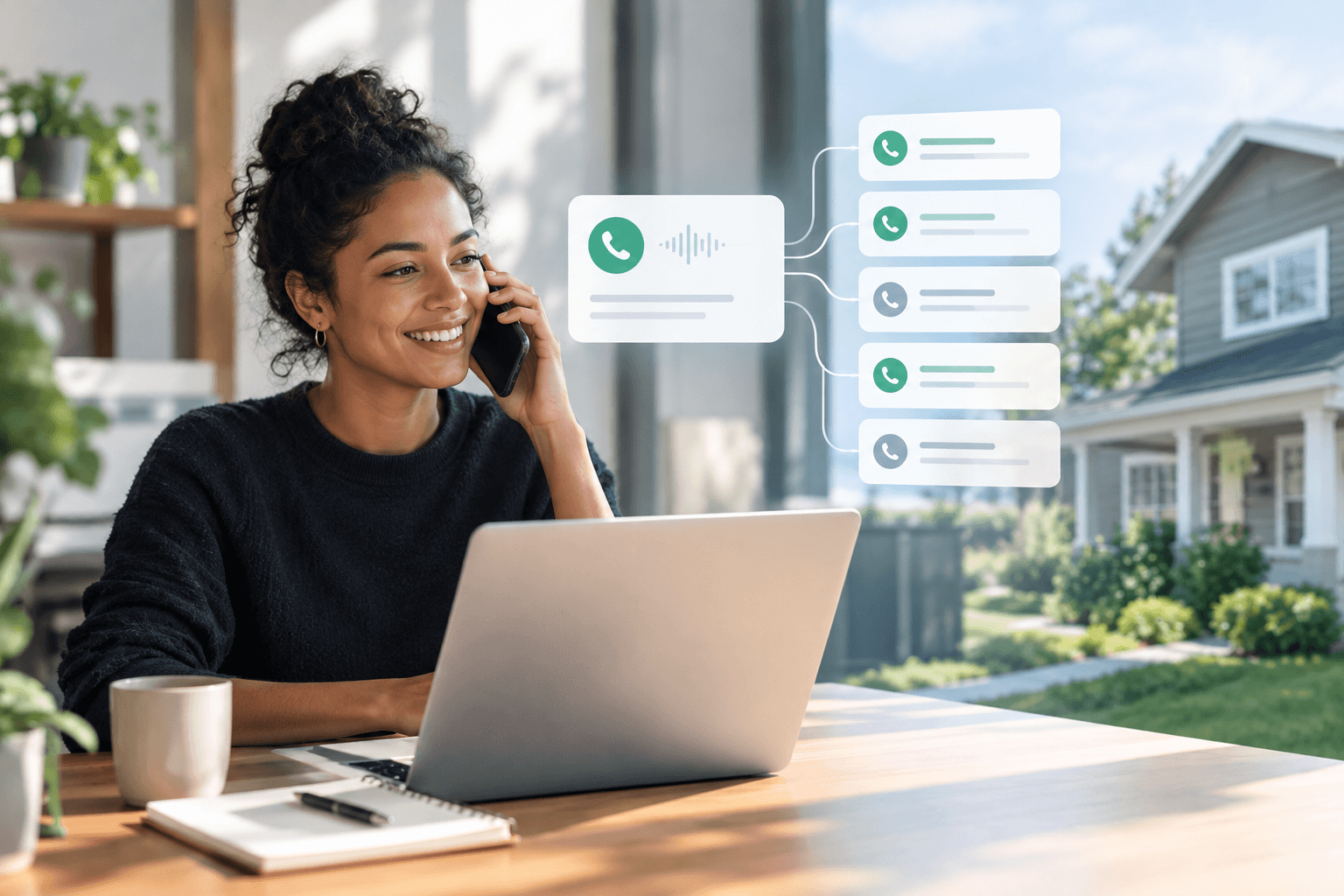
The AI voice receptionist answers every inbound call 24/7, qualifies the caller's intent, and books the showing directly into the calendar. The outcome is specific: no voicemail on weekends, no Monday morning triage backlog, and no manual catch-up when staff arrive.
How leasing gaps send leads elsewhere#
SFR prospects typically contact multiple properties at the same time, and the first operator to deliver a qualified response wins the showing. When your leasing line goes to voicemail at 9PM Saturday and the competitor down the street answers, that prospect books a tour with them before your team logs in Monday morning.
The downstream metrics affected by missed after-hours calls:
Occupancy rate: Every missed inquiry extends days-to-lease, which extends vacancy and reduces NOI
Conversion speed: Response speed directly affects whether a prospect moves forward with your property or a competitor's. The longer a qualified inquiry waits for a meaningful reply, the lower the chance it converts to a showing.
Tailoring lead capture for SFR portfolios#
Centralizing fragmented leasing data#
Lead data scattered across spreadsheets, voicemails, and property-level inboxes creates a fragmented view of the leasing pipeline. When data lives across disconnected systems, no single view of vendor performance, maintenance status, or compliance progress exists. Problems stay hidden until they surface as budget overruns, missed unit turns, or service failures.
The self-updating CRM transcribes every call, text, and chat in real time and maps extracted details directly to customer records. Smart Variables pull structured data from live conversations and update CRM fields in real time, removing manual logging from the workflow entirely.
Reducing onsite manual call volume#
Onsite staff begin each shift sorting, logging, and routing overnight inquiries before any proactive leasing work begins. That is capacity the director is paying for but not getting. AI Frontdesk handles routine inquiries and escalates only items that require human judgment.
The AI handles incoming volume the way a triage process handles a busy queue: qualifying intent, routing urgency, and escalating anything that requires a human judgment call. Staff handle only escalated items, which means their first hour goes to leasing or retention work instead of message triage.
Quantifying lost leasing revenue#
The calculation framework: Missed calls/month × Conversion rate × Average lease value = Lost revenue
To illustrate with hypothetical inputs: if a portfolio misses 50 calls monthly, converts at 10%, and averages $18,000 annual lease value, that's 5 lost leases worth $90,000 annually. Property management fees typically range from 8% to 12% of monthly rent collected. A comprehensive study of 722 branches across 80 metro areas found an average of 8.49% of monthly rent collected.
For SFR specifically, single-family homes tend to sit at the higher end of the national range, often 8% to 12%, because a manager coordinates a single address for a single tenant.
Automating 24/7 response for SFR prospects#
Capturing after-hours leasing inquiries#
When a prospect calls at 9PM Saturday, AI Frontdesk answers, qualifies intent, answers questions about the property, and books the showing. AI Frontdesk logs the conversation automatically to the CRM, extracting and mapping the caller's name, contact information, move-in timeline, budget, and property preferences to the lead record.
The AI voice receptionist handles multiple concurrent calls at once so callers never hit a busy signal. For SFR portfolios in diverse metro markets, the AI supports 20+ languages, including Spanish, Mandarin, and Hindi, at no additional cost.
Instantly scoring leasing inquiries#
The AI qualifies intent by asking about move-in date, budget, property type, and urgency. Smart Variables extract structured data from the conversation and update CRM fields in real time, so your outreach references current needs, preferences, and conversation history instead of static merge fields.
Automating property tour scheduling#
The AI checks availability, books the showing directly into the calendar, and sends confirmation. No staff involvement required. AI Frontdesk pulls live availability and pricing data from your PMS, so the AI never books a showing for a unit already leased or quotes outdated pricing.
AI Frontdesk walks through the setup in this video on how to connect your AI receptionist to AppFolio in 5 minutes, demonstrating the native integration process for property management platforms.
Direct PMS logging for SFR leads#
The critical differentiator for SFR portfolios is native bidirectional PMS integration. AI Frontdesk writes guest cards, tours, work orders, and call notes back to Yardi, AppFolio, Buildium, Entrata, Knock CRM, and ResMan natively. Lead context, guest cards, work orders, payment notes, hardship flags, renewals, and tour bookings sync in real time, no manual data entry, no broken handoffs between systems.
Tools without a native connector route through Zapier instead, which requires additional technical setup. For operators using non-standard or proprietary PMS tools outside the core list, direct integration documentation is not available from AI Frontdesk's public materials, and users would need to contact the enterprise sales team to explore custom API solutions.
Connect AI call handling to your leasing platform#
Automated leasing sync for Yardi#
AI Frontdesk integrates bidirectionally with Yardi Voyager and RentCafe CRM. The integration pulls live availability and pricing lookups directly from Yardi Voyager and RentCafe, and writes guest cards, call notes, work orders, and tour bookings back to your PMS automatically.
For Yardi specifically, AI Frontdesk integrates with Yardi Voyager and RentCafe CRM to triage emergencies and open work orders.
Buildium workflows for leasing calls#
For Buildium, lead context, guest cards, work orders, payment notes, hardship flags, renewals, and tour bookings sync in real time, no manual data entry, no broken handoffs between systems. The AI captures the lead, qualifies intent, books the showing, and logs the call outcome to Buildium without staff touching the keyboard.
Syncing calls to leasing records#
The bidirectional data flow works in both directions. The AI pulls property data from the PMS to answer caller questions about availability, pricing, and amenities, and writes call outcomes back to the PMS so the leasing pipeline reflects current activity. For AppFolio, the data synchronization follows the same bidirectional pattern: lead context, guest cards, work orders, payment notes, hardship flags, renewals, and tour bookings write back to AppFolio automatically.
Standardizing call handling for distributed teams#
Step 1: Measure current call demand#
Pull call logs, voicemail counts, and after-hours inquiry volume across the portfolio. Establish the baseline before evaluating any tool. If your team handles 500 inbound contacts a month and 30% arrive outside staffed hours, the question is not whether contacts are being missed. The question is how many, and what each one costs.
Step 2: Filter high-intent prospects#
Define what qualifies as high intent for SFR leasing: move-in timeline, budget fit, property match. Configure the AI to score and route accordingly. Prospects who meet your criteria move directly to showing scheduling, and the AI logs the rest for follow-up.
Step 3: Automate data flow to your PMS#
Set up the native integration so every call writes lead data back to the PMS. Verify the sync points before going live. The AI receptionist can be live in under five minutes, no IT project or implementation timeline required.
Step 4: Automate staff alerting triggers#
Configure escalation rules: emergency keywords, high-intent leads, specific properties. You define the on-call rotation and what triggers a human alert. Default emergency keywords (leak, flood, fire, lockout, breach, and others) trigger an on-call rotation, primary then backup then manager, with transcript and severity score sent to the responder.
Step 5: Review inquiry-to-tour performance#
Track the metric that matters: how many inquiries convert to scheduled tours. Compare before and after deployment.
Selecting the right call intake for SFR leasing#
Not every call handling platform is built for property management. The variables that matter for SFR portfolios are native PMS integration, maintenance escalation logic, and per-minute cost at realistic call volume.
Below are the key considerations for evaluating each.
Native integrations for SFR portfolios#
The evaluation criterion is whether the tool writes data back to your PMS natively or through Zapier. For a full comparison of human answering services, virtual receptionists, and AI voice agents for property management, property management answering services: which option is right for you? covers how the options differ in practice. AI Frontdesk integrates natively with Yardi, AppFolio, Buildium, Entrata, Knock CRM, and ResMan. Generic AI voice tools require custom development to achieve the same operational depth.
Elise AI carries PM-specific depth for multifamily portfolios, making a direct comparison with the AI Frontdesk entry-tier plan difficult to draw. AI Frontdesk covers the same core property management workflows with native integrations across Yardi, AppFolio, Buildium, Entrata, Knock CRM, and ResMan, and also extends to retail and eCommerce verticals across Shopify, WooCommerce, BigCommerce, and Magento. The Business-in-a-Box plan starts at $99/month with 200 voice minutes included, designed for small businesses with lower call volumes, and scales with usage-based overage pricing at $0.25/minute.
Vapi AI and Retell AI offer developer-grade API control for technically sophisticated buyers. Vapi requires substantial technical expertise and works best for teams with engineering capacity to debug multi-vendor integrations. Retell AI is a developer-first voice API platform requiring technical resources to deploy. Both platforms connect to third-party systems through custom API development or Zapier, so verify the connection method per PMS before committing.
AI Frontdesk is the only option in this comparison with no-code native PMS integrations built specifically for property management. Vapi requires engineering capacity to connect to enterprise tools, and Retell's connection method varies by PMS, so confirm the specific integration path before committing. AI Frontdesk connects directly to Yardi, AppFolio, Buildium, Entrata, Knock CRM, and ResMan without developer involvement.
Clear costs for call handling volume#
Business-in-a-Box is $99/month with 200 voice minutes included and $0.25/minute overage. The plan includes 200 voice minutes, 400 SMS, 100 chatbot conversations, 300 form submissions, 500 email drafts, and 20 outbound calls per day. Business-in-a-Box includes a pool of 1,000 overage credits each month, applied across SMS, chatbot conversations, form submissions, and email drafts. Voice overage is billed separately at $0.25/minute as shown in the table above.
For a 1,000+ unit portfolio, calculate the overage cost at realistic call volume. Two hundred minutes equals roughly 40 calls at 5 minutes each. Any business taking more than 40 calls per month should calculate overage costs before committing.
Monthly call volume | Included minutes | Overage minutes | Total monthly cost |
|---|---|---|---|
40 calls (200 min) | 200 | 0 | $99 |
100 calls (500 min) | 200 | 300 | $99 + $75 = $174 |
200 calls (1,000 min) | 200 | 800 | $99 + $200 = $299 |
400 calls (2,000 min) | 200 | 1,800 | $99 + $450 = $549 |
Triaging maintenance requests instantly#
The AI distinguishes leasing inquiries from maintenance requests. AI Frontdesk escalates calls with emergency keywords (leak, flood, fire, lockout) to the on-call rotation with transcript and severity score, and logs routine maintenance requests as work orders without staff involvement.
AI Frontdesk answers every after-hours maintenance call, triages emergencies and pages on-call techs only when it actually warrants it. Gas smell, flooding, fire alarms, and elevator entrapments need immediate dispatch. Emergencies page the on-call tech immediately with the unit number, issue summary, and resident callback. Routine requests queue in the PMS for morning.
Pages go out via SMS, voice, or app push, tech acknowledgement is confirmed, and the system escalates to backup if the primary on-call does not acknowledge within the configured window. AI Frontdesk opens the work order in Yardi, AppFolio, Entrata, Buildium, or ResMan with category, priority, photos, and resident contact, no morning data entry. AI emergency maintenance triage features live dispatch in under 30 seconds.
Ensuring Fair Housing call compliance#
AI Frontdesk logs every call with a transcript, creating a consistent documentation record. Consistent, scripted responses reduce the risk of inconsistent or non-compliant statements. Every tenant interaction, maintenance request, and lease action is documented as both an operational discipline and a legal defense.
The AI follows the script, logs the conversation, and escalates complex situations to humans with the full context attached.
Book a demo to see the self-updating CRM process a live SFR leasing call.
FAQs#
How does AI handle emergency maintenance calls after hours?
AI Frontdesk escalates calls with emergency keywords to the on-call rotation with transcript and severity score, and logs routine requests as work orders.
What happens when a prospect asks a question the AI can't answer?
When that happens, the AI escalates to a human with the full conversation context attached, so no inquiry is dropped and no caller has to repeat themselves.
Can AI receptionists schedule showings across multiple properties?
Yes, the AI checks availability across the portfolio and books directly into the calendar for the specific property.
How long does it take to integrate with my property management software?
Native integrations with Yardi, AppFolio, Buildium, Entrata, Knock CRM, and ResMan can be live in under five minutes.
What does AI call handling cost for a 1,000+ unit portfolio?
Business-in-a-Box is $99/month with 200 voice minutes included and $0.25/minute overage. Calculate overage at your actual call volume.
Key terms glossary#
Days-to-lease: The average number of days between listing a vacant unit and executing a signed lease. A rising number typically signals a breakdown in response time, showing availability, or application processing speed.
Rent roll: The schedule of rental income across every unit in a portfolio, capturing lease dates, monthly rent amounts, and current payment status.
Turn time: The total elapsed time between a resident vacating a unit and that unit being move-in ready for the next resident. It directly determines how many vacancy days a portfolio absorbs between leases.
Leasing pipeline: The sequence of stages a prospect moves through from first inquiry to a signed lease, covering touring, application, screening, and execution.
Make-ready: The process of returning a vacant unit to rentable condition before a new resident moves in, covering cleaning, repairs, and final inspection. Delays here add directly to turn time.