
This article is published by AI Frontdesk (myaifrontdesk.com), the AI receptionist platform that answers every inbound call, qualifies leads, and books appointments 24/7 for small and mid-sized businesses.
In an age of endless digital noise, the humble phone call remains a powerful tool for building trust and closing deals. But its effectiveness hinges entirely on one critical factor: professional phone calling etiquette. A poorly handled call doesn't just annoy a potential client; it actively tanks conversion rates, damages your brand's reputation, and wastes valuable resources. Get it right, and you create meaningful connections that drive real business growth.
This guide moves beyond generic advice to provide specific, actionable strategies for modern business communication. We'll outline the non-negotiable rules for structuring every call for success, from the initial greeting to the final confirmation of next steps. You will learn not only what to do but also how to do it consistently.
Furthermore, we will demonstrate how integrating smart tools like My AI Front Desk can systematize this etiquette across your entire organization. By implementing features like AI receptionists and automated workflows, you can enforce best practices at scale, ensure every caller has a professional experience, and turn your business phone lines into a reliable conversion engine. Mastering these principles is no longer a soft skill-it's a fundamental business imperative.
1. Call During Business Hours and Respect Time Zones#
The most fundamental rule of professional phone calling etiquette is respecting the recipient's time. Contacting someone during their established business hours, while being mindful of their local time zone, is not merely polite; it’s a strategic decision. This simple act of consideration dramatically increases your chances of reaching them when they are available and receptive, setting a positive tone for the entire interaction.
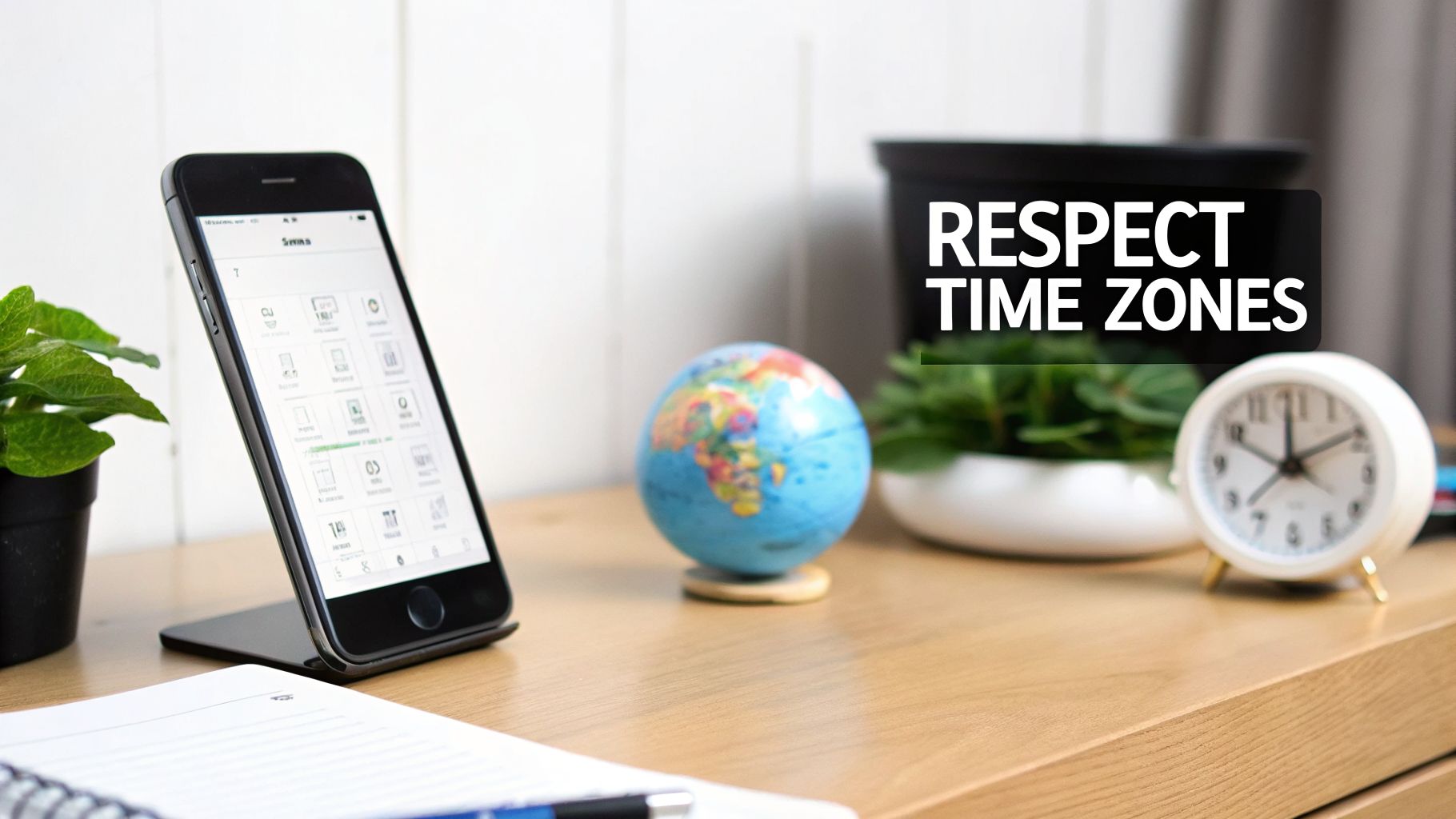
Ignoring this rule almost guarantees a poor outcome. An ill-timed call is more than an inconvenience; it can be perceived as unprofessional, intrusive, and may even lead to your number being flagged as spam. Furthermore, regulations like the Telephone Consumer Protection Act (TCPA) legally mandate specific calling windows (typically 8 AM to 9 PM in the recipient's time zone), making compliance a matter of law, not just courtesy. Failing to adhere to these rules can result in significant fines and damage your business's reputation, turning a potential opportunity into a costly liability.
How to Implement This Rule#
- Establish Optimal Windows: Research shows that the best times for business calls are often between 10 AM and 11 AM, and then again from 2 PM to 3 PM. Avoid calling during the common 12 PM to 1 PM lunch hour when answer rates plummet.
- Segment by Location: For businesses with a national or international reach, separate your contact lists by time zone. Schedule your outbound campaigns to align with each region’s prime business hours.
- Use Smart Automation: Employ tools with built-in time zone awareness. For example, My AI Front Desk's Active Times Control feature lets you define specific operational hours for your AI receptionist. This ensures automated outbound calls and texts are only sent during compliant and strategic windows, preventing after-hours disturbances. The consequences of just one poorly timed interaction can be significant, reinforcing the danger of missed calls and mishandled communication.
Key Insight: Calling at the right time is the first filter for success. It shows you value the other person's schedule, which makes them more likely to value what you have to say. It’s the difference between being a welcome contact and an unwelcome interruption.
2. Identify Yourself Clearly and Immediately#
The first 10-15 seconds of a phone call are critical for establishing trust and setting expectations. A clear, immediate introduction stating your name, company, and purpose isn't just a courtesy; it's a strategic move that prevents confusion and captures the listener's attention. This element of professional phone calling etiquette instantly frames the conversation, showing respect for the recipient's time and making them more receptive to your message.

Failing to introduce yourself properly creates immediate friction and suspicion. An ambiguous opening like "Hi, is John there?" or launching directly into a pitch without context can make the recipient defensive, increasing the likelihood of a hang-up. For automated systems, a robotic or unclear introduction erodes credibility and makes the business seem untrustworthy. A strong opening script is fundamental to both human and AI-driven communication, ensuring the call begins on a foundation of clarity and professionalism.
How to Implement This Rule#
- Script a Concise Opening: Craft a direct, friendly introduction. For instance, "Hi [Prospect's Name], this is Alex calling from [Company Name]. I'm reaching out because..." This format is polite, personal, and immediately states the call's intent. Crafting effective phone greetings is a key first step.
- Personalize with Context: Use CRM integrations to arm your team or AI with relevant information. An introduction like, "Hi Sarah, it's Alex with My AI Front Desk. I'm following up on the demo you requested yesterday," is far more effective than a cold, generic opening.
- Select the Right Voice and Tone: A brand's voice is part of its identity. Use My AI Front Desk's Voice Library to choose from over 100 premium voices, ensuring your AI receptionist's tone aligns with your company's image. Agencies can even set pronunciation guides to guarantee names and technical terms are spoken correctly, maintaining a high standard of professionalism.
Key Insight: A clear introduction is your first opportunity to build rapport. By immediately answering "Who is this?" and "Why are you calling?", you remove uncertainty and earn the right to continue the conversation.
3. Ask Permission Before Discussing Details or Making Requests#
A foundational principle of effective phone calling etiquette is to confirm the other person's availability before launching into your reason for calling. Asking a simple question like, "Do you have a moment to talk?" shows respect for their time and acknowledges that your call is an interruption. This small courtesy makes the recipient feel valued and in control, making them far more receptive to your message, whether it's an inbound service inquiry or an outbound sales call.
Diving straight into details without this confirmation can make the other person feel ambushed and disrespected, immediately putting them on the defensive. It conveys that your agenda is more important than theirs, which is a poor starting point for any conversation. When someone is caught off guard, they are less likely to listen actively and more likely to look for a quick way to end the call. This misstep can easily turn a potential opportunity into a missed connection.
How to Implement This Rule#
- Use Natural Language: Frame the question in a conversational way. Instead of a stiff "May I have a moment of your time?", opt for a more natural "Is now a good time?" or "Do you have a quick minute?".
- Respect the Answer: If they say no, don't push. Immediately offer an alternative, such as, "No problem at all. When would be a better time to call back?" This reinforces your respect for their schedule.
- Automate with Intelligence: An AI receptionist can be programmed to handle this professionally. For example, My AI Front Desk can ask, "Is this still a good time to talk?" before proceeding with an Intake Form Workflow. If the caller says no, the AI can use its Google Calendar Integration to schedule a callback at a more convenient time, ensuring no lead is lost due to bad timing. This automated respect builds instant rapport.
Key Insight: Asking for permission transforms the dynamic from an interruption into a scheduled conversation. By giving the other person a choice, you empower them, which builds trust and makes them significantly more willing to engage with your request or message.
4. Minimize Background Noise and Distractions#
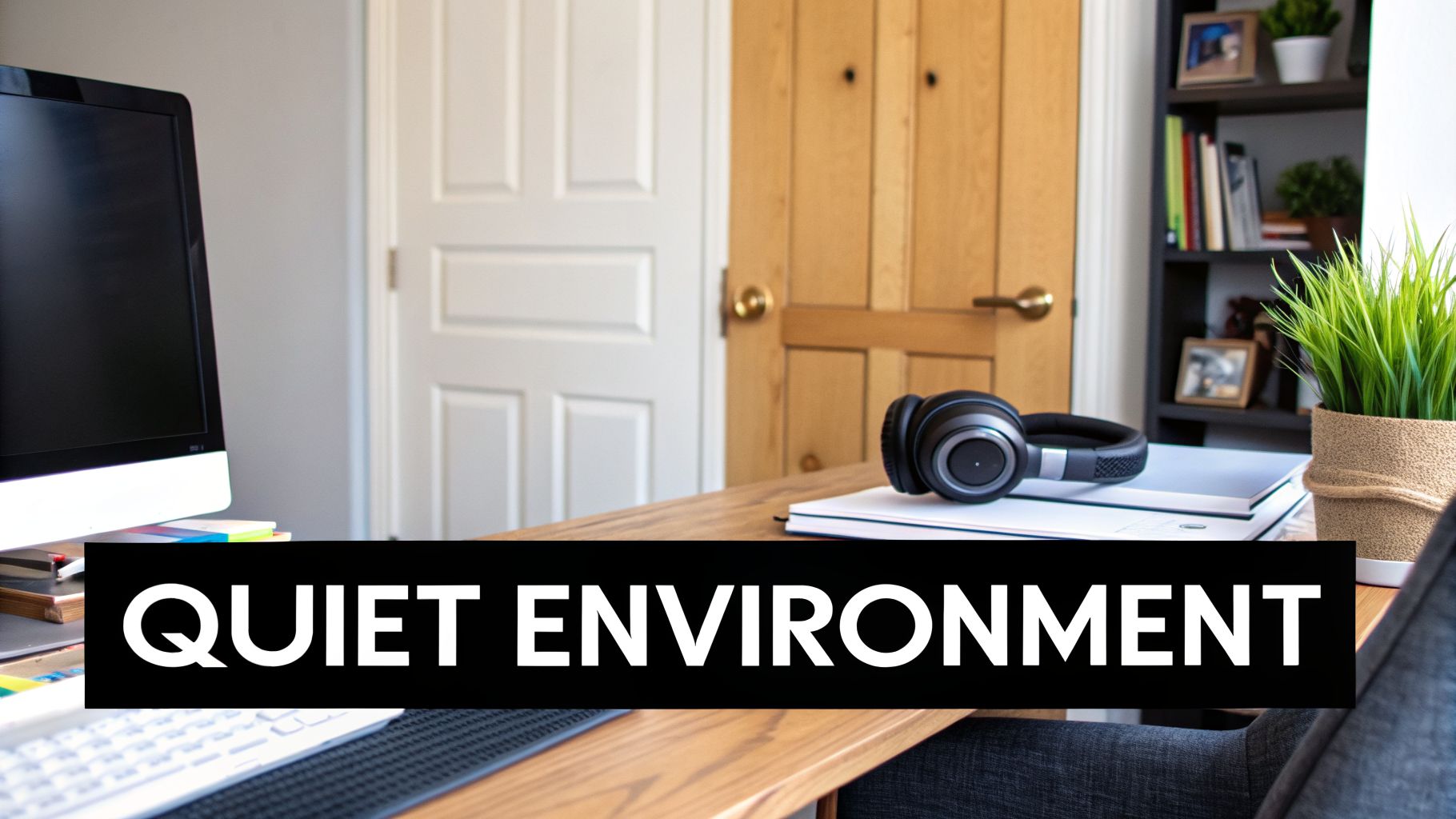
One of the most critical aspects of professional phone calling etiquette is ensuring a clean, quiet audio environment. Background noise, such as dogs barking, office chatter, or traffic, immediately undermines your credibility and makes it difficult for the recipient to focus on your message. A distraction-free call demonstrates respect for the other person’s time and attention, showing that you consider the conversation important enough to give it your full focus.

Failing to control your audio environment signals a lack of preparation and professionalism. It forces the listener to strain to hear you, increasing the likelihood of miscommunication and frustration. For businesses, this can be fatal; a noisy call can make a potential customer feel unimportant, leading them to question your company's competence. This principle also applies to automated systems, where poor audio quality or high latency can make an AI receptionist sound unnatural and difficult to interact with, damaging the customer experience from the first touchpoint.
How to Implement This Rule#
- Create a Quiet Zone: Designate a specific room or area for making important calls. Close doors and windows to block external sounds, and ask colleagues or family members not to interrupt you.
- Invest in Quality Hardware: Use a high-quality microphone and noise-canceling headphones. This combination is essential for remote teams and call centers, as it isolates your voice and filters out ambient noise for maximum clarity.
- Optimize Your System: For AI-driven communication, ensure the underlying infrastructure is robust. My AI Front Desk features a Fast Response Time, which minimizes latency to create a more natural, clear, and delay-free conversation. This attention to technical detail is just as important as a quiet room. Also, learning how to transfer a call correctly can prevent the abrupt disconnections that ruin a customer's experience.
Key Insight: Your audio quality is a direct reflection of your professionalism. A clear, quiet call communicates that you are organized, serious, and respectful of the other person's time, making them far more receptive to your message.
5. Listen Actively and Avoid Interrupting#
Effective communication is a two-way street, and the most overlooked aspect of phone calling etiquette is active listening. This involves giving the speaker your undivided attention, acknowledging their points before responding, and resisting the urge to interrupt. When a person feels heard and understood, trust is built, and conversations become more productive. It signals respect for their perspective and transforms a transactional call into a genuine dialogue.
Failing to listen actively can quickly derail a conversation. Interrupting someone or responding with a generic, unrelated script makes the speaker feel dismissed and undervalued. For AI-driven systems, this is a common pitfall; an AI that simply waits for a keyword before launching into a pre-written response appears robotic and unintelligent. This poor experience can lead to immediate hang-ups, damage brand perception, and result in missed opportunities as important context and objections go unaddressed.
How to Implement This Rule#
- Program Natural Pauses: Implement smart pause logic in AI responses. This allows callers to finish their thoughts completely before the AI responds, mimicking a natural, patient conversational flow.
- Use Acknowledgment Statements: Train your AI to use brief, confirming phrases like, "Got it," "That makes sense," or "I understand your concern about pricing." My AI Front Desk, using Premium AI Models like GPT-4, can generate contextually appropriate acknowledgments that reference what was just said, demonstrating true comprehension.
- Focus on Context, Not Just Keywords: Move beyond simple keyword spotting. Use sentiment analysis to detect frustration or enthusiasm in the caller's tone and adjust the AI's response accordingly. For more guidance on creating positive interactions, you can review some essential techniques for mastering receptionist phone skills.
- Flag Important Details: Use features like Post-Call Notifications to alert your team to specific objections, questions, or concerns raised during a call. Reviewing Call Recordings is also an excellent way to audit whether your AI is demonstrating active listening skills and capturing critical information.
Key Insight: Active listening isn't about being silent; it's about making the other person feel heard. Whether human or AI, demonstrating that you are processing what is said, not just waiting for your turn to speak, is fundamental to building rapport and achieving your call's objective.
6. Be Clear About Call Purpose and Keep It Brief#
Once you've earned a moment of someone's attention, the next rule of professional phone calling etiquette is to immediately justify it. Clearly stating the reason for your call within the first few seconds and keeping the conversation focused shows you value their time, which is critical for making a positive impression and achieving your objective. A brief, purposeful call is always more effective than a long, meandering one.
Failing to get to the point quickly is a surefire way to lose your audience. When a recipient can’t identify the purpose of a call, they are likely to disengage, become impatient, or simply hang up. This is especially true for outbound sales, where every second counts. A vague opening invites skepticism and resistance, whereas a concise, value-driven introduction encourages the other person to stay on the line and listen to what you have to say.
How to Implement This Rule#
- Lead with a Value Proposition: Open with a single sentence that clearly states who you are and what value you offer. For example: "Hi [Name], I'm calling because we help businesses in [Industry] save 15+ hours per week on customer calls with an AI receptionist. Do you have two minutes?"
- Prepare and Stick to a Script: Create a script with clear talking points, transitions, and decision-point questions like, "Does this sound like something worth exploring for 15 minutes next week?" This keeps the conversation on track and moving toward a defined goal.
- Set Time Limits with AI: Tools can enforce brevity. My AI Front Desk's Adjustable Call Duration feature can be configured to limit qualification calls to a specific timeframe, such as 3-5 minutes. This ensures the AI agent gathers essential information efficiently without prolonging the interaction, ideal for initial lead screening.
- Gather Data Asynchronously: Instead of asking numerous questions on the call, use Intake Form Workflows to send a link via text for the prospect to fill out at their convenience. This keeps the call brief while still collecting necessary details.
Key Insight: Brevity is a sign of respect. When you prove you can deliver value in a short amount of time, you earn the right to ask for more of it later. A concise initial call is the foundation for a longer, more productive future conversation.
7. Handle Objections Professionally and Respectfully#
Excellent phone calling etiquette extends to how you manage disagreements and concerns. Handling objections professionally is a critical skill that turns potential dead-ends into productive conversations. Instead of viewing an objection as a rejection, treat it as a request for more information and a chance to clarify your value, which builds trust and demonstrates respect for the caller's perspective.
Failing to address objections gracefully can instantly destroy rapport and end the call on a negative note. A defensive or dismissive response makes the other person feel unheard and invalidated, confirming their initial hesitation. This not only loses the immediate opportunity but also damages your reputation, ensuring they won't consider your business in the future. For a deeper dive into managing difficult conversations, explore strategies on how to overcome price objections effectively.
How to Implement This Rule#
- Acknowledge and Clarify: Always start by acknowledging their point. For example, if a prospect says, "This is too expensive," respond with, "I understand budget is a primary concern." Then, ask clarifying questions like, "Could you tell me more about what you were expecting?" This shows you are listening, not just waiting to talk.
- Automate Empathetic Responses: Advanced AI systems can be programmed to handle common objections with nuance. For instance, My AI Front Desk's API Workflows can use conditional branching based on detected objections. If a caller mentions "timing," the AI can offer to schedule a follow-up in a few weeks. If they mention "price," it can explain the ROI, noting that "most clients find the time saved far outweighs the cost."
- Analyze and Adapt: Use system features to track recurring objections. Post-Call Notifications can flag calls where specific keywords like "too expensive" or "not a good fit" were mentioned. Reviewing these, along with Call Recordings, helps your team identify patterns and refine your scripts and strategies for both human agents and your AI receptionist.
Key Insight: An objection isn't a "no"; it's a "show me why." By handling it with respect and providing relevant information, you transform a point of friction into an opportunity to build a stronger connection and demonstrate your true value.
8. Close Professionally and Confirm Next Steps#
How a phone call ends is just as important as how it begins. A professional closing prevents misunderstandings, reinforces value, and sets clear expectations for what comes next. Ending a call by summarizing key points and confirming the next actions transforms a simple conversation into a productive milestone, ensuring both parties are aligned and committed.
Failing to close properly leaves the door open for ambiguity and inaction. When next steps are unclear, follow-through rates plummet, and potential opportunities are lost. The client or prospect may be left wondering what they are supposed to do, or worse, feeling that their time was wasted. This poor final impression can undo all the rapport you built during the call, making it a critical aspect of phone calling etiquette.
How to Implement This Rule#
- Recap and Confirm: Briefly summarize the main points of the conversation. For example, "So to confirm, we've identified that you're interested in our lead conversion solution." Follow this with a direct confirmation, like, "I'm understanding you're ready to move forward, is that correct?"
- State Next Steps Explicitly: Clearly outline the subsequent actions and timeline. For instance, "Great. Our specialist, [Team Member], will reach out by Friday to discuss pricing. Sound good?" This removes all guesswork.
- Use Integrated Tools for Automation: My AI Front Desk can be configured to deliver a perfect closing script every time. For example, an AI receptionist can say, "To confirm, I'm scheduling you for a 15-minute demo on Thursday at 2 PM, and I'll send a calendar invite. Does that work for you?" The system’s Google Calendar Integration can then automatically create and send the event, locking in the appointment. For post-call reference, Shareable Call Links can be sent via automated text, giving the client access to the call details.
Key Insight: A strong closing acts as a verbal contract. It solidifies agreements and provides a clear, actionable path forward, converting a conversation into a tangible outcome and demonstrating your commitment to organization and follow-through.
8-Point Phone Calling Etiquette Comparison#
| Practice | 🔄 Implementation Complexity | ⚡ Resource Requirements | 📊 Expected Outcomes | 💡 Ideal Use Cases | ⭐ Key Advantages |
|---|---|---|---|---|---|
| Call During Business Hours and Respect Time Zones | Moderate — scheduling logic and timezone mapping | Moderate — dialer scheduling, analytics, timezone DB | Higher connection & conversion rates; fewer complaints | Multi-region outbound, regulated industries | Increased answer rates, compliance, better relationships |
| Identify Yourself Clearly and Immediately | Low — scripting and voice configuration | Low — scripted prompts, voice library, CRM lookup | Reduced rejections; faster trust formation | Cold outreach, first-contact AI receptionists | Immediate credibility and transparency |
| Ask Permission Before Discussing Details or Making Requests | Moderate — branching flows and conditional logic | Moderate — intake workflows, calendar integration | Higher engagement and completion; less negative feedback | Qualifying calls, appointment scheduling, intake | Respectful engagement; improved prospect willingness |
| Minimize Background Noise and Distractions | Low — environment controls and audio standards | Moderate — quality mics, headsets, noise-cancel tech, infrastructure | Clearer audio; fewer misunderstandings; higher conversions | Remote teams, call centers, high-value conversations | Professional audio quality and stronger credibility |
| Listen Actively and Avoid Interrupting | High — advanced NLP, context memory, pause logic | High — premium AI models, sentiment analysis, QA tools | Large gains in satisfaction, accuracy, and conversions | Consultative sales, support escalations, complex dialogs | Deeper rapport and more accurate qualification |
| Be Clear About Call Purpose and Keep It Brief | Low — concise scripts and timing controls | Low — scripts, call timers, adjustable duration features | Higher completion rates; increased throughput per day | High-volume outreach, quick lead qualification | Efficient, time-respecting outreach with better throughput |
| Handle Objections Professionally and Respectfully | High — nuanced NLP, branching objection flows | High — premium models, CRM, post-call analytics, training | Converts objections into opportunities; better trust | Mid/late-funnel sales, pricing/negotiation conversations | Preserves relationships and increases conversions |
| Close Professionally and Confirm Next Steps | Moderate — closing scripts plus integrations | Moderate — calendar/texting integrations, CRM updates | Improved follow-through; reduced administrative ambiguity | Demos, appointment confirmations, onboarding calls | Clear next steps, accountability, higher follow-through |
Automate Etiquette, Scale Success#
Throughout this guide, we've explored the foundational pillars of effective business communication. From the simple courtesy of respecting time zones and identifying yourself clearly, to the more nuanced skills of active listening and professional objection handling, each point serves a single, vital purpose: to build trust and create a positive experience for the person on the other end of the line. Mastering proper phone calling etiquette is not merely about being polite; it's a direct investment in your brand's reputation and your bottom line.
A professional, respectful interaction can be the deciding factor between a lost lead and a loyal customer. It communicates that you value their time, respect their needs, and operate with a high degree of competence. Yet, maintaining this standard consistently across every single call, day in and day out, can be a monumental challenge, especially as your business grows. Human error, busy schedules, and inconsistent training can quickly erode the very principles you're trying to uphold.
From Manual Effort to Automated Excellence#
This is where the true power of a systematic approach becomes clear. The principles of great phone calling etiquette shouldn't just be a list of rules for your team to memorize; they should be woven into the very fabric of your operational workflow. By embedding these best practices into your technology, you move from simply hoping for compliance to actively engineering it.
Consider the key takeaways from our discussion:
- Clarity and Purpose: Every call needs a clear objective. Your opening should immediately establish who you are and why you're calling, asking for permission before proceeding.
- Respect for Time: Adhering to business hours, keeping calls concise, and providing clear next steps shows you value the other person's schedule.
- Professionalism Under Pressure: Handling objections or difficult questions with grace and providing a smooth process for holds and transfers are hallmarks of a well-run organization.
Implementing these manually is one thing, but automating them is how you truly scale. A system like My AI Front Desk is designed specifically for this purpose. It ensures that every inbound call is answered with a perfectly crafted, professional script. It schedules follow-ups automatically, so no lead is forgotten. It even provides transcriptions and call recordings, offering invaluable insights for training and quality assurance. By automating the foundational elements of etiquette, you free up your team to focus on high-value conversations, secure in the knowledge that your brand's first impression is always a great one.
Ultimately, excellent phone communication is about creating a predictable, positive, and efficient experience. When you systematize your phone calling etiquette, you're not just improving individual calls; you're building a reliable engine for customer acquisition and retention.
Ready to ensure every call reflects the highest standard of professionalism? My AI Front Desk acts as your 24/7 receptionist, perfectly executing phone calling etiquette to capture and qualify leads so you never miss an opportunity. See how our AI-powered voice and texting solutions can transform your customer interactions by visiting My AI Front Desk today.


