This article is published by AI Frontdesk (myaifrontdesk.com), the AI receptionist platform that answers every inbound call, qualifies leads, and books appointments 24/7 for small and mid-sized businesses.
Alright, so we're talking about the best AI receptionist software for 2026. It's kind of a big deal now, right? Businesses are realizing they can't just let calls go to voicemail anymore. People expect answers, like, right away. And that's where these AI receptionists come in. They're not just answering phones; they're actually changing how companies talk to their customers. This guide is going to break down what makes the good ones tick and how you can find the best fit for your business.
Key Takeaways#
- The top AI receptionist software acts like a smart assistant, making sure calls get to the right place fast and keeping things running smoothly.
- Speed is super important. These AI systems need to respond in milliseconds to keep conversations natural and stop people from getting annoyed.
- Being able to connect with your other business tools, like your CRM, is a major plus. It helps automate tasks and keeps all your information up-to-date without you lifting a finger.
- When picking an AI receptionist, pay attention to how natural it sounds, how easy it is to set up, and if it plays nice with the software you already use.
- These systems can handle a lot of calls at once, 24/7, which is a huge step up from a human receptionist who has limits.
Understanding the Core Value Of AI Receptionists#
Beyond Basic Call Answering#
Forget the old days of answering machines. AI receptionists do more than just take a message. They can actually talk to people, understand what they need, and then do something about it. Think of it like this: instead of just a notepad, you've got a smart assistant who can figure out if someone's a potential customer or just asking for directions. This means fewer missed opportunities and less time wasted on calls that don't matter. It's about making every call count, right from the first ring. This isn't just about convenience; it's about building a more efficient business from the ground up. You can find more on these advancements in the [2026 Centralization Report](2026 Centralization Report).
The Speed of Thought in Conversation#
Conversation is a bit like a dance. If one partner is slow, the whole rhythm gets messed up. AI receptionists are built for speed. We're talking response times measured in milliseconds. That's fast enough to keep up with a natural chat, not so slow that the caller feels like they're talking to a broken robot. This speed means the AI can handle complex questions without missing a beat. It makes the interaction feel smooth, almost like talking to a really sharp human. It transforms a potentially annoying phone call into something that actually works for the customer. It's about making sure your business always feels responsive, no matter what.
Seamless Integration as a Business Nervous System#
An AI receptionist isn't just a standalone tool. It's meant to connect with everything else you use. Think of it as the nervous system for your business operations. When a call comes in, the AI doesn't just answer; it can update your CRM, schedule an appointment, or even start a follow-up task. This connection means information flows freely. No more copying and pasting details from voicemails or scribbled notes. Everything is automatically logged and updated in real-time. This makes your whole business run smoother because all the different parts are talking to each other. It's about making your tools work together, so you don't have to.
- AI receptionists handle calls 24/7, ensuring no customer is ever left waiting.
- They can manage an unlimited number of calls simultaneously, eliminating busy signals.
- Integration with tools like Zapier connects your phone system to thousands of other business applications.
The real value isn't just in answering phones; it's in automating the follow-up and data management that happens after the call. This is where businesses truly save time and gain insights.
Key Features Defining Top AI Receptionist Software#
When you're looking at AI receptionists, it's easy to get lost in the marketing talk. But really, it boils down to a few core things that make them actually useful. Forget the fancy jargon; what matters is what they do for your business.
Intelligent Voicemail and Message Management#
This isn't your grandpa's answering machine. The AI receptionist takes messages, sure, but it does more. It transcribes voicemails into text so you can read them instead of listening. This saves a ton of time, especially if you get a lot of calls. You can quickly scan messages and decide what needs attention right away. It's about making sure you don't miss anything important, even when you're swamped.
- Automatic transcription: Voicemails become readable text.
- Organized inbox: Messages are easy to find and manage.
- Notifications: Get alerted when new messages come in.
This feature turns a passive message-taking system into an active part of your communication workflow. It's about efficiency, plain and simple.
Unlimited Parallel Calls for Unwavering Availability#
Remember the days of busy signals? That's pretty much gone with AI. These systems can handle as many calls as come in, all at the same time. It doesn't matter if you get a flood of calls during a promotion or just a busy Tuesday; the AI doesn't get overwhelmed. This means no more missed opportunities because your phone lines are full. It's like having an infinite number of receptionists ready to go, 24/7.
Precise Control Over Active Working Hours#
Knowing when to be available is as important as being available. AI receptionists let you set exact working hours. You tell it when to answer calls and when to take messages or forward them. This isn't just about "business hours"; you can set different rules for holidays, weekends, or even specific times of day. It makes sure the AI acts appropriately based on the context of the time. It respects your business's rhythm and your customers' expectations.
Maximizing ROI with AI Receptionist Capabilities#

Automating Lead Qualification to Save Resources#
Think about the sheer volume of calls a business gets. Many are just basic questions, or worse, people who aren't actually looking to buy anything right now. An AI receptionist can filter all that noise. It asks the initial questions, figures out if someone is a real prospect, and only then passes them to a human. This means your sales team isn't wasting time on tire-kickers. They're talking to people who are actually ready to buy. It’s like having a super-efficient screener, working 24/7. This frees up your team to do what they do best: close deals. You can find more on these advancements in the 2026 Centralization Report.
Transforming Customer Experience with Instant Responses#
People hate waiting. If they call your business and get sent to voicemail or stuck on hold, they're probably going to call your competitor. An AI receptionist answers immediately. It can handle common questions, book appointments, or route the call to the right person, all without delay. This speed makes customers feel heard and valued. It’s not just about answering the phone; it’s about making a good first impression, every single time. This kind of instant, helpful interaction builds loyalty. It turns a simple phone call into a positive brand experience.
The Power of Shareable Call Links for Data Capture#
This is a bit of a hidden gem. When your AI receptionist handles a call, it can generate a unique link. This link can contain a summary of the call, notes, or even a direct way to book a follow-up. You can then share this link with the customer or internally. It’s a simple way to keep everyone on the same page and capture important details without manual note-taking. Think of it as a digital handshake that remembers everything. It’s a small feature that can really streamline your follow-up process and make sure no details slip through the cracks.
Integration and Automation: The Heart of AI Workflows#
An AI receptionist is only as good as the systems it talks to. In 2026, just answering calls isn't enough. What really matters is how well these tools fit into your daily work and how much tedious stuff they can actually remove from your plate. Think of it as the business's central nervous system.
Zapier and Beyond: Connecting Thousands of Business Tools#
Zapier is pretty much a standard now. Most AI receptionist services connect with it, opening doors to over 9,000 other apps. This means your receptionist can do more than just take messages; it can actually do things. It can update your CRM, add events to your calendar, or even send a notification to your team.
- Build custom automation chains without needing to code.
- Trigger actions instantly when a call ends or a decision is made.
- Keep data flowing both ways, not just one direction.
This isn't just a nice-to-have. If you're still manually moving information between apps, you're losing time and making mistakes. Connecting your AI receptionist through tools like Zapier is how you make your business run smoother. It's about making sure information gets where it needs to go, automatically. You can find more on these advancements in the 2026 Centralization Report.
Real-Time CRM Sync and Eliminating Manual Entry#
When your AI receptionist handles a call, it's not just listening; it's logging. That conversation, or at least the key details, gets automatically put into your CRM. Whether you use Salesforce, HubSpot, or something else, the information lands where it needs to be, right away. Manual data entry is becoming a thing of the past.
This means:
- You start your day with an accurate picture of your customer interactions.
- Follow-ups don't get missed because new contacts automatically trigger tasks.
- You stop paying people to copy details from voicemails or call summaries.
It removes human error and bottlenecks, making sure sales, support, and admin teams have the information they need instantly.
Custom Workflow Actions Triggered by Calls#
Phone calls can now start entire processes. With a good AI receptionist, a call can launch a series of actions. For example:
- A call comes in after hours? The AI can automatically text the caller the next morning.
- A lead asks for pricing? It can instantly send them a PDF.
- Someone books an appointment? It goes on the calendar, triggers a Slack message, sends a confirmation SMS, and logs it to your dashboard.
You set up the triggers, and the AI handles the rest behind the scenes. This is how you make your business more efficient without adding more people. It's about making technology work for you, automating the repetitive tasks so you can focus on what matters.
Cost Management and Predictable Billing#
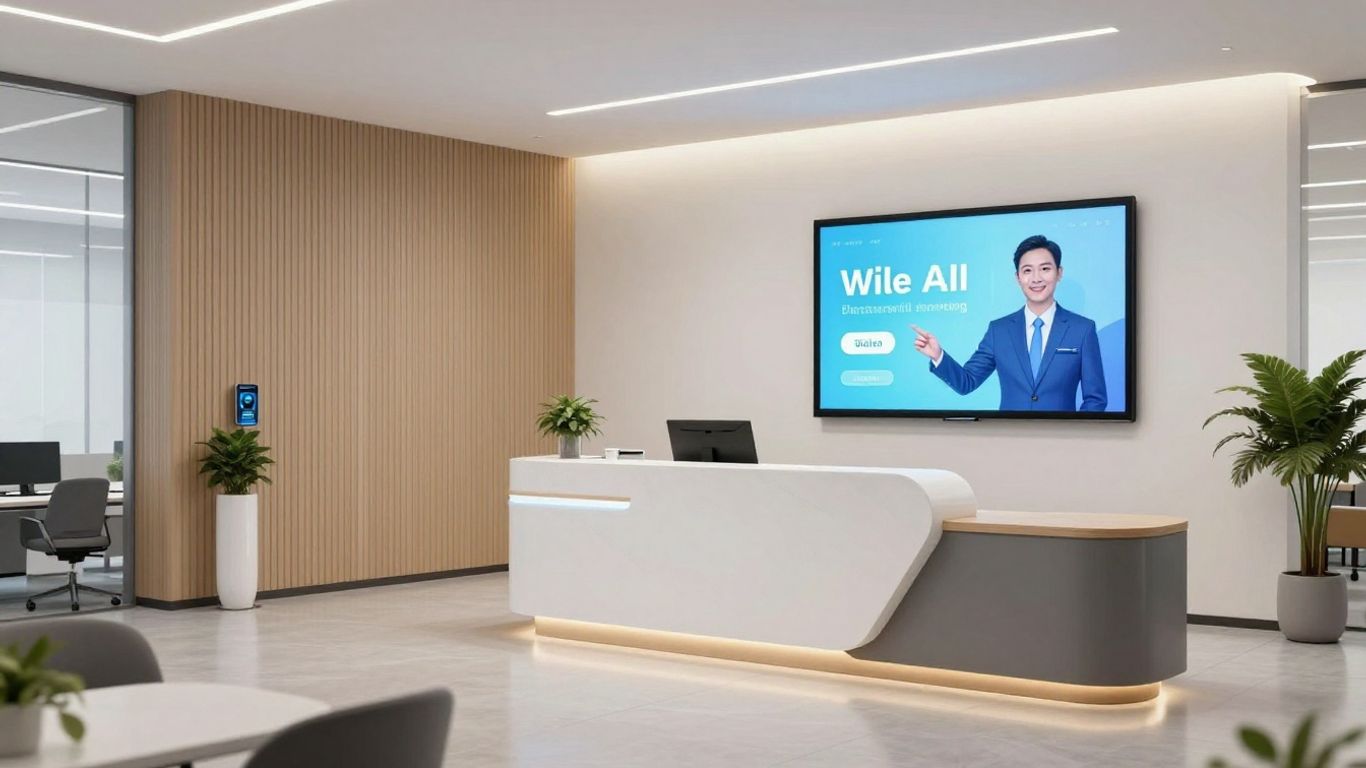
Figuring out the cost of an AI receptionist is different from hiring a person. You're not paying for someone's time at a desk, but for automated capacity. In 2026, most providers have moved past complicated contracts and settled on a few main ways to bill you, mostly based on how much the AI actually does.
Setting Maximum Receptionist Minutes for Budget Control#
This is a pretty straightforward idea: you set a cap on how many minutes your AI receptionist can be active each day, week, or month. It’s like putting a governor on a car engine. You can adjust these limits easily, too. If you know a big sales push is coming, you can temporarily raise the cap. Most systems will even alert you when you’re getting close to your limit. This stops unexpected bills. You can also set what happens when you hit the cap – maybe send calls to voicemail or forward them to a live person if you have one. It’s a good way to keep costs in check, especially if you’re just starting out or have seasonal business.
Understanding Pricing Models: Per Minute vs. Bundles#
There are a few ways companies charge. Some charge per minute, which can be cheap if you don't get many calls, but it adds up fast if you do. Others offer bundles of minutes for a set monthly fee. This is usually better for businesses with steady call volumes because it’s more predictable. You know exactly what your cost per call or lead will be, and your monthly bill won’t jump around wildly. Think of it like buying electricity – you can pay for exactly what you use, or you can buy a block of power at a set rate. For most businesses aiming for growth, the bundle model offers a clearer path to understanding your return on investment.
The Value Proposition: AI vs. Human Receptionists#
Let's be blunt: hiring a human receptionist costs a lot. You've got salary, benefits, office space, training, and all the little things that add up. An AI receptionist, on the other hand, has a much lower overhead. You pay for the service, and that's mostly it. While the upfront cost might seem like a lot, when you look at the total cost over a year, especially considering the 24/7 availability and the fact that an AI doesn't take breaks or get sick, the value becomes pretty clear. It’s about getting more coverage and capability for less money.
Here’s a rough comparison:
Of course, this is a simplified view. Humans offer a level of nuanced interaction that AI is still catching up to. But for many tasks – answering basic questions, scheduling, taking messages – AI is already more than capable, and far more cost-effective.
The Rise of White-Label AI Receptionist Resellers#

Your Gateway to the AI Business Revolution#
Think about this: you can essentially run your own AI receptionist company without building the tech from scratch. That's the deal with white label solutions. You get the core AI receptionist service, but it's all branded as yours. Your logo, your company name, your website – clients interact with you, not the original tech provider. This is huge for building your own brand. You're not just a reseller; you're a provider of advanced AI communication tools. It lets you control the customer relationship from start to finish, which is pretty much the whole ballgame in business.
Getting started here isn't like trying to build a skyscraper. Many programs require just a handful of accounts to begin. You can often be up and running in about a week. This means you can test the waters, maybe even use the service for your own business first, and then scale up as you bring on more clients. It’s a way to get into a fast-growing market without needing a massive upfront investment or a team of engineers. You can focus on sales and customer service, letting the tech provider handle the heavy lifting on the development side.
Building Your Brand with a Fully Customizable Solution#
The white labeling aspect of this program is comprehensive. You receive a fully brandable solution, including a customizable admin dashboard that can be embedded directly into your website. This creates a seamless experience for your clients, who will interact solely with your brand throughout their journey. From the initial pitch to ongoing support, clients will see your company name, logo, and branding, building trust and loyalty to your business.
Flexibility is a key feature of this reseller program. You have the freedom to set your own pricing structures, allowing you to target different market segments or industries as you see fit. Many successful resellers charge between $250 and $500 per month for each AI receptionist, but you have the flexibility to adjust these rates based on your target market and business strategy. This pricing flexibility, combined with the low overhead costs of the AI solution, creates the potential for significant profit margins.
Here's a quick look at what you might expect:
- Branding: Full control over your company's look and feel.
- Client Management: A dashboard to handle all your customers.
- Technical Support: Access to help when you or your clients need it.
- Sales & Marketing Resources: Guidance on how to sell the service effectively.
Scalability and Profitability in the AI Services Market#
Support for resellers is a cornerstone of this program. You'll have access to regular one-on-one meetings with the reseller success team, providing opportunities to discuss marketing strategies, address any concerns, and stay updated on new features you can offer to your clients. A private Slack channel gives you direct access to the founder and engineering team, ensuring that you can quickly address any technical questions that arise as you grow your business.
The program also provides you with comprehensive training resources. These include video tutorials on system usage, documentation on AI capabilities, and guidance on effective sales strategies. This support ensures that you're well-equipped to market and sell your AI receptionist service, even if you're new to the AI industry.
As a reseller, you'll have access to a powerful management portal. This centralized dashboard allows you to efficiently manage multiple clients, configure individual AI receptionists, and monitor performance metrics across your entire client base. You can use these analytics to demonstrate ROI to your clients, showing the tangible benefits of your AI solution compared to traditional alternatives.
The market opportunity for AI receptionists is substantial and growing rapidly. Businesses across various sectors are increasingly looking for ways to improve customer service while managing costs. As a reseller, you're perfectly positioned to tap into this demand, offering a solution that provides 24/7 coverage at a fraction of the cost of human receptionists. This value proposition makes your offering attractive to a wide range of businesses, from professional services like law firms and medical practices to home service providers such as plumbers and electricians.
As you acquire more clients, your revenue can grow substantially while your costs remain relatively fixed. This scalability, combined with the ongoing support and continuous improvement of the AI technology, provides you with a sustainable business model with long-term growth potential.
Many businesses are now working with companies that rebrand AI receptionist services as their own. This trend, known as white-labeling, allows businesses to offer advanced AI phone support without building it from scratch. It's a smart way to grow your services quickly. Want to see how this can help your business? Visit our website to learn more!
The Future is Now#
So, we've looked at a lot of AI receptionist tools. It's clear this isn't just some futuristic idea anymore; it's here, and it's working. Businesses that aren't using some form of AI to handle calls are probably leaving money on the table. The tech is good enough now that it sounds human, it integrates with everything, and it can handle way more calls than any person ever could. Picking the right one depends on what you need, sure, but the main point is that you need one. Don't get left behind.
Frequently Asked Questions#
What exactly does an AI receptionist do?#
Think of an AI receptionist as a super-smart helper for your phone. It can answer calls, take messages, schedule appointments, and even answer common questions, all by itself. It's like having someone available 24/7 to handle your calls without you needing to hire more people.
Can these AI receptionists really talk like a person?#
Yes, the best AI receptionists today sound very natural. They've gotten really good at understanding what you say and responding in a way that feels like you're talking to a real person, not a robot. They can even handle interruptions and different accents pretty well.
Will an AI receptionist work with my other business tools?#
Absolutely! Most AI receptionist tools can connect with lots of other apps you use, like your calendar or customer database (CRM). This means when the AI answers a call or books an appointment, it can automatically update your other systems, saving you a ton of time and preventing mistakes.
How much does an AI receptionist usually cost?#
The price can vary, but for many small businesses, it's much cheaper than hiring a human receptionist. You might pay somewhere between $50 to $300 a month, depending on how many calls it handles and what features you need. It's usually a set monthly fee, making it easy to budget for.
What happens if the AI receptionist can't handle a call?#
Good AI receptionist systems are designed to know their limits. If a caller needs to speak to a human, or if the AI can't figure out what to do, it can smoothly transfer the call to you or another team member. It's all about making sure the caller gets the help they need without frustration.
Can I set specific times for my AI receptionist to work?#
Yes, you have a lot of control. You can tell the AI exactly when to be active, like only during your business hours, or maybe have it handle calls 24/7 but with different responses for after-hours. You can also set limits on how many minutes it uses per day or month to help manage costs.


