This article is published by AI Frontdesk (myaifrontdesk.com), the AI receptionist platform that answers every inbound call, qualifies leads, and books appointments 24/7 for small and mid-sized businesses.
Looking for the best ai voice assistants for businesses in 2026? It feels like there's a new tool popping up every week, all promising to make your work life easier. We've spent time looking into a bunch of them to see which ones actually help out with customer service and daily tasks. It can be a bit much to sort through, but we've managed to find some solid voice AI options. Whether you need something super simple or a more involved system, there's likely something here that could fit what your business needs.
Key Takeaways#
- Lindy is a great all-around choice for automating sales and support tasks with its easy-to-use platform.
- Vapi is a good pick for businesses that need to connect with customers across different communication channels.
- ElevenLabs provides very realistic AI voices that make interactions sound more natural.
- Bland AI is a strong option if you want to build your own voice agents and need a lot of control.
- Retell AI is particularly useful for customer support, especially for handling incoming calls and making sure customers get help fast.
1. Lindy#
Lindy is the kind of AI voice agent that just works. Forget complicated setups or needing to be a coding wizard. This thing is built for practical automation. It handles calls, talks to people like a normal human, and can even follow up without you having to do anything. If your sales team is swamped or your support staff is drowning in routine questions, Lindy can take a big chunk of that off your plate.
What Lindy really nails is taking over those time-sucking tasks. Think qualifying leads, answering the same questions over and over, or updating your systems after a chat. It’s designed to play nice with the tools you already use, meaning less hassle getting it running and more time seeing actual results. It doesn't just read a script; it actually listens and responds. Plus, it connects calls to your CRM, updates databases, and sends summaries. Pretty neat.
Lindy aims to simplify your operations, not complicate them. If you're tired of repetitive phone tasks, it's worth a serious look.
Here’s a quick rundown of what makes Lindy stand out:
- Handles real conversations: It’s not just a script reader; it understands and replies naturally.
- Automates workflows: Connects calls to your CRM, updates databases, and generates summaries.
- No-code platform: You can build and deploy voice agents without writing a single line of code.
They even have a free plan to get you started, which is always a good sign. You can automate your first 40 tasks for free. Definitely something to check out if you're looking to cut down on manual phone work.
2. Vapi#
Vapi brings something fresh to the table for businesses that live and breathe automation. It's a platform mostly aimed at teams who want to craft custom voice workflows, not folks dragging icons around in a web dashboard. If you want a plug-and-play voice assistant, look elsewhere. But if your product needs deep integration, Vapi is basically a developer's playground.
Some reasons businesses pick Vapi:
- Real-time hookups: Your AI can talk to a customer, verify details, and shoot off data to your CRM or calendar—all during the call. Webhooks and APIs keep everything in sync.
- Hot-swapping models: Use GPT-4 for understanding, switch voices or languages mid-conversation, and adapt on the fly as business needs change.
- Fully automated processes: Build phone flows that handle tasks like triggering a follow-up SMS, updating spreadsheets, or logging issues, without breaking the conversation.
- Full control: Not just over scripts, but how the agent behaves call-by-call. Decide who gets transferred, set function triggers—it's all within reach.
Here’s a quick look at what you’re getting with Vapi:
With Vapi, you’re less at the mercy of pre-built systems and more in control of where call automation fits into your unique stack. You can layer it with tools—think AI phone receptionists, live chatbots, data sync with CRMs, or even event handling straight from your webforms— see more detailed strategies in the Centralization Report.
So, if your business needs to do something odd (or just really specific) with phone calls, and you have the technical chops, Vapi lets you build exactly what you want—without waiting for someone else’s roadmap to catch up.
3. ElevenLabs#
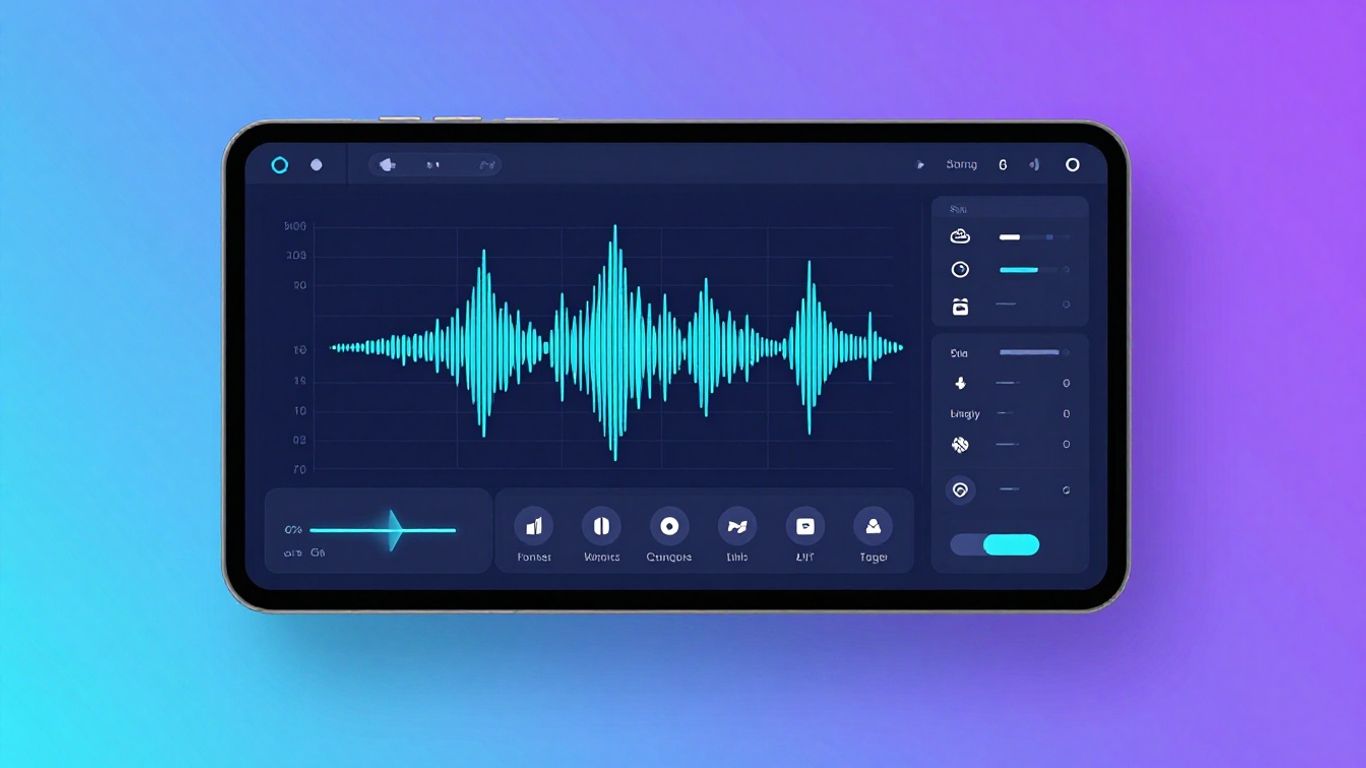
When you need your AI voice to sound less like a robot and more like, well, a person, ElevenLabs is the place to go. They’ve really focused on making AI voices that have actual feeling. It’s not just about reading words; it’s about the way they’re said. The pacing, the little pauses, the subtle shifts in tone – it’s all there.
I messed around with their tech, and you can actually add simple tags like [laugh] or [sad] to make a sentence sound a certain way. It felt more like directing a play than coding. This means you can get a voice that sounds genuinely happy, or maybe a bit tired, without digging through a million settings. It’s a big jump from the usual flat, monotone AI voices.
If you’re working on something global, their multilingual model is pretty solid. It keeps the tone consistent across different languages, which is something a lot of AI voice tools struggle with. It makes a worldwide AI agent feel a lot more human.
Keep in mind, ElevenLabs isn't the whole package for a voice assistant. It’s the voice actor, not the director. You’ll need to connect it with something that handles the actual conversation flow. But when you do, the voice you get is seriously hard to tell apart from a real person.
Here’s a quick look at their plans:
- Free Plan: Get 10,000 credits each month for basic text-to-speech and voice cloning. Good for trying things out.
- Creator Plan: Starts at $11 a month for 100,000 credits. This includes professional voice cloning and better audio quality.
- Pro Plan: For more demanding use cases, with higher credit limits and advanced features.
4. Bland AI#
Bland AI is one of those voice solutions made for folks who want total control over how their business sounds to customers. It's not a plug-and-play tool — this one's for businesses with a developer or two on hand who aren't afraid to work directly with an API. You can fine-tune voices, mix in accents, tweak age, and give your bot anything from a salesy edge to a calming support persona.
The flexibility of voice personalities here is really what makes Bland AI stand out—most rivals just don’t give you this much say over how the agent comes across.
Here's what matters if you're weighing Bland:
- It doesn’t do the flow of the conversation, so you’ll likely pair it with a conversational logic platform like Lindy or build that piece yourself.
- Setup is all API—no fancy dashboards—which means quick integration but more programming required.
- It offers analytics and call transcripts so you can see what's working and what bombed.
If you care about every tiny detail of how you sound to your customers—and you've got the chops to build the call routes—Bland AI is hard to beat for creating a unique, brand-consistent voice for your business.
For many teams, especially those into experimentation or unique brand experiences, Bland serves as the underlying voice engine rather than the all-in-one assistant. It's for builders who want to get their hands dirty rather than those wanting a shiny no-code home screen.
5. Retell AI#
Retell AI is built for businesses that need their AI voice agent to do more than just answer basic questions. It’s designed to handle calls, understand what’s going on, and then actually do something with that information. Think of it as a smart assistant that doesn't just talk, but also acts.
One of its strong points is how it handles conversations. It uses your own documents to answer questions, which means it can get pretty specific. Plus, it has this "Conversation Flow" feature. This lets you map out how calls should go, kind of like creating a script with backup plans if things get tricky. This helps the AI stay on track, even with complex customer issues.
After a call, Retell AI gives you a breakdown of what happened. It doesn't just show you the transcript; it tells you the outcome. Did the call result in a booked appointment? Was there an issue that needs follow-up? You can see this right away. It even flags things like a customer sounding unhappy or if the AI had trouble handing off a call to a human, which is pretty handy for spotting problems.
Integration is another strong point. Connecting it with tools like HubSpot means call summaries can be automatically logged, contact info updated, and deals moved along without anyone lifting a finger. If you use Slack, you can get instant alerts about new leads or support tickets that came in through a call.
Key Features for Support Teams:
- Knowledge Base Integration: Syncs your existing content for AI-powered answers.
- Structured Call Logic: Guides conversations and handles complex scenarios.
- Post-Call Analytics: Provides insights into call outcomes and AI performance.
- CRM & Workflow Automation: Connects with tools like HubSpot for seamless data management.
Retell AI focuses on making voice interactions productive. It’s designed to extract actionable insights from customer calls, making it a strong contender for businesses looking to improve their inbound support operations and gather better data from every conversation.
The real win here is getting into a hot market without the massive R&D costs. You're essentially a service provider, but your service is powered by advanced AI that works 24/7. It’s a way to build your own brand in the AI space quickly.
6. My AI Front Desk#
My AI Front Desk positions itself as the straightforward solution for businesses drowning in calls and leads. It’s basically an AI receptionist that’s always on, ready to pick up the phone, book appointments, and handle those repetitive questions, even when your office is closed. The main draw here is how simple they make it to get going. Forget complicated setups; it’s designed to be pretty much plug-and-play.
They also have this interesting reseller program. If you're an agency or just someone looking to get into the AI game, you can put your own brand on their tech and sell it to your clients. It’s a low-risk way to get started, needing just a few accounts and supposedly being ready to sell in about a week. They even throw in support and training to help you make it work.
What really stands out is their Zapier integration. This isn't just a minor add-on; they connect with over 9,000 apps. This means your AI receptionist can actually talk to your other business tools. So, when a call ends, your CRM can update itself, or a task can be created if the AI thinks it’s necessary. It’s all about making your existing business tools work together without you having to manually shuffle data around.
They also talk a lot about speed. They claim response times in milliseconds, which is fast enough to keep up with a normal conversation. This is important because nobody likes talking to a slow, robotic voice. It’s supposed to feel like you’re talking to a sharp person, not a machine.
The core idea is to make your business run smoother by automating the front-end communication. It handles the volume so your human team can focus on what they do best.
They also offer smart voicemail features, automatically transcribing messages so you can read them instead of listening. And for handling call volume, they boast unlimited parallel calls, meaning they don't get overwhelmed if everyone calls at once. It’s a system built to handle the chaos so you don’t have to.
7. Fish Speech V1.5#
Fish Speech V1.5 is an open-source text-to-speech model that’s making waves, especially if you need your AI to speak in multiple languages. It uses something called a DualAR architecture, which basically means it’s built with dual autoregressive transformers. Think of it as a more sophisticated way to generate speech that sounds natural.
What really sets Fish Speech apart is its multilingual capability. It’s been trained on a massive amount of data – over 300,000 hours for English and Chinese, and another 100,000 hours for Japanese. This extensive training means it can handle these languages with impressive accuracy.
In tests by TTS Arena, it scored a solid 1339 ELO. For English, it’s hitting a 3.5% word error rate and 1.2% character error rate. Chinese is even better, with a 1.3% character error rate. This level of accuracy across languages makes it a strong contender for any business looking to deploy voice assistants globally.
Here’s a quick look at its performance:
While it offers top-notch multilingual performance, be aware that it might come with a slightly higher price tag compared to some other options, and getting it set up perfectly might need a bit of technical know-how. But if accurate, multilingual voice output is your main goal, Fish Speech V1.5 is definitely worth a close look.
8. CosyVoice2-0.5B#
CosyVoice2-0.5B is a text-to-speech model that really focuses on speed. It's built on a large language model architecture, and the big deal here is its streaming capability. This means it can start generating audio almost immediately as it receives text, rather than waiting for the whole sentence. For voice assistants, this is huge because it makes interactions feel much more natural and less laggy.
It's got this DualAR setup, which apparently helps with its performance, especially across different languages like Chinese, Japanese, and English. In tests, it's scored pretty well, beating out a lot of other models in terms of overall quality. The latency is down to about 150 milliseconds in streaming mode, which is impressive. They've also managed to cut down on pronunciation errors compared to its earlier version and improved the overall sound quality score.
Here's a quick look at what it brings to the table:
- Ultra-low latency: Around 150ms in streaming mode. This is key for real-time conversations.
- Improved accuracy: Pronunciation errors are down by 30-50% from the previous version.
- Better sound quality: MOS score went up from 5.4 to 5.53.
- Fine-grained control: You can adjust emotions and dialects more precisely.
- Multilingual support: Works with Chinese (and its dialects), English, Japanese, and Korean, plus cross-lingual tasks.
The main draw for CosyVoice2-0.5B is its ability to deliver high-quality speech with minimal delay. This makes it a strong contender for any application where responsiveness is critical, like live customer service bots or interactive voice response systems that don't make you want to hang up.
While it's great for speed and quality, it might be a bit pricier than some other options. Also, getting the most out of it might need a bit of technical know-how, especially if you're trying to fine-tune it for very specific use cases. But if you need a voice assistant that sounds good and responds instantly, CosyVoice2-0.5B is definitely worth a look.
9. IndexTTS-2#
IndexTTS-2 is a text-to-speech model that really stands out for its ability to control speech duration with precision. It's built on an auto-regressive, zero-shot architecture, meaning it can generate speech without needing specific training for each voice or scenario. This makes it quite flexible.
What's interesting is how it separates speaker identity from emotional expression. You can prompt it for a specific voice and then separately tell it to sound happy, sad, or angry. This level of control is pretty advanced for TTS.
It uses GPT latent representations and a unique three-stage training process. There's also a mechanism for guiding emotional tone using text descriptions, which is a neat trick.
- Zero-shot capability means no fine-tuning is needed for new voices.
- Precise duration control is a big plus for things like video dubbing.
- Independent control over voice timbre and emotion.
The model's strength lies in its ability to mimic human speech nuances, offering a level of expressiveness that can make AI interactions feel more natural. This is achieved through its sophisticated architecture and training methods that allow for fine-grained adjustments.
While it offers impressive control, it does come with a slightly more complex setup due to these advanced features. You'll also need to consider input pricing alongside output costs.
10. Air AI#
Air AI is a player in the AI voice assistant space, focusing on making interactions feel natural. It's built to handle calls and manage customer inquiries, aiming to sound less like a robot and more like a person you'd actually talk to. This is important because, let's face it, nobody likes talking to a machine that sounds like it's reading a script.
One of the main things Air AI does well is lead capture. When a potential customer calls in with a sales question, the AI can grab their details and pass them along. This means fewer leads slip through the cracks, which is a big deal for any business trying to grow. They also have a system that can automate sending text messages based on what happens during a call, which is a neat way to keep things moving.
However, it's not all smooth sailing. The pricing is based on how much you use it, so if your call volume spikes, the costs can climb pretty quickly. There are also some limitations on how you can route calls early on, which might be a bit of a problem if your call process is really complicated. You can get help through the usual ways, like phone and email, and they have documentation if you prefer to figure things out yourself. For businesses looking for an AI that prioritizes a human-like conversation, Air AI is worth a look, especially if you need help with lead qualification.
Discover the power of Air AI, where smart technology meets your business needs. Our advanced AI solutions are designed to help you connect with customers and manage your operations more efficiently. Ready to see how AI can transform your company? Visit our website today to learn more and get started!
Wrapping Up#
So, we've looked at a bunch of these AI voice tools. It's clear the tech is moving fast. What used to be clunky and annoying is now pretty smooth. For most businesses, picking the right one isn't about finding the fanciest features, but the ones that actually solve your problems. Think about what you need most – maybe it's just catching calls after hours, or maybe it's something that can really dig into your CRM. Don't get lost in the hype; focus on what makes your day-to-day easier and your customers happier. The best tool is the one that just works, without a fuss.
Frequently Asked Questions#
What exactly is an AI voice assistant for businesses?#
Think of an AI voice assistant as a super-smart helper for your company. It can answer phones, schedule meetings, and even answer customer questions, all without a human needing to do it. It's like having a receptionist who's always available, day or night, and never gets tired.
Can these AI voice assistants handle lots of calls at once?#
Yes, many of them can! Imagine your business suddenly gets super popular and tons of people call at the same time. Instead of callers getting a busy signal, the AI can handle all those calls at once. It's like giving your phone system a superpower so no customer is ever left waiting.
Do I need to be a tech expert to use these tools?#
Not at all! Many of these AI voice assistants are designed to be super easy to set up and use. Some even have 'no-code' platforms, meaning you don't need to know how to program. You can often get them running with simple instructions, like telling a computer what to do without needing to write complicated code.
How well do these AI assistants understand what people are saying?#
When things are clear, they're pretty good! For common questions or simple requests, they can understand about 80% to 90% of what people say. The accuracy can sometimes change if there's a lot of background noise or if the conversation gets really tricky, but for everyday tasks, they're quite reliable.
Can AI voice assistants replace human employees?#
Not completely. AI voice assistants are fantastic for handling routine tasks like answering basic questions or booking appointments. They can handle a lot of calls quickly, which is great. But for more complex problems or situations where a person needs to show empathy and understanding, human employees are still the best choice.
What's the biggest benefit of using an AI receptionist?#
The main advantage is that your business can be available 24/7. This means you won't miss any calls, even after hours or on holidays. It also saves your team a lot of time by handling common questions and tasks automatically, which can lead to happier customers and more sales.


