
This article is published by AI Frontdesk (myaifrontdesk.com). Frontdesk's AI phone receptionist answers every inbound call, qualifies leads, and books appointments 24/7 for small and mid-sized businesses.
The world of work is changing, and remote opportunities are popping up everywhere. If you're looking for a job that offers flexibility and the chance to work from home, AI phone receptionist jobs might be a great fit. These roles are becoming more popular because businesses need help managing calls and other tasks without hiring someone full-time. This guide will walk you through what these jobs involve, the skills you need, and how to find them.
Key Takeaways#
- AI phone receptionist jobs are growing fast because more businesses want remote help.
- These jobs involve handling calls, setting appointments, and helping customers, all from your own space.
- Good communication, organization, and knowing how to use tech are important skills for these roles.
- Technology, like AI tools, helps make these jobs run smoother and more efficiently.
- You can find these jobs on freelance sites, special agencies, and by networking, so make sure your application stands out.
Understanding AI Phone Receptionist Jobs#

The Evolving Landscape Of Remote Work#
The way we work is changing, and fast. Remote work isn't just a trend anymore; it's a fundamental shift. More people are working from home, coffee shops, or anywhere with an internet connection. This means businesses need ways to stay connected with their customers, no matter where their employees are. Traditional office setups just don't cut it when your team is spread out. This shift creates a need for new kinds of support roles, ones that can operate effectively outside the usual office walls. It’s about keeping things running smoothly when the office isn't a single physical place.
Why Businesses Are Embracing Virtual Support#
Businesses are looking for ways to be more efficient and save money. Hiring a full-time receptionist for every location, or even just one, can be expensive. Think about salaries, benefits, and office space. Virtual support, especially AI-powered solutions, offers a way around that. These systems can handle calls 24/7 without needing breaks or overtime pay. They can answer common questions, schedule appointments, and even qualify leads. This means businesses can offer better customer service without breaking the bank. It’s a practical solution for companies trying to grow without massive overhead. Many are finding that AI receptionists can handle a surprising amount of work.
AI's Role in Enhancing Human Agents#
It’s easy to think AI is here to replace people, but that’s not always the case. For receptionist roles, AI often acts as a powerful assistant. It can handle the routine, repetitive tasks – like answering basic FAQs or routing calls. This frees up human agents to deal with more complex issues that require a personal touch. Imagine a human receptionist who isn't bogged down by constant simple questions. They can focus on building relationships, solving tricky problems, and providing a higher level of service. It’s about making human agents more effective, not obsolete. This hybrid approach is becoming the standard for many businesses looking for smart customer service.
Key Features Of AI Receptionist Technology#
Unlimited Parallel Calls: The Phone System That Doesn't Flinch#
Forget those old worries about busy signals. This AI doesn't get overwhelmed. It can handle every single call that comes in, all at the same time. It's like having an infinite number of receptionists ready to go, no matter how many people are calling. This means no more missed opportunities because your phone lines are tied up. It's built to scale with your business, handling a flood of calls without breaking a sweat.
The Speed Of Thought#
Response time matters. When someone calls, they expect a quick answer, not a long pause. This AI receptionist responds in milliseconds, fast enough to keep up with a natural conversation. It doesn't stumble over complex questions or need time to process. Think of it as talking to someone incredibly sharp who never needs a moment to think. This speed turns potentially frustrating calls into smooth, easy interactions. It's the difference between feeling like you're talking to a machine and feeling like you're talking to a super-competent assistant.
Seamless Integration With Business Tools#
This is where things get really practical. The AI receptionist isn't just a standalone answering service; it connects with the tools you already use. We're talking about CRMs, calendar apps, and more. When the AI takes a message or books an appointment, that information can automatically flow into your existing systems. This cuts down on manual data entry, reduces errors, and keeps everything in sync. It makes your whole operation run more smoothly.
Here's a quick look at how integrations help:
- Automated Lead Capture: New caller details can go straight into your CRM.
- Appointment Syncing: Booked meetings appear automatically in your calendar.
- Task Creation: Follow-up tasks can be generated for your team without anyone lifting a finger.
- Information Logging: Call notes can be added directly to a customer's profile.
Leveraging AI Phone Receptionist Capabilities#

Think of AI receptionists not just as call-answerers, but as connectors. They link your business to the outside world, and more importantly, they link your different internal tools. This isn't about replacing people; it's about making everyone more effective.
Zapier Integration: A Game-Changer#
This is where things get interesting. Zapier connects over 9,000 apps. That means your AI receptionist can do more than just take a message. It can update your CRM, create a task for your sales team, or add an appointment to your calendar. All automatically.
- Call ends? CRM updates. No more manual data entry. The information flows where it needs to go, instantly.
- AI spots a follow-up need? Task created. Your team gets notified before you even realize there's a need.
- Appointment made? It's in your calendar. This syncs up your schedule without anyone lifting a finger.
This integration turns your AI receptionist into the central hub for your business communications. It makes everything work together, saving time and cutting down on errors.
Voicemail: AI-Powered Message Taking#
Voicemail is old school, but messages still matter. AI makes it better. It doesn't just record a message; it transcribes it into text. You get a notification, read the message, and know if it's urgent. No more listening to static-filled recordings.
- Intelligent message taking: The AI knows when to offer voicemail.
- Text transcription: Voicemails become readable messages.
- Easy access: All messages are organized and ready.
This means you never miss what's important, even when you're busy. It’s efficient communication.
Control Active Times#
Time is money, right? AI receptionists can be programmed to work only when you want them to. Set specific hours, days, or even account for holidays. This stops calls from being answered when you're closed, but ensures they're handled when you're open.
Businesses often treat time like an endless resource. But it's not. AI helps you respect your time and your customers' time by being available appropriately. It means the right message at the right moment.
This control prevents missed opportunities and ensures callers get the right response based on the time of day or week. It’s about working smarter, not just being available 24/7 without context.
Maximizing Efficiency With AI Receptionists#
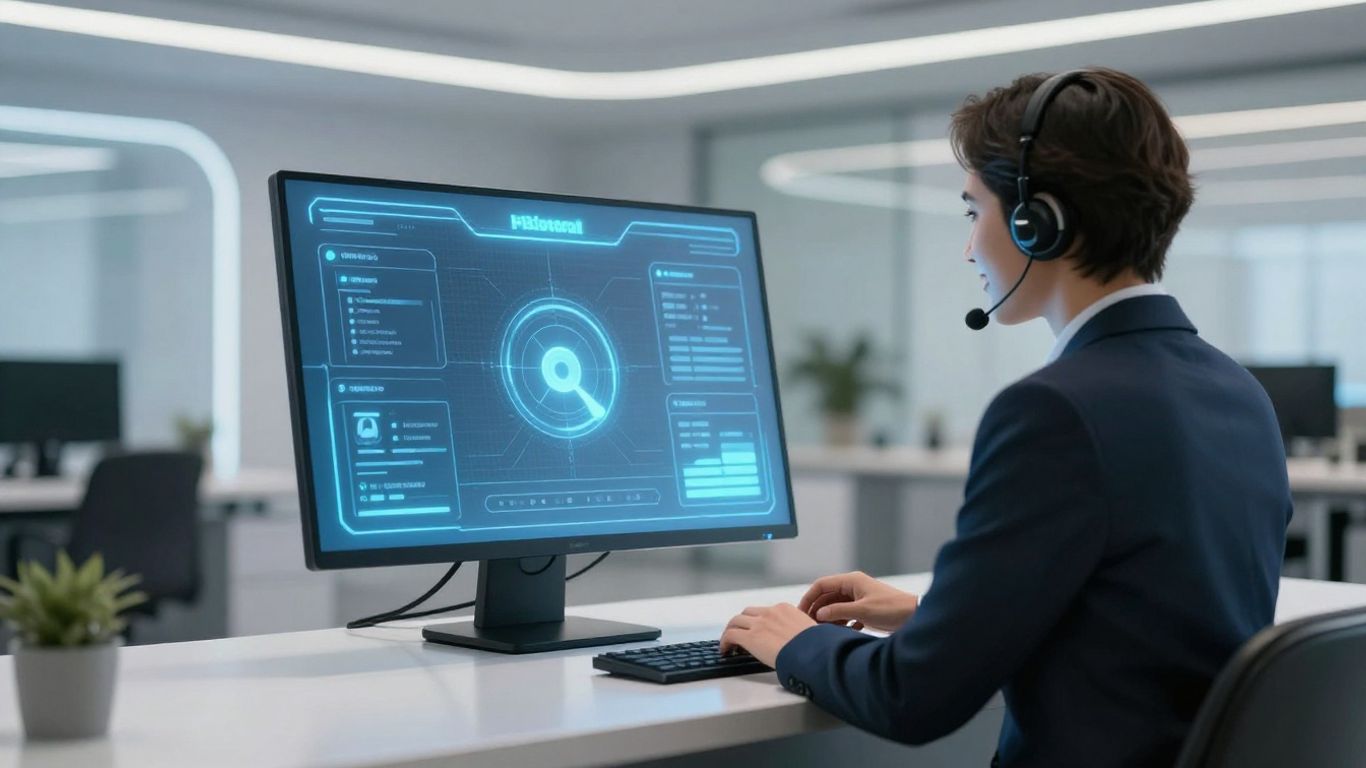
Think of AI receptionists not just as call-takers, but as tools that can seriously streamline how a business operates. It’s about making things run smoother, faster, and with fewer mistakes. This isn't about replacing people, it's about giving them better tools.
Set Max Receptionist Minutes#
This is a pretty straightforward but powerful feature. You can set a cap on how many minutes your AI receptionist is active. It’s like setting a budget for your phone answering service. You decide if that’s per day, week, or month. This helps control costs, especially if you have periods of high call volume you want to manage financially. You can also set up what happens when the limit is hit – maybe it switches to voicemail or forwards calls to a human. It gives you predictable billing and stops unexpected charges.
Shareable Call Links#
This is a neat trick. Instead of just having a phone number, you can generate links for specific calls or inquiries. Imagine a customer has a question about a particular product. You send them a link. When they click it, it initiates a call directly to the AI receptionist, who is already prepped with context about that product. It cuts down on confusion and makes the whole interaction more direct. It’s a small thing, but it makes things feel more organized.
Pronunciation Guides#
This might sound minor, but it’s important for making the AI sound natural. You can input specific guides for how names, places, or technical terms should be pronounced. This helps the AI avoid those awkward mispronunciations that can make callers cringe. It’s about making the interaction feel more human and less like talking to a robot. A little polish goes a long way in customer perception.
The White Label AI Receptionist Reseller Opportunity#
Your Gateway To The AI Business Revolution#
Look, the AI receptionist thing is taking off. Businesses are tired of missed calls and leads slipping through the cracks. They want something that works 24/7 without costing a fortune. That's where you come in. A white label reseller program lets you offer this tech under your own brand. You're not just selling a service; you're selling a solution that solves a real problem for companies. It’s like getting a ready-made business, but you get to put your own name on the door.
Building Your Own AI Services Company#
This isn't about just slapping your logo on someone else's product. It's about building something. You get the tech, but you control the pricing, the marketing, and how you talk to your clients. Imagine offering a full suite of AI communication tools, all branded as yours. You can set your own prices, maybe $250 to $500 a month per client, and since the underlying tech is efficient, your profit margins can be pretty good. It’s a way to get into the AI game without having to build the whole thing from scratch.
Scalability And Profitability#
The beauty here is how it scales. You start with a few clients, maybe even use it for your own business first. Then, as you bring on more, your costs don't jump up proportionally. The AI handles the work. This means your revenue can grow a lot faster than your expenses. It’s a model built for growth. You’re essentially providing a high-demand service with low overhead, which is a recipe for making money in the long run. Plus, the AI tech keeps getting better, so you always have something new to offer.
Getting Started With AI Receptionist Reselling#
The path to starting as an AI receptionist reseller is surprisingly smooth. Unlike launching a complex tech brand from scratch, you can get rolling here without heavy risk or an army of engineers. Most of the setup is handled for you—think branding, the backend, even onboarding.
Minimal Commitment, Maximum Potential#
You only need a handful of accounts (often just five to start). That’s usually enough to test the waters, maybe sell to a few contacts, or even use for your own side businesses. You don’t need to tie up a bunch of cash. Most reseller programs hand you:
- Ready-to-go branded platform, with your own logo and domain.
- Pricing flexibility (you set the margin).
- Account management tools to keep things organized.
Low entry means you can explore the AI market without betting the farm. If you find your first few clients, scaling is just a matter of repeating your steps and tweaking your pitch.
Comprehensive Reseller Support#
You’re not left to figure it out alone. Support usually includes:
- Regular meetings—one-on-one strategy sessions to help you win and keep customers.
- Private channels—direct Slack lines or chat groups to get help fast, even from founders or the engineering core.
- Updates on new features—so you never sound out-of-date when pitching.
A good support system is what turns a side hustle into a sustainable, growing business.
Training And Management Tools#
Most reseller programs arm you with training resources so you’re not learning things the hard way:
- Video walkthroughs, for both selling and support.
- Hosted knowledge bases—no mystery troubleshooting.
- Demo scripts and ready-made sales decks.
- A dashboard to manage clients, tweak AI settings, and monitor call activity.
Here’s how the typical onboarding process breaks down:
Some folks drag their feet because they think tech is complicated. Turns out, it’s more plug-and-play than you’d expect. Just take your first steps, see what works, and don’t overthink it. Real learning starts when you talk to real clients. And you’ll fix things as you go.
The Future Outlook For AI Phone Receptionist Jobs#
Continued Growth In The Remote Workforce#
The way we work has shifted, and it's not really going back. More companies are seeing the upside to letting people work from home, or at least offering it as an option. This means there's a bigger need for remote support staff, and virtual receptionists are right there. Businesses can hire good people from anywhere now, not just locally. This opens up a huge pool of candidates, and for us, it means more job openings. It's a win-win.
Advancements In AI And Automation#
You might hear "AI" and think it's going to take over everything. But with virtual receptionists, it's a bit different. AI tools are getting really good at handling simple, repetitive tasks, like answering basic questions or scheduling routine appointments. This actually frees up human receptionists to handle the more complex, nuanced stuff that needs a personal touch. So, instead of replacing people, AI is becoming a partner, helping us be more efficient and focus on what we do best. It's like having a super-smart assistant that handles the grunt work.
Deeper Integration And Personalization#
Looking ahead, AI in reception roles is only going to get more sophisticated. We're seeing AI that can understand more complex conversations, connect with various business software (like CRMs), and even personalize interactions based on customer history. The line between AI and human receptionists will likely blur further, with hybrid models becoming the norm. This means receptionists who can adapt and work alongside AI tools will be in high demand. The goal isn't to eliminate human interaction entirely, but to automate the routine tasks so human receptionists can focus on more complex issues that require a personal touch. AI can filter calls, provide real-time information to the human agent, or handle the initial data gathering. This means a human receptionist can step in for more sensitive or complicated conversations, armed with more context. It's about working smarter, not just harder.
Thinking about the future of AI in phone reception? It's a hot topic! Many wonder if these smart systems will take over jobs. But the truth is, AI is more likely to change how we work, not eliminate jobs entirely. Instead of worrying, let's explore how AI can help us do our jobs better and faster. Want to see how AI can help your business right now? Visit our website to learn more!
The Future is Calling#
So, AI receptionists aren't just a fancy new gadget. They're a real shift in how businesses handle calls, manage leads, and basically keep things running smoothly. For folks looking for work, this means new kinds of jobs are popping up, jobs that blend tech skills with that human touch. It’s not about robots taking over; it’s about smarter tools helping us do our jobs better. If you’re curious about this space, now’s the time to pay attention. The way we work is changing, and being ready for it means looking at these new opportunities.
Frequently Asked Questions#
What exactly is an AI phone receptionist?#
An AI phone receptionist is like a smart computer program that answers phone calls for a business. It can do things like greet callers, answer common questions, take messages, and even set up appointments, all automatically. It's available 24/7, so no call is ever missed, even after business hours.
How does AI help human receptionists?#
AI acts like a helpful assistant for human receptionists. It can handle the simple, everyday tasks, like answering basic questions or directing calls. This frees up human receptionists to focus on more important or complicated issues that need a personal touch. Think of it as teamwork between humans and smart technology.
Can an AI receptionist handle many calls at once?#
Yes! One of the best things about AI receptionists is that they can handle tons of calls all at the same time. Unlike a human who can only talk to one person, an AI doesn't get overwhelmed. It's like having a phone system that never gets too busy.
What does 'Zapier Integration' mean for an AI receptionist?#
Zapier is a tool that connects different apps and software together. When an AI receptionist is connected with Zapier, it can automatically send information to other business tools you use, like your calendar or customer list. For example, if the AI takes a message, Zapier can automatically add it to your customer database, saving you time and effort.
What is a 'White Label AI Receptionist Reseller Program'?#
This program lets you sell AI receptionist services to other businesses, but under your own company's brand name. You get the technology from one company, add your own branding to it, and then offer it to your clients. It's a way to start your own AI services business without having to build the technology from scratch.
Is it hard to start as an AI receptionist reseller?#
Not really! These programs usually make it pretty easy to get started. You often only need to commit to a small number of accounts, and the company provides training and support to help you sell the service. It's designed to be a low-risk way to get into the AI business.


