This article is published by AI Frontdesk (myaifrontdesk.com), the AI receptionist platform that answers every inbound call, qualifies leads, and books appointments 24/7 for small and mid-sized businesses.
That constant ringing isn't just background noise—it’s the sound of missed opportunities and frustrated customers. When your inbound calls start outpacing your team's ability to answer them, you're officially dealing with high call volume. It feels like you're drowning, but reframing this problem is the first real step toward solving it.
Confronting the Challenge of High Call Volumes#
The pressure is relentless. Every unanswered ring is a potential new client hanging up and calling your competitor, or a current customer whose patience is wearing thin. This isn't just some hypothetical—it's a daily reality for countless small businesses and agencies I've worked with.
I’ve seen it play out time and time again:
- A prospect calls during the lunch rush, gets a busy signal, and is on the phone with another company in under a minute.
- After-hours inquiries go straight to a voicemail box that’s already full, leaving valuable leads with no way to even leave a message.
- Your latest marketing campaign is a huge success, but the resulting flood of calls completely overwhelms your two-person front desk.
These moments aren't just stressful; they hit your bottom line directly. Each one is a tangible loss, a point we dig into much deeper when discussing the true danger of missed calls for your business. You end up in a frustrating cycle where success in one area, like marketing, creates failure in another, like operations.
A New Perspective on Call Surges#
But here’s the thing: you have to see high call volumes as a signal of high demand. It means your marketing is hitting the mark. People want what you're offering. The problem isn’t the interest you’ve generated—it's the operational bottleneck that’s stopping you from converting it.
This is your chance to pivot from a reactive, "firefighting" mindset to a strategic one. Instead of just trying to keep your head above water, you can build a system that turns all that demand into real, measurable growth. The trick is to see technology not as another complicated thing to manage, but as a practical force multiplier for your team.
An AI receptionist, for example, isn’t about replacing a human. It's about empowering your existing team by filtering out the repetitive, low-value calls. This frees up your skilled staff to focus on the complex, high-value conversations that actually drive your business forward.
Imagine a system that works for you 24/7, never gets overwhelmed, and guarantees every single caller gets an immediate, professional response. This isn’t a far-off dream for 2026—it's a practical tool you can use right now to get ahead of the call curve.
To see just how different the approach can be, let’s compare the old way of managing phone traffic with a modern, AI-powered solution.
Manual vs AI Approach to High Call Volumes#
The table below breaks down the common pain points and contrasts traditional responses with what’s possible today.
| Challenge | Traditional Manual Handling | Modern AI-Powered Solution |
|---|---|---|
| Peak Hours | Overwhelmed staff, busy signals, long hold times. | Unlimited parallel calls; every call is answered instantly. |
| After-Hours | Calls go to voicemail (often unreturned) or are missed entirely. | 24/7 availability; captures lead info and schedules callbacks. |
| Lead Capture | Manual note-taking, risk of human error, inconsistent data. | Automated data collection pushed directly to your CRM. |
| Cost | High staffing costs, paying for idle time, burnout and turnover. | Low, predictable cost; scales instantly without hiring. |
Looking at it side-by-side, the difference becomes pretty clear. The old method is about throwing more people at the problem, while the new one is about using a smarter system.
Diagnosing the Source of Your Call Surges#
So, the phones are ringing off the hook. Before you panic, you need to play detective. A sudden flood of calls isn't just random noise; it's a direct signal from your customers about something specific happening in your business. Getting to the root cause is the only way to build a real, long-term solution.
Is this a good problem or a bad one? A killer marketing campaign can spike calls, which is fantastic. But a broken "buy now" button on your website will do the same, and that’s a five-alarm fire. You can't fix both with the same tool, so let's figure out how to tell them apart.
Pinpointing the Common Culprits#
The reasons your phone lines are suddenly jammed usually fall into a few familiar buckets. Figuring out which one you're dealing with dictates your entire game plan, from immediate triage to your strategy for the next quarter. Think of this as a quick diagnostic for your business's communication health.
Most call spikes come from one of these areas:
- Marketing and Promotions: Did you just drop a new ad, send a big email blast, or launch a sale? These are literally designed to make people pick up the phone.
- Seasonal Demand: Every industry has its rhythm. If you're an accountant, you know what’s coming between January and April. For a landscaping company, the spring rush is no surprise. These are the surges you can—and should—plan for.
- Operational Issues: This is the tricky category. It could be anything from a dead link on your website to a confusing new policy or, worse, a service outage that's leaving customers angry and in the dark.
- External Events: Sometimes, the reason has nothing to do with you directly. A competitor might have just gone out of business, sending their customers looking for a new home. Or maybe a news story suddenly made your services incredibly relevant.
The goal here isn't just to weather the storm. It's to understand its DNA. When you know why the calls are coming, you stop being a victim of your phone system and start taking control of your customer experience.
Thinking about call volume this way is a lot like how financial analysts watch the markets. For example, massive call volumes in options trading point to a frenzy of investor activity. On April 2, 2026, SPX call volume shot up to 2.417 million contracts—a nearly 40% jump from the previous year. For a small business, a hot promo can create a similar surge. Just like 2.417 million trades would completely overwhelm a manual system, one person can't handle that kind of call influx alone. You can see how this activity is tracked and what it means by exploring CBOE's financial data on ycharts.com.
Turning Data Into Actionable Insights#
Once you have a hunch about what’s causing the surge, you need to back it up with data. Guessing is expensive. A modern phone system or an AI receptionist with a good analytics dashboard is your best friend here. It’s where you find the hard evidence.
Don't get bogged down in every single number. Start by zoning in on the few key metrics that tell you the most important parts of the story.
Key Metrics to Monitor:
| Metric | What It Tells You | Actionable Insight |
|---|---|---|
| Peak Call Times | Pinpoints the exact hours and days your lines are slammed. | Lets you adjust staffing schedules or set up AI overflow rules to kick in right when you need them. |
| Call Abandonment Rate | The percentage of callers who hang up before ever talking to a person. | A high rate is a massive red flag for long hold times and seriously frustrated customers. |
| Average Handle Time | How long, on average, a call takes from "hello" to resolution. | If this number is creeping up, it might signal a new, complex problem or that your team needs more training. |
These metrics give you the big picture, but the real gold is often buried inside the calls themselves. Listening to call recordings or reading transcripts is the final piece of the puzzle. This is how you go from knowing what's happening to truly understanding why.
Listen for patterns. Are ten people in a row calling to ask for your address? It's not visible enough on your website. Is everyone confused about your new return policy? The FAQ page you just updated isn't clear enough. This kind of hands-on analysis gives you a crystal-clear, actionable to-do list to fix the real friction points your customers are hitting.
Immediate Triage for Overwhelming Call Traffic#
When your phone lines are lighting up like a Christmas tree and your team is completely swamped, you don't have time for a five-year strategic plan. You need relief now. These are the first-aid tactics for your business, designed to stop the bleeding from high call volumes and buy you some breathing room.
Think of it like stabilizing a patient. Your business is overwhelmed, and every missed call is a lost customer or a missed opportunity. The goal here is to regain control, and fast, using a few practical moves you can deploy today.
Deploying a Smart IVR Menu#
One of the quickest ways to bring order to the chaos is a simple Interactive Voice Response (IVR) menu. Forget those frustrating, endless phone trees from a decade ago. A modern IVR acts like an intelligent front-desk clerk, sorting callers before they ever hit your team.
I once worked with a local plumbing company that was drowning in calls. Their single receptionist was at a breaking point. We set up a dead-simple IVR with just three options, and it immediately eased the pressure.
- "Press 1 for a new service request." (This routed directly to the lead dispatcher.)
- "Press 2 for questions about an existing appointment." (This went to the admin assistant.)
- "Press 3 for billing inquiries." (This sent callers an automatic text with a link to their payment portal.)
That simple setup instantly filtered their traffic. It got the right calls to the right people without anyone having to play operator, and it even deflected common, low-value calls entirely. This freed up the team for the truly urgent jobs.
Before you just throw up an IVR, it helps to know why the calls are surging in the first place. This is where a quick diagnosis comes in.
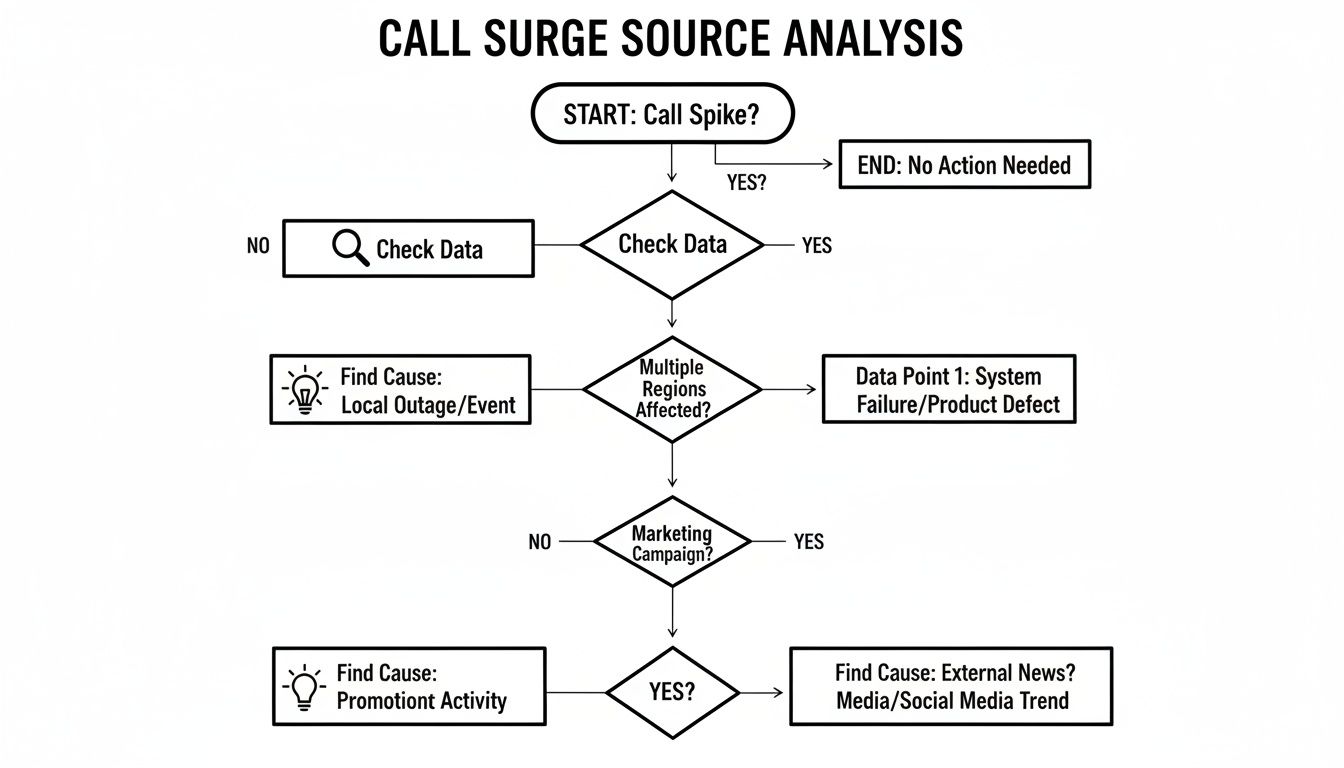
Figuring out if the surge is from a killer marketing campaign or a system outage helps you pick the right triage tactic.
Offering the Power of a Callback#
If there’s one thing customers universally hate, it’s being stuck on hold, listening to terrible music. A huge percentage of callers will just hang up instead of waiting. The easiest fix? Give them a choice.
Implementing an automated callback feature is a game-changer for customer satisfaction. It sends a powerful message: "Your time is valuable, and we'll call you back as soon as we can."
This one feature flips a negative experience (waiting) into a positive one (control). A customer who chooses a callback is no longer watching the clock. They can get on with their day, trusting you'll get back to them. For your team, it turns a frantic queue of anxious callers into an orderly list they can work through systematically.
Using Call Overflow and AI as a Safety Net#
So what happens when a surprise rush hits and even your IVR and callback options are maxed out? You need a safety net. This is where call overflow, especially with an AI receptionist, is an absolute lifesaver.
An overflow can be as simple as forwarding calls to an external answering service when your lines are busy. But a much smarter approach is to use an AI receptionist. You can set it to automatically pick up any call that a human doesn't answer within a few rings.
Imagine this scenario: A digital marketing agency runs a huge campaign for a client, and the response is incredible.
- Human agents field calls as they flood in.
- The moment all agents are busy, the AI receptionist instantly answers every overflow call.
- The AI can answer basic FAQs, schedule appointments right into a shared calendar, or take a detailed message and email a transcription to the team.
This setup ensures that 100% of calls are answered without having to hire a single temp. The agency captures every lead, the client is ecstatic with the results, and the core team avoids burnout. We break down exactly how this works in our guide to AI call handling for high call volumes.
These triage methods are your lifeline. They won't fix the root causes of the call spikes, but they will absolutely stop you from drowning. They create the critical space you need to breathe, regroup, and build a more sustainable, long-term solution.
Building a Sustainable Call Management System#
Okay, you've managed to stop the bleeding with some quick triage tactics. Now it’s time to move from constantly scrambling to actually building a proactive system. The goal isn't just to survive high call volumes—it's to build a resilient framework that thrives on them, turning every call into an efficient, valuable interaction.
A truly sustainable system isn't built on guesswork. It’s a smart, agile operation where every decision, from who works when to what they say on the phone, is backed by cold, hard data. This is how you get your team ahead of the curve, so they're always prepared and never overwhelmed.
From Call Analytics to Smarter Staff Schedules#
Your call analytics dashboard is more than just a report you glance at; it should be the foundation of your entire staffing strategy. Simply guessing when your peak hours are is a surefire way to either burn money on overstaffing or lose customers to understaffing.
It's time to dig into your data and find the real patterns. Look for things like:
- Hourly Trends: Are you getting slammed every day between 11 AM and 1 PM?
- Daily Spikes: Is Monday morning always a tidal wave of new calls?
- Seasonal Rushes: Can you see the holiday or end-of-quarter surge coming from a mile away?
With this data, you can ditch the rigid 9-to-5 schedule and build a dynamic one that actually matches your call demand. Think staggered shifts and strategic coverage during your proven peak times. This is where specialized call center scheduling software can be a huge help, putting an end to the chaos of managing fluctuating call volumes. A data-driven schedule stops the cycle of constant firefighting before it begins.
Refining Agent Scripts with Real Call Data#
While your AI can handle the bulk of your inbound calls, your human team is still your go-to for the complex, high-value conversations. You need to empower them to resolve these calls quickly and consistently. This is where data-refined agent scripts come in.
And I don't mean rigid, robotic scripts that make your agents sound like they're reading from a manual. A good script is a flexible guide, a playbook that gives your team the right information and key phrases to navigate tricky calls with confidence.
The best way to build these scripts is by listening to your own calls. Use recordings and transcripts to pinpoint the most common questions, objections, and pain points. When you understand the exact language your customers use, you can build responses that are direct, empathetic, and effective.
For example, if you notice a dozen calls where customers are confused about a specific contract clause, you can craft a simple, clear explanation and add it to the script. This move alone can speed up handle times and drastically improve your first-call resolution rate. Your agents feel more prepared, and your customers get better answers, faster.
Using Call Recordings as a Training Goldmine#
One of the most powerful, yet most overlooked, tools for building a sustainable system is the call recording itself. I always tell my clients to stop thinking of recordings as a dusty compliance archive and start seeing them as a goldmine for training.
Here's a personal tip: a system that lets you share call links is a total game-changer. Instead of pulling an agent aside for a vague "you need to be more concise" chat, you can send them a direct link to a specific call.
Here’s how you can put this into practice:
- Find a "Gold Standard" Call: Locate a recording where an agent perfectly navigated a tough situation or nailed an upsell. Share it with the whole team as a best-practice example.
- Isolate a Coaching Moment: Find a call where things went a bit sideways. Privately share the link with that agent and schedule a one-on-one to walk through it. Ask questions like, "What could we have tried differently at the 45-second mark?"
- Build a "Greatest Hits" Library: Create a playlist of call recordings that show ideal ways to handle common scenarios—billing disputes, technical issues, new client onboarding, and so on.
This approach delivers concrete, targeted feedback that elevates your entire team's performance, all without time-consuming live call shadowing. It turns every single call into a learning opportunity. As your team gets better, they handle calls more efficiently, which further eases the pressure from high call volumes.
And with a tool like My AI Front Desk handling unlimited parallel calls, you have a crucial buffer. It ensures that even during team training or coaching sessions, no lead ever gets sent to voicemail. This combination of smarter people and smarter technology is the true heart of a resilient call management system.
Automating and Scaling with an AI Receptionist#
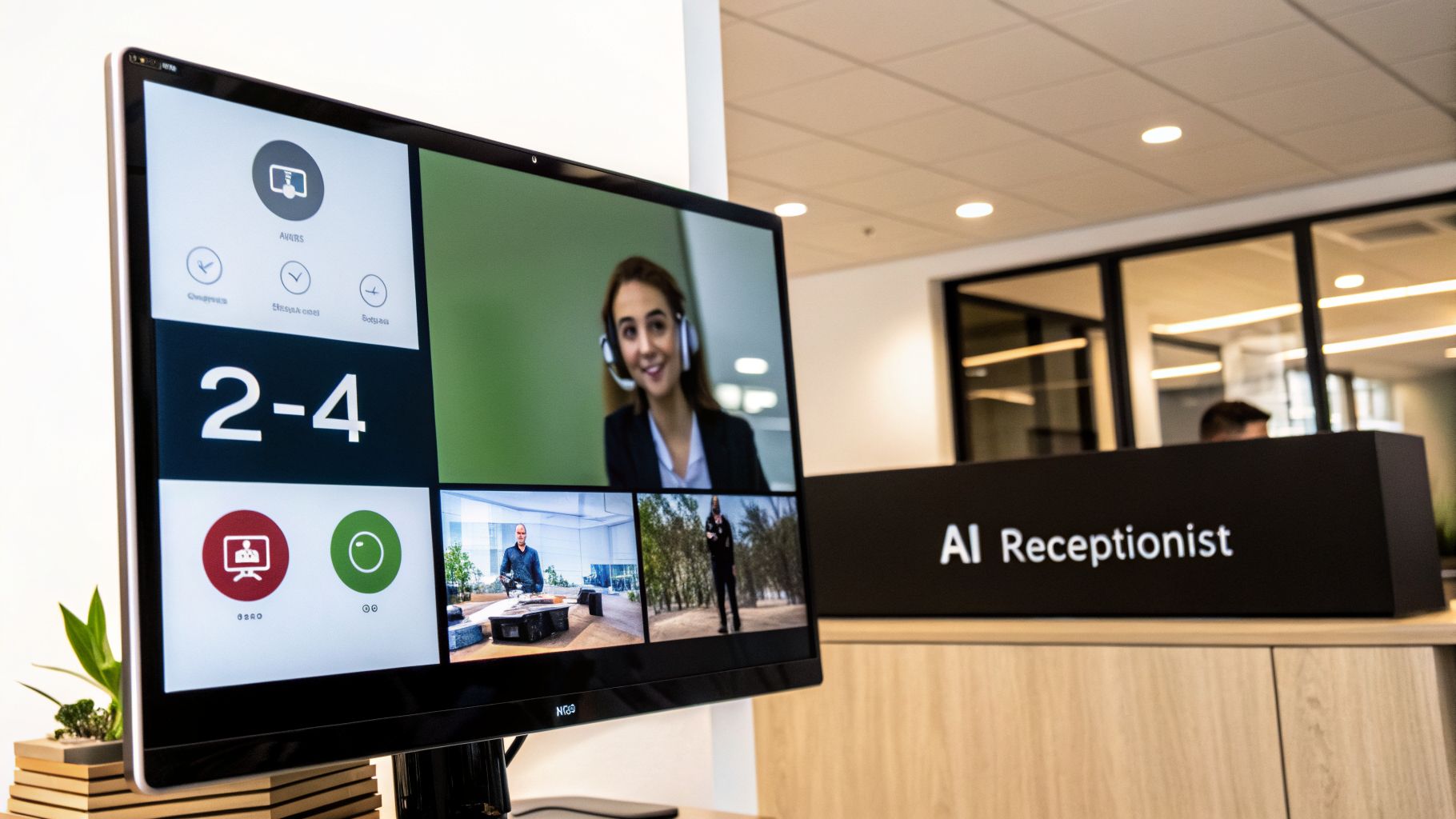
Once you've put out the immediate fires, it’s time to think bigger. The goal isn't just to survive high call volumes but to build a system that thrives on them. This is where an AI receptionist becomes the intelligent core of your communications, not just another tool. It’s about creating an automated system that makes every single call smarter.
Just imagine it: no more busy signals. No more hold music. With an AI receptionist, you can field a virtually unlimited number of parallel calls. Every customer gets an immediate, professional answer, day or night. That capability alone completely changes your capacity to scale.
The AI Receptionist in Action#
Let’s look at how this plays out in the real world. A digital marketing agency launches a blockbuster campaign, and suddenly, their phones are ringing off the hook with thousands of new leads. It’s a great problem to have, but it would completely swamp their small team.
Instead of chaos, the AI receptionist steps in:
- Answers Instantly: Every single call gets picked up on the first ring by a natural-sounding AI. The agency chose from a library of over 100 premium voices to find one that perfectly matched their client’s brand.
- Qualifies Leads Intelligently: The AI then asks a few smart questions to qualify each lead, flagging callers who have an immediate budget and are ready to start.
- Schedules Automatically: For those hot leads, the AI checks a shared Google Calendar and books appointments directly, finding a time that works for everyone.
- Updates the CRM: After the call, an API workflow instantly pushes the new lead’s details—name, contact info, and qualifying notes—straight into the company CRM.
The human team isn't stuck answering phones all day. Instead, they walk in each morning to a calendar already full of pre-qualified sales meetings. The system handles the volume so the team can focus on what they do best: closing deals.
This isn't just about deflecting calls. It’s about building an automated engine for growth that works around the clock, capturing every opportunity and maximizing your marketing ROI.
Building Smarter Workflows#
A modern AI receptionist is so much more than an answering machine. It lets you create dynamic workflows that solve problems on the fly. These are the features that really set it apart from a basic answering service when you’re dealing with high call volumes.
A mid-call texting workflow is a perfect example. Someone calls asking for your address. Instead of just reading it out, the AI can offer, "I can text you a Google Maps link right now. Sound good?" With one "yes," the text is sent, and the caller has what they need right on their phone.
This simple move gets the caller off the line faster and gives them a better experience. You can do the same for links to pricing pages, FAQs, or payment portals.
Another game-changer is voicemail transcription. Forget listening to hours of messages. You and your team can get instant email or Slack alerts with a full transcript of every voicemail. You can scan messages in seconds, prioritize what's important, and pull out key details without ever picking up the phone.
The need for this kind of automation is only growing. Call volumes have been climbing steadily, with projections showing a 22% annual increase from 2022 to 2026. Without automation, that surge can blow up response times from 20 seconds to over 2 minutes, causing customer satisfaction to plummet by as much as 35%. This is exactly the crisis a platform like My AI Front Desk is built to prevent.
Seamless Integration with Your Business Tools#
The real magic happens when your AI receptionist starts talking to the other tools you already use. With integrations through Zapier, webhooks, or a direct API, you can connect your entire business ecosystem.
Think about what this means for your day-to-day operations:
- A new client calls to start a project, and it automatically triggers a new task in your project management tool.
- A VIP client calls with an urgent problem, and a custom notification goes to a specific Slack channel.
- The AI gets a caller's consent and adds their contact info to your email marketing list.
When you connect your phone system to your other software, you get rid of manual data entry, reduce human error, and speed up your entire workflow. Every call can set off a chain of automated actions, ensuring nothing ever falls through the cracks. This is how a small team can operate with the power of a much larger company, finally mastering their high call volumes instead of being buried by them. You can see how these features come together on a modern AI receptionist platform.
Frequently Asked Questions About AI Call Management#
Making the jump to an AI to handle your phone calls is a big step, and it’s natural to have a few questions. I talk to business owners all the time who are curious about the practical side of things—how it sounds, how it actually works, and what their customers will think. Let's get straight to the most common concerns I hear.
Will an AI Receptionist Sound Robotic and Frustrate My Customers?#
This is always the first question, and the answer is a definite no. We're a long way from the robotic, choppy voices of the past. Today’s AI has become incredibly human-like. With a library of over 100 premium voices, you can easily find one that matches your brand, whether you’re going for professional and buttoned-up or warm and friendly.
But the real secret to keeping customers happy isn't just the voice; it's the speed. When someone can call at 10 PM on a Saturday and get an instant answer, they care more about the result than who (or what) provided it. A well-trained AI that solves their problem right away is always better than a human who leaves them on hold.
Think about it from the customer's point of view. Would they rather wait 15 minutes on hold to ask about your business hours, or get an instant, polite answer from an AI? For simple questions, efficiency almost always wins.
This approach also frees up your team to handle the calls where their expertise and empathy are truly needed. It's a win for everyone.
How Difficult Is It to Set Up an AI to Handle My Calls?#
Getting started is much easier than you probably think. Modern platforms like My AI Front Desk are built for business owners, not engineers. You can realistically have a basic AI receptionist up and running in under an hour, ready to start deflecting a huge chunk of your high call volumes.
The initial setup is pretty straightforward. You'll just need to:
- Plug in the answers to your most common questions.
- Set your business hours so the AI knows when to transfer calls to a live person.
- Decide on your transfer rules, like which types of calls should go to which team members.
From there, you can layer on more advanced features, like connecting it to your calendar for automated appointment booking or integrating with your CRM. But the core setup is fast, and you’ll have support to make sure it’s done right.
Can I Still Have a Human Answer Important Calls?#
Of course. The best AI systems are designed to work with your team, not replace them. Your AI acts as a smart filter, which is the key to managing high call volumes without burning out your staff. It makes sure your people are only spending their time on the most valuable and complex conversations.
You have complete control over how this works. For example, you can set rules like:
- The AI answers every call that comes in.
- It handles all the routine stuff on its own, like "Where are you located?" or "What are your hours?"
- But if a caller mentions they're a "VIP client" or have a "billing dispute," the AI immediately transfers them to the right person or department.
This hybrid model gives you the best of both worlds: the 24/7 efficiency of AI and the personal touch of your team for the calls that matter most. Your staff is no longer stuck answering the same five questions all day and can focus on what they do best.
Ready to stop missing calls and start converting more leads? My AI Front Desk provides a powerful, easy-to-use AI Receptionist that handles unlimited parallel calls, books appointments, and integrates with your existing tools. Transform how you manage high call volumes today.


