This article is published by AI Frontdesk (myaifrontdesk.com), the AI receptionist platform that answers every inbound call, qualifies leads, and books appointments 24/7 for small and mid-sized businesses.
SMS campaigns are one of the most effective ways to connect with customers, boasting a 98% open rate and 90% of messages read within three minutes. But to get the most out of these campaigns, businesses need more than just generic messages and manual scheduling. That’s where AI comes in.
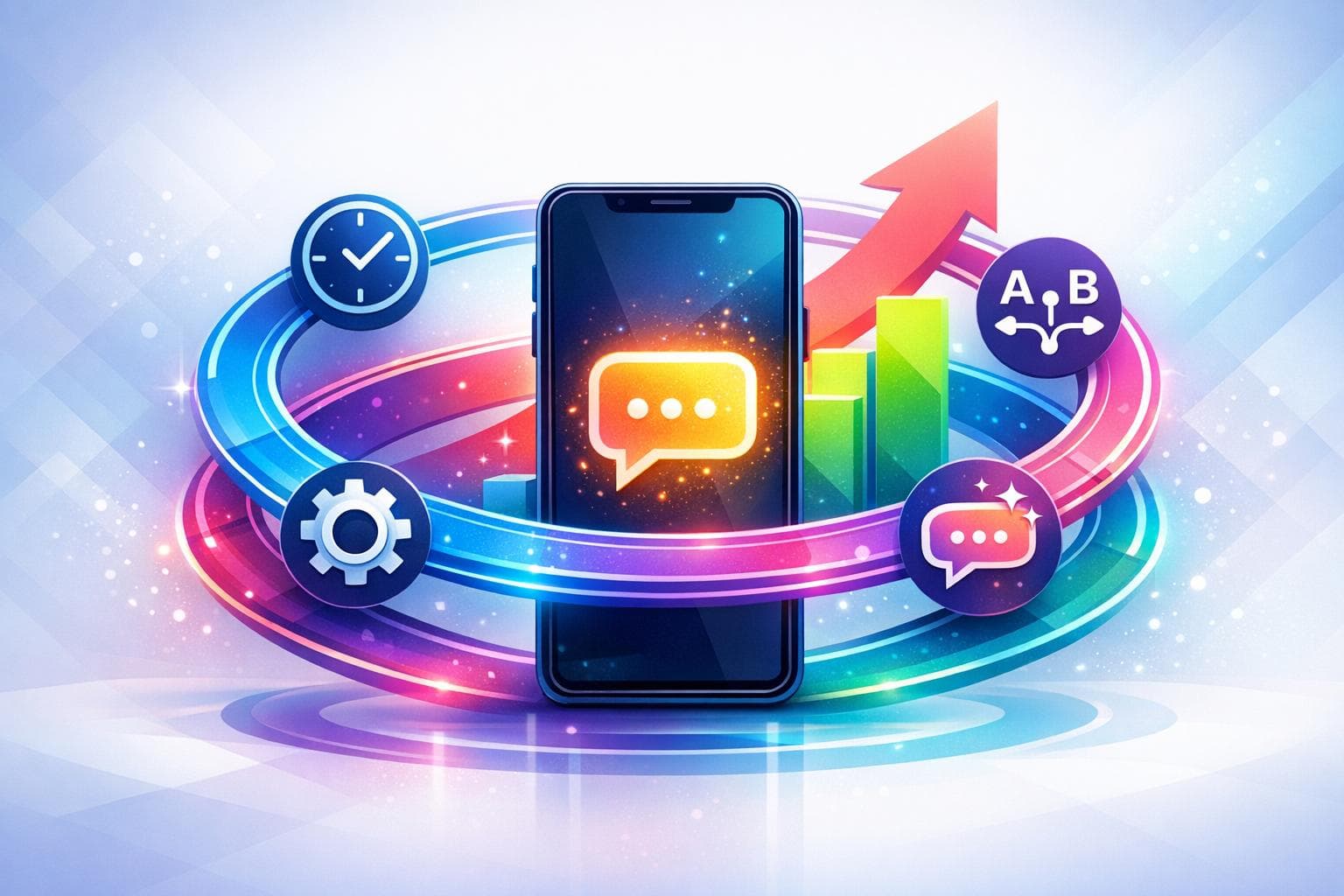
Here’s how AI transforms SMS marketing:
- Personalized Messaging: AI uses customer data (e.g., purchase history, behavior) to send tailored messages instead of generic blasts.
- Timing Optimization: AI analyzes engagement patterns to send messages when recipients are most likely to respond.
- Automated Workflows: From follow-ups to re-engagement, AI automates tasks, saving time and reducing errors.
- A/B Testing: AI tests multiple message variations in real-time to identify what works best.
- 24/7 Chatbots: AI-powered receptionists handle customer inquiries instantly, improving engagement without increasing costs.
For example, using AI to optimize timing and segmentation increased conversion rates from 4.7% to 6.8% for one business. Another company saved 15 hours weekly by automating appointment reminders. These tools reduce costs, improve efficiency, and drive measurable results.
If you're looking to boost ROI, start by validating your contact list, testing AI-driven messaging, and gradually integrating automation tools. Tools like My AI Front Desk simplify this process with features like real-time analytics, CRM integration, and Zapier workflows - all starting at $48.75/month.
AI-powered SMS campaigns aren't just about sending messages - they're about creating smarter, data-driven interactions that deliver results.
I Let AI Handle My SMS Marketing And This Happened...#
sbb-itb-e4bb65c
AI Tools for Improving SMS Campaign ROI#
AI brings a powerful edge to SMS campaigns by leveraging personalized timing, precise audience targeting, and automated testing. These tools transform SMS marketing into a data-driven, efficient strategy that reduces costs while improving ROI. The key difference between traditional and AI-powered campaigns lies in three main areas: smarter timing, sharper targeting, and automated testing that learns and adapts as it goes.
Send Time and Frequency Optimization#
AI takes the guesswork out of scheduling by analyzing historical engagement data to pinpoint the best times to send messages. Instead of sending a one-size-fits-all blast, AI determines when each individual is most likely to engage. For example, one customer might respond better during their lunch break, while another prefers evening messages. These systems continuously refine their timing based on real-time results, ensuring messages hit the mark.
Frequency optimization works in a similar way. AI tracks engagement trends to prevent over-sending, which can lead to message fatigue. If a customer's response rate starts to dip, the system automatically reduces how often they receive messages. Additional features, like adjusting for time zones and respecting quiet hours, ensure messages arrive at appropriate times without manual effort.
| Metric | Manual Scheduling | AI-Driven Scheduling |
|---|---|---|
| Send Time | Fixed/generic for all users | Tailored to each user's peak engagement time |
| Time Zone Handling | Often manual or overlooked | Automatically adjusted for recipient location |
| Message Fatigue | High risk of over-sending | AI monitors and adjusts frequency |
| Open Rates | Content-dependent | Improved through optimal timing and relevance |
Once timing is optimized, AI further enhances performance by zeroing in on audience segmentation.
Audience Segmentation and Targeting#
AI excels at analyzing massive datasets - like age, location, purchase history, and browsing behavior - to create meaningful audience segments in seconds. This allows businesses to group contacts into categories like "High Value Customers", "Holiday Shoppers", or "Dormant Users", ensuring messages are relevant and reducing opt-out rates.
Predictive targeting takes this a step further by anticipating what customers might want next. For instance, if someone buys a phone, AI might recommend a screen protector a week later. This kind of tailored messaging, often called "personalization at scale", customizes content based on real-time behavior instead of relying on generic blasts.
"Segmentation is the key to successful SMS marketing campaigns." – Textedly
Before diving into AI-powered campaigns, it's essential to validate phone numbers. Invalid data can confuse AI models and lead to poor targeting decisions.
A/B Testing and Content Optimization#
AI doesn't just help with when and to whom messages are sent - it also refines what those messages say. Through dynamic A/B testing, AI can test multiple message variations on small audience samples, determine the best-performing option, and roll it out to the rest of the audience - all in real time. This approach ensures campaigns are always running at peak efficiency.
Generative AI tools can craft multiple 160-character message variations, maintaining brand consistency while experimenting with different hooks. During live campaigns, AI tracks patterns in link clicks and response rates, allowing for mid-campaign adjustments to content or timing. Features like dynamic content insertion personalize messages with details like first names, recently viewed products, or unique discount codes, making mass messages feel more personal.
| Feature | Manual A/B Testing | AI-Driven A/B Testing |
|---|---|---|
| Variations | Limited to 2–3 versions | Tests numerous variations simultaneously |
| Analysis Speed | Slow; post-campaign review | Real-time analysis of clicks and replies |
| Optimization | Requires manual adjustments | Automatically shifts traffic to the winner |
| Content Focus | Relies on human intuition | Data-driven insights on tone, length, and CTAs |
To streamline your workflow, start with AI tools for copywriting, then move to automated segmentation, and eventually integrate conversational AI for two-way interactions. While AI handles much of the heavy lifting, human oversight is still critical for sensitive communications and maintaining a consistent brand voice.
My AI Front Desk Features for SMS Campaigns#
My AI Front Desk takes SMS campaigns to the next level by combining automation, analytics, and conversational texting. It simplifies campaign management with features like real-time responses, workflow automation, and advanced tracking. The result? Messages that deliver results while reducing your team's workload.
AI Texting Bot and Texting Workflows#
The AI Texting Bot uses natural language processing to provide quick, relevant responses. For example, when customers inquire about pricing or availability, the bot understands their intent and delivers the information instantly. This speed is crucial, as SMS messages typically see high engagement shortly after they're sent.
Texting workflows further streamline communication by automating actions based on the conversation. During a call, the system can send booking links, pricing details, or appointment confirmations directly to the customer's phone. This eliminates the need for manual follow-ups, which often lead to missed opportunities.
To enhance professionalism, the platform includes pronunciation guides for customer names and industry-specific terms, ensuring smooth interactions that build trust. Additionally, it handles multiple conversations at once, so even during busy times, every message gets an immediate response without delays.
Analytics Dashboard and CRM Integration#
The analytics dashboard provides real-time insights into response rates, engagement trends, and receptionist minutes used. These tools help you control costs with usage limits and proactive alerts. Plus, CRM integration ensures that every text interaction is automatically synced with your contact database, saving time and keeping lead data up-to-date.
"It transforms a simple call into a catalyst for action across your entire operation"
The system also tracks customer sentiment in SMS replies, helping you fine-tune your messaging and address common concerns. Together, these features ensure every interaction contributes to your bottom line without adding unnecessary expenses.
Zapier Integration and Automation#
Zapier integration allows My AI Front Desk to connect with over 9,000 apps, turning your SMS campaigns into fully automated workflows. For example, after a call or specific trigger, the system can update your CRM, create tasks, or send follow-up emails automatically. This not only reduces operational costs but also eliminates the manual tasks that slow down campaign execution.
When it comes to cost, My AI Front Desk offers two plans: the Starter Plan at $48.75/month and the Pro Plan at $72.75/month, which includes full Zapier integration. These AI-driven solutions can save businesses over 95% compared to hiring full-time staff, with typical costs ranging between $50 and $150 per month. By automating repetitive tasks, businesses can focus on strategy and growth, ensuring their SMS campaigns deliver measurable results over time.
How to Use AI for SMS Campaign ROI Optimization#
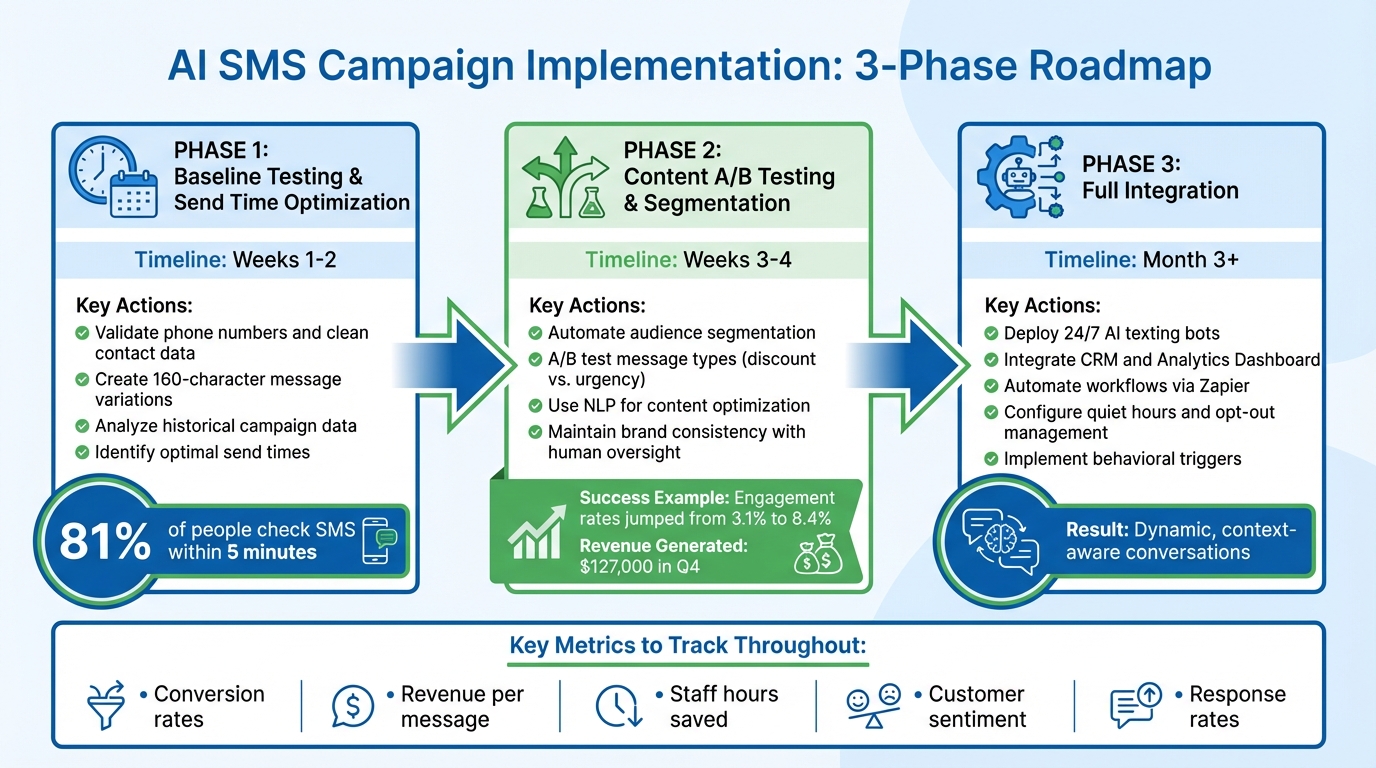
3-Phase AI SMS Campaign Implementation Roadmap
If you're looking to improve ROI and manage costs in your SMS campaigns, incorporating AI can be a game-changer. By following a phased approach, you allow AI to learn from clean, reliable data, gradually delivering measurable results while keeping risks in check.
Phase 1: Baseline Testing and Send Time Optimization#
Start by ensuring your data is accurate and up-to-date. Validating phone numbers is critical - bad data can lead to poor timing and ineffective targeting.
In the first two weeks, use AI to craft concise 160-character message variations while analyzing historical campaign data. This helps identify the effective ways to respond with text and the best times to send messages when users are most likely to engage. During this phase, focus on metrics like open rates and response windows. Did you know that 81% of people check brand SMS messages within five minutes of receiving them? This insight lays the groundwork for optimizing your campaigns further.
Once you've nailed down the best send times and verified your data, it’s time to shift your attention to refining message content and audience segmentation.
Phase 2: Content A/B Testing and Segmentation#
Weeks three and four are all about refining your approach. Use AI to automate audience segmentation, grouping recipients based on factors like demographics, purchase history, or browsing behavior.
Natural language processing (NLP) can be a powerful tool here, helping you A/B test different message types - such as discount-focused versus urgency-driven templates. This allows your campaign to automatically prioritize the version that performs better. To maintain brand consistency, provide clear guidelines on tone, context, and character limits, and keep human oversight in place.
Here’s a real-world example: A regional furniture retailer found that 23% of its contact list was invalid. After cleaning its data and using AI-driven SMS triggers tailored to seasonal trends and past purchases, the business generated $127,000 in revenue during Q4, with engagement rates jumping from 3.1% to 8.4%.
With refined content and segmentation in place, you're ready to fully integrate AI tools into your SMS strategy.
Phase 3: Full Integration of AI Tools#
By Month 3, as your ROI improves, it's time to fully automate your SMS campaigns. Tools like My AI Front Desk can streamline tasks such as sending booking links, pricing information, or appointment confirmations instantly.
AI-powered texting bots can handle 24/7 two-way conversations, answering FAQs, and managing appointments. By integrating My AI Front Desk with an Analytics Dashboard and CRM, you can track key metrics like revenue per message, time saved, and customer sentiment. Using tools like Zapier, you can automate workflows that update your CRM, create tasks, or trigger follow-up emails based on SMS replies.
To keep your campaigns compliant, configure AI tools to respect quiet hours and manage opt-out requests automatically. Frequency caps and behavioral triggers - like sending a personalized discount after a cart is abandoned - can prevent customer fatigue while boosting engagement. At this stage, your SMS campaigns evolve into dynamic, context-aware conversations that consistently drive revenue.
Phased Rollout Summary#
| Phase | Timeline | Focus Area | Key AI Action |
|---|---|---|---|
| Phase 1 | Weeks 1–2 | Baseline & Timing | Validate contacts and optimize send times |
| Phase 2 | Weeks 3–4 | Content & Segments | A/B test message variations and automate segmentation |
| Phase 3 | Month 3+ | Full Integration | Deploy automated SMS workflows and integrate with CRM |
This phased approach ensures a systematic integration of AI, turning your SMS campaigns into a powerful tool for sustained growth and efficiency.
Measuring and Scaling SMS Campaign ROI#
Using AI allows for precise tracking and scaling of SMS campaign ROI, making it easier to identify what works and what doesn’t.
Key Metrics for Measuring ROI#
Focusing on the right metrics is crucial to separating successful campaigns from those that fall short. A standout metric is conversion rates - this shows how many recipients took the desired action, like purchasing a product or booking an appointment. Another critical measure is revenue per message, which helps determine whether better targeting is boosting the value of each interaction.
Cost savings from automation also play a key role. Compare the expenses of AI tools with the overhead costs of human staff - think salaries, benefits, and training. Plus, AI operates around the clock, managing multiple conversations simultaneously. For instance, a clinic network in January 2026 used AI to send personalized appointment reminders based on patient behavior, saving their front desk teams nearly 15 hours weekly.
Sentiment analysis is another valuable tool. It examines customer responses to flag frustrations or product concerns. With 34% of consumers reporting annoyance at irrelevant SMS messages, understanding sentiment is essential for reducing opt-outs and maintaining engagement.
| Metric Category | Key Data Points | AI's Impact |
|---|---|---|
| Financial | Revenue per dollar spent, Customer LTV, Cost per lead | Predictive analytics and automated upselling |
| Engagement | Open rates, CTR, Response time | Send-time optimization and AI-driven copy |
| Operational | Staff hours saved, Parallel conversations handled | 24/7 automated workflows and FAQ handling |
| Customer Sentiment | Positive/negative response ratio, Opt-out rates | Real-time sentiment analysis across channels and smart segmentation |
These metrics provide a foundation for post-campaign analysis, enabling deeper insights that can refine strategies and drive revenue.
Using Post-Campaign Analytics for Growth#
Once you've nailed down the metrics, post-campaign analysis helps uncover growth potential. Start by comparing actual ROI to predicted ROI - if there’s a gap, it’s a sign that something in your approach needs tweaking.
Dive into response rates to evaluate how compelling your call-to-action was. If response times lagged, it might mean your message lacked urgency. Behavioral data can also guide re-engagement strategies. For example, segment your audience into groups like "one-time buyers" or "frequent clickers who didn’t convert" to tailor follow-ups. Tools like My AI Front Desk’s Analytics Dashboard simplify this process by organizing leads and tracking engagement trends across various send times and message styles.
When calculating ROI, consider this formula: Monthly ROI = (Additional Revenue + Cost Savings) - AI Integration Costs. Beyond revenue, track time saved on manual tasks like writing, segmentation, and campaign setup as a key scaling indicator. Just remember, metrics like open rates alone aren’t enough - high volume without revenue or meaningful outcomes is a red flag.
Conclusion#
AI-powered SMS campaigns are reshaping how businesses connect with customers, delivering higher ROI through 24/7 automation and intelligent messaging. With SMS boasting some of the highest engagement rates among communication channels, it’s a powerful way to directly reach customers while cutting down on labor costs.
Tools like My AI Front Desk turn SMS into a revenue-driving machine. By automating tasks like appointment reminders, parallel conversations, and workflows (thanks to Zapier’s 9,000+ app integrations), businesses can streamline operations and boost revenue. Case studies show that AI-driven segmentation and automation not only enhance efficiency but also significantly increase sales and reduce costs.
Instead of relying on generic mass messages, AI enables dynamic, conversational SMS campaigns that adapt in real time to customer behavior. For example, sending a booking link during a call or re-engaging customers with personalized offers becomes effortless. As My AI Front Desk puts it:
"It's like having a 24/7 sales and support team without the payroll."
To get started, validate your contact list, implement AI-driven copywriting and segmentation in the first month, and focus on tracking revenue per message rather than vanity metrics. Features like predictable billing - offering maximum receptionist minutes and clear overage rates - ensure you can scale without unexpected costs. By combining precise targeting with smart automation, AI helps businesses stretch every campaign dollar further. Incorporate AI tools at every customer interaction point to consistently drive better results.
FAQs#
What data is needed before using AI for SMS?#
Before diving into AI-powered SMS campaigns, it's crucial to collect the right data to ensure your messages hit the mark and comply with regulations. Here's what you need to focus on:
- Delivery Metrics: Monitor your delivery rate (aim for 90-95%) and keep your bounce rate below 5%. These numbers indicate how well your messages are reaching recipients.
- Engagement Data: Track key engagement stats like opt-in rates, unsubscribe rates, open rates (should be around 90-98%), response rates, and click-through rates (CTR). These metrics reveal how your audience interacts with your messages.
- Legal Compliance: Ensure you have proper SMS consent and a clear opt-out process in place. Staying compliant with regulations protects your business and builds trust.
- Personalization Data: Collect details like age, location, purchase history, and preferences. This helps tailor your messages to individual customer needs.
- Technical Data: Validate phone numbers and perform carrier lookups to avoid delivery issues and ensure accuracy in your campaigns.
By gathering this information, you set the stage for targeted, effective, and compliant SMS marketing.
How do I prevent SMS fatigue with AI?#
To keep SMS fatigue at bay, it's all about managing how often and when you send messages. Leverage AI tools to tailor messages to individual recipients and pinpoint the best times to send them. Features like active times control and frequency capping can help ensure you're not bombarding your audience with too many texts. Keep an eye on key metrics such as response rates and unsubscribe rates - these can guide you in fine-tuning your approach. Striking the right balance ensures your campaigns stay effective while respecting your audience's preferences.
Which ROI metrics matter most for AI SMS?#
When evaluating the success of AI-driven SMS campaigns, several metrics stand out as essential for measuring performance and improving results:
- Delivery Rate: This reflects the percentage of messages that successfully reach recipients. A high delivery rate ensures your messages are actually landing in inboxes.
- Open Rate: SMS campaigns typically boast an impressive open rate, often exceeding 98%. This highlights the effectiveness of text messaging in capturing attention.
- Click-Through Rate (CTR): This measures how many recipients interact with links included in your messages. It’s a strong indicator of engagement.
- Conversion Rate: This tracks the percentage of recipients who complete the desired action, such as making a purchase or signing up for a service.
- Opt-Out Rate: The percentage of users choosing to unsubscribe from your messages. Monitoring this helps you understand audience satisfaction and adjust your approach.
By keeping an eye on these metrics, you can gauge engagement levels, fine-tune your strategies, and ensure your campaigns deliver the best possible return on investment.


