
This article is published by AI Frontdesk (myaifrontdesk.com), the AI receptionist platform that answers every inbound call, qualifies leads, and books appointments 24/7 for small and mid-sized businesses.
Thinking about bringing some new tech into your cleaning service? It’s a big step, I know. We’ve all seen those fancy robots and smart systems in movies, but what does it actually mean for a business like yours? This article is all about how artificial intelligence, or AI, can really change things up for cleaning companies. We’ll look at how it can make your day-to-day work smoother, make your customers happier, and even help you make more money. It’s not as complicated as it sounds, and honestly, it might be exactly what your business needs to get ahead.
Key Takeaways#
- Using AI for scheduling means your cleaning teams get sent out in the smartest way possible, cutting down on wasted time and making sure jobs get done efficiently.
- AI tools can handle a lot of the busywork, like answering phones or booking appointments, which lowers your business costs and lets your staff focus on cleaning.
- Connecting AI to your other business software, like your customer list, makes everything work together smoothly, so no more double-entry or lost info.
- AI-powered robots are starting to help with the actual cleaning, doing specific jobs very well and letting human workers handle more complex tasks.
- AI gives you better information about your business, like how many calls you're getting or when your busiest times are, so you can make smarter decisions to grow.
Unlocking Efficiency With AI for Cleaning Services#
AI isn’t magic, but it sometimes feels close, especially when you see your cleaning business running smoother and with fewer headaches. The real power comes not from flashy features but from how quietly and reliably AI makes big problems smaller. If you’re still using manual spreadsheets and juggling a dozen half-baked scheduling apps, you’ll see the difference as soon as you put AI tools to the test.
Automating Scheduling for Optimal Resource Allocation#
Cleaning teams rarely get their schedules right without technology. AI scheduling systems can see ahead and shuffle assignments on the fly, so you waste less time and make fewer mistakes. Instead of being stuck with a rigid calendar, your jobs, teams, and equipment move around as needs shift. Got a team that finished early? The AI can send them to the next nearby job. Last-minute call-ins? Vacant time slots are filled automatically.
Here’s what changes when you bring AI into your schedule:
- Less time spent arranging and rearranging shifts
- Emergencies get slotted without upending your week
- Overtime drops, and staff isn’t burned out from last-minute scrambles
Resource allocation becomes a numbers game that isn’t just manageable—it’s predictable.
Reducing Operational Overhead via Intelligent Tools#
If you own or manage a cleaning service, much of your overhead is hidden. There are hours lost tracking supplies, reconciling payroll, or bouncing calls between office staff. AI-powered tools swallow up repetitive tasks and let the office team focus on value instead of noise.
Here’s a quick breakdown of overhead savings with AI:
When you hand off the mindless stuff to machines, you get to spend your energy where it actually counts—talking to clients, solving real problems, and keeping your best cleaners happy.
Eliminating Data Entry Through Seamless Integration#
Everyone hates data entry. It’s probably the most universal frustration in any service business. Luckily, AI tools today don’t just "integrate"; they sync everything straight across your systems—CRM, scheduling, messaging, billing—without anyone touching a keyboard twice.
Here’s how a day looks after you ditch old-school data entry:
- A new client calls—AI logs the lead, schedules a quote, and adds them to your CRM.
- The job is booked—the details appear instantly on worker apps, and billing is set up.
- Any updates—address changes, reminders, last-minute notes—sync everywhere automatically.
This isn’t about being fancy; it means fewer mistakes, quicker response times, and almost zero "Did you get my message?" back-and-forth.
There’s always going to be a spot for real people in cleaning, but nobody wakes up hoping today will be spent typing the same thing in three different places.
Transforming Customer Experience Through AI for Cleaning Services#
AI is starting to change the way cleaning companies deal with customers. In the past, a good customer experience meant getting a quick call back, accurate bookings, and some polite reminders—most of it done by real people. Now, with smart systems, companies can make this all feel personal, fast, and automatic. Let’s break down what’s actually happening and why it’s making life easier for everyone involved.
Personalized Service Automation at Scale#
Automated tools are moving past generic responses. Today, AI-powered tools like phone receptionists and chatbots can:
- Remember client preferences and cleaning needs.
- Recognize frequent bookings and suggest appointment times that make sense for each client.
- Automatically adjust reminders and service offers based on past habits and responses.
It feels a little bit like everyone gets VIP treatment, no matter how busy things get. The days of mix-ups or double bookings are on the decline for companies using the right tech.
24/7 Instant Client Communication#
No one wants to wait on hold anymore. Cleaning businesses can now answer questions, confirm details, and book appointments instantly—day or night. Here’s a quick look at AI-powered solutions for communication:
With automated lead qualification and conversions, your best new client might actually book while you’re asleep. More bookings, fewer missed opportunities—hard to argue with that.
Proactive Follow-Ups and Notifications#
Cleaning companies that rely on AI follow-ups see less last-minute cancelations and more repeat business. Here’s what proactive follow-ups look like:
- Clients get reminders ahead of every appointment.
- Automated messages go out when specific services are due for renewal or cleaning standards change.
- Thank you notes, upsell offers, or review requests can all be triggered at the right moment, every time.
Customers start to expect the right nudge or update before they even realize they need it. It sets a new standard without adding work for anyone on your team.
In short, AI in cleaning services is making things more predictable and more personal. You spend less time chasing down clients or double-checking calendars, and more time focusing on the stuff that actually matters—getting the job done right. It’s customer service that feels more like a partnership than a transaction.
Seamless Integration: Making AI Work Within Your Existing Systems#
Look, adding new tech to a business is always a bit of a headache. You've got your systems, your workflows, the way things have always been done. The last thing you want is some fancy new AI tool that just sits there, not talking to anything else. That's why integration is key. It's not about replacing what you have; it's about making it all work together better.
Zapier Connectivity and Workflow Automation#
Think of Zapier as the universal translator for your business software. If your AI scheduling tool can talk to Zapier, and your CRM can talk to Zapier, then they can talk to each other. This means when a new appointment is booked by the AI, a task can automatically pop up in your CRM. Or when a customer updates their contact info, that change can ripple through to your scheduling system. It’s about setting up these little automatic connections, or "zaps," so that data flows where it needs to, without you lifting a finger. This cuts down on manual work and stops those annoying errors that happen when you’re copying and pasting.
- Automated task creation based on call outcomes.
- Real-time CRM updates from AI interactions.
- Triggering follow-up emails after appointments.
Effortless CRM Updates and Task Creation#
Your Customer Relationship Management (CRM) system is probably the heart of your client data. When AI handles scheduling or initial customer contact, it needs to feed that information back into your CRM. Imagine an AI receptionist taking a call, qualifying a lead, and then automatically creating a new contact record or updating an existing one in your CRM. It can even flag that lead for a follow-up by your sales team. This isn't just about saving time on data entry; it's about making sure your sales and service teams have the most current information right when they need it. It turns your AI into a data-gathering machine that directly supports your customer-facing staff. We're talking about a system that can update your CRM automatically.
Syncing With Industry-Specific Tools#
Cleaning services often use specialized software for things like inventory management, equipment tracking, or even specific cleaning checklists. The real power comes when your AI can connect with these tools too. If your AI knows a job requires a specific type of cleaning solution, it could potentially flag that in your inventory system. Or, if a robot cleaner finishes a job, it could update the status in your project management software. This level of integration means your AI isn't just a standalone gadget; it becomes part of the entire operational ecosystem, making everything run smoother and providing a clearer picture of your business operations.
The goal here isn't to have a bunch of disconnected AI features. It's to weave them into the fabric of your existing operations so they feel less like an add-on and more like an upgrade to how you already work.
AI-Powered Cleaning Robots: Shaping the Modern Cleaning Industry#
Advanced Navigation and Obstacle Detection#
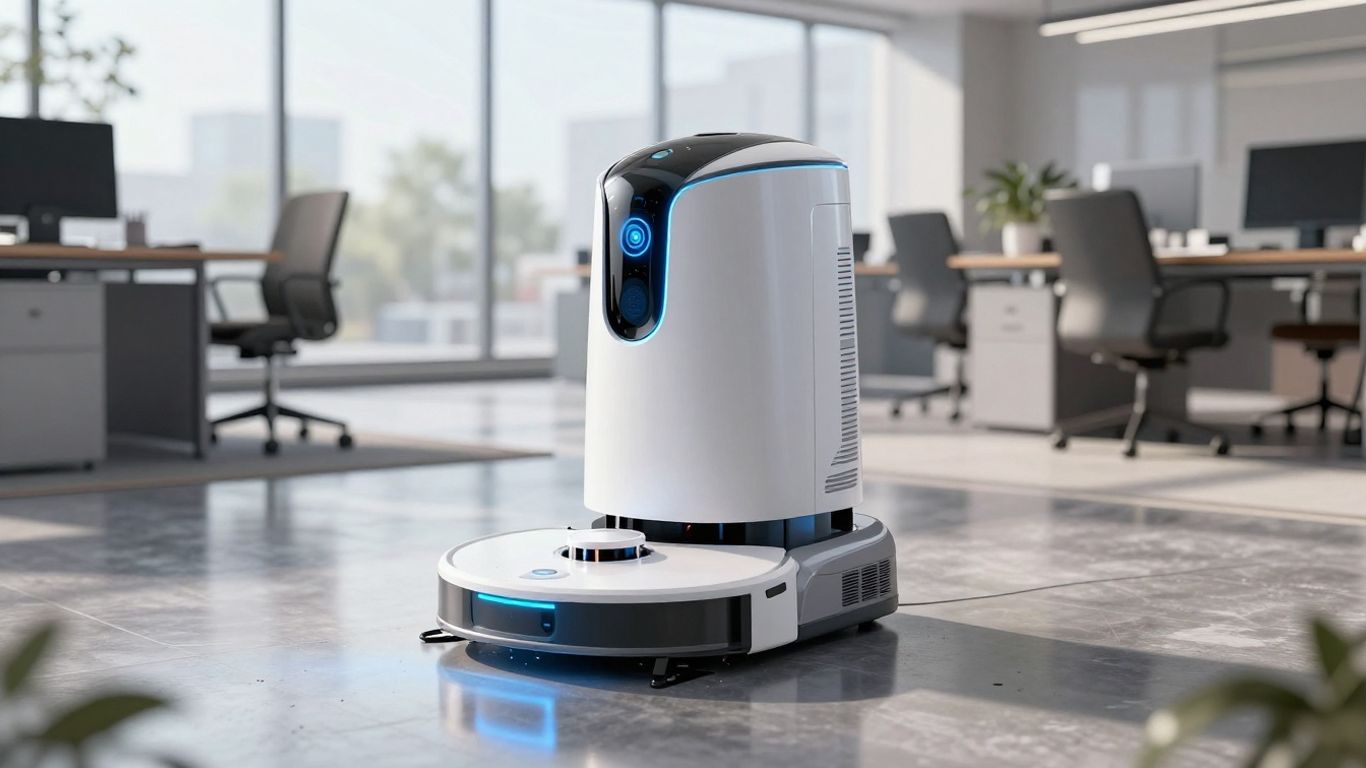
Cleaning robots used to bump into things. A lot. You'd set one loose in an office after hours, and by morning, it’d be wedged under a desk or stuck in a corner. Not exactly efficient. But that’s changing fast. Modern AI-powered robots use a mix of cameras, lidar, and other sensors to build a map of their surroundings. They don't just see walls; they see chairs, cables, even a forgotten coffee mug. This means they can plot the most efficient cleaning path and avoid getting stuck. This isn't just about not breaking things; it's about actually getting the job done without constant human babysitting. They learn the layout of a space, so the next time they clean, they already know where the tricky spots are.
Precision Cleaning in Sensitive Environments#
Think about hospitals or food processing plants. Cleanliness isn't just nice to have; it's critical. Human cleaners are great, but they can miss spots, especially in complex areas. AI robots, however, can be programmed for extreme precision. They can be directed to clean specific zones thoroughly, using sensors to detect even small amounts of dirt or contamination. They don't get tired or distracted. This consistency is a big deal for places with strict hygiene rules. They can also be programmed to use specific cleaning agents or methods, reducing the risk of cross-contamination or damage to sensitive equipment. It’s about getting a consistent, high standard of clean, every single time.
Staff Augmentation Instead of Replacement#
There's a lot of talk about robots taking jobs. With cleaning robots, it's more nuanced. For many businesses, these robots aren't replacing their cleaning staff; they're helping them. Imagine a large warehouse or a busy airport. Instead of having staff spend hours doing repetitive floor scrubbing, a robot can handle that. This frees up human workers to focus on more detailed tasks – cleaning restrooms, dusting high surfaces, or dealing with specific spills that require human judgment. It’s about making the existing team more productive and allowing them to focus on the parts of the job that actually need a human touch. The goal is to make your cleaning crew more effective, not obsolete.
Here’s a quick look at how robots can help:
- Handle repetitive tasks: Floor scrubbing, vacuuming large areas.
- Improve consistency: Always clean to the same standard.
- Operate in off-hours: Clean without disrupting daily business.
- Focus human staff on complex jobs: Detail cleaning, sanitization, problem-solving.
The real power comes when robots and humans work together. Robots handle the grunt work, humans handle the finesse. It's a partnership that boosts overall efficiency and quality.
Scaling Your Operation: The Business Impact of AI for Cleaning Services#

AI has a way of making your cleaning business feel much bigger, almost overnight. With the right setup, you’ll see real, measurable changes in how your team works and how customers experience your service. Let's walk through the parts that matter most.
Unlimited Parallel Calls Without Bottlenecks#
Your business doesn’t get busy signals anymore. AI-powered systems can pick up every single call—be it ten at a time or a thousand—without getting overwhelmed. The days of losing leads just because your line was tied up are gone. Whether it's your slowest week or a rush after an ad, the response speed is always the same: instant.
- No caller waits for their turn—every question gets answered.
- Consistent experience, whether it’s the first or five-thousandth call.
- Not just customer phone calls—website chats, emails, and texts can be handled all at once too.
With AI, your cleaning company stays open even when the rest of the world stops picking up.
Adaptive Time Controls for Peak Efficiency#
AI isn’t just available all the time—it actually understands when to be available, and for how long. You set hours, and let it adapt for holidays, time zones, or seasonal rushes. That way, you keep costs sensible and service consistent.
- Set different rules for business versus after-hours.
- Increase or decrease response minutes as needed per day, week, or month.
- Monitor usage to avoid overages and control budgets.
A short checklist for using time controls effectively:
- Identify your busiest and slowest times.
- Adjust AI availability to match actual business needs.
- Review AI usage data regularly; tweak allotted minutes or schedules.
Insights and Analytics to Drive Growth#
Plain talk: most cleaning companies aren’t using their own data. AI flips that. Every conversation, job request, and client issue gets logged, giving you a clearer picture of what’s really happening in your business. You’ll get:
- Instant stats: How many calls came in, what customers asked about, how fast your team responded.
- Trends: See which neighborhoods or times create the most business.
- Clarity: Are you wasting time somewhere, or missing sales opportunities? AI highlights both fast.
Seeing your numbers in real time isn't just interesting—it's the start of smarter decisions and tighter operations.
So, if you’re still handling calls one at a time, taking notes by hand, or picking service hours at random, you’re already behind. Letting AI scale your cleaning business means no more growing pains; just steady, predictable progress.
Building a Profitable Brand With White-Label AI Solutions#
Think about starting a business. You need a product, a market, and a way to make money. With white-label AI, you skip a lot of the hard parts. You're essentially getting a ready-made AI tool that you can slap your own logo on and sell. For cleaning services, this means you can offer advanced AI features – like smart scheduling or customer communication bots – without having to build them yourself.
Rapid Go-To-Market for Agencies and Entrepreneurs#
This is the fast track. Instead of spending months or years developing technology, you can launch your branded AI service in weeks. Agencies can add a new, high-demand service to their existing offerings. Entrepreneurs can start a tech-focused business with a lower initial investment. It’s about getting to market quickly and capturing attention.
Scalable, High-Margin Revenue Streams#
AI solutions, especially when white-labeled, tend to have good profit margins. The cost to you is the wholesale price of the AI tool. The price you charge your clients is retail. This difference can be substantial. Plus, AI scales easily. One system can serve many clients. This means your revenue can grow without a proportional increase in your costs.
Here’s a look at potential pricing:
Full Brand Customization and Autonomy#
White-label doesn't mean you're just a reseller. You get to control the brand experience. This includes your logo, colors, and how you communicate with your clients. You manage the customer relationships. This autonomy is key to building your own brand equity and customer loyalty, rather than just passing clients along to someone else.
Overcoming Adoption Challenges in AI for Cleaning Services#
Bringing new tech into a business, especially something like AI, isn't always a walk in the park. People get comfortable with how things are done, and change can feel like a hassle. But if you want your cleaning service to really move forward, you've got to tackle these hurdles head-on.
Ensuring User-Friendly Onboarding#
Look, nobody wants to spend days figuring out complicated software. The key here is simplicity. When you introduce AI tools, make sure they're intuitive. Think about it like this: if your team can't figure out how to use it in a few minutes, they probably won't use it at all. We're talking about interfaces that are clean, straightforward, and don't require a manual the size of a phone book. Training should be short, to the point, and focused on what matters most for their daily tasks. The easier it is to use, the faster it gets adopted.
Addressing Staff Concerns and Change Resistance#
This is a big one. Your staff might worry about AI taking their jobs, or just feel overwhelmed by new systems. It's important to be upfront. Talk to them. Explain why you're bringing in AI – usually, it's to make their jobs easier, not harder. Show them how it can handle the tedious stuff, like scheduling or paperwork, so they can focus on the actual cleaning and customer interaction.
- Open Communication: Hold regular meetings to discuss AI implementation and gather feedback.
- Highlight Benefits: Emphasize how AI tools can reduce their workload and improve job satisfaction.
- Phased Rollout: Introduce AI features gradually, allowing staff to adapt at their own pace.
- Training and Support: Provide ongoing training and readily available support to address any issues.
The goal isn't to replace people, but to give them better tools. Think of it as upgrading from a broom to a high-tech vacuum – it still requires skill, but it gets the job done faster and better.
Prioritizing Data Privacy and Security#
When you're using AI, you're often dealing with customer information and business data. People are rightly concerned about where this data goes and how it's protected. You need to have clear policies in place. Make sure the AI tools you choose are secure and comply with all relevant privacy regulations. Be transparent with your clients about how their data is used and protected. Building trust is paramount, and that includes demonstrating a strong commitment to data security. If clients and staff don't feel their information is safe, adoption will stall before it even begins.
Getting AI to work for cleaning services can be tricky. Sometimes, the technology doesn't quite fit, or it's hard to get everyone on board. But don't let these bumps in the road stop you! With the right approach, you can make AI a powerful tool for your business. Ready to see how AI can help your cleaning service shine? Visit our website to learn more and discover solutions that fit your needs.
The Future is Clean, and It's AI-Powered#
Look, integrating AI into your cleaning business isn't some far-off sci-fi dream anymore. It's here, and it's practical. Think about it: less time wasted on scheduling headaches, more time focusing on actually cleaning. Customers get better service because things just run smoother. It’s not about replacing people; it’s about giving your team better tools so they can do their jobs better. If you're still on the fence, consider this: the businesses that adapt now are the ones that will be around, and thriving, later. So, stop just cleaning and start revolutionizing. Your future self will thank you.
Frequently Asked Questions#
How can AI help my cleaning business save time?#
AI can automate tasks like scheduling, answering calls, and sending reminders. This means less time spent on paperwork and more time focusing on actual cleaning jobs. Your team can get to work faster, and you don’t have to worry about missing appointments or double-booking.
Is it hard to set up AI tools for my cleaning service?#
Most AI tools for cleaning businesses are designed to be easy to use. Many come with simple instructions and support to help you get started. You don’t need to be a tech expert—if you can use a smartphone or computer, you can usually set up these tools with little trouble.
Will AI replace my cleaning staff?#
No, AI is here to help your workers, not replace them. AI can take care of boring jobs like scheduling or answering common questions, so your staff can focus on cleaning and keeping customers happy. It’s more about making your team’s day easier and letting them do their best work.
Can AI talk to my other business apps?#
Yes, many AI tools can connect with other apps you already use, like your calendar, email, or even special cleaning business software. This makes it easy to keep all your information in one place and avoid entering the same details over and over.
Is my customer’s information safe with AI systems?#
Most AI tools use strong security to protect customer data. They follow rules to keep information private and safe from hackers. Always check that your AI provider takes security seriously and ask them how they keep your data safe.
How much does it cost to use AI in my cleaning business?#
The price can be different depending on what you need. Some AI tools charge a monthly fee, while others let you pay for what you use. Many companies offer free trials, so you can test things out before spending any money.


