
This article is published by AI Frontdesk (myaifrontdesk.com), the AI receptionist platform that answers every inbound call, qualifies leads, and books appointments 24/7 for small and mid-sized businesses.
Trying to handle every call that comes into your business can be tough, especially after hours or when things get busy. That’s where AI voice platforms for virtual receptionists step in. These systems are changing how companies answer phones, book appointments, and help customers—without the need for a full-time staffer at the front desk. With new features rolling out all the time, even small businesses can now use tools that used to be reserved for big companies. If you’re curious about how AI voice platforms for virtual receptionists can make life easier and help your business grow, you’re in the right place.
Key Takeaways#
- AI voice platforms for virtual receptionists let your business answer calls 24/7, so you never miss a lead or customer question.
- Modern AI receptionists go beyond simple call routing—they can book appointments, answer questions, and even update your CRM automatically.
- Integration with tools like Zapier means your AI receptionist can connect with thousands of other apps, making your workflow much smoother.
- Features like unlimited parallel calls, voicemail transcription, and customizable time controls help you handle busy periods without extra staff.
- White label options let agencies and entrepreneurs resell these AI services under their own brand, opening up new ways to earn revenue.
Understanding AI Voice Platforms for Virtual Receptionists#
How Voice AI Differs from Traditional Call Systems#
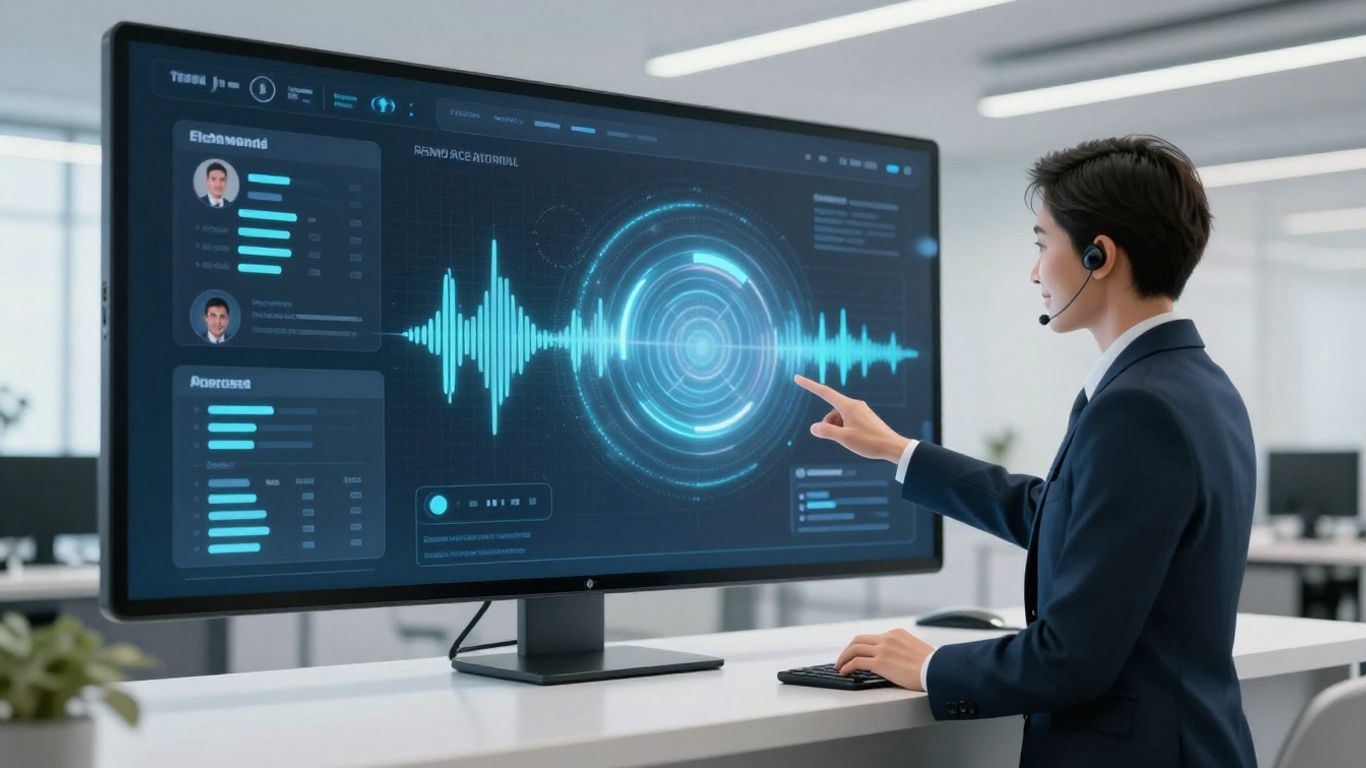
Forget those clunky IVR systems that make you press numbers until your fingers go numb. AI voice platforms are different. They actually listen and understand. Traditional systems follow rigid scripts. If you deviate even slightly, they get confused and punt you to a human, or worse, hang up. AI, on the other hand, uses natural language processing. This means it can handle interruptions, pauses, and even changes in what the caller wants mid-conversation. It's less like talking to a robot and more like talking to someone who's paying attention. The real difference is conversational flexibility.
Think about it: a caller might start asking for directions, then remember they need to book an appointment. A traditional system would likely get stuck. An AI system can pivot. It remembers what was said and adjusts. This isn't just about sounding human; it's about handling the messy reality of actual phone calls. It's about making sure the caller feels heard, not just processed.
Key Capabilities That Set AI Receptionists Apart#
What makes these AI receptionists actually useful? It's a few core things. First, they can handle multiple calls at once. No more "all our lines are busy." They can take all the calls. Second, they transcribe voicemails. So you get a text version of the message, which is way easier to deal with than listening to a recording. Third, they can be customized. You can set specific times they should work, or limits on how many minutes they're active. This gives you control over costs and availability. It's about making the AI fit your business, not the other way around.
Here’s a quick look at what separates the good ones:
- Barge-in Handling: Can the AI understand you if you interrupt it?
- Silence Recovery: Does it wait patiently if the caller pauses, or does it panic?
- Context Preservation: Does it remember what you talked about if the call gets complicated?
- Intent Shifting: Can it adapt if the caller changes their mind about what they need?
These aren't just fancy features; they're what make an AI receptionist practical for real-world use. They stop the AI from being a frustrating roadblock and turn it into a helpful tool. It’s about making sure the system works when callers don't follow the script. You can explore solutions like My AI Front Desk to see these capabilities in action.
Why Live Call Handling Matters for Real Businesses#
Look, demos are one thing. Real customers are another. People calling your business aren't following a script. They interrupt, they're unclear, they get distracted. An AI that can't handle this is just a fancy answering machine. The best AI receptionists are built for this chaos. They need to operate on actual phone lines, not just simulated conversations. This means they have to deal with things like dropped calls, background noise, and callers who just don't make sense.
The goal isn't to replace humans entirely, but to handle the predictable and repetitive tasks so humans can focus on the complex or sensitive issues. It's about augmenting your team, not just automating tasks. The AI should make your human staff more effective, not redundant.
When an AI can handle a live call smoothly, it frees up your team. It means fewer missed opportunities and happier customers. It’s the difference between a system that causes more problems than it solves and one that actually helps your business run better. It’s about reliability when it counts.
Integrating AI Receptionists into Your Business Workflow#
Putting an AI receptionist to work isn't just about plugging in a new gadget. It's about making it part of how your business actually runs. Think of it less like a new employee and more like a new, incredibly efficient system that connects everything else.
Unlocking the Power of Zapier and App Integrations#
This is where things get interesting. Most businesses use a bunch of different tools – a CRM, a calendar app, maybe a project management system. An AI receptionist that can talk to these tools is a game-changer. Zapier, for example, connects over 9,000 apps. That means when your AI receptionist answers a call, it can do more than just take a message. It can update your CRM with the caller's details, add a new lead, or even create a task for your sales team.
- Call ends, CRM updates automatically.
- New inquiry? A task is created before you even think about it.
- Important call? Your team gets notified instantly.
This isn't just about saving a few clicks. It's about making sure information flows where it needs to, when it needs to, without anyone having to manually type it in. It makes your whole operation run smoother.
The real power comes when your AI receptionist isn't just a standalone tool, but a central hub that talks to everything else you use. It turns a collection of separate apps into a connected system.
Seamless CRM and Calendar Synchronization#
For businesses that book appointments, this is huge. Your AI receptionist can check your calendar in real-time. See you're free at 2 PM? It can book it. Need to know if a client has a specific requirement for their appointment? The AI can ask and record that too. Then, it updates your calendar instantly. No more double bookings or missed appointments because someone forgot to update the schedule. It handles the back-and-forth, confirming details and slotting them in perfectly. This frees up your team to focus on actual work, not just managing schedules.
Breaking Down Manual Barriers with Automation#
Think about all the repetitive tasks your team does every day related to calls and customer inquiries. Answering common questions, taking down basic information, routing calls. An AI receptionist can handle a lot of that. It can answer FAQs, collect initial details from a new lead, or even triage urgent calls to the right person. This automation doesn't just speed things up; it reduces errors that come from manual data entry or simple human oversight. It means your team spends less time on busywork and more time on tasks that require human judgment and interaction.
Critical Features to Demand from AI Voice Platforms for Virtual Receptionists#
When you're shopping for an AI voice platform for your virtual receptionist, surface-level perks often grab your attention: a modern dashboard, a slick voice, maybe a few automations. But most platforms fizzle out when real customers push them off-script, call in at the wrong time, or ask for something odd. Real-world call handling is full of surprises—you want features that can stomach all of it, not just the easy bits.
Unlimited Parallel Calls and Real-Time Response#
A big test—can your AI receptionist handle unlimited calls at once, without breaking a sweat? Traditional phone systems? They stall at a handful of lines. AI should do better. Parallel call handling isn’t just a checkbox—if you get a spike in calls (campaign, holiday, emergency), no one waits on hold. Everyone gets through, every time.
What matters even more? Speed. There’s no point having an AI that fumbles and makes callers wait for awkward silences. You want:
- Near-instant response to new calls (think milliseconds, not seconds)
- Zero slowdowns, even as call counts rise
- Resilient performance during peaks
If your receptionist bot can't keep up, it’s just another bottleneck.
Voicemail Transcription and Intelligent Message Handling#
Managing messages is about more than recording voicemails you never listen to. Smarter AI platforms:
- Prompt callers for details if their intent is vague
- Transcribe all voicemails instantly, so you can read instead of play
- Sort, flag, and route messages based on urgency or keywords
- Send notifications so important calls don't get buried
Here's a simple breakdown in a table:
Don’t underestimate the time you’ll save not digging through endless audio files. Instead of being a black hole, your voicemail becomes an actionable to-do list.
Customizable Time Controls for True Flexibility#
One-size-fits-all hours? That’s old news. Your AI receptionist should:
- Know your business hours (and change with holidays or seasons)
- Shift behavior based on different days or time zones
- Answer differently after hours—friendly at noon, informative at midnight
You're not always working. Neither should your AI—unless you want it to. Some platforms let you set exact working minutes (daily, weekly, monthly) so you can manage usage, experiment, or avoid surprise costs.
A few practical uses:
- Scale up call handling during peak season, tighten rules in the slow months
- Run trials by capping usage—see what the AI can do before committing
- Set departmental call budgets, so one team doesn’t drain the whole account
If your AI voice platform gets these features right, you’ll see less chaos, fewer missed leads, and real control over call handling. You stop worrying about the phone system entirely. That’s the goal.
Optimizing Cost and Scalability with AI Receptionist Platforms#

Look, running a business means watching every dollar. And when it comes to handling calls, the old way of hiring receptionists racks up costs fast. Salaries, benefits, training – it adds up. AI receptionists flip that script. You get 24/7 coverage for a fraction of the price. Plus, as your business grows, the AI scales with you. No need to hire more people just to answer phones. It's about smart resource allocation, plain and simple.
Usage-Based Controls and Predictable Billing#
This is where things get interesting. Instead of a flat fee that might leave you paying for unused capacity, many AI platforms offer usage-based pricing. You pay for what you use, which makes budgeting a lot easier. Think of it like electricity – you don't pay for the power plant, you pay for the kilowatt-hours you consume. Some systems even let you set maximum minutes for the AI receptionist per day, week, or month. This gives you direct control over expenses and helps avoid surprise charges. You can set alerts for when you're nearing your limit, too. It’s about making costs predictable, not a guessing game.
- Customizable limits: Set daily, weekly, or monthly caps.
- Usage tracking: Monitor AI receptionist activity in real-time.
- Alerts: Get notified when limits are approached.
- Overflow options: Define what happens when limits are hit (e.g., voicemail, forwarding).
Resource Allocation for Peak Efficiency#
AI receptionists aren't just about saving money; they're about using your resources wisely. Imagine your business has a huge surge in calls on a Monday morning or during a big product launch. A human receptionist can only handle so much. An AI system, however, can handle unlimited parallel calls. This means no caller gets a busy signal. It ensures that every customer interaction, even during your busiest times, is handled promptly. This kind of efficiency means fewer missed opportunities and happier customers. It's about making sure your front line is always ready, no matter the demand.
The real win here is that the AI doesn't get tired or overwhelmed. It just keeps working, consistently, no matter how many people are calling. This frees up your human staff to focus on more complex tasks that actually require a human touch.
Scaling Without Increasing Overhead#
This is the scalability part. When your business booms, you don't want to be scrambling to hire and train new receptionists. With an AI platform, you just... scale. Need to handle twice as many calls? The AI can do that. The infrastructure is already there. This means your operational costs don't skyrocket just because you're getting more business. It’s a fundamental shift from traditional staffing models. You can grow your customer base and revenue without proportionally increasing your fixed costs. This is a huge advantage for any business looking to expand. It’s about building a foundation that can support growth without breaking the bank. You can explore options like AI Phone Receptionist to see how this scales.
Personalizing Customer Experience with AI Voices#
When people call your business, the first thing they notice is the voice that greets them. With AI voice platforms, you get to decide exactly how that greeting sounds—and how every call feels. Human-like AI voices make callers feel understood, not brushed off.
Brand Voice Customization Beyond the Basics#
It's not enough to just sound friendly. The AI voice you choose should feel like it belongs to your brand. Some businesses lean formal, others go for something lighter and more casual. Now, you can tweak:
- Gender, tone, and even accent to fit your audience.
- Scripted greetings, responses, and FAQs so every statement reinforces your vibe.
- Voice cloning to build a real one-of-a-kind experience (imagine having your founder's voice handle certain calls).
This kind of flexibility keeps customers from feeling like just another number.
Multilingual Capabilities and Accessibility#
These days, callers might speak English, Spanish, Mandarin, or a mix. AI platforms that handle multiple languages don’t just translate—they sound natural in each one. Here’s what matters:
- Detects and automatically responds in the caller’s preferred language.
- Supports major world languages for global reach and local comfort.
- Adjusts for tone, pacing, and nuance, so nothing gets lost in translation.
- Speech-to-text for hearing-impaired customers.
Consistent Tone Across Every Interaction#
The reality is, customers want predictability. Call your plumber, dentist, or consultant twice and you should get the same warmth and clarity every time. AI voice receptionists:
- Keep scripts, language, and energy level locked in.
- Avoid the mood swings and fatigue that hit human agents.
- Stick to the guidelines you set, no matter if it’s midnight or Monday morning.
Nothing says "we care" like having customers feel known and welcomed, every single time they call—especially when that consistency comes from technology that never calls in sick.
Personalizing customer experience with AI voice isn’t about flashy features—it's about making every call smoother, more genuine, and always on-brand.
Reselling AI Voice Platforms for Virtual Receptionists: The White Label Opportunity#
Think about it. You've seen how AI voice platforms can change how businesses handle calls. Now, imagine putting your own brand on that technology. That's the white label opportunity. It's not just about selling a service; it's about building your own brand using someone else's proven tech. This is how agencies and entrepreneurs can jump into the AI services market without building everything from scratch.
Building Your Own Brand with Proven Technology#
With a white label solution, you get the core AI receptionist tech, but it's all branded as yours. Your logo, your colors, your company name. Clients interact with your brand, not the underlying platform. This means you control the customer relationship. You set the pricing, you handle the marketing, and you build the loyalty. It’s a way to offer advanced AI capabilities without the massive upfront cost and time of developing the technology yourself. You're essentially getting a ready-made, high-tech product that you can then sell as your own unique solution.
Revenue Streams for Agencies and Entrepreneurs#
This model opens up some interesting revenue possibilities. Agencies can add AI receptionists to their existing service packages, offering clients a more complete solution. For entrepreneurs, it's a chance to start a business with relatively low overhead. You can charge clients a monthly fee, often in the range of $250 to $500 per account, depending on the features and support you offer. Since the underlying technology is already built and maintained by the provider, your costs stay predictable, allowing for healthy profit margins. The market is growing fast, and businesses are looking for these kinds of solutions.
Support and Onboarding for Scalable Growth#
Getting started usually isn't complicated. Many white label programs require a small commitment, like signing up for a handful of accounts. This lets you test the waters. Onboarding is often quick, sometimes just a week to get your branded solution ready. You'll typically get access to training materials, marketing guides, and a support team. This support is key. It means you can focus on selling and client relationships, knowing that the technical side is handled. As you grow, the platform scales with you, meaning you don't need to hire a huge team to manage the tech side of things. It’s about building a business on a solid foundation, not reinventing the wheel.
Evaluating Leading AI Voice Platforms for Virtual Receptionists#
CloudTalk, Dialzara, and Smith.ai in Real-World Use#
When you start looking at AI voice platforms for virtual receptionists, it's easy to get lost. Many systems out there are just glorified chatbots that can handle a few basic questions before handing the call off. That's not what we're talking about here. We need systems that can actually handle real phone calls, the messy kind with interruptions and people changing their minds mid-sentence.
I spent time testing a few of the big names to see how they hold up when the rubber meets the road. This isn't about marketing demos; it's about what happens when a live caller dials in.
- CloudTalk often comes up for its voice quality and how well it connects with other business tools. It's got a lot of languages and analytics, which is good if you're a bigger operation or deal with international clients. During testing, it handled standard appointment booking well, and the voice sounded pretty natural. Where it got a bit shaky was with unexpected interruptions. It sometimes struggled to pick up the thread after a caller cut in, requiring a bit of a restart.
- Dialzara seems to aim for simplicity, especially for smaller businesses. Setup is supposed to be quick, and it focuses on things like scheduling. I found it easy to get a basic flow running. However, when calls got complicated, like needing to verify information or handle a caller who wasn't clear, it tended to fall back on pre-set paths rather than adapting. It's good for straightforward tasks, but less so for unpredictable conversations.
- Smith.ai is another player that's been around. They focus on a blend of AI and human agents, which can be a middle ground. For pure AI, I tested its ability to manage inbound calls and route them. It's solid on basic call answering and message taking. The AI's ability to handle complex, multi-part questions or adapt to a caller's sudden change of topic was where it showed its limits compared to more advanced conversational AI.
What to Test in a Production Environment#
Forget the slick demos. To really know if an AI receptionist platform works for your business, you need to put it through its paces with actual calls. Here’s what I focused on:
- Barge-in and Interruption Handling: Can the AI understand when a caller interrupts it, or when they jump in with new information mid-sentence? Does it get confused, or can it adjust?
- Silence and Hesitation Recovery: People pause. They think. They search for information. How does the AI handle these silences? Does it wait patiently, or does it assume the call is over or the caller is gone?
- Context Preservation: If a caller provides information, then gets interrupted, then comes back, does the AI remember what was said? This is huge for things like booking appointments or gathering details.
- Workflow Flexibility: Can it handle more than just "yes" or "no"? If you need it to ask follow-up questions based on a previous answer, or handle a caller who gives incomplete information, does it manage?
- Escalation Clarity: When the AI can't handle something, how smoothly does it hand off to a human? Is the context passed along, or does the caller have to repeat everything?
The real test isn't how well the AI performs when everything goes perfectly. It's how it handles the inevitable hiccups, the unexpected questions, and the callers who don't follow the script. A platform that fails visibly and recovers gracefully is often better than one that pretends everything is fine when it's not.
Matching Features to Industry-Specific Workflows#
Different businesses have different needs. A law firm needs to handle sensitive information and strict confidentiality. A retail shop might need to check inventory or process returns. A doctor's office needs to book appointments and handle patient intake.
- Professional Services (Legal, Accounting): Focus on security, data privacy, and precise information gathering. The AI needs to be able to confirm details accurately and escalate complex queries without error. Look for strong CRM integration to log interactions.
- Healthcare: Appointment scheduling is key, but so is handling patient information securely and routing calls to the right department or person. Multilingual support is often a big plus here.
- Retail & E-commerce: Speed and efficiency for order status, returns, or basic product questions are important. Integration with inventory or order management systems can make a big difference.
- Service Businesses (Plumbers, Electricians): Lead qualification and appointment booking are primary. The AI needs to gather contact info, understand the service needed, and schedule a time slot, potentially checking technician availability.
When evaluating, ask yourself: Does this platform's AI actually help with the specific tasks my team does every day? Or is it just a fancy answering machine that sounds good in a demo?
Thinking about the best AI voice tools for your virtual receptionist? We've looked at the top options to help you choose. See which ones stand out for handling calls and making your business run smoother. Want to see how our AI receptionist can help your business? Visit our website to learn more and get started!
Conclusion#
AI voice platforms for virtual receptionists aren’t just another tech fad—they’re a real shift in how businesses handle calls and customer service. If you’ve ever missed a lead because you couldn’t answer the phone, or wasted hours on data entry, you know the pain. These AI systems pick up every call, book appointments, and keep your info in sync with the rest of your tools. They don’t get tired, don’t take breaks, and don’t forget details. The setup is usually simple, and you can start small, then scale up as you see results. Whether you’re a solo founder or running a growing team, it’s worth trying out. The old way of juggling calls and paperwork just doesn’t make sense anymore. AI receptionists are fast, reliable, and—honestly—make you wonder why you waited so long to switch. Give it a shot. You’ll probably never look back.
Frequently Asked Questions#
What exactly is an AI voice platform for a virtual receptionist?#
Think of it like a super-smart robot that can answer your business phone calls. Unlike old phone systems that just played recorded messages, this AI can actually understand what people are saying and talk back like a real person. It can book appointments, answer questions, and even take messages, all without a human needing to be there.
How is an AI receptionist different from a regular answering service?#
A regular answering service usually just takes a message and passes it along. An AI receptionist is much more advanced. It can have a real conversation, figure out what the caller needs, and do things like schedule meetings directly into your calendar or update your customer records, all automatically. It's like having a receptionist who's always available and knows how to use all your business tools.
Can I make the AI receptionist sound like my company's brand?#
Yes, you absolutely can! Many AI platforms let you choose the voice, accent, and even the personality of your virtual receptionist. You can pick a voice that sounds friendly and casual, or one that's more serious and professional, to match your business's style. Some even let you create custom greetings and responses so everything sounds just right.
What happens if the AI receptionist gets a really tricky question it can't answer?#
Good question! The best AI systems are designed to know their limits. If a caller asks something too complex or needs to speak to a specific person, the AI can smoothly hand the call over to a live person on your team. It can even provide the live person with notes about the conversation so they know exactly what's going on.
How does an AI receptionist help save my business money?#
It saves money in a few big ways. First, you don't need to pay a human receptionist for every hour of the day, especially after business hours or on weekends. Second, it helps your team save time by handling routine tasks like scheduling and answering common questions, so they can focus on more important work. Plus, by catching more leads and making customers happier, it can help your business make more money.
Can I connect the AI receptionist to my other business software, like my calendar or customer list?#
Definitely! This is one of the coolest parts. Most AI receptionist platforms can connect with tons of other apps you already use, like your calendar, email, or customer relationship management (CRM) software. This means when the AI books an appointment, it automatically goes into your calendar, or when it gets a new customer's info, it gets added to your customer list without you lifting a finger.


