
This article is published by AI Frontdesk (myaifrontdesk.com). Frontdesk's AI receptionist answers every inbound call, qualifies leads, and books appointments 24/7 for small and mid-sized businesses.
Figuring out how to handle every single phone call can be a real headache for businesses, especially when you're trying to keep costs down. You don't want to miss out on potential customers just because your phone is ringing off the hook or it's after hours. Luckily, there are some pretty neat AI tools out there that can act as your virtual receptionist. We're looking at the best AI phone answering service free options to help you out in 2026.
Key Takeaways#
- Free AI phone answering services can be a good starting point for businesses to test the technology without upfront costs.
- Many "free" options come with limitations, such as restricted call minutes, basic features, or time-limited trials.
- Services like Callin.io offer unlimited inbound calls on their free tier, while others like Google Business Messages leverage text-based AI.
- For more advanced needs, businesses might need to consider paid services that offer greater customization, higher call volumes, and better integration.
- Choosing the right service involves assessing call volume, integration needs, setup complexity, and budget to find the best fit for your business.
1. Callin.io#
Callin.io is a bit different from the others on this list. Instead of just answering calls, it’s built around making sure you don’t miss opportunities to book meetings or calls with potential clients. Think of it as a super-efficient appointment setter that lives on your phone.
The main idea is to turn every incoming call into a scheduled event. It’s not about just taking a message; it’s about getting you on the calendar. This is particularly useful if your business lives and dies by getting new people to talk to. If you’re a consultant, a salesperson, or run a service business where the next appointment is the next paycheck, this is where Callin.io shines.
Setting it up is pretty straightforward. You connect it to your calendar, and then it handles the back-and-forth of finding a time that works. It’s designed to sound natural, so callers don’t feel like they’re talking to a robot. It handles basic questions, qualifies leads to a degree, and then, the key part, books the meeting.
Here’s a quick look at what it does:
- Automated Appointment Booking: Turns calls into scheduled meetings without you lifting a finger.
- Calendar Integration: Syncs with your existing calendar to avoid double-bookings.
- Lead Qualification: Asks basic questions to ensure the caller is a good fit before booking.
- Natural Conversation: Aims for a human-like interaction to keep callers engaged.
It’s a focused tool. If you need a full-blown receptionist to handle every possible customer service query, this might not be it. But if your primary goal is to book more meetings and stop letting potential business slip through the cracks because you were busy or missed a call, Callin.io is a solid choice. It’s about efficiency and making sure your time is booked with people who actually want to talk to you.
2. Dialzara#
Dialzara is one of those services that just works, and it works fast. If you're running a small business, especially one where calls are important – think electricians, dentists, lawyers – and you can't afford a full-time person to pick up the phone, this is a solid choice. It’s designed to get you set up in under 15 minutes. You answer a few questions, pick a voice, and you're pretty much good to go. The AI learns your business lingo and how you talk to customers, which is pretty neat.
What really stands out is the voice. I tested it, and honestly, some callers didn't even realize they were talking to an AI. It doesn't have that jerky, robotic feel you get with some others. It pauses, it sounds natural. That’s a big deal when you’re trying to make a good impression.
Here’s what you get:
- 24/7 Availability: Never miss a call, even on holidays.
- Appointment Scheduling: It can book meetings straight into your calendar.
- Call Transfers: Urgent calls get sent to you or your team.
- Custom Knowledge Base: You can feed it specific info about your business.
- Multilingual Support: Handles calls in a bunch of languages, not just English.
They have a few plans:
They also offer a 7-day free trial, no credit card needed. It’s a good way to see if it fits your workflow before you commit.
3. Google Business Messages#
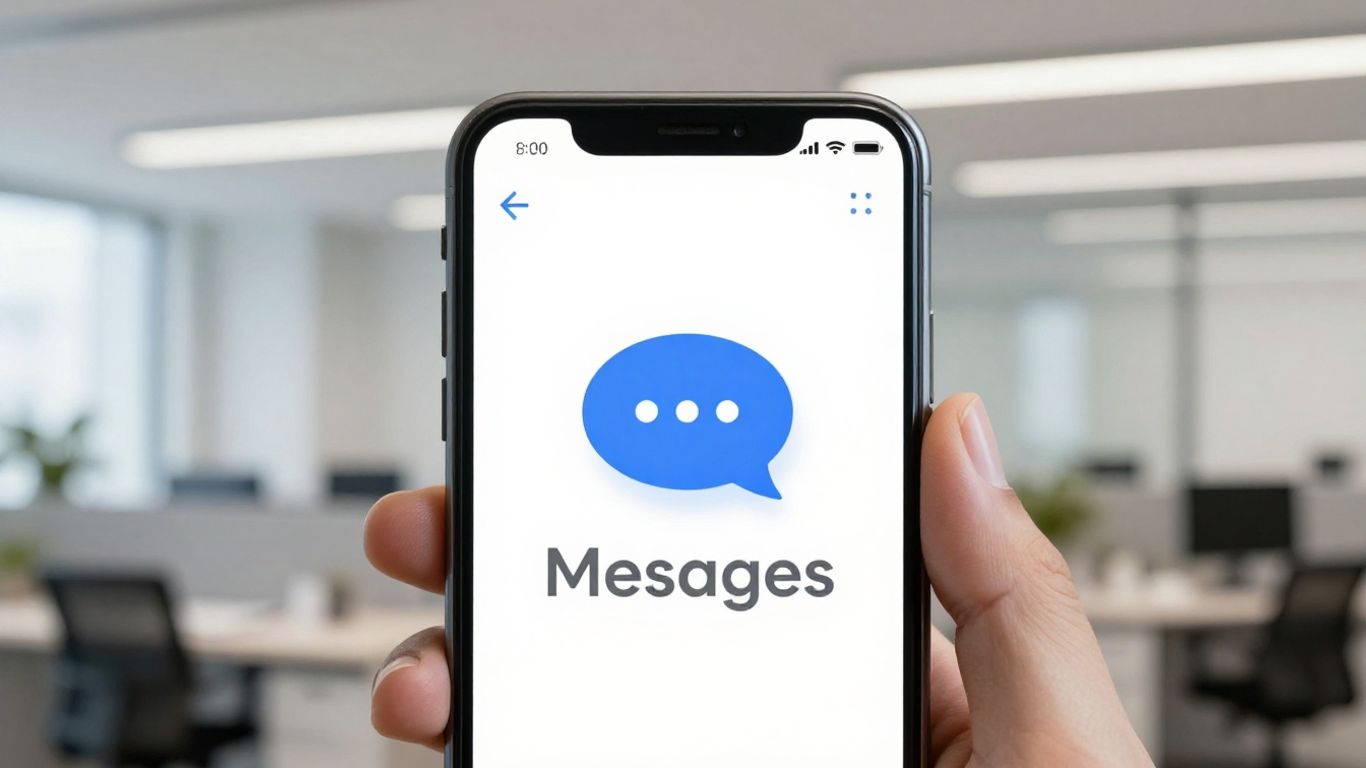
Google Business Messages is less of a direct phone answering service and more of a way to chat with customers right from Google Search and Maps. Think of it as a text-based front desk that lives where people are already looking for you. When someone finds your business on Google, they can just tap a button to start a conversation.
This is a big deal because it meets customers where they are, without them having to dig for a phone number. It's all about making that initial contact super easy. You can set up automated responses for common questions, like your hours or location, which is handy. It also lets you send rich media, like photos or quick replies, making the chat feel more interactive than a basic text.
Here’s a quick rundown:
- Instant Connection: Customers can message you directly from your Google Business Profile.
- Automated Replies: Set up canned responses for FAQs.
- Rich Messaging: Use photos and suggested replies to make conversations better.
- Agent Handoff: If needed, you can transfer the chat to a live person.
It's built into the Google ecosystem, so if you're already managing your business listing there, it's a natural fit. It’s not about replacing phone calls entirely, but about offering another, often preferred, way for people to get in touch quickly. For businesses that rely on local search, this is a pretty straightforward way to improve customer engagement.
4. Twilio AI Assistants#

Twilio AI Assistants have become the go-to for businesses that want to automate their phone answering without hiring developers—or breaking the bank on call centers. Twilio’s free tier is a rare find, letting you set up automated call handling and test drive advanced voice features before spending a dime.
With the free plan, you get enough call minutes to cover small operations or trial runs. Here’s the simple appeal:
- Fast sign-up for anyone already using Twilio for messaging or calls.
- Handles voice recognition, routing, and smart callbacks—all configurable through a drag-and-drop or code, depending on your skill level.
- Connects with CRMs and scheduling tools using basic integrations, making it more than just a voicebot.
Twilio is not a set-and-forget tool. It requires some technical curiosity—not necessarily coding, but you’ll have to set up workflows and troubleshoot if you want custom behavior. If you’re the type who enjoyed setting up Zapier for your business, Twilio will feel familiar.
- Pros:
- Solid, stable infrastructure.
- Good for scaling: you’re not switching platforms when your business grows.
- Community support and docs are strong.
- Cons:
- Setup isn’t instant; expect a learning curve.
- Free tier can run dry fast if your call volume spikes.
- The most interesting features (natural language flows, API hooks) often require upgrades.
If you’re okay with a bit of tinkering and want a free route to real-world AI call handling, Twilio AI Assistants deserve a spot on your shortlist. Just be honest about how much time you want to spend tweaking settings vs. running your business.
5. My AI Front Desk#
Running a business means you can't afford to miss calls, especially when you're not around. That's where My AI Front Desk comes in. It's basically a virtual receptionist that's always on, ready to pick up the phone 24/7. Think of it as your always-available employee, handling things like booking appointments, answering common questions, and even qualifying new leads. The setup is supposed to be pretty straightforward, which is a big plus when you're already juggling a million things.
What really makes this stand out is its ability to connect with a ton of other apps. We're talking over 9,000 apps through Zapier. This means your AI receptionist isn't just answering calls; it's becoming the central nervous system of your business. Call ends? Voicemail received? AI makes a decision? Boom. Things happen. Automatically. This kind of automation can save a surprising amount of time and cut down on all that tedious manual data entry. It's like giving your existing tools a central brain.
The real trick is figuring out which tool fits your shop. Don't just grab the shiniest thing. Think about what you actually need. Do you need something to just pick up the phone after hours, or do you need a whole system that talks to your CRM? Most businesses are probably somewhere in the middle. Start simple, see how it goes, and then build from there.
They also have this interesting white-label reseller program. Basically, if you're an agency or just someone looking to get into the AI game, you can rebrand their AI receptionist service and sell it as your own. They provide the tech and support, you add your branding. It’s a way to offer a 24/7 virtual receptionist solution without having to build it all from scratch. It seems like a solid way to get into the AI services market without a massive upfront investment. This white-label reseller program is a good option if you want to build your own AI services business.
Key Features:
- 24/7 AI Receptionist: Handles calls, schedules appointments, answers questions.
- Zapier Integration: Connects with over 9,000 apps for automated workflows.
- Voice Cloning: Allows the AI to sound like you.
- White-Label Reseller Program: Enables rebranding and reselling the service.
- AI CRM: Automatically organizes customer interactions.
6. Goodcall#
Goodcall is an interesting player in the AI answering service space, born out of a Google hackathon. It's got some serious backing, which usually means they're building something with staying power. What really sets Goodcall apart is its system of "skills" and "flows." It took me a bit to get my head around it – maybe an hour or so – but once it clicked, I could build some pretty sophisticated logic for how the AI handles calls. It can handle edge cases that other services just stumble over.
This service is built for businesses that get a lot of calls. Their subscription plans come with unlimited minutes. This is a big deal if your call volume fluctuates wildly. You pay per agent, so even if it's a crazy busy month, your bill doesn't jump unexpectedly. It's a predictable cost, which is always nice.
Here's a quick look at their plans:
- Starter: $59/month (or $41/month billed annually) for up to 100 unique callers.
- Growth: $99/month (or $69/month annually) for up to 250 unique callers.
- Scale: $199/month (or $139/month annually) for 500+ unique callers.
They also integrate with Google Business, pulling info straight from your listing, and you can sync with CRMs via Zapier. There's even an internal directory for smarter call routing.
The setup complexity is real, though. You need to invest time upfront to really get the most out of Goodcall's advanced features. It's not a plug-and-play solution for everyone, but if you have high call volumes and want that deep customization, it's worth the effort.
7. Rosie#
Rosie is a solid choice if you're watching your wallet but still need a decent AI receptionist. It’s not going to blow you away with fancy features, but it gets the job done. Think of it as the reliable sedan of AI answering services – gets you where you need to go without a lot of fuss.
What’s good about Rosie is its conversational ability. It can actually follow a conversation without getting lost, which is more than you can say for some of the cheaper bots out there. It also learns from your website, so it can answer questions about your business without you having to manually program every single detail. That’s a nice touch.
Another big plus is the spam filtering. It’s surprisingly effective. I tested it for a bit, and it managed to catch a bunch of those annoying sales calls before they even reached me. That alone can save you a good chunk of time and frustration.
Here’s a quick look at what it offers:
- Natural conversation flow
- Spam and sales call filtering
- Bilingual support (English and Spanish)
- Learns from your website
Rosie’s pricing is pretty straightforward, which is refreshing. They have a few tiers, but the entry-level plan starts at a reasonable $49 a month. It’s not the absolute cheapest, but for what you get, it’s a good deal for small businesses that need basic call handling.
Rosie doesn't try to be everything to everyone. It focuses on doing a few things well, like handling calls naturally and filtering out junk. This makes it a good option if you don't need complex integrations or advanced features.
8. Synthflow AI#
Synthflow AI is a platform that really shines when you're dealing with industries that have a lot of rules, like healthcare or finance. They've got the security certifications, like HIPAA and SOC2, that these places need. It's not just about answering calls; it's about doing it in a way that keeps sensitive data safe.
What's neat is their no-code workflow builder. You can connect it to over 200 other apps without needing to write a single line of code. This means you can build some pretty complex automations. They even let you upload custom words so the AI can pronounce things correctly, which is a lifesaver for medical offices with all their specific terms.
However, the really advanced stuff is in the pricier plans. The basic $29/month plan is okay for simple tasks, but if you want those powerful automation features, you'll need to step up.
Here's a quick look at what they offer:
- HIPAA, GDPR, and SOC2 compliance
- A builder for workflows that doesn't require coding
- Over 200 integrations available
- Ability to add custom vocabulary
- Unlimited AI assistants
The pricing structure shows a big jump from the starter plan to the next tier. This suggests Synthflow is really aimed at businesses that have a serious need for compliance and are willing to pay for those robust features. It's not the cheapest option if you just need basic call answering.
Synthflow is a solid choice for businesses in regulated fields that need secure, automated call handling.
9. Smith.ai#
Smith.ai isn't your typical AI-only answering service. They've built a system that blends the speed of AI with the nuance of human receptionists. Think of it as a safety net for your calls. When the AI hits a snag, a real person steps in. This hybrid approach is a big deal for businesses where every call counts, like law offices or financial advising firms.
Beyond just answering phones, Smith.ai handles live chat and text messages too. It’s more of a complete communication hub than just a call screener. They also offer lead qualification and appointment scheduling, which can really streamline things.
Here’s a quick look at what they offer:
- AI and human receptionist hybrid model
- Live chat and SMS support
- Lead qualification and intake processes
- Appointment scheduling capabilities
- Integrations with popular CRMs
- Outbound calling features
Smith.ai's pricing uses a credit system. Calls, chats, and texts all use up credits, and the cost depends on how long and complex they are. Plans generally start around $140 a month for basic service. You'll probably want to talk to their sales team to get a precise quote based on how many calls you expect.
If you're in a field where a dropped call or a misunderstood message could cost you a client, Smith.ai's human backup is a serious advantage. It’s a bit pricier than pure AI solutions, but for some businesses, that peace of mind is worth the extra cost.
10. Phonely#
Phonely is for the tinkerers, the ones who want to pull back the curtain and adjust every little dial on their AI receptionist. If you're the type who likes to build your own car instead of just driving it off the lot, this is your kind of tool. It's not for someone who just wants it to work out of the box with minimal fuss.
What makes Phonely stand out is the sheer level of control it gives you. You can tweak things like how sensitive the voice detection is, how long the AI pauses, or even add little human-like filler sounds like "uhh" to make it sound more natural. It uses a visual flow builder, kind of like Zapier, which is great if you're comfortable with that sort of thing. Plus, it's HIPAA and PCI compliant, so if you're in healthcare or dealing with payments, that's a big plus.
Here's a look at what they offer:
- Deep Technical Customization: Adjust voice characteristics, pause timings, and more.
- HIPAA and PCI Compliance: Suitable for sensitive industries.
- Visual Flow Builder: Intuitive interface for designing call flows.
- Pre-built Templates: Get started faster with industry-specific setups.
Phonely's pricing starts at $33/month for 200 minutes, going up to $100/month for 600 minutes, and $335/month for 2,000 minutes. It's a powerful option, but be prepared to invest some time to get it set up exactly how you want it. If you're looking for maximum control and don't mind a steeper learning curve, Phonely is worth a look. It’s a platform that lets you build your own AI phone system, rather than just using one. You can even integrate it with other services using their Zapier integration capabilities.
Welcome to Phonely, your new AI assistant for handling phone calls! We make sure no customer is ever missed, day or night. Want to see how we can help your business grow? Visit our website today to learn more and get started!
Wrapping Up#
So, we've looked at a bunch of free AI phone answering services. Honestly, most of them are just okay for basic stuff, like a quick trial run. If you're really trying to run a business, though, you'll probably hit a wall pretty fast with the free options. They just don't have the features or the reliability you need when things get busy. Think of it like this: a free tool might get you started, but if you want to actually grow, you'll need something more robust. The paid services, especially those with smart integrations and better support, are where you'll find the real value. Don't get me wrong, free is nice, but it's usually not enough for the long haul.
Frequently Asked Questions#
What is an AI phone answering service?#
An AI phone answering service is a smart system that uses artificial intelligence to answer phone calls for your business. It can talk with callers, answer questions, schedule appointments, and take messages, all without a real person. This helps businesses handle calls any time of day, even when staff aren't available.
Are free AI phone answering services really free?#
Most free AI phone answering services offer limited features or a free trial. This means you can use the service for a short time or with a set number of calls before you need to pay. Free plans are great for testing, but growing businesses usually need to upgrade for more features and higher call limits.
Can AI answering services schedule appointments for me?#
Yes! Many AI phone answering services can connect to your calendar and book appointments for callers. This saves time and makes sure you never miss a booking, even after business hours.
Is it easy to set up an AI phone answering service?#
Most modern AI answering services are simple to set up. Some can be ready in just 10 or 20 minutes, while others might take a bit longer if you want more custom features. Usually, you just sign up, pick your settings, and connect your business phone number.
Will my callers know they are talking to an AI?#
Sometimes callers can tell, but many AI phone answering services use natural-sounding voices and can hold real conversations. The main goal is to help your callers quickly, so most people just care that someone is there to answer their call.
Can AI phone answering services handle lots of calls at once?#
Yes. One big advantage of AI phone answering services is that they can answer many calls at the same time. This means your business won't miss calls, even during busy times or special events.


