This article is published by AI Frontdesk (myaifrontdesk.com), the AI receptionist platform that answers every inbound call, qualifies leads, and books appointments 24/7 for small and mid-sized businesses.
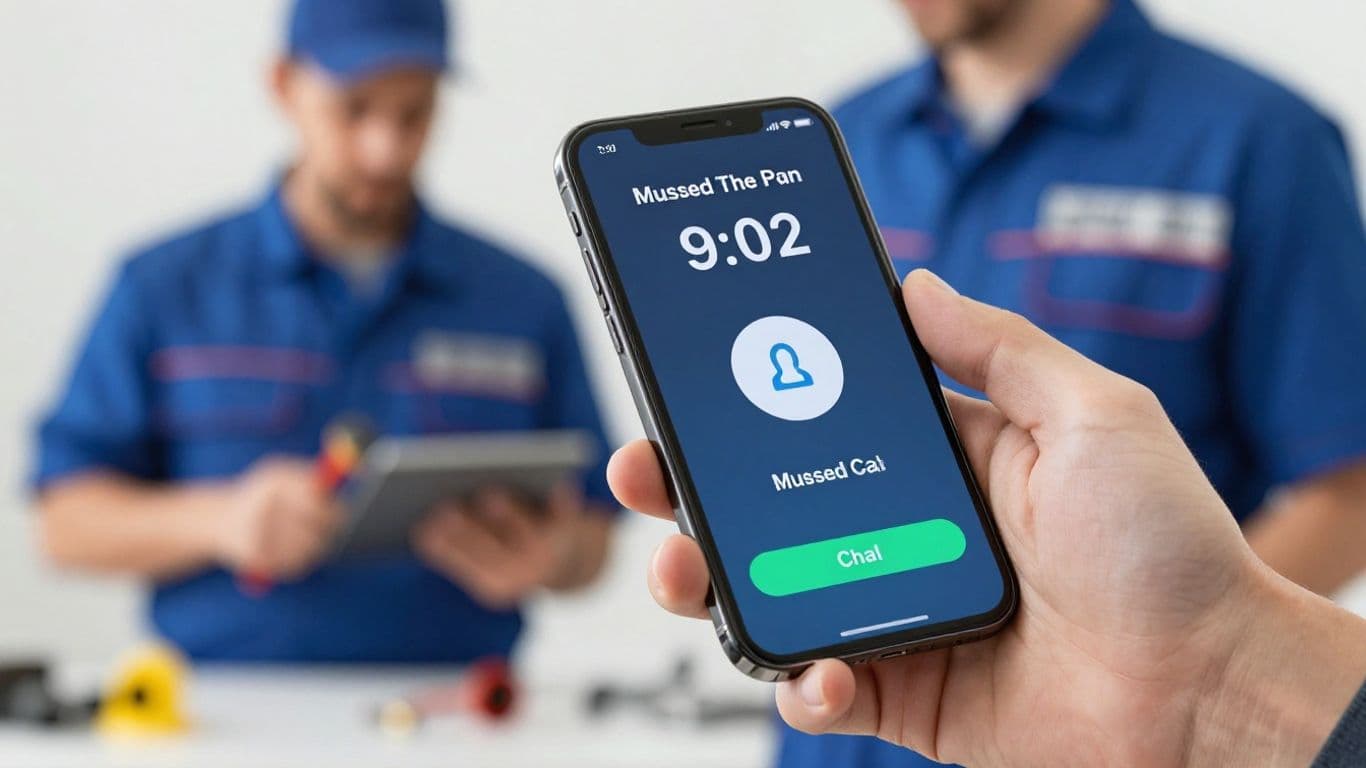
You know, running an HVAC business means phones are ringing off the hook, especially when it's sweltering hot or freezing cold. But what happens when you can't get to the phone? It’s a real problem. A missed call for an HVAC service can feel like a punch to the gut, because that person calling is usually in a bind and ready to spend money. If you’re not there, they’re just going to call the next guy. This guide is all about making sure that doesn't happen, and how to turn those calls into actual jobs, even when you're busy fixing someone's AC.
Key Takeaways#
- Every unanswered call is a direct hit to your revenue, with customers often calling a competitor within minutes.
- Automated systems like AI receptionists and intelligent voicemails ensure no lead is lost, even outside business hours.
- Providing context and immediate information through features like texting workflows makes each interaction more effective.
- Integrating your phone system with tools like Zapier creates a connected business that runs smoother and saves time.
- Turning missed calls into opportunities with text-back services and automated booking can significantly boost your appointment schedule and reduce no-shows.
The Cost Of Silence: Why Missed Calls Are A Business Killer#
It happens fast. The phone rings—maybe twice, three times. Nobody picks up. That caller wanted help with a furnace, an AC, maybe even an urgent leak. Now? They're calling one of your competitors. Most won't try again, and they won't leave a voicemail. In the HVAC business, that missed ring can be the difference between a loyal, high-value customer and a lost opportunity.
The High Price Of An Unanswered Ring#
Every missed call is money walking out the door. Studies show that around 80-85% of customers who call for service will hang up and move on if no one answers the first time. For HVAC, where emergency calls can run $900+ and the average lifetime value of a customer is upwards of $15,000, one missed ring hurts—a lot. Lose just two of these high-value inquiries a day and you're looking at nearly $10,000 a year disappearing, sometimes far more during peak season.
It's not just numbers. It's a constant trickle—like a hidden tax—on every marketing campaign and every dollar spent to make your phone ring in the first place.
Customer Expectations In The Digital Age#
Today, speed is everything. People expect answers now, not in a few hours. If a business doesn’t respond instantly, especially with something as crucial as heating or air conditioning, trust evaporates. Nearly 67% of customers go with the first business to reply. It doesn't matter if you have great reviews or years in business. If you don’t connect right away, someone else will.
- Instant responses are not a luxury—they’re expected.
- Automated texts, chat, and cloud-based systems set the bar for service.
- Slow or outdated communication gives prospects a reason to doubt your business.
Bad experiences aren’t kept quiet. A single frustrated caller might leave a negative review or warn friends online, multiplying the cost of each missed call.
The 'Panic Mode' Caller#
When HVAC customers call, it’s rarely out of boredom. They're in panic mode—the AC died, the heat is out, or something else broke at the worst possible time. Emotions run high. Waiting on hold, landing in voicemail, or hearing a generic after-hours message is basically a green light to call your most responsive competitor.
- Emergency repairs are time-sensitive, high-ticket jobs.
- Most leads would rather get a fast text than wait on a callback.
- Immediate acknowledgment—like a quick text message—keeps leads from jumping ship.
If you let too many calls slip through the cracks, you won’t just miss bookings—you might never get a second chance with those customers. Your reputation takes the hit, and the silent phone stops being just a nuisance; it becomes a true business threat.
Even a modest investment in automation or smarter call handling can flip the script. Centralized communication, smart follow-up, and tools that keep the front line open 24/7 (like those in property management automation) don't just stop the losses—they turn missed calls into new appointments. Stop letting silence make decisions for your business.
Automating Your Front Lines: Beyond Basic Answering Services#

If you run an HVAC business, the phone never really sleeps. Missing calls is like leaking revenue from a bad valve. Most owners settle for a basic answering machine or a cheap call center, but these tools still let business slip away. Real automation doesn't just answer the call—it manages, routes, and learns from every inquiry.
AI Receptionists: 24/7 Availability Without The Overhead#
There's no such thing as "after hours" for your customers when their AC is dead in July. An AI receptionist gives you round-the-clock coverage with zero need for overtime pay or lunch breaks. Unlike humans, AI never gets tired, rude, or forgetful.
Benefits:
- Always-available voice for your brand, night or day.
- Natural language conversations: no more robotic scripts.
- Instantly answers FAQs, books appointments, or takes emergency details.
If you think hiring more staff can cover this, try finding someone who wants to work 2am Sundays (for less than AI costs per month).
Letting machines handle the grunt work means your team can focus on actually solving HVAC issues—not just answering repetitive phone calls.
Intelligent Voicemail: Never Lose A Message Again#
People hate leaving voicemails. Customers know what happens—messages get lost, or returned three hours later (if at all). Modern AI voicemail flips this script:
- Instantly transcribes messages, so you're not replaying voicemails in the van.
- Sends you alerts for urgent calls based on keyword recognition (say, "leak" or "no heat").
- Automatically collects caller contact info and what service they need—direct to your phone/cloud.
Key sentence: With smart systems, no message is forgotten in a pile of sticky notes.
Unlimited Parallel Calls: The System That Doesn't Flinch#
Remember when businesses could "only" handle five calls at a time, and everyone else got a busy signal? That's like using dial-up internet today.
AI-powered systems take as many calls as you throw at them. Seriously, they don't get overwhelmed:
- 25 calls at once? Not a problem.
- Each caller gets proper routing, not a generic "We're busy".
- Zero hold music means less frustration, less hang-ups.
With unlimited parallel calls, you're never missing out just because the phones are ringing off the hook.
Here's what changes:
- No more rush-panic when a heatwave hits and every system in town fails at once.
- Seasonal peaks become predictable—no one falls through the cracks.
- Your business isn't stuck "waiting" for capacity—growth feels effortless.
If you build your repair schedule around how many people can answer at a time, you're playing with limits that don't have to exist. Automated front lines free you up to make business decisions based on opportunity, not on fear of missed calls.
Context Is King: Making Every Call Count#
Missing the context of a call is like guessing what your customer wants with your eyes closed. In HVAC, the difference between a loyal client and a lost lead often comes down to whether you truly understand each call’s urgency and intent—right when it comes in. When your phone rings, it isn't just another call; it's often a customer with a heater down, or an AC unit leaking in July. You can't afford to treat them all the same. Here’s how smart call handling puts context at the center of every interaction.
Controlling Active Times For Precision#
Not every minute should be open for business. Letting your system run 24/7 without borders might sound ideal, but it actually leads to confusion and wasted time. Setting precise call handling hours gives you:
- Predictable staffing: Know when your team's needed most.
- Fewer annoyed callers: No more “Sorry, we’re closed” at noon on a workday.
- Real cost control: Align your AI’s active hours with high-demand periods, so you’re not paying for off-peak calls that rarely convert.
A platform like AI-powered phone agent control lets you set active times, adjust for holidays, and change coverage as seasons shift—critical for HVAC where business is anything but steady.
Assigning distinct hours for your automated receptionist builds trust; customers always know when to expect a real answer, not a cold machine.
Texting Workflows: Instant Information Delivery#
People hate waiting for answers. With HVAC problems, patience usually runs thin. That’s where intelligent texting workflows come in. Instead of making customers sit through long menus or wait for a callback, your system can send the info they need while the call’s happening. Some effective scenarios:
- Booking links sent instantly if a caller mentions scheduling.
- Repair guides or rate sheets texted when pricing is requested.
- Promotion codes fired off during conversations about annual service contracts.
No coding required; just write simple instructions: “If a customer asks about rates, text pricing PDF.” The AI picks up on conversation intent and acts fast, keeping everything moving.
Understanding The Urgency Of HVAC Needs#
HVAC calls aren't like pizza orders. A broken furnace at midnight is a panic call. An AC tuneup inquiry at 2pm on Wednesday is not. Treating these the same loses trust and costs you valuable business.
A good call platform listens for urgency cues. If a customer says “my heat is out and it’s 20 degrees,” the AI should flag this call for immediate follow-up, or route it differently than someone requesting routine maintenance. Smart systems let you:
- Triage and respond to hot leads first—literally and figuratively.
- Set up auto-escalation for emergency keywords ("flooding", "smoke", "no heat").
- Log urgency in your CRM so your team knows what’s time-sensitive and what can wait.
The takeaway? Context—not just call volume—decides whether your business feels attentive or just automated. Get the context right, and you’ll stop leaving money on the table every time your phone rings.
Integrating Your Operations: The Power Of Connected Systems#

When your business systems work together, you get speed, accuracy, and the ability to spot opportunities instantly. The best HVAC businesses are more than just skilled techs with tools; they have well-oiled internal machines powered by integration. One system talking to another is how you stop dropped balls and missed revenue.
Zapier Integration: The Central Nervous System#
Zapier isn’t just another integration app. It’s the bridge between the apps you use and the ones you wish talked to each other. Want every call to automatically create a new contact in your CRM? Or maybe you want task reminders whenever a high-value customer leaves a voicemail. Using Zapier, that setup takes minutes, not weeks.
A few quick wins you get:
- Two-way sync: Keep phone, CRM, and job notes in lockstep.
- Zero manual entry: Calls log themselves, tasks set themselves.
- Alerts in real-time: No more missing a hot lead simply because the info was sitting in someone’s inbox.
Integrated systems don’t just save time—they rescue opportunities that would otherwise disappear between apps.
Automated Task Creation And Notifications#
Stop relying on your memory, sticky notes, and the hope that you’ll remember to call someone back. With automation, every important call, form submission, or booking triggers tasks for your team. Here’s what a tight process looks like:
- Customer calls and asks for an emergency repair.
- The AI tags the call as urgent, and a service ticket is instantly created in your workflow app.
- Your tech gets a ping on their phone with job details—no time lost.
Bulleted advantages:
- No missed steps: Every customer need leads to a real action.
- Full transparency: Anyone can see who’s doing what, and when.
- Notifications that matter: Your team is only interrupted for tasks that are actionable, not spammy alerts.
Seamless Calendar Management#
Everyone hates double-bookings and endless back-and-forth over free time. Integrated calendar tools mean customers book an available slot, and your whole team sees it in real-time. There’s no guessing, no jumping between apps, no accidental overbooking.
Key points:
- Instant booking confirmations—customers don’t wait around for a call back.
- Open slots update automatically as jobs finish or cancel
- Reminders sent automatically (cutting no-shows)
- Reschedules handled in-app with a few taps
Getting your tools to work together quietly in the background is the difference between chaos and clarity in your day-to-day.
By connecting your systems—calls, calendars, reminders—you’re not just saving time. You’re protecting your business from the slow leaks that happen when things fall through the cracks. A well-integrated HVAC operation is efficient, responsive, and ready to scale up without losing its grip on quality.
Maximizing Revenue: Turning Every Inquiry Into An Opportunity#
If you’re in HVAC, you know the pain of missed calls. Let’s talk about how to make sure every single inquiry counts—not just to plug leaks, but to turn those in-the-moment, what-do-I-do-now prospects into booked jobs and repeat business.
The Missed Call Text-Back Advantage#
A missed call is a missed deal, unless you do something about it. Customers don’t wait around. They call the next pro on Google if you don’t pick up, especially if their heater just died at 9 PM. The trick? Use a text-back tool to reply the instant you miss a call. That keeps the lead engaged and reassures them you’ll handle their problem.
Here's what a solid text-back flow gets you:
- Immediate acknowledgment: Let them know you heard them
- Invitation to book online
- Personal touch that keeps your brand in their head
The first contractor to respond almost always gets the job—especially when people are stressed. Giving them an instant response builds confidence and blocks the competition.
Automated Appointment Booking Systems#
Old-school phone tag takes time you don’t have, and nobody loves voicemail. Automated booking lets customers grab a slot that works for them, even if you’re fixing a furnace. Put your calendar link in your confirmation texts and on your site. It’s fast, it’s easy, and it fills your schedule without all the back and forth.
Benefits of booking automation:
- Appointments book themselves; no manual follow-up needed
- Available 24/7—even during family dinner or while you’re under a house
- Cuts down staff admin work
The right system does this natively, or it can be set up with a smart CRM like Frontdesk’s AI-powered CRM.
Reducing No-Shows With Smart Reminders#
No-shows are money walking out the door. They’re also frustrating as all get-out. Automation helps here too: most modern systems send out SMS and email reminders before every appointment.
What makes reminders actually cut no-shows:
- Automated, so nobody forgets to send them
- Customizable so you can gently nudge, not annoy
- Multi-channel (text & email reach everyone)
Retention is the keyword here. You don’t want to just fill your schedule—make sure people stick to it.
Revenue comes down to systems that respond instantly, book jobs without delay, and keep those jobs on the calendar. If you set up just these three steps, you’ll see fewer leads disappear, more work booked, and a healthier bottom line—even when you’re too busy to answer the phone yourself.
Scaling Your Business: The Reseller's Edge#

Think about this: you've got a solid system for handling calls, booking appointments, and keeping customers happy. Now, what if you could offer that same power to other businesses? That's where the reseller angle comes in. It's not just about selling a service; it's about building your own brand on top of a proven AI receptionist platform. You get to put your name on it, set your own prices, and essentially run your own AI services company without building the tech from scratch.
White Labeling Your AI Receptionist Solution#
This is the core of it. You take the AI receptionist tech, slap your logo on it, and present it to the world as your solution. Clients interact with your brand, your dashboard, your support. It’s a way to get into the AI services market fast. You're not just a middleman; you're the provider. This means you control the customer relationship, which is where the real value is built. Imagine a plumber needing a better way to answer calls after hours. You offer them your branded AI receptionist. They pay you, not some faceless tech company.
Flexible Pricing For Maximum Profit#
With white labeling, you're not stuck with someone else's pricing. You can set your own rates. Most resellers find success charging somewhere between $250 and $500 a month per AI receptionist. But you can adjust that. Maybe you offer a basic package for small shops and a premium one for larger operations. This flexibility lets you capture different market segments and maximize your profit margins. Since the underlying AI tech is already built, your overhead is low, meaning more of what your clients pay you stays in your pocket.
Building Your Own AI Services Brand#
This is the long game. By reselling a white-labeled AI receptionist, you're not just making a quick buck. You're building an asset. You're creating a brand that businesses trust for their communication needs. As you add more clients, your revenue grows, but your core costs don't necessarily skyrocket. It's a scalable model. You can start small, maybe with just a few clients, and grow from there. The support systems are usually in place to help you manage your clients, configure their services, and monitor performance. It’s a way to become a player in the AI space without needing a team of engineers.
Want to grow your business faster? Being a reseller gives you a big advantage. You can offer great services to your customers and make more money. Discover how to get ahead in the reseller game. Visit our website today to learn more!
Conclusion#
If you’re still letting calls slip through the cracks, you’re basically handing business to your competitors. It’s easy to ignore the problem—until you see how much money is walking out the door every time the phone rings and nobody answers. The truth is, most HVAC companies aren’t losing out because of bad service or high prices. They’re losing because they’re not picking up the phone, or not following up fast enough.
The good news? Fixing this isn’t rocket science. With the right tools—like AI receptionists, automated text-backs, and smart scheduling—you can make sure every call gets answered, every lead gets a response, and your team spends less time chasing voicemails. Small changes add up. Start plugging those leaks now, and you’ll see the difference in your bottom line before you know it. In the end, the companies that win are the ones who treat every call like it matters—because it does.
Frequently Asked Questions#
How can missed calls hurt my HVAC business?#
Missed calls can cost you a lot of money. Most people who call your business and don’t get an answer will just call someone else. This means you lose out on new jobs and repeat customers. Over time, this can add up to thousands of dollars lost every year.
What is an AI receptionist and how does it help?#
An AI receptionist is a smart phone system that answers calls for you, even when you’re busy or closed. It can talk to callers, take messages, book appointments, and send information by text. This way, you never miss a chance to help a customer.
What are unlimited parallel calls?#
Unlimited parallel calls mean your phone system can answer as many calls as you get at the same time. No more busy signals or missed calls when lots of people try to reach you during busy times. Every caller gets help right away.
Can I control when my AI receptionist works?#
Yes, you can set the hours for your AI receptionist. You decide when it answers calls, like during business hours or after hours. You can also change the schedule for holidays or special events, so your customers always get the right message.
How does automation help reduce no-shows for appointments?#
Automation can send reminders by text or email before each appointment. This keeps customers from forgetting and lets them reschedule if needed. HVAC companies using these reminders see fewer missed appointments and less wasted time.
What is the reseller program for AI receptionist services?#
The reseller program lets you sell AI receptionist solutions to other businesses under your own brand. You buy the service at a lower price, set your own rates, and offer it to your clients. This helps you grow your own business and help others at the same time.


